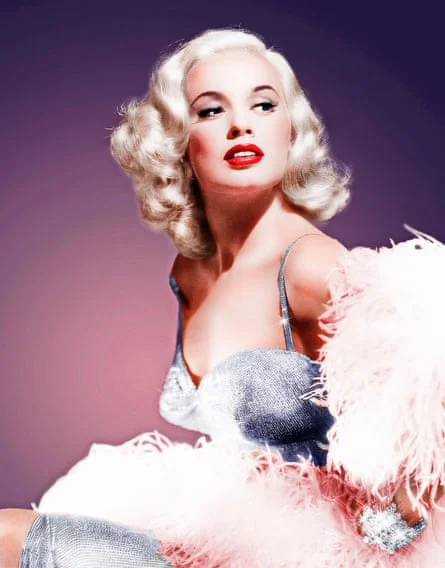
The enduring fascination with Marilyn Monroe, over six decades after her untimely death, continues to fuel both public curiosity and scholarly examination. While her image as a global sex symbol and Hollywood icon is indelible, a deeper understanding of her personal life reveals a complex tapestry of genuine human connection. An exploration into the lives of those who surrounded Monroe during her 36 years on Earth, undertaken for an upcoming radio documentary marking her centenary, unearths a wealth of anecdotes that paint a picture of a woman who, despite the often-isolating glare of superstardom, cultivated a rich network of friendships, both platonic and professional. The initial premise of this investigation, driven by a desire to commemorate her 100th birthday, also harbored a personal undercurrent: the hope of discovering whether, in a different life, Monroe and the author might have shared the bonds of friendship.
A significant revelation from these interviews is the sheer breadth of Monroe’s social circle. The fact that it remains possible, even today, to connect with individuals who knew her personally speaks volumes about the enduring impact she had on those she encountered. This is particularly striking given her persona as an almost mythical screen goddess, seemingly too grand for the ordinary act of having close companions. While the image of her being perpetually surrounded by adoring male admirers, reminiscent of Tom Ewell’s character in The Seven Year Itch, is pervasive, the notion of her forming deep, genuine friendships with women is often less readily conceived by the public.

The "Girl’s Girl": Challenging Perceptions of Female Friendship
Contrary to the prevailing perception, Marilyn Monroe was, by many accounts, a staunch "girl’s girl." Amy Greene, former model and widow of photographer Milton Greene, provides compelling testimony to this. Milton Greene was instrumental in the formation of Monroe’s independent production company, Marilyn Monroe Productions (MMP), in 1955. Greene resided with Monroe for several years in the mid-1950s, an arrangement that initially sparked considerable consternation among some of her female acquaintances. "Girlfriends would say, ‘Are you out of your mind to have that woman in your house?’" Greene recalled. "I’d say, ‘What’s wrong with you? There’s nothing there. They’re business partners!’" As their relationship deepened, Greene affirmed, "when we got to know each other and we became real friends, I knew that she would never hurt me by banging Milton." This account directly challenges the idea that Monroe’s star power or perceived romantic entanglements precluded her from forming authentic female bonds.
Monroe’s on-screen portrayals also frequently highlighted the importance of female camaraderie. In the 1953 classic How to Marry a Millionaire, she shares the screen with Lauren Bacall and Betty Grable, portraying a dynamic that, while perhaps more sophisticated than typical teenage friendships, underscored a deep sense of connection and mutual support. Her close bond with Eileen Heckart’s character, Vera, in Bus Stop is also noteworthy, particularly given that this film marked MMP’s first co-production. However, perhaps the most iconic cinematic representation of her female friendships is found in Gentlemen Prefer Blondes. Here, Monroe shared the spotlight with Jane Russell, another prominent brunette sex symbol of the era. Despite a significant disparity in their salaries – Monroe reportedly earned a fraction of Russell’s £200,000 fee – the two actresses developed a genuine mutual affection that transcended the professional sphere. In her 1985 memoir, My Path and My Detours, Russell reminisced about a gathering with close female friends in August 1962, where she reflected, "I thought of Marilyn. I wished I had her phone number, because I knew she belonged there, where we were all laughing about our problems." Tragically, this sentiment was followed by the devastating news of Monroe’s death the very next day.
Rivalries and Solidarity in the Studio System
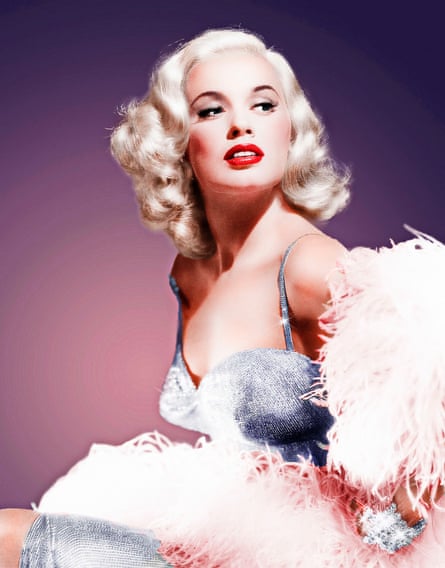
The complexities of Monroe’s relationships extended to her interactions with contemporaries who were often positioned as rivals. Mamie Van Doren, now 95, was famously contracted by Universal Pictures in 1953 as their "answer to Marilyn Monroe." Van Doren recounts frequent encounters with Monroe during this period. Describing Monroe as "a lovely person [who] didn’t have a bad bone in her body," Van Doren also possesses a penchant for candid, and at times, legally precarious, anecdotes, as evidenced in her recent memoir, You Thought I Was Dead. While Van Doren notes a subtle tension, stating, "Everybody thought I was copying her, but it was more or less the other way around," her overriding sentiment was one of solidarity. She recognized the shared struggles faced by young women navigating the male-dominated studio system. "We had the same problems; what we were expected to do if we wanted to get a role," Van Doren stated. "And she was more having problems with that than I was." This perspective highlights the common ground and mutual understanding that existed between these two stars, despite their manufactured rivalry.
Platonic Pillars and Creative Collaborations
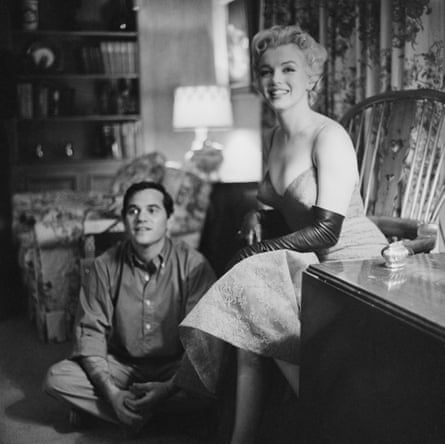
While the alleged dalliance between Monroe and John F. Kennedy has been widely publicized, with some even postulating its role in her premature demise, those closest to her suggest that his significance in her personal life was considerably less profound than that of her platonic confidants and professional collaborators. The men who ultimately held the greatest sway in Monroe’s emotional landscape were those who offered genuine friendship and intellectual partnership.
Among these was photographer Lawrence Schiller, who collaborated with Monroe on what became the second most scandalous nude photoshoot of her career. The first, the now-infamous "red velvet" series, was shot during a period of financial hardship for Monroe and was later acquired by Hugh Hefner to launch Playboy, with Monroe receiving only a nominal $50 fee. The second shoot, however, was conceived by Monroe herself as a publicity stunt during the filming of her final, unfinished movie, Something’s Got to Give in 1962. The objective was to reassert her star power and remind the studios of her enduring appeal. Schiller’s recollections underscore Monroe’s sophisticated understanding of her own image and the power of visual representation: "Very few people really understand light. Marilyn understood it," he stated. "This is a woman unsurpassed by any other I’ve come across in the entertainment business… She knew a lot about photography, and she knew what was right for her." This anecdote illustrates Monroe’s agency and her strategic engagement with her public persona.
Another pivotal figure in Monroe’s life was Sam Shaw, the photographer responsible for arguably the most iconic image of the star – the one of her standing above a subway grate in a billowing white dress. Shaw’s posthumously published book, Dear Marilyn, credits Monroe’s "elegance and clean sense of fun" for the enduring success of this photograph. Their extensive correspondence reveals a warm and supportive friendship, forged in the crucible of shared artistic passions and challenging childhoods, which ultimately blossomed into a chosen family for Monroe. Edie Shaw, Sam Shaw’s daughter, who shares Monroe’s birthday of June 1st, vividly recalls a circus outing with the actress to celebrate her 10th birthday and Monroe’s 29th. Edie’s observations offer a nuanced perspective on Monroe’s personality: "She was a complex person. She would talk in the same sort of language that you’d speak to her. So if it was a child, she was sweet and soft. If it was a studio head, she was tough. She could be many Marilyns."
The Maternal Longing and a Chosen Family
Monroe’s apparent yearning for motherhood is often cited as a central element of her personal tragedy. However, Amy Greene offers a different perspective, derived from their intimate conversations. "She loved [to say], ‘Oh, I want children.’ She loved the word ‘children.’ But it was a fantasy, and she knew it," Greene explained. "She should never have had children. She couldn’t have dealt with them. She was not a housewife-y type." This viewpoint suggests that Monroe’s desire for children might have been more of an idealized aspiration than a practical reality, given her temperament and the demanding nature of her life.
Despite this, Monroe was not entirely devoid of maternal experiences. As the memories of the Shaw family attest, she found opportunities to express maternal affection. On the very day of her death, she was on the phone, offering comfort to her former stepson, Joe DiMaggio Jr., who was experiencing a personal heartbreak. This act of empathy underscores her capacity for care and connection, even in her final moments.
Reconstructing the Legacy: Beyond the Tabloid Narrative
When pieced together, the accounts from Monroe’s friends and collaborators paint a portrait vastly different from the sensationalized tabloid narrative of a lovelorn sexpot whose life was irrevocably shaped by the Kennedy brothers and her inability to have a family. The Marilyn Monroe remembered by those who knew her best was a woman brimming with joy, possessed of a sharp wit, and driven by intellectual curiosity and creative ambition. Her friendships were not mere footnotes to her fame but fundamental pillars of her life, offering solace, support, and a sense of belonging. The evidence suggests that anyone would have been fortunate to count her among their friends. Her enduring legacy, therefore, lies not only in her cinematic contributions but also in the profound human connections she forged, connections that continue to resonate and offer valuable insights into the life of a woman often misunderstood and tragically underestimated.