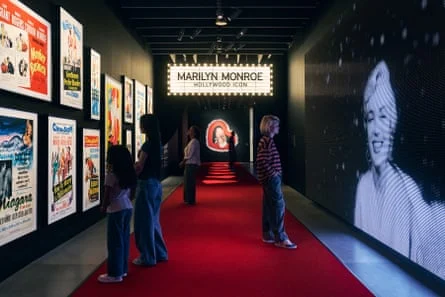
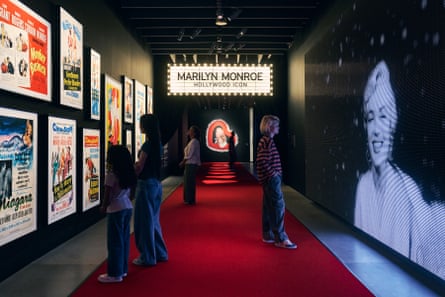
A poignant auditory echo of Marilyn Monroe’s final public reflections now reverberates within the hallowed halls of the Academy Museum of Motion Pictures in Los Angeles, marking a significant moment in the newly unveiled exhibition, "Marilyn Monroe: Hollywood Icon." This immersive retrospective, opening this weekend, offers a profound exploration of the enduring legacy of one of cinema’s most incandescent stars, moving beyond the glitz and glamour to reveal the complex woman beneath the manufactured persona.
The exhibition’s curators have masterfully woven a narrative that highlights the duality of Monroe’s existence: the celebrated global icon and the private individual grappling with immense pressure. A particularly arresting element is the inclusion of her last recorded words, drawn from a meticulously restored audio recording of her final interview, published in Life magazine just one day before her untimely death in August 1962. As her gentle, almost vulnerable voice emanates from the gallery walls, visitors are confronted with a raw and intimate perspective: "With fame, you can read about yourself and somebody else’s ideas about you, but what’s important is how you feel about you, for survival and living day to day with oneself," Monroe stated in 1962. She candidly added, "I like people, but the public scares me."
This powerful statement serves as a thematic cornerstone for the exhibition, encapsulating Monroe’s lifelong struggle with the overwhelming nature of stardom and the stark contrast between her public image and her private reality. While the exhibition showcases an impressive array of her most iconic costumes and captivating photography, it is the meticulously curated collection of personal effects—letters, handwritten notes, and intimate belongings—that truly resonate, offering a deeply personal glimpse into her world.

A Centenary Celebration of a Singular Star
The "Marilyn Monroe: Hollywood Icon" exhibition is part of a global surge of retrospectives and commemorative events marking the centenary of Monroe’s birth, a testament to her enduring cultural impact. Similar exhibitions have graced institutions such as the British Film Institute and the National Portrait Gallery in London, each striving to present a unique facet of her multifaceted life. Sophia Serrano, the curator of the Academy Museum exhibition, emphasized the collaborative efforts to ensure distinctiveness across these concurrent tributes.
The Los Angeles presentation is characterized by the Academy Museum’s signature opulent style. Upon entering, visitors are greeted by a crimson carpet and a colossal video screen where Monroe’s iconic on-screen persona seemingly offers a playful greeting. Her timeless melodies drift through the exhibition space, creating an atmosphere that is both celebratory and evocative. The décor itself—a symphony of reds, sparkling chandeliers, and plush heart-shaped pillows—pays homage not only to her unforgettable performance in "Diamonds Are a Girl’s Best Friend" but also to the studio system’s deliberate cultivation of her image as "America’s sweetheart," as Serrano explains.
Unveiling the Private World Through Personal Artifacts
Central to the exhibition is the meticulously preserved pink satin dress Monroe wore in the legendary "Diamonds Are a Girl’s Best Friend" scene. This garment, rarely made available for public viewing, commands a place of honor, symbolizing her quintessential Hollywood glamour. Beyond this showstopper, the exhibition unveils a treasure trove of items previously unseen by the public, including a costume from the film Love Happy and a series of personal letters and photographs that offer intimate insights.
Among the most striking displays are an elaborately sequined gown adorned with a dramatic feathered tail, worn during a memorable charity appearance at Madison Square Garden where Monroe announced the formation of her own production company. In stark contrast, a pair of simple pajamas from The Seven-Year Itch offers a more understated glimpse into her life. While the original, wind-swept white dress from that iconic scene is not present, the exhibition features a faithful replica crafted by the original designer, William Travilla, acknowledging its cultural significance.
Beyond the Silver Screen: Everyday Life and Personal Reflections
The exhibition extends its reach to capture the essence of Monroe’s everyday life, a departure from the often-fantastical portrayal in popular culture. A pair of her well-worn jeans, displayed prominently, serves as a poignant reminder of her role in popularizing women’s denim, a testament to her influence on fashion beyond haute couture. Accompanying these are a collection of personal belongings, including a telephone, a chair, meticulously marked-up scripts, a delicate wine glass, and a personal address book. These artifacts collectively paint a compelling portrait of the woman behind the icon.
The true emotional core of the exhibition lies within the collection of letters and handwritten notes. These documents offer unfiltered access to Monroe’s inner thoughts and anxieties. One pair of pages reveals her free-associative musings, including a deeply personal reflection: "I’m afraid to ever say anything about her for fear she will think I am trying to flatter her—thereby trying to trap her into liking me." Another poignant scribble reads, "I’m finding that sincerity is often taken for stupidity."
In a handwritten letter to director John Huston, Monroe, who harbored a keen interest in psychoanalysis, explains her decision to decline a role in a film about Sigmund Freud. Her reasoning, based on an understanding of familial sensitivities, is articulated with intellectual consideration: "I have it on good authority that the Freud family does not approve of anyone making a picture of the life of Freud—so I wouldn’t want to be a part of it." This demonstrates a thoughtful engagement with her career choices and an awareness of the broader implications of her work.
Navigating Fame and Public Scrutiny
Throughout the galleries, the pervasive impact of public image management on Monroe’s life is palpable. Newspaper clippings meticulously collected by the actress herself, detailing articles about her, are on display. These, along with details of her collaborations with favored designers and photographers, underscore the constant negotiation between her artistic aspirations and the demands of the Hollywood machine. One striking image features a large ‘X’ painted over it, marking Monroe’s rejection of it as a potential Vogue cover. Another display showcases her wearing a potato sack dress, a bold statement in response to criticism of her fashion choices.
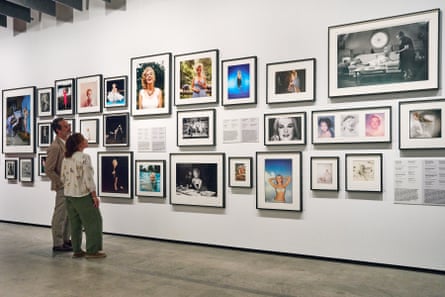
A reel of her television appearances serves as a stark reminder of the pervasive sexism she endured. Yet, even in the face of such challenges, Monroe’s sharp wit and humor shone through. In one clip, when an off-screen interviewer inquires if she weighs the same as at a previous event, she replies with characteristic charm, "I’m the same, but it’s a different suit." When posed the question, "You’re a happy girl now?" her succinct and telling response is, "Eh." These moments highlight her ability to navigate difficult situations with grace and a disarming honesty.
The Enduring Enigma of Marilyn Monroe
Photographer Richard Avedon’s insightful observation, emblazoned on an exhibition wall, encapsulates the paradoxical nature of Monroe’s persona: "For hours she danced and sang and flirted—she did Marilyn Monroe. And when the night was over… she sat in the corner like a child, with everything gone." This quote powerfully illustrates the profound emotional toll of maintaining the larger-than-life character that captivated the world.
Monroe herself, in her Life interview, reflected on her difficult childhood, yet found solace and inspiration in imagination and play. "Then I heard somebody say, you know: ‘That’s acting.’ And I said: ‘That’s what I want to be!’" she recalled. However, she concluded with a dark laugh, "But then you grow up and you find out, they make playing very difficult for you." This sentiment, born from a life lived under an intense and unforgiving spotlight, continues to resonate, offering a profound commentary on the human cost of celebrity and the relentless pursuit of a dream.
The exhibition, by presenting these intimate artifacts and personal reflections alongside her iconic cinematic contributions, offers a more complete and nuanced understanding of Marilyn Monroe. It moves beyond the superficial allure of Hollywood stardom to explore the vulnerability, intelligence, and resilience of a woman who, despite her immense fame, grappled with profound personal challenges. "Marilyn Monroe: Hollywood Icon" is not merely a collection of memorabilia; it is a vital exploration of a cultural phenomenon and the enduring enigma of a woman who continues to captivate and inspire generations.