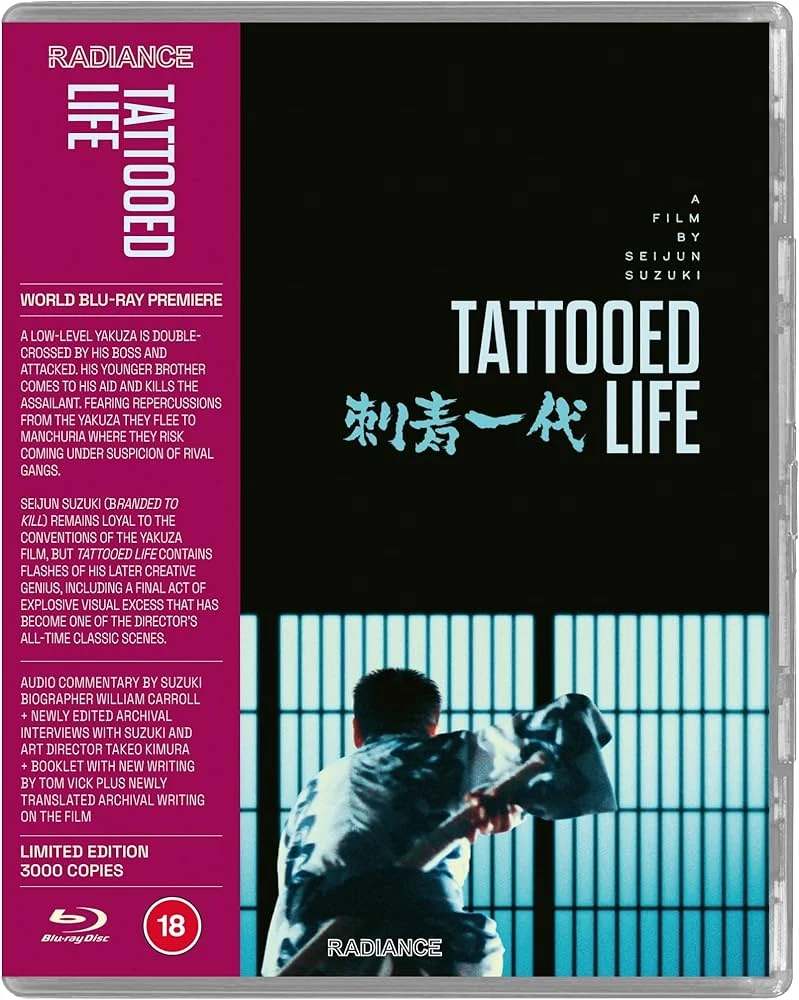
While director Seijun Suzuki would later become renowned for a filmography that consistently defied studio expectations, it was with the 1965 yakuza drama Tattooed Life that he first received a formal warning from Nikkatsu, his then-employer, for "going too far." This pivotal moment marked an escalation in the artistic tension between Suzuki’s avant-garde sensibilities and the studio’s commercial directives, setting the stage for a trajectory that would ultimately lead to his controversial dismissal just a few years later.
Background: Seijun Suzuki’s Early Career and Nikkatsu’s Production Model
Seijun Suzuki began his directorial career at Nikkatsu in 1956, working within the rigid studio system that dominated Japanese cinema during its golden age. Nikkatsu, alongside major players like Toho, Toei, and Shochiku, operated a prolific production line, churning out films designed to fill double-bill programs. Directors were often assigned projects, sometimes with tight schedules and limited creative freedom, especially for B-features. Suzuki, initially known as Seitaro Suzuki, honed his craft on a diverse array of genre films, including thrillers, musicals, and action pictures.
By the early 1960s, Nikkatsu had largely shifted its focus to action and yakuza films, capitalizing on the popularity of stars like Akira Kobayashi, Tetsuya Watari, and Yujiro Ishihara. These films were expected to adhere to established genre conventions: clear narratives, identifiable heroes and villains, choreographed action sequences, and themes of loyalty, honor, and sacrifice within the criminal underworld. Commercial viability was paramount, and deviation from these proven formulas was often viewed with suspicion by studio executives.
Suzuki, however, quickly developed a distinctive visual style and thematic approach that began to subtly, and then overtly, challenge these commercial mandates. His earlier works like Youth of the Beast (1963) and Gate of Flesh (1964) had already showcased a burgeoning predilection for violating genre norms. Youth of the Beast, for instance, was lauded for its audacious visual panache and non-linear narrative, while Gate of Flesh depicted a gritty, morally ambiguous world of post-war prostitution with a striking, almost pop-art aesthetic. These films, while successful in their own right, signaled a director increasingly willing to push boundaries, introducing elements of surrealism, abstraction, and a heightened sense of theatricality that diverged from conventional realism.
The Escalation of Artistic Rebellion: From Subversion to Direct Confrontation
The "first warning" issued for Tattooed Life in 1965 was not an isolated incident but rather a culmination of Nikkatsu’s growing unease with Suzuki’s increasingly experimental vision. Studio executives, prioritizing box office returns and mainstream appeal, perceived Suzuki’s artistic choices as increasingly esoteric and potentially detrimental to the marketability of their genre pictures. They desired a straightforward, easily digestible yakuza narrative, one that would resonate with a broad audience accustomed to predictable genre tropes. Tattooed Life, despite its surface adherence to many yakuza conventions, proved to be a step too far in its thematic depth and visual idiosyncrasies.
This warning represented a critical juncture in Suzuki’s career at Nikkatsu. Prior to this, his stylistic deviations might have been tolerated, perhaps even seen as eccentric flourishes. However, with Tattooed Life, the studio’s tolerance for his artistic liberties evidently waned, viewing his work as a direct challenge to their commercial model. This official reprimand foreshadowed the more severe conflicts that would arise with his subsequent films, most notably Tokyo Drifter (1966) and the famously controversial Branded to Kill (1967), which ultimately led to his blacklisting from the Japanese film industry for a decade.
A Deep Dive into "Tattooed Life": Genre, Themes, and Narrative
Tattooed Life largely adheres to the external trappings expected of a yakuza narrative, featuring intense gunfights, dynamic action sequences, copious bloodshed, and a spectacular, violent finale. Yet, beneath this familiar surface, Suzuki meticulously deconstructs the genre, incorporating profound reflections on Japanese imperialism and a deeply fatalistic story about two brothers ensnared by the inexorable pull of a yakuza clan.
The film’s plot centers on Tetsutaro Murakami (Hideki Takahashi), a yakuza hitman, who, after killing a gang boss in self-defense, decides to flee with his younger brother Kenji (Kotobuki Hananomoto) to Manchuria. Their aspiration is to build a new life, far removed from the criminal underworld. Tetsu, a seasoned survivor of the yakuza lifestyle, is fiercely protective of Kenji, having poured his earnings into supporting Kenji’s artistic ambitions, hoping to secure his acceptance into a prestigious art school. However, their escape is fraught with peril. Their former clan relentlessly pursues them, and a cunning swindler absconds with nearly all their remaining funds. Forced to find work, the brothers secure employment at a remote construction site, momentarily finding a semblance of peace and camaraderie with their fellow laborers.
This fragile tranquility is short-lived. Kenji becomes captivated by the foreman’s wife, sketching her obsessively, an artistic pursuit that borders on a dangerous infatuation. Simultaneously, Tetsu finds himself falling in love with Masayo (Hiroko Ito), a relationship that prompts him to reconsider their flight to Manchuria, imagining a peaceful life within reach. However, any hope for such a future is brutally extinguished when the men from his former clan finally catch up, bringing the past violently into their present.
Thematic Resonance: Longing, Illusion, and Imperial Ambitions
Tattooed Life stands as a crucial work in Suzuki’s filmography, not only for the studio’s reaction but also for its thematic depth. It explores a central preoccupation that runs through many of his films of the period: the profound longing for a normal life and the elusive hope of a new beginning. Characters like Tetsuya in Tokyo Drifter and Hanada in Branded to Kill share a similar yearning with Kenji and Tetsu. Their conflicts with the yakuza invariably push them towards the pursuit of an ordinary existence, a dream that, in Suzuki’s world, is almost inevitably doomed to fail.
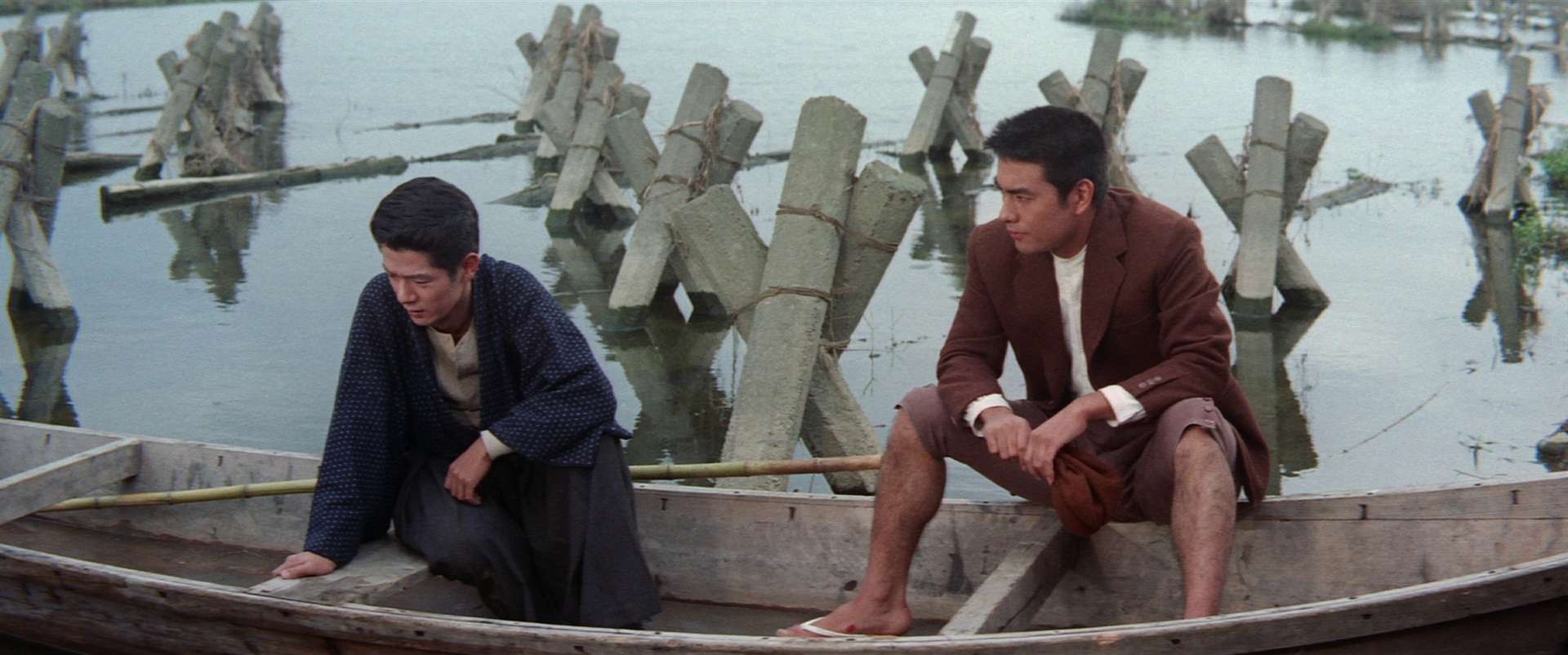
In Tattooed Life, Suzuki frames this recurring idea through the powerful historical lens of Japan’s imperial ambitions. The brothers’ desperate desire to escape to Manchuria—a territory historically synonymous with Japanese expansionism and the illusion of a utopian colonial frontier—serves as a potent symbol. Suzuki wastes no time in exposing this "dream" as a fallacy. The immediate theft of their money by a con artist shatters the illusion of a clean break, underscoring the impossibility of escaping one’s past or a predetermined fate. By dismantling this illusion early on, Suzuki shifts the audience’s focus to the far more compelling image of two men caught in an inescapable transitional state, desperately clinging to the fading hope of a normal life. This thematic choice provides a subtle critique of nationalistic dreams, mirroring the personal disillusionment of the protagonists.
The Indelible Mark: Tattoos and Fatalism
One of the most visually striking and thematically profound elements of Tattooed Life is Suzuki’s fascination with the visual power of yakuza tattoos. The opening title sequence immediately draws the camera’s attention to the intricate details of these elaborate body art pieces, transforming them into more than mere adornments; they become works of art in themselves, as well as crucial narrative devices. Although the tattoos largely disappear from view until the film’s climactic final act, their symbolic weight permeates the entire narrative.
Beyond their obvious aesthetic appeal, the tattoos embody the film’s underlying fatalism. They symbolize a destiny permanently inscribed onto the bodies of those who wear them, an unalterable mark of identity and allegiance to the underworld. Tetsu, despite his fervent desire to leave his criminal past behind and forge a new life, finds himself inexorably bound by his yakuza identity. The tattoos serve as a constant, silent reminder that any attempt at a genuine new beginning is futile. Worse still, his decision to bear the clan’s tattoo has not only condemned his own future but has tragically dragged his innocent younger brother, Kenji, into a world of violence and crime from which there is no escape.
This powerful belief that one’s fate is sealed the moment one enters the underworld, and that past choices dictate an inescapable future, closely connects Suzuki’s work in Tattooed Life to the darker, more realistic portrayals of yakuza life found in the films of Kinji Fukasaku and Hideo Gosha. Fukasaku’s Battles Without Honor and Humanity series (beginning in 1973) famously deconstructed the romanticized yakuza code, portraying a brutal, cynical world of shifting loyalties and inevitable self-destruction. Similarly, Gosha’s works, such as Three Outlaw Samurai (1964) or Violent City (1974), often depicted protagonists trapped by circumstance and honor, facing inevitable tragic ends. Suzuki’s earlier exploration of this fatalistic worldview in Tattooed Life positions him as a significant precursor to these later, more cynical takes on the genre.
Character Dynamics: Contrasting Obsessions
What truly distinguishes Tattooed Life from many contemporary yakuza films is its nuanced portrayal of the complex relationship between the two brothers, Kenji and Tetsu. Hideki Takahashi’s Tetsutaro initially appears to be the archetypal yakuza: loyal, stoic, and willing to sacrifice everything for his clan, unquestioningly obeying orders that involve murder, theft, or other illicit activities. However, as the narrative unfolds, Tetsu develops into a far more complex protagonist. He is torn between the family he was born into and the "family" he chose within the underworld, a conflict exacerbated by his desire to protect Kenji from his own fate. His internal struggle, his longing for a life he knows he cannot have, adds layers of pathos to his character.
Kenji, portrayed by Kotobuki Hananomoto, stands in stark contrast to his older brother. He represents innocence and purity, embodying the dream of an artistic, uncorrupted life that Tetsu desperately wishes for him. Kenji’s fascination with the human body, particularly his relentless sketching, mirrors the film’s own obsession with the tattoo art introduced in the title sequence. His artistic endeavors, however, are not without peril. His relentless search for beauty borders on an obsessive naivety, leading him to jeopardize not only his own safety but also that of his brother. His artistic impulse, while seemingly pure, becomes a catalyst for further entanglement in the dangerous world Tetsu strives to escape. Hananomoto’s performance, though perhaps not fully exploited by Suzuki, offers a fascinating counterpoint to the hardened yakuza world, highlighting the tragic clash between art and violence.
Nikkatsu’s Perspective and Broader Implications
From Nikkatsu’s standpoint, the "warning" for Tattooed Life was a commercial rather than an artistic judgment. The studio was under increasing pressure in the mid-1960s. The rise of television eroded cinema attendance, forcing studios to rely more heavily on predictable genre films starring popular actors to secure box office revenue. Suzuki’s stylistic flourishes, while artistically innovative, were likely perceived as alienating to mainstream audiences who expected conventional genre entertainment. The studio sought a "marketable yakuza picture"—one that would generate consistent profits, not challenge artistic boundaries. Their ideal yakuza film likely featured unambiguous heroes, clear moral codes (even within criminality), and narratives that resolved in a satisfying, if tragic, manner. Suzuki’s Tattooed Life, with its complex themes of fatalism, imperial disillusionment, and genre deconstruction, diverged significantly from this commercial imperative.
The implications of this escalating conflict between Suzuki and Nikkatsu were profound. For Seijun Suzuki, the warning marked a critical turning point. It solidified his reputation as an auteur who prioritized artistic expression over commercial demands, ultimately leading to his blacklisting by Nikkatsu in 1968 after Branded to Kill. This period of forced inactivity, however, ironically cemented his status as a cult figure and an uncompromising artist, whose unique vision would later be celebrated internationally.
For yakuza cinema, Suzuki’s work, including Tattooed Life, began a process of deconstruction and artistic elevation. He demonstrated that genre films could simultaneously entertain and provoke, adhering to tropes while subverting them for deeper thematic resonance. His influence can be seen in subsequent generations of Japanese filmmakers who blended genre storytelling with art-house sensibilities, paving the way for a more diverse and intellectually stimulating cinema.
More broadly, the conflict between Suzuki and Nikkatsu highlighted the perennial tension between artistic freedom and commercial pressures within the film industry. It served as a stark example of how studio systems, while providing a platform for creativity, could also stifle innovation when commercial interests were perceived to be at risk. This struggle between the artist and the institution is a recurring motif in film history, and Suzuki’s story remains one of its most compelling narratives.
In conclusion, Tattooed Life is far more than just another yakuza drama. It is a fascinating and pivotal work in Seijun Suzuki’s career, a film that encapsulates the impossibility of a new beginning once fate has been permanently inscribed onto one’s body and soul. Through the intertwined destinies of two brothers—one incapable of escaping the criminal life that has literally been tattooed into his identity, the other tragically drawn into danger by his relentless pursuit of art and beauty—Suzuki crafts a powerful meditation on fate, illusion, and the indelible marks of the past. It remains a testament to Suzuki’s singular vision, a film that dared to go "too far" and, in doing so, forged a path for cinematic rebellion.