Narrative Overview and Character Dynamics
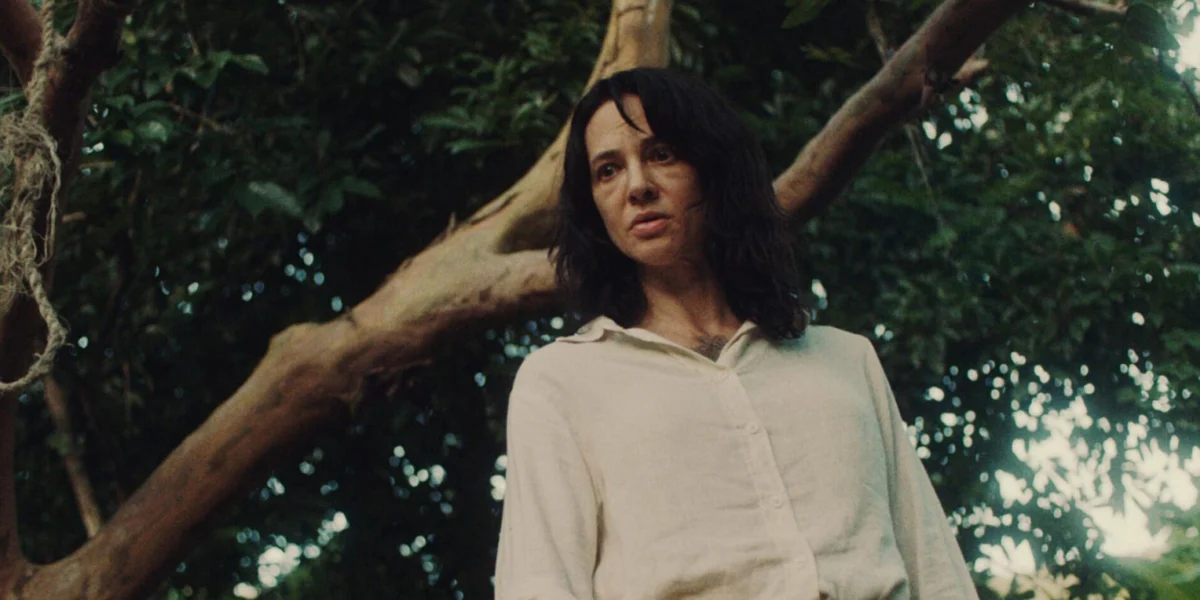
The story centers on Caro, portrayed by Asia Argento, a woman in her forties who has spent the majority of her adult life abroad. Following the death of her father—a once-prominent owner of a cacao estate—Caro returns to her childhood home in Venezuela with the intention of liquidating the property. Upon her arrival at the secluded, dilapidated mansion, she discovers that the estate is no longer the private sanctuary she remembers. Instead, it has been occupied by Sonia (Dogreika Tovar), a former employee of her father, who lives there with her young son, Maiko (Yermain Sequera).
The conflict is immediate and psychological. Sonia refuses to vacate the premises, asserting a sense of ownership born from years of labor and physical presence, contrasting with Caro’s legal but distant claim to the land. The household is further complicated by the presence of a tenant (Jose Aponte) with whom Sonia shares an intermittent relationship, and Yoni (Arturo Rodriguez), the father’s former retainer who remains a fixture on the grounds. As Caro navigates the bureaucratic and personal hurdles of reclaiming the home, she enlists the help of Roque, a lawyer played by the director’s father, Jorge Thielen Hedderich. This decision sets a series of events in motion that lead toward an inevitable and violent confrontation.
Production Background and Artistic Direction
Jorge Thielen Armand has established a reputation for "slow cinema" that prioritizes atmosphere and sensory experience over traditional plot progression. Death Has No Master continues this trajectory, leaning heavily into the "tropical gothic" aesthetic. The film was shot on location, utilizing the natural humidity, dense foliage, and crumbling architecture of the Venezuelan countryside to create a palpable sense of dread.
A significant element of the production is the collaboration with Academy Award-winning sound designer Sylvain Bellemare (Arrival). The auditory landscape of the film is designed to be as much a character as the actors themselves. Whispers in corridors, the rustle of the surrounding jungle, and the mechanical groans of the old house serve to blur the lines between Caro’s internal psychological state and the physical reality of her surroundings. This hallucinatory quality is established in a grisly, unexplained prologue involving ritualistic or historical violence, suggesting that the land itself is soaked in a legacy of bloodshed that predates the current occupants.
The casting reflects Armand’s penchant for blending professional actors with non-professionals. Asia Argento, an icon of European cinema, learned Spanish specifically for the role, bringing an outsider’s perspective that mirrors Caro’s own alienation. In contrast, Dogreika Tovar, a non-actor, provides a grounded, formidable presence as Sonia. This juxtaposition highlights the cultural and economic chasm between the two women: one representing the displaced elite and the other the resilient, if legally precarious, working class.
Chronology of the Armand Trilogy
To understand the context of Death Has No Master, it is essential to view it within the framework of Armand’s body of work, which often deals with the decay of the Venezuelan upper class and the reclamation of space.
- La Soledad (2016): Armand’s debut feature followed a young man living in his family’s decaying mansion in Caracas, attempting to find a legendary treasure buried within its walls to save his family from eviction. It established the director’s interest in the "haunted house" as a metaphor for national collapse.
- La Fortaleza (2020): This film starred the director’s father as a man fleeing the crisis in Caracas to realize a dream of building a lodge in the Amazon jungle. It explored themes of addiction, redemption, and the brutal reality of the Venezuelan interior.
- Death Has No Master (2024): The third entry shifts the focus to a female protagonist and the specific industry of cacao, moving the setting from the urban decay of Caracas or the wild Amazon to the structured but failing environment of a colonial-style plantation.
This progression shows a filmmaker increasingly concerned with how the ghosts of the past—both literal and metaphorical—prevent the living from moving forward.
Socio-Political Context: The Cacao Industry and Land Rights
The film’s setting on a cacao plantation is not incidental. Venezuela was once the world’s leading producer of cacao, and its "Cacao Fino de Aroma" remains some of the most sought-after in the world. However, the industry has suffered under decades of economic instability, land seizures, and a lack of infrastructure.
In Death Has No Master, the mansion represents the "Old World" of Venezuelan land ownership. The tension between Caro and Sonia reflects real-world disputes over land reform and squatters’ rights that have characterized Venezuelan society for over twenty years. Under various legislative shifts, the rights of long-term occupants have often been pitted against those of absentee landlords. By focusing on the personal friction between a returning heir and a resident worker, Armand dramatizes the broader national struggle over who truly "owns" the land: those with the deed, or those with the dirt under their fingernails.
Critical Analysis of Narrative Structure
While the film has been praised for its technical prowess, some critics at the Cannes premiere noted that the script remains intentionally vague. The narrative often "treads water," focusing on Caro’s aimless wandering through the house and her internal malaise rather than driving the plot toward its conclusion. This choice emphasizes the "stasis" of the characters—none of them are able to leave or change their situation until the arrival of outside force.
The symbolism used by Armand is often overt. The recurring imagery of a whip and a rifle serves as a Chekhovian promise of the violence to come. These objects represent the historical tools of the plantation owner, suggesting that even as Caro tries to distance herself from her father’s legacy, she is eventually forced to adopt his methods of control. The lack of clear exposition regarding Caro’s past trauma or the specific history of the house contributes to a viewing experience that is more evocative than informative. It asks the audience to feel the weight of the history rather than understand its specific dates and names.
Performance and Casting Impact
Asia Argento’s performance is characterized by a "dazed" quality that effectively conveys the character’s dissociation. Having been away for so long, Caro is a stranger in her own home, unable to speak the local vernacular with total fluency or navigate the social hierarchies that Sonia understands implicitly. Argento’s casting brings a certain "genre" weight to the film, given her history with horror and psychological thrillers, which Armand utilizes to heighten the film’s more unsettling moments.
Dogreika Tovar’s debut is perhaps the film’s most significant discovery. As Sonia, she does not play a villain but rather a woman who has carved out a life in the vacuum left by the ruling class. Her authority over the house is absolute, and her refusal to leave is presented not as malice, but as a survival instinct. The chemistry—or lack thereof—between Argento and Tovar drives the film’s tension, as they represent two different versions of Venezuela that can no longer coexist in the same space.
Implications for the Venezuelan Film Industry
The production of Death Has No Master is a significant feat given the ongoing challenges facing the Venezuelan film industry. With limited domestic funding and a fragmented infrastructure, filmmakers like Armand rely heavily on international co-productions (often involving countries like France, Mexico, or the Netherlands) and the prestige of the festival circuit to bring their stories to life.
The film’s inclusion in the Director’s Fortnight (Quinzaine des Cinéastes) is a testament to its artistic merit. This sidebar is known for discovering innovative voices and prioritizing "cinematic excellence and risk-taking." For Venezuelan cinema, such a platform is vital for maintaining a cultural voice during a time when domestic exhibition and production are under extreme pressure.
Conclusion and Future Outlook
Death Has No Master is a film that prioritizes mood over message, yet it cannot escape the political gravity of its setting. While its pacing and opaque script may prove challenging for mainstream audiences, its success at Cannes suggests a strong life on the international festival circuit and in arthouse cinemas.
The film serves as a somber meditation on the impossibility of "going home." For Caro, the house is a tomb of memories; for Sonia, it is a fortress of survival. By the time the film reaches its violent finale, Armand suggests that when the master is gone, the house does not belong to the next in line, nor to the workers, but to the cycle of violence that built it in the first place. As the Venezuelan film industry continues to evolve, Death Has No Master stands as a technically brilliant, if frustratingly elusive, entry into the canon of modern Latin American cinema. It confirms Jorge Thielen Armand as a filmmaker of significant atmospheric power, even as he leaves his audience searching for answers in the shadows of the cacao trees.