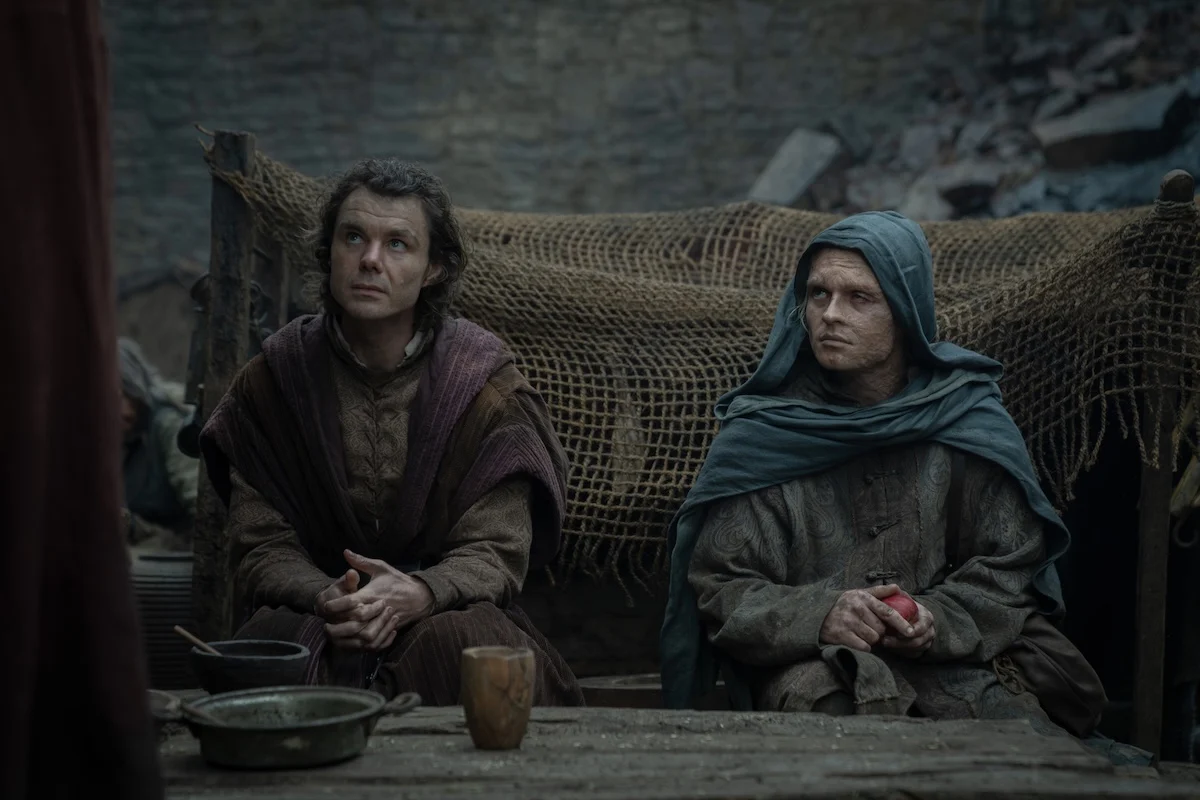
The gripping narrative of House of the Dragon has plunged into its third season’s latter half, delivering an installment that unflinchingly propels its characters toward the calamitous consequences of their own machinations. The episode’s potent opening moments underscore this descent into chaos, with scenes that are as stark as they are thematically resonant. Ser Criston Cole’s grim address to his assembled men, invoking the Stranger—the aspect of the Seven-Faced God symbolizing death—as a harbinger of rest, sets a somber tone. Simultaneously, Daemon’s discovery of the brutal tableau of his Gold Cloaks and Alicent and Helaena’s chilling descent into the oppressive darkness beneath the Red Keep all signal that the series is disavowing any pretense of leniency, confronting viewers with the grim realities of the unfolding conflict.
This analysis will delve into the episode’s thematic core, its titular reference to House Martell’s proud motto, and the intricate character arcs presented. It will also explore the subtle yet significant alterations being made to George R.R. Martin’s source material, Fire & Blood, a section explicitly marked for those seeking to avoid substantial spoilers. Finally, it will touch upon the symbolic depth embedded within the show’s evolving opening credits and the poignant explorations of motherhood amidst war.
The Echoes of "Unbowed and Unbent"
The episode’s title, "Unbowed and Unbent," immediately invokes a powerful piece of Westerosi lore: the foundational words of House Martell of Dorne, "Unbowed, Unbent, Unbroken." This phrase, skillfully woven into Ormund Hightower’s historical exposition on Meria Martell, carries profound weight. Historically, the Martell motto signifies their resilience and independence, a testament to their favored weapon, the spear—straight and unbroken, even when faced with adversity. More critically, it speaks to Dorne’s unique status as a kingdom that, during the era depicted in House of the Dragon, has never been conquered by the Targaryens. While the books confirm Prince Qoren Martell ruled Dorne as an independent realm during this period, their eventual integration into the Seven Kingdoms occurred through marriage 57 years after the show’s current in-world date, a testament to their enduring autonomy.
However, the episode’s title deliberately truncates the full motto, leaving a critical void: the possibility that those who remain "unbowed and unbent" may ultimately be "broken." This concept of "broken men," a term George R.R. Martin uses to describe soldiers defeated in battle, often disbanded or having deserted their lords, is a recurring tragedy in his post-war narratives. Janos, a character whose fate is sealed within this episode, exemplifies such a broken man, his loyalty to Ser Criston Cole more nominal than genuine.
It is Ser Criston Cole himself, perhaps the most profoundly broken character, who embodies the episode’s title. His suicidal vow to confront Lord Tully and the formidable Winter Wolves head-on—to remain, in some capacity, "unbowed and unbent"—suggests a final act of defiance. His days of servitude are behind him, and he intends to meet his end on his own terms. Notably, Cole stands as the sole significant Dornishman in the series, an outsider by upbringing, raised in the households of Marcher lords who harbored resentment towards his heritage. This unique position might afford him a singular understanding of House Martell’s words in their entirety.
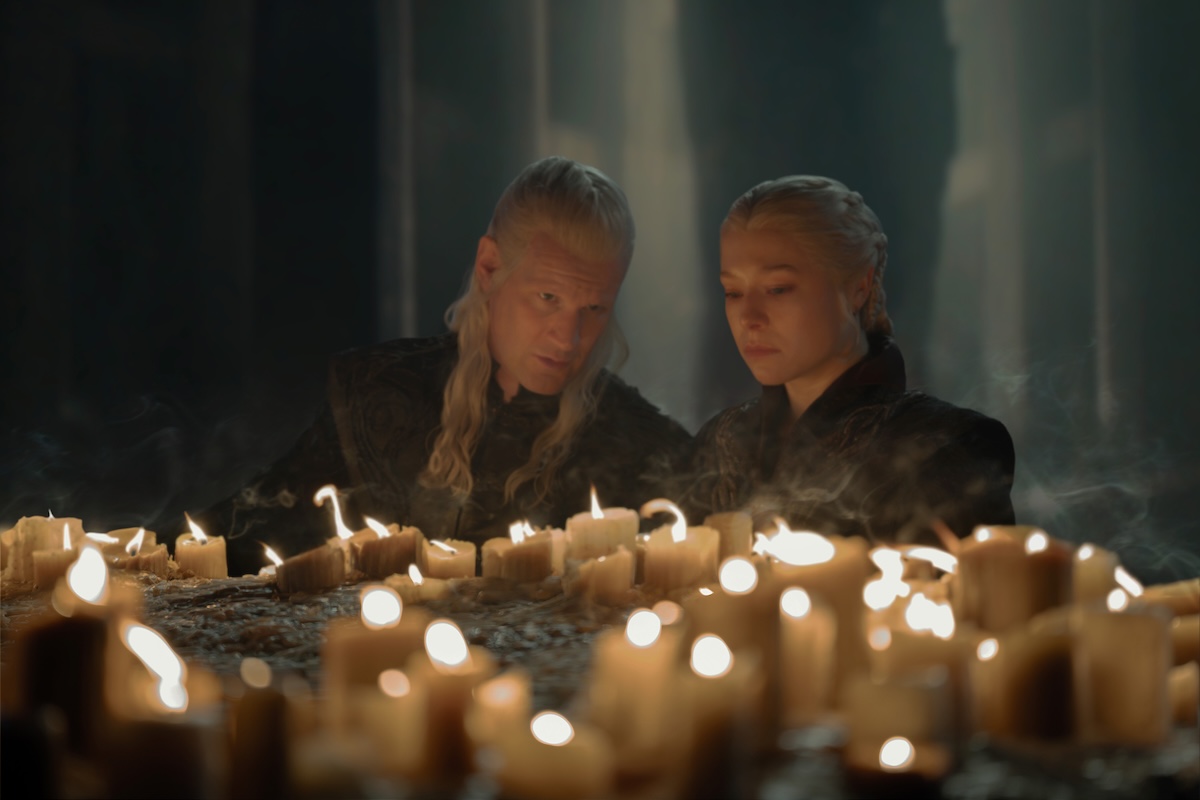
Despite Ormund Hightower’s prejudiced dismissal of Cole’s lineage as a "taint in his blood," Cole has ascended to a position of considerable influence, only to confront the harsh reality of never being fully respected or loved by those he governs. While the series acknowledges Cole’s flaws—his bitterness, misogyny, and the pathetic aftermath of his rejections by Rhaenyra and Alicent—it offers him a third path, distinct from outright failure or redemption. When Daeron inquires whether Meria Martell was a hero or a villain, Ormund’s response, highlighting her laudable cunning regardless of her allegiances, provides a parallel for Cole. His aim appears not to achieve heroism, but to be remembered as unbent, a form of immortality that might ensure Alicent recalls him, perhaps not fondly, but as an individual who lived on his own terms.
Unraveling the Tapestry: New Layers in the Opening Credits
The series’ iconic opening credits have undergone a subtle yet significant evolution, now featuring a new panel at the end. This addition depicts two figures, one clad in white and the other in brown, engaged in an unclear interaction, possibly aboard a boat or near a hay bale. While their precise representation remains ambiguous, this panel appears to be part of a larger, developing tapestry that chronicles Rhaenyra’s reign. Previous panels have shown Rhaenyra’s arrival with Syrax, a scene featuring Alicent and Helaena, and an individual whispering into another’s ear—potentially identifying Manderly. The rent in the tapestry, a recurring visual motif, now tears through this new panel, hinting at the unfolding discord.
Furthermore, astute viewers have noted that the self-animating, blood-soaked threads that rise in the new opening sequence number fourteen. This is a conspicuous detail, echoing the Fourteen Flames—the fourteen active volcanoes that once spanned the Valyrian peninsula and whose simultaneous eruption is attributed to the Doom of Valyria. The visual of fire and blood rising from beneath the earth to weave history is a potent and elegantly integrated touch, reinforcing the cyclical nature of destruction and creation in Westeros.
The Perilous Joys of Motherhood
The thematic exploration of motherhood, a central concern in the first season of House of the Dragon, has been powerfully re-examined in the current season, particularly through the intertwined narratives of Alicent and Helaena. The first season vividly illustrated how patriarchy weaponizes pregnancy, exemplified by Queen Aemma’s tragic death in childbirth, Rhaenyra’s initial aversion to motherhood, and Aegon II’s discarded bastards. This season brings this theme into sharp focus with the fraught dynamic between Alicent and her daughter.
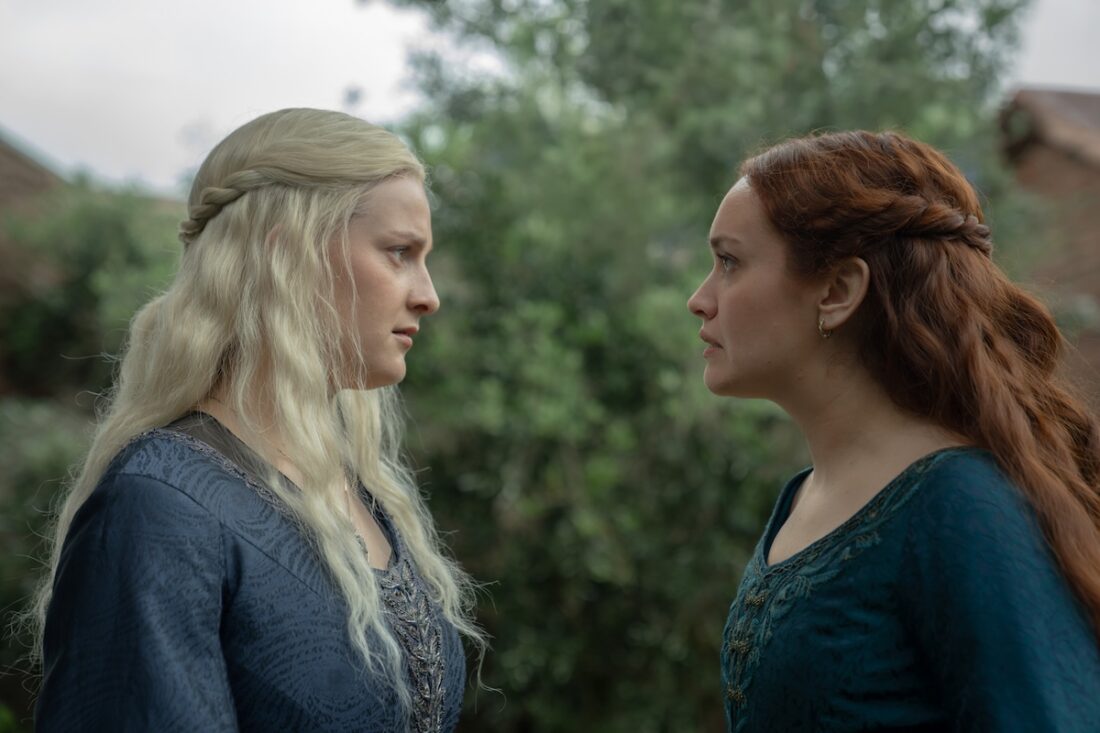
Olivia Cooke’s portrayal of Alicent’s palpable panic over Helaena’s refusal to ingest the abortifacient procured from Grand Maester Orwyle is profoundly heartbreaking. Alicent’s fear extends beyond Helaena’s immediate well-being and the potential ramifications of bearing a male child; it encompasses a grim recognition of Helaena’s continued subjugation within a patriarchal system that inextricably links a woman’s destiny to her offspring, denying her any independent identity. The narrative contrasts this with the younger Alicent, who never had the opportunity to grapple with such choices. She dutifully accepted her marriage to Viserys at her father’s behest, and after a time jump, she was already a mother. The tragedy lies in her present realization that, had she been able to avoid bearing her own children, she might have escaped the oppressive men who have controlled her life. Yet, she cannot, in good conscience, impose that choice on her daughter, the only one of her children she actively raised and does not view as a failure.
This complex emotional landscape is further amplified when Mysaria learns of Helaena’s pregnancy. Mysaria, herself infertile due to a miscarriage following childhood sexual assault, understands the profound impact of patriarchal violence on women’s bodies. Alicent appeals to Mysaria not on the basis of fealty to Rhaenyra, recognizing Daemon’s enduring place in Mysaria’s affections, but by highlighting a shared vulnerability. She reminds Mysaria that no woman is truly free from patriarchal violence and that, despite the horrific circumstances, Mysaria’s own infertility has paradoxically enabled her ascent in the world, granting her a degree of freedom from the indignities of men that neither Alicent nor Rhaenyra possess.
DragonWatch: A Glimpse of Scale
This episode offers a more restrained display of the dragons, featuring only a single shot of Seasmoke and Moondancer. The majestic beasts are seen patiently awaiting Baela and Addam as they search for Vhagar. While the brief visual is appreciated, particularly for the implied meticulous orchestration of scale comparisons in every shot, the limited dragon presence serves as a welcome respite after the season’s earlier abundance of aerial spectacle. The expectation remains that more substantial dragon-centric sequences will unfold as the narrative progresses.
Significant Deviations: The "Butterflies" of Adaptation
As the season passes its midpoint, it becomes increasingly pertinent to examine the narrative divergences from George R.R. Martin’s source material, Fire & Blood. Martin himself has voiced disagreements with showrunner Ryan Condal regarding these changes, which he believes are substantial enough to potentially alter the historical narrative presented in both his novels and the original Game of Thrones series. He has metaphorically termed these alterations "butterflies," referencing the Butterfly Effect, where small initial changes can lead to significant, cascading consequences.
From an analytical perspective, while the series is undeniably making notable departures from the original vision, the overarching plot remains largely congruent with the established history of Westeros. This season’s approach differs from the first, which meticulously threaded the needle between conflicting accounts presented by the in-world historian Gyldayn. While not directly conflicting with the major beats of this era in Targaryen history, the show is carving its own path.
Major Spoilers for Fire & Blood and Potential Future Episodes Below
Readers seeking to remain entirely unspoiled regarding the source material and potential future plot developments are advised to cease reading at this point. This section will detail significant alterations.
-
Luthor Largent: Largent, the Commander of the Gold Cloaks, meets a brutal end around this point in the source material. However, in Fire & Blood, his death occurs during a riot among the smallfolk of King’s Landing, rather than being murdered and displayed by a Hightower agent to taunt Daemon. This suggests the show may be orchestrating such a riot as a direct consequence of Hightower machinations, aligning with the series’ broader tendency to portray Rhaenyra not as a flawed ruler but as someone making difficult choices under duress, a departure from Gyldayn’s more critical portrayal.
-
Gwayne Hightower: Freddie Fox’s portrayal of Otto Hightower’s younger son has been a highlight, but in the book, Gwayne meets his end much earlier. He serves as the second-in-command of the City Watch in Fire & Blood, placed there by his father to monitor Largent. He is killed by Largent when attempting to raise the alarm about Rhaenyra’s approach. The show, however, depicts Alicent leveraging Luthor’s sympathies to de-escalate the situation. Gwayne’s current status, having seemingly departed Cole’s retinue, leaves his narrative arc open to further development.
-
Queen Helaena and Maelor: Helaena is also deceased by this point in the book. The Fire & Blood depiction of Helaena is notably sparse; she is described as unattractive and fond of her dragon, Dreamfyre. In the book, she descends into madness following her son Jaehaerys’s murder and throws herself from the Red Keep early in Rhaenyra’s reign. She is not pregnant with Aegon II’s child at this juncture, having already given birth to her second son, Maelor. Maelor dies at the hands of a mob after being secretly escorted from the Red Keep by Ser Rickard Thorne. The episode’s events leave the precise fate of Helaena and Maelor uncertain, a potentially positive development given the strength of show-Helaena’s characterization, which arguably deserves a more impactful and distinct narrative arc than her book counterpart.
-
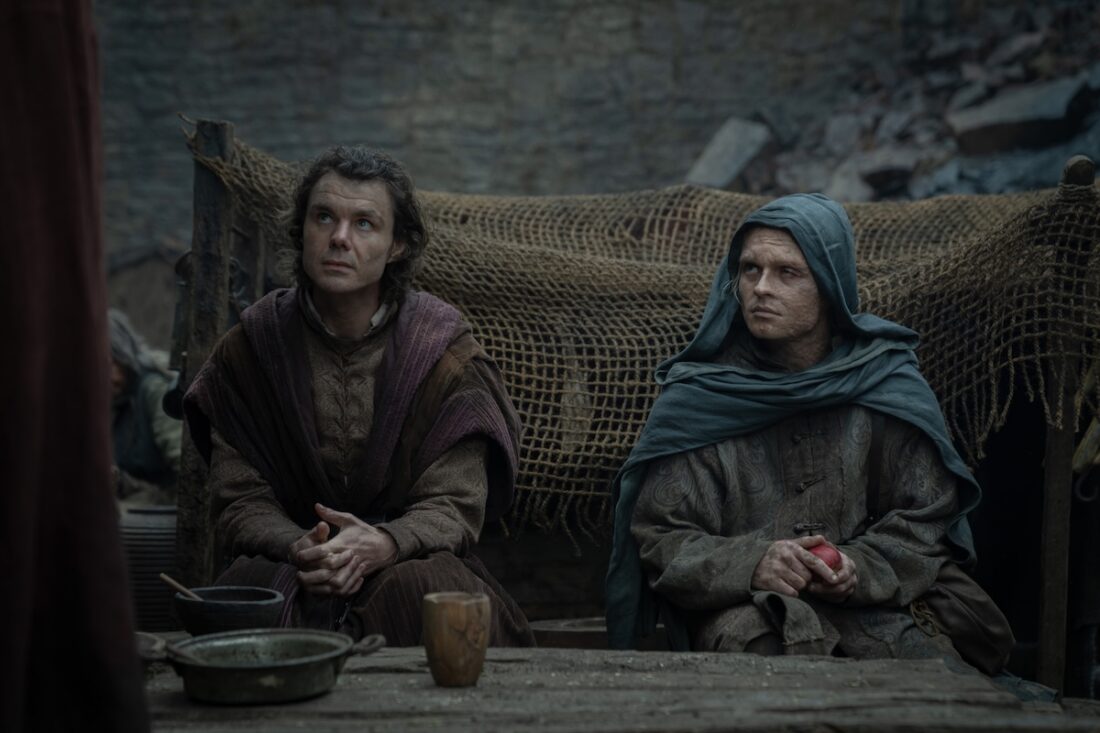
Tyland Lannister: In the novel, Tyland Lannister does not personally engage with the Triarchy. He brokers the deal that brings Sharako Lohar to the Greens’ side and is later imprisoned and tortured in the Black Cells of King’s Landing for information regarding the missing treasury when Rhaenyra arrives. Placing Tyland alongside Aegon and Larys is a significant and unexpected deviation, granting him a more central and active role. For book readers, this strategic placement creates new territory for Tyland and his companions, as Aegon’s immediate future is known, but the path to it remains unexplored.
-
Grand Maester Orwyle, Torrhen Manderly, and Sabitha Frey: The inclusion of Lady Sabitha on Rhaenyra’s small council, akin to Ser Torrhen Manderly’s elevation last season, is a show invention with no basis in the source material. Similarly, book-Orwyle is currently imprisoned in the Red Keep’s dungeons. The decision to keep Kurt Egyiawan’s Orwyle prominent is likely due to his talent as an actor, and using him in place of Gerardys (who remains on Dragonstone in the show) is not a major plot alteration. However, the introduction of Manderly and Frey, both pivotal figures towards the series’ conclusion, suggests a deliberate effort to ensure that by the end of the show, when familiar faces are fewer, the narrative does not solely rely on newly introduced characters. In Fire & Blood, Torrhen Manderly is en route to serve Rhaenyra, while Sabitha Frey is rumored to be Alys Rivers’ lover at Harrenhal.
Numerous other minor alterations exist, either previously discussed or related to characterization rather than plot.
Conclusion: A Season of Calculated Risks
Despite a slightly slower pace and a less thematically unified structure compared to previous episodes this season, "Unbowed and Unbent" stands as another strong entry in what has demonstrably been the most compelling season of House of the Dragon to date, potentially rivaling the finest seasons of any A Song of Ice and Fire adaptation. Ryan Condal and his writing team exhibit a profound grasp of the established world and have developed nuanced interpretations of characters who were more broadly sketched in the original text. The series’ willingness to embrace these narrative "butterflies" and departures from the book invites reflection: are these changes enriching the story, or do they detract from its core? For viewers unfamiliar with Fire & Blood, does this season offer an exciting and novel experience, or has the recent pacing caused a decline in engagement? The ongoing dialogue surrounding these adaptations will undoubtedly shape the perception of this pivotal chapter in Westerosi history.