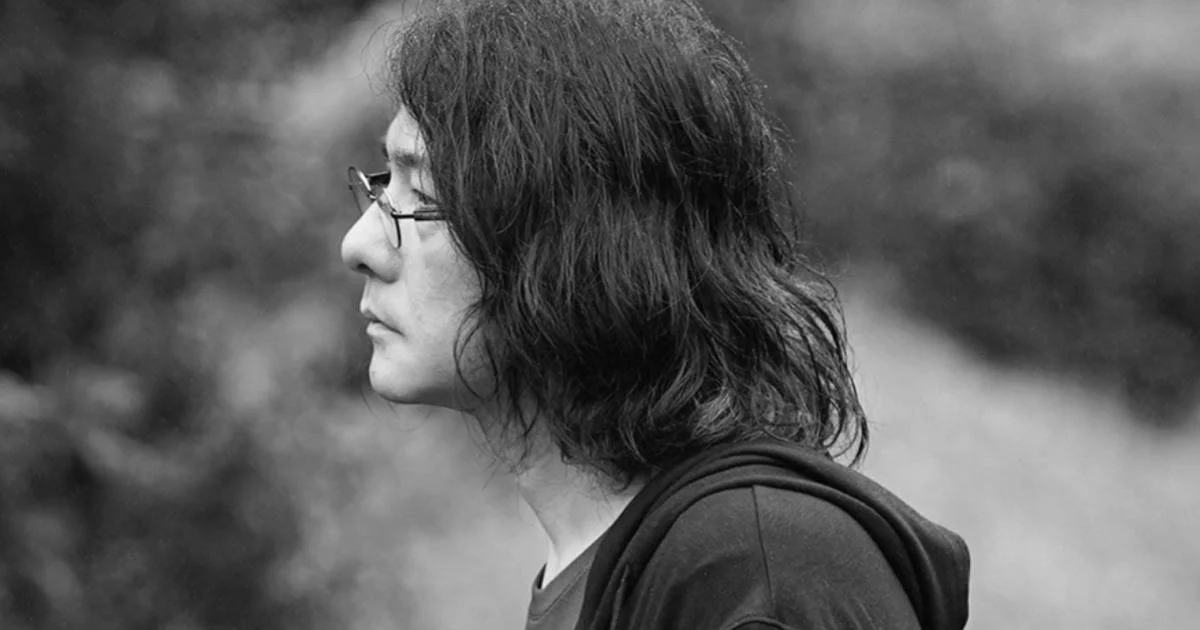
Shunji Iwai stands as one of the most influential and distinctive voices in contemporary Japanese cinema, renowned for his deeply emotional narratives and visually arresting style. With seminal works such as "All About Lily Chou-Chou," "Swallowtail Butterfly," and particularly the iconic "Love Letter," Iwai has cultivated a unique cinematic language that masterfully intertwines themes of memory, music, longing, and the intricate inner lives of his characters. "Love Letter," released in 1995, has solidified its position as one of the defining Japanese films of the 1990s, continuing to resonate with audiences and inspire filmmakers across the globe three decades after its original debut.
The enduring appeal of "Love Letter" was recently highlighted by its meticulous 4K restoration and subsequent revival screenings, notably at New York’s prestigious Metrograph cinema. Described by the venue as "one of the most beloved directorial debuts of the 1990s," these screenings provided a fresh opportunity to engage with the film’s timeless themes and impeccable craftsmanship. In conjunction with this significant milestone, Shunji Iwai shared profound insights into the film’s legacy, touching upon the elusive nature of memory, the quiet solitude of human existence, the transformative impact of social media, and the miraculous endurance of a film that continues to captivate new generations.
The Enduring Legacy of a Miraculous Film
For many filmmakers, the longevity of their work is an elusive dream. Shunji Iwai openly admits his astonishment at "Love Letter"’s sustained relevance. "When I made it, I never imagined that people would still be watching it 30 years later," Iwai reflected, acknowledging the transient nature of most cinematic releases. "To be honest, I don’t think I was thinking about 30 years into the future at all back then. Most films have a very short shelf life. New films continue to emerge, and older ones gradually disappear." The fact that "Love Letter" consistently finds new, young audiences today is, to Iwai, "almost miraculous," a sentiment for which he expresses profound gratitude. This humble perspective underscores the film’s organic journey into the cultural lexicon, transcending fleeting trends to become a cherished classic.
Released at a time when Japanese cinema was experiencing a renaissance with diverse voices, "Love Letter" distinguished itself with its poignant narrative and lyrical aesthetic. It garnered significant critical acclaim both domestically and internationally, winning numerous awards, including the Best Director award at the 1995 Fantasporto Film Festival and the Audience Award at the 1996 Berlin International Film Festival’s Panorama section. Its commercial success in Japan was considerable, and it quickly became a beloved hit across Asia, particularly in South Korea and China, where it profoundly influenced a generation of filmmakers and solidified Iwai’s reputation as a master of emotional storytelling. The film’s influence extended beyond critical circles, embedding itself in popular culture through its memorable imagery, iconic dialogue, and melancholic soundtrack.
Shunji Iwai: A Visionary’s Trajectory
Shunji Iwai’s journey into filmmaking was marked by a distinctive style that emerged from his early work in television dramas, music videos, and short films. Before "Love Letter," Iwai had already showcased his visual flair and narrative sensitivity in works like "Undo" (1994) and "Fried Dragon Fish" (1993). However, it was "Love Letter" that truly crystallized his thematic preoccupations and established his signature aesthetic. His films are often characterized by dreamlike visuals, non-linear narratives, and an exquisite attention to detail, creating immersive worlds that blur the lines between reality and memory.
Following "Love Letter," Iwai continued to push cinematic boundaries with "Swallowtail Butterfly" (1996), a sprawling crime epic set in a dystopian Tokyo, and "All About Lily Chou-Chou" (2001), a raw and unflinching look at adolescence and online communities, which itself became a cult classic. These films, while diverse in genre, consistently explored themes of youth, identity, communication, and the human condition, cementing Iwai’s status as a visionary auteur. His consistent exploration of these universal themes, coupled with his unique visual artistry, has allowed his work to resonate deeply across different cultures and generations.
The Art of Memory and Forgetfulness
At the core of Iwai’s filmography, and particularly "Love Letter," lies a profound fascination with memory. The film intricately navigates the labyrinthine corridors of the past, exploring how individuals reconstruct and perceive events rather than simply recalling them with perfect accuracy. For Iwai, memory is not merely a plot device but one of the central pillars of his artistic and personal philosophy. "I would say that memory is one of the biggest themes in both my work and my life," he asserted.
Iwai recounted a childhood anecdote that profoundly shaped his perspective: "I have a memory from when I was a child. I didn’t like milk growing up, and my mother once said to me, ‘But you were breastfeeding just recently.’ I think I was around three years old at the time, and I remember being frightened by the realization that I couldn’t remember something that had happened only a year earlier. It made me think about how quickly human beings forget things." This early encounter with the fragility of memory instilled in him a "phobia" of forgetting the people and places from his transient childhood, having moved frequently and attended various schools. This deep-seated fear catalyzed his lifelong inquiry: "What exactly is memory?"
This existential question found its most natural expression in cinema. Iwai recognized film as a powerful medium for preservation: "Cinema is a medium that records and preserves memory." For him, filmmaking became an act of archiving, a way to defy the relentless march of time and the inevitable erosion of recollection. He posits that "life, death, and memory are probably the three biggest themes in both my films and my life," highlighting the existential weight he imbues in his narratives. "Love Letter," with its dual protagonists sharing a name and a past shrouded in recollection and misdirection, serves as a masterful cinematic exploration of how memories are shaped, shared, and sometimes, hauntingly, mistaken.
Letters in a Digital Age: A Prescient Narrative
Beyond memory, the physical act of letter writing forms the structural and emotional backbone of "Love Letter." The letters exchanged in the film serve as ethereal conversations with memory itself, bridges connecting disparate lives through shared recollections. Iwai was drawn to the intimate, almost fantastical nature of strangers communicating through handwritten correspondence. "In my generation, letter writing was still a very normal form of communication," he explained. "I exchanged letters with friends all the time when I was younger. But what fascinated me was the idea of complete strangers communicating through letters. At the time, that felt almost fantastical to me."
The film’s premise—two individuals, unknowingly connected by a deceased man, gradually forming a bond through written words—was, in the mid-1990s, a rare and deeply personal form of interaction. Yet, Iwai observes with a touch of irony how swiftly the world evolved. "What’s interesting is that it didn’t even take 30 years for the world to change completely. About ten years after ‘Love Letter,’ social media and the internet made it entirely normal for strangers to communicate with each other every day." He mused that the mid-1990s might have been "the last moment when you could naturally make a contemporary film centered around letter writing." The film’s enduring appeal to younger audiences, despite its "anachronistic" central communication method, is a source of both joy and a sense of pleasant strangeness for the director.
The Resurgence of Analog: A Cultural Phenomenon
Iwai finds it particularly fascinating that younger generations are now rediscovering and embracing analog forms of communication and media, such as letter writing and vinyl records. This cultural phenomenon suggests a yearning for tangible connection and slower, more deliberate forms of engagement in an increasingly digitized world. While the world has transitioned to instant digital communication, the human desire for connection, albeit transformed, remains constant.
The director delved into the sociological implications of this shift, particularly concerning social media. He contrasted the deeply private nature of diaries from his youth with the public self-expression prevalent today. "When I was younger, many people kept diaries, but those were deeply private things that you would never show to anyone else. Today, people write about their daily lives publicly for audiences they don’t even know. I honestly think that’s something humanity has never experienced before."
Iwai’s fascination lies not merely in the technology itself but in what it reveals about human nature. He pointed out the stark contrast between real-world social etiquette and online behavior: "In everyday life, people rarely talk to strangers on trains or in elevators. And if you overhear somebody’s conversation, you don’t suddenly interrupt and tell them they’re using a word incorrectly. But online, people do that constantly. They insert themselves into conversations they were never invited into." This behavior, while "frightening" in its potential for aggression, is also "deeply human." He concluded with a profound observation: "I sometimes think that if you gave social media to someone from a thousand years ago, they would probably use it in exactly the same way we do today. There’s something very strange – and very revealing – about human nature in that." This analysis underscores "Love Letter"’s accidental prescience in exploring the human drive for connection and self-expression, regardless of the medium.
Music as an Emotional Language
Music plays an enormous, almost character-like role in Iwai’s films, enriching the emotional landscape and often conveying what words cannot. However, Iwai eschews a didactic approach to scoring. "I don’t think of music as something explanatory or didactic," he clarified. For him, music functions as a "harmonizing element" within the film, akin to natural elements like snow, a vast landscape, or the ocean. These elements are not merely decorative but "essential to expressing what I want the audience to feel." The harmony, melody, and atmosphere created by music are integral to the emotional fabric of his narratives, guiding the audience through subtle shifts in mood and intensifying moments of quiet introspection or profound longing. The iconic score for "Love Letter" by Remedios (Nobuyuki Takebe) is a prime example, its delicate piano melodies becoming synonymous with the film’s melancholic beauty and enduring romanticism.
The Filmmaker’s Solitude and Gratitude
For many younger filmmakers and critics, "Love Letter" is unequivocally one of the defining Japanese films of the 1990s, a benchmark for poetic realism and emotional depth. Iwai, while grateful for this recognition, approaches the concept of legacy with characteristic humility. "I’m very thankful for it, although I honestly don’t fully understand why the film has endured in the way it has," he admitted. This humility stems from his perception of filmmaking as an inherently solitary endeavor. "For me, filmmaking has always been quite a lonely process—even back when I was a university student. Of course, there are collaborators around you, but discovering the core of a film—its spirit, its emotional center—is something deeply personal. It feels almost like the work of a philosopher confronting an idea alone."
Despite the collaborative nature of film production, Iwai views the creative genesis as a solitary journey of introspection and discovery. "In my case, I happened to enjoy that loneliness. I enjoyed spending time thinking carefully about stories and images and emotions." This quiet dedication ultimately yielded a film whose resonance far exceeded his initial expectations. The fact that "Love Letter" remains beloved after 30 years is, to him, a genuine "miracle." Beyond critical acclaim and audience adoration, the film also provided a crucial foundation for his career. "The film also allowed me to continue making films throughout my life. Many people don’t get that opportunity." This profound gratitude underscores his reflections: "That’s why I feel grateful that I struggled through the process of making ‘Love Letter.’ It ultimately gave me the career—and the life—that I have today."
The 4K Restoration and Its Significance
The recent 4K restoration of "Love Letter" is not merely a technical upgrade; it is a vital act of cinematic preservation. Film restoration involves a meticulous process of scanning original negatives at ultra-high resolutions, digitally cleaning imperfections, correcting color, and enhancing sound, all while respecting the director’s original artistic intent. This process breathes new life into classic films, ensuring their survival for future generations and allowing contemporary audiences to experience them with unparalleled clarity and fidelity.
For a film like "Love Letter," celebrated for its visual poetry and delicate aesthetic, a 4K restoration is particularly significant. It allows viewers to appreciate Iwai’s precise framing, the subtle nuances of performance, and the breathtaking winter landscapes of Otaru with renewed depth and detail. Revival cinemas like Metrograph play a crucial role in showcasing these restored masterpieces, providing a communal viewing experience that honors the film’s artistic integrity and historical importance. These screenings serve as cultural touchstones, connecting past cinematic achievements with present-day audiences and fostering a deeper appreciation for film as an art form.
Broader Implications for Japanese Cinema
"Love Letter" emerged during a period of significant evolution for Japanese cinema. The 1990s saw a departure from the studio-dominated productions of previous decades, giving rise to a new wave of independent filmmakers and diverse genres. Iwai, alongside contemporaries like Hirokazu Kore-eda and Takeshi Kitano, helped redefine the international perception of Japanese cinema, moving beyond traditional samurai films and yakuza thrillers to explore more introspective, character-driven narratives.
The film’s global success, particularly in other Asian markets, paved the way for greater international distribution and appreciation of Japanese arthouse cinema. Its unique blend of melancholic romance, poignant drama, and stunning visuals proved universally appealing, transcending cultural barriers. "Love Letter" continues to be studied in film schools and referenced by critics as a quintessential example of 1990s Japanese filmmaking, a testament to its lasting influence on both its national cinema and the broader global film landscape.
As "Love Letter" enters its fourth decade, its themes of memory, connection, and the human search for meaning remain as potent and relevant as ever. Shunji Iwai’s humble reflections underscore not just the miraculous journey of one film, but the profound power of cinema itself—to capture fleeting moments, to preserve emotions, and to forge connections across time and space, continuing to resonate with the deepest currents of human experience.