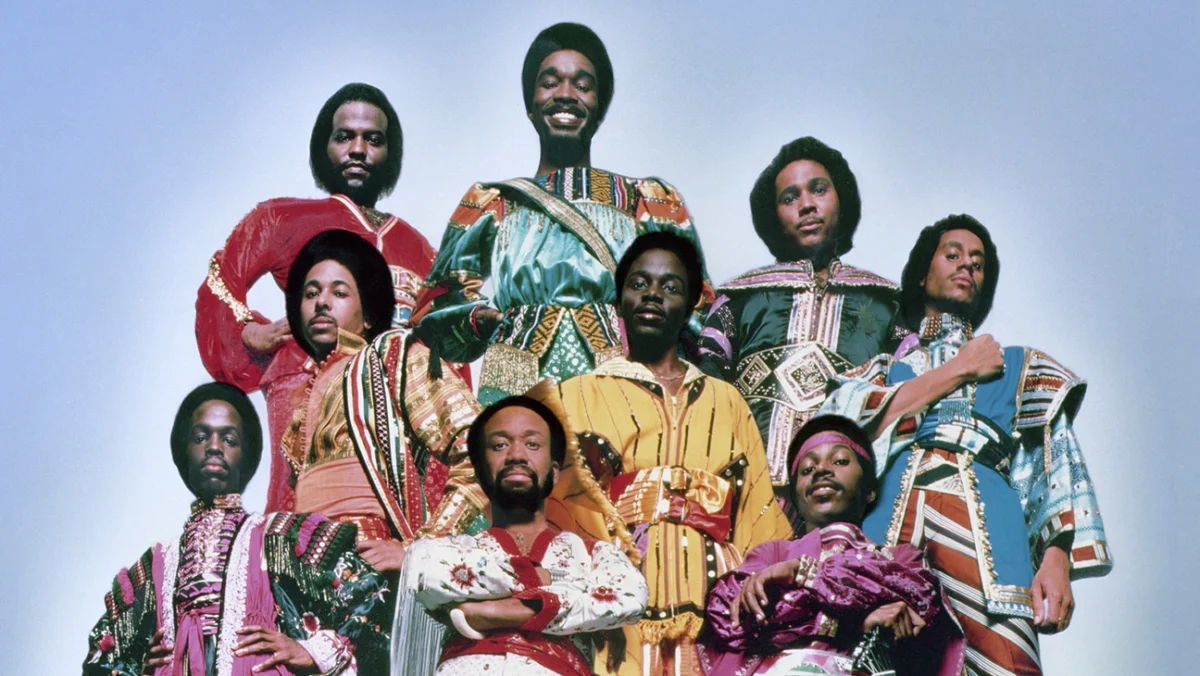
The highly anticipated documentary, helmed by Oscar-winning filmmaker Ahmir "Questlove" Thompson, made its world premiere as the opening night film of the Tribeca Film Festival, drawing immediate acclaim for its comprehensive and vibrant portrayal of the iconic band Earth, Wind & Fire. Set to air on HBO in the coming days, the film underscores Questlove’s remarkable ability to blend deep musical knowledge with an infectious enthusiasm, offering an unparalleled look into the six-time Grammy-winning group’s more than half-century-long career.
Questlove, already celebrated for his cinematic achievements with the Academy Award-winning Summer of Soul (…Or, When the Revolution Could Not Be Televised) and the critically lauded Sly Lives! (aka The Burden of Black Genius), continues to solidify his reputation as a premier music documentarian. His latest effort, Earth, Wind & Fire (To Be Celestial vs. That’s the Weight of the World), is praised for its meticulous research, rich archival footage, and an extraordinary roster of interviewees, reflecting Questlove’s extensive network within the music industry and beyond. The film features commentary from a diverse array of figures, including music titans Stevie Wonder, Lionel Richie, and H.E.R., as well as Red Hot Chili Peppers bassist Flea, all attesting to Earth, Wind & Fire’s profound and lasting influence on popular music and culture. In a notable and unique addition, former President Barack Obama and First Lady Michelle Obama also contribute, offering lighthearted reflections on the band’s timeless love songs and their role in the intricacies of slow dancing, highlighting the group’s universal appeal. The film’s critical reception has been overwhelmingly positive, with early reviews, such as one from The Hollywood Reporter, proclaiming it "a shining star of a music documentary," signaling another triumph for the musician and filmmaker.
Questlove’s Vision: A Maestro Behind the Lens
What consistently distinguishes Questlove’s documentary work is not merely his encyclopedic knowledge of his subjects but his palpable passion. He approaches these projects with the energy and excitement of a true devotee, a quality that proves remarkably infectious for audiences. This immersive approach allows him to delve into the intricate narrative of Earth, Wind & Fire with a depth that transcends conventional music documentaries. The film, running at 1 hour and 59 minutes, is a meticulously crafted tapestry of sound, visuals, and personal accounts that paints a vivid picture of the band’s journey from its formative years to its enduring status as musical legends. His directorial style eschews the typical "Behind the Music" formula, instead employing imaginative stylistic flourishes and a compelling narrative structure that keeps the audience engaged, culminating in moments of pure, unadulterated joy, such as a segment dedicated to the band’s iconic hit "September" that reviewers suggest will have viewers dancing in their living rooms.
The Genesis of a Legend: Maurice White’s Formative Years
The documentary commences by tracing the troubled childhood of Maurice White, the visionary founder and driving force behind Earth, Wind & Fire. Born in Memphis, Tennessee, in 1941, White grew up in a racially segregated South, a challenging environment that shaped much of his early life. Raised by his grandmother after his single mother relocated to Chicago in search of work, White carried feelings of abandonment that, according to those close to him, never fully dissipated. This personal history provides a crucial psychological context for understanding his relentless ambition and complex character.
White’s musical journey began early. He honed his skills as a session musician at the legendary Chess Records in Chicago, a hub for blues, jazz, and R&B, where he played drums for numerous artists. His experience at Chess provided him with an invaluable education in diverse musical styles and the intricacies of studio production. He then gained significant recognition as the drummer for the hit-making Ramsey Lewis Trio, a prominent jazz ensemble known for its crossover appeal. Yet, even at the height of the trio’s success, White’s entrepreneurial spirit and artistic vision compelled him to leave and form his own band. The group’s unique name, Earth, Wind & Fire, was inspired by elements of his astrological chart – with "wind" chosen for its phonetic appeal over "air" – reflecting White’s deep interest in spirituality, metaphysics, and cosmic themes that would later become hallmarks of the band’s aesthetic.
Forging the Sound: Early Struggles and Breakthrough
The initial incarnation of Earth, Wind & Fire faced commercial struggles. Maurice White, demonstrating a ruthlessly pragmatic approach to achieving his artistic goals, made the difficult decision to dismiss the original members and assemble a new lineup. This new group featured younger, highly talented musicians, crucially including the distinctive falsetto vocalist Philip Bailey. This strategic restructuring proved to be a pivotal moment, as the revamped ensemble quickly gelled, laying the groundwork for their future success.
The band’s fortunes began to dramatically improve when they were signed to Columbia Records by the legendary music executive Clive Davis. Davis, known for his keen eye for talent and his ability to cultivate groundbreaking artists, recognized the immense potential in Earth, Wind & Fire’s unique blend of funk, soul, jazz, and R&B. A significant turning point in their early career was their exposure at the 1974 "California Jam" festival, a massive rock concert that drew over 250,000 attendees and was televised nationally. Initially serving as an opening act for George Clinton’s Parliament-Funkadelic, Earth, Wind & Fire’s electrifying performance allowed them to cross over to a wider, predominantly white audience, expanding their fan base beyond traditional R&B circles. This experience further fueled White’s determination to make the group’s sound even funkier and more universally appealing.
Ascension to Stardom: Innovation and Theatricality
Under White’s visionary leadership, Earth, Wind & Fire’s sound evolved rapidly. Philip Bailey succinctly articulates White’s central role, stating, "He was the visionary, and the power belongs to the visionary." White’s ambition was boundless, leading him to integrate sophisticated orchestrations, intricate horn arrangements, and unparalleled theatricality into the band’s performances. Their first major pop hit, "Shining Star," which reportedly began as a simple jam session, catapulted them to superstardom in 1975, earning them their first Grammy Award for Best R&B Vocal Performance by a Duo, Group or Chorus. The documentary highlights the song’s profound impact, showing various interview subjects grooving to its infectious rhythm. Stevie Wonder, in a particularly insightful moment, reveals that "Shining Star" directly inspired him to compose his own classic, "I Wish," a revelation that elicits a genuine "My mind’s blown! I didn’t see that coming!" from Questlove, showcasing his authentic fanboy excitement.
White’s explorations into religion, philosophy, metaphysics, and Afrofuturism deeply influenced the band’s aesthetic. He continuously expanded their horizons, adding a dynamic horn section, elaborate costuming that evoked ancient Egyptian and futuristic themes, and hiring top-tier creative talent. Tony-winning choreographer George Faison, renowned for his work on Broadway’s The Wiz, was brought in to stage their elaborate tours, transforming concerts into immersive musical theater experiences. The band also collaborated with renowned magician Doug Henning to create mind-bending illusions, such as the levitation of bassist Verdine White during a performance, who, as mesmerizing archival footage shows, continued to play his instrument flawlessly while suspended sideways. Lionel Richie, still awestruck by the spectacle, comments, "It wasn’t a show, it was musical theater." These innovative elements solidified Earth, Wind & Fire’s reputation not just as musicians but as unparalleled entertainers. Their albums like That’s the Way of the World (1975), Gratitude (1975), and All ‘n All (1977) were multi-platinum successes, producing hits like "Reasons," "Fantasy," and "Serpentine Fire," cementing their status as one of the biggest acts of the decade.
Navigating New Eras: Disco, Pop, and Internal Strife
As the musical landscape shifted towards the end of the 1970s, Maurice White, ever the pragmatist, embraced new trends. This included the burgeoning disco movement, resulting in the massive 1979 hit "Boogie Wonderland," featuring The Emotions. While commercially successful, this foray into disco was not universally acclaimed, even within the band’s ardent fan base. Songwriter and producer Jimmy Jam, a prominent figure in R&B, reflects on the track: "It’s not that I didn’t like it, but it didn’t go into my soul like their music usually did." This sentiment highlights a growing tension between commercial appeal and the band’s foundational artistic integrity.
White’s pursuit of broader mainstream success also led him to collaborate with producers like David Foster, known for his polished pop sound. This collaboration resulted in a more overtly pop-oriented direction for the band’s music, notably on albums like I Am (1979) and Faces (1980). While these efforts yielded further hits such as "After the Love Has Gone" and "Let’s Groove" (from Raise!, 1981), the shift alienated some band members. They felt increasingly marginalized, perceiving themselves as mere session musicians rather than integral creative partners. This internal friction exposed the hierarchical nature of the band, with Philip Bailey candidly admitting, "The idea of a democracy is an illusion in our band."
The documentary bravely confronts the complexities of Maurice White’s character, praising his undeniable musical genius while not shying away from his personal flaws. The film addresses his serial adultery, which resulted in several children with women other than his longtime partner, Marilyn White. His youngest son, Eden White, humorously introduces himself as "Maurice’s youngest son… that we know about," underscoring the extent of his father’s infidelities. When confronted by Marilyn about his behavior, White reportedly excused himself by claiming, "I’m a star," revealing a darker side to his ambition and the pressures of celebrity. This nuanced portrayal ensures that the documentary presents a full, humanized picture of the visionary leader.
The 1980s and Beyond: Hiatus, Reformation, and Enduring Legacy
The 1980s ushered in darker times for Earth, Wind & Fire. Musical tastes underwent a significant transformation, with record buyers gravitating towards the emerging sounds of pop and R&B superstars like Michael Jackson and Prince. The band’s commercial momentum waned, and internal conflicts intensified. White, burdened by the financial strain of his ambitious ventures, including opening his own costly studio and production complex, began to treat his bandmates poorly. Accusations of denying royalties and underpaying members emerged, further eroding morale. The quality of the music suffered, several key members departed, and in 1984, Maurice White abruptly dissolved the band, leaving many feeling abandoned. His son, KB White, one of the film’s executive producers, offers a poignant analysis: "He did to them what was done to him as a child," drawing a direct parallel to Maurice’s own feelings of abandonment from his youth.
Following the dissolution, Maurice White’s solo album, Stand by Me, failed to achieve significant commercial success. In contrast, Philip Bailey embarked on a highly successful solo career, reaching new heights with his smash hit collaboration with Phil Collins, "Easy Lover," which topped charts worldwide in 1984. The contrasting fortunes highlighted the shifting dynamics and talent within the group. A few years later, at the urging of his record label, Maurice White reformed a smaller version of Earth, Wind & Fire, including five of the original members. However, the power dynamics within the group had irrevocably shifted. Philip Bailey notably asserted, "I said I would work with him, not for him," signaling a new era of collaborative effort rather than White’s singular command.
Despite the reformation, the music industry had moved on, and a subsequent tour flopped. The band found themselves playing in smaller and smaller venues, a stark contrast to their arena-filling heyday. Yet, their resilience and dedication to their craft saw them persevere. A significant factor in their enduring relevance has been the extensive feature of their music in films, television shows, and, crucially, hip-hop samples. This continuous exposure introduced their iconic sound to new generations, ensuring their music remained vibrant and current. This "decades-long victory lap" has allowed Earth, Wind & Fire to perform continuously, maintaining a robust touring schedule even today. Maurice White, battling Parkinson’s disease, eventually retired from touring in 1994, though he continued to be involved in the band’s creative direction. He passed away in 2016 at the age of 74, leaving behind an unparalleled musical legacy.
The Documentary’s Narrative Craft: Archival Riches and Expert Voices
Questlove’s Earth, Wind & Fire (To Be Celestial vs. That’s the Weight of the World) stands out for its exceptional narrative craft. The documentary masterfully weaves together a well-edited combination of vintage and recent interviews with a copious amount of rare archival footage, including electrifying concert clips, behind-the-scenes glimpses, and personal home videos. This rich tapestry of visual and auditory elements prevents the film from feeling like a mere historical recounting, imbuing it with a dynamic and immersive quality.
The breadth of interview subjects is a testament to the band’s far-reaching impact and Questlove’s extensive connections. Icons like Stevie Wonder offer deep musical insights, breaking down the genius behind Earth, Wind & Fire’s compositions. Lionel Richie provides vivid anecdotes about their theatrical prowess, while contemporary artists such as H.E.R. and Flea speak to the band’s enduring influence on modern music across genres. The inclusion of Barack and Michelle Obama, sharing personal reflections on slow dancing to Earth, Wind & Fire’s love songs, adds a layer of cultural significance and universal relatability, demonstrating how the band’s music transcended mere entertainment to become a part of the fabric of American life. Questlove’s ability to elicit such diverse and heartfelt commentary elevates the film beyond a standard biography, transforming it into a vibrant celebration of a cultural phenomenon.
Earth, Wind & Fire’s Undeniable Impact
Earth, Wind & Fire’s influence on music, culture, and fashion is undeniable. Their groundbreaking fusion of funk, soul, R&B, jazz, pop, and African rhythms created a sound that was uniquely theirs and profoundly influential. They were pioneers in incorporating elaborate stage shows, intricate choreography, and mystical themes into their performances, setting a new standard for live music entertainment. Their music has been sampled countless times by hip-hop artists, covered by diverse musicians, and featured in numerous films and television shows, ensuring its continued relevance across generations. With over 90 million albums sold worldwide, multiple Grammy Awards, and induction into the Rock and Roll Hall of Fame in 2000, Earth, Wind & Fire cemented their place as one of the most successful and revered bands of all time.
The documentary culminates in a joyous celebration of their timeless hit "September," a track that encapsulates the band’s infectious energy and enduring appeal. This segment, designed to be an immersive experience, underscores the film’s ultimate goal: to vividly convey the brilliance of Earth, Wind & Fire’s innovative music and to invite audiences to rediscover, or discover for the first time, the magic of their celestial sound.
In conclusion, Questlove’s Earth, Wind & Fire (To Be Celestial vs. That’s the Weight of the World) is more than just a documentary; it is a meticulously researched tribute, a vibrant historical record, and a compelling testament to the power of music. It solidifies Maurice White’s legacy as a visionary and celebrates the enduring genius of Earth, Wind & Fire, ensuring that their celestial sound continues to inspire and uplift audiences for generations to come. For fans and newcomers alike, the film promises an enriching journey into the heart of a musical phenomenon, affirming Questlove’s growing stature as a vital chronicler of music history.