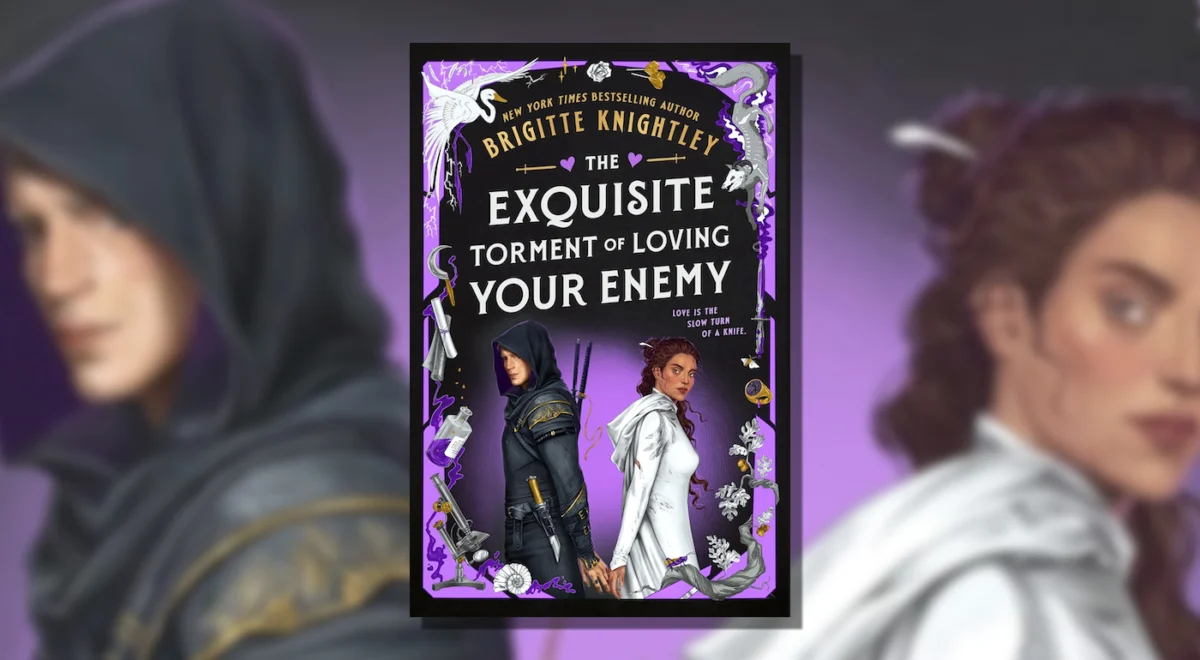
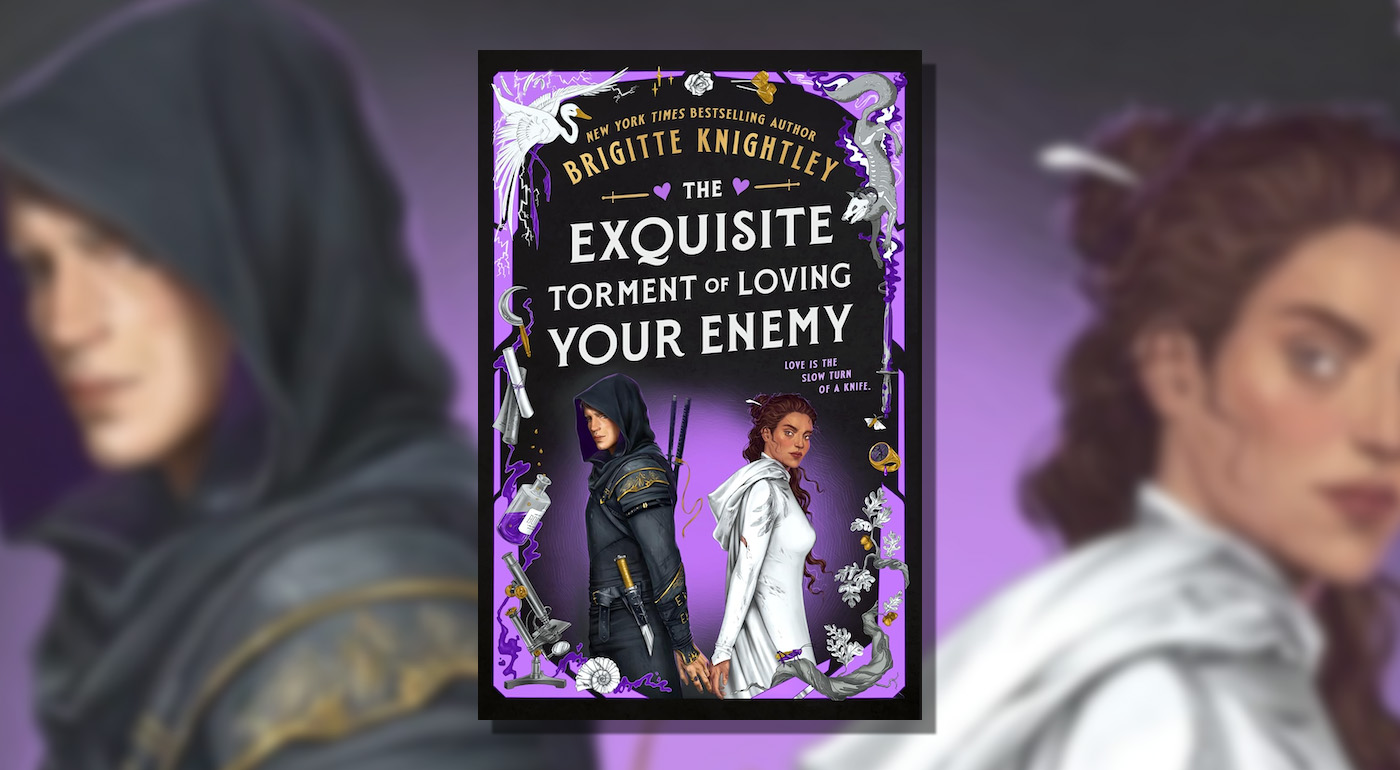
Knightley masterfully crafts a scenario where sworn enemies find themselves drawn together by circumstance and an undeniable, albeit unwanted, connection. Osric, accustomed to a life of violence and profit, unexpectedly seeks out Aurienne for healing. This initial transaction, driven by necessity, gradually erodes the rigid boundaries between their worlds. The excerpt reveals Osric’s growing internal conflict as he develops feelings for Aurienne, her skilled touch not only mending his physical wounds but also beginning to heal aspects of his hardened heart. Simultaneously, Aurienne’s carefully constructed life is thrown into disarray by the enigmatic assassin. Her professional obligations and personal convictions are challenged by an attraction that defies logic and threatens to consume her.
The narrative escalates as Osric and Aurienne uncover a far more sinister threat: a deadly plague, the Pox, deliberately unleashed upon the Täendoms. This revelation points to the involvement of another, more malevolent Order, suggesting a conspiracy that extends beyond their individual conflicts and poses a danger to their entire world. As the lines between their loyalties and affections continue to blur, the very balance between peace and war, love and hate, hangs precariously in the balance.
A World Divided: The Fyren Order and the Haelan Order
To fully appreciate the stakes within The Exquisite Torment of Loving Your Enemy, understanding the foundational principles of the two central factions is crucial. The Fyren Order, as depicted in the excerpt, operates on a starkly utilitarian philosophy: murder for hire. Their existence is predicated on the swift and efficient elimination of targets, a profession that necessitates a detachment from morality and a keen understanding of lethality. This guild likely operates in the shadows, their activities shrouded in secrecy, and their members are trained from a young age to suppress empathy and prioritize mission success above all else. The very name "Fyren" might allude to fire, suggesting a destructive or consuming force, aligning with their lethal profession.
In direct opposition stands the Haelan Order, whose guiding principle, "Harm to none," forms the bedrock of their existence. As scholar-healers, their purpose is preservation, restoration, and the alleviation of suffering. This Order likely dedicates itself to the study of medicine, ancient lore, and the intricate workings of the body and spirit. Their members are expected to embody compassion, wisdom, and a profound respect for life. The contrast between these two Orders—one built on taking life, the other on preserving it—creates an inherent, almost insurmountable chasm between individuals like Osric and Aurienne. This fundamental opposition amplifies the "exquisite torment" of their burgeoning feelings, as their very existence and purpose are in direct conflict.
The Prelude to Conflict: Aurienne’s Arrival and Mordaunt’s Shadow
The excerpt opens with Aurienne’s disorienting arrival at Rosefell Hall, a stark illustration of the physical and mental toll of her responsibilities. The description of waystone travel—"successive dips into the graticule made her nauseated," "the stars spun too quickly overhead," "the gravel drive ribboned queasily away"—effectively conveys her vulnerability and the taxing nature of her journeys. This immediate sense of unease is amplified by the sudden appearance of Mordaunt, a figure cloaked in darkness, who greets her with an unsettling familiarity.
Mordaunt, despite his outwardly mocking demeanor, appears to be a complex character, perhaps a confidant or associate of Osric, or even a rival within the Fyren Order. His description—"deepest hood and blackest cowl," "pale eyes were visible among the shadows," "scar-crossed grin"—evokes an image of a roguish, potentially dangerous individual. Aurienne’s unexpected "tingle of gladness" at his appearance suggests a prior connection, a shared history that transcends their current antagonistic relationship. Their subsequent exchange is a masterclass in verbal sparring, a dance of wit and veiled barbs. Mordaunt’s "debonair, arrogant, mocking" persona, coupled with Aurienne’s sharp retorts—"Spare me your theatrical ardours," "I wouldn’t if I thought you were sincere"—highlights a dynamic built on mutual provocation and an undeniable underlying tension.
The revelation that Mordaunt has been unwell, suffering from a "stomach bug," adds a layer of vulnerability to his otherwise formidable presence. Aurienne’s concern, despite their antagonistic banter, underscores her Haelan nature. Mordaunt’s dismissive response, "Don’t start quizzing me about diarrhoea. It’s not manners," further emphasizes his attempts to maintain a facade of nonchalance. This exchange, though seemingly trivial, reveals the fragile boundaries between their roles and the lingering concern that Aurienne, the healer, holds for Mordaunt, the assassin.
Unraveling the Pox: A Deeper Conspiracy
The core of the plot’s urgency is revealed with the mention of the Pox, a deadly plague that has been "deliberately unleashed through the Täendoms." This detail shifts the narrative from a personal conflict to a wider existential threat. The deliberate nature of the plague suggests a calculated act of warfare or terror, orchestrated by an entity far more insidious than the individual factions currently engaged in their own internecine struggles. The phrase "an Order far nastier than either of them can handle" implies a shadowy organization with immense power and a malevolent agenda, one that could potentially dwarf the influence of both the Fyren and Haelan Orders.
The investigation into the Pox likely forms a significant portion of the novel’s plot, forcing Osric and Aurienne to collaborate despite their inherent differences. Their shared goal of understanding and combating this new threat could serve as the catalyst for their relationship’s development, pushing them into increasingly dangerous situations where their reliance on each other becomes paramount. The mention of "Glastonbury Tor" and the "Färwundor" suggests that the investigation may lead them to ancient, mystical locations, hinting at a deeper connection between the Pox and old magic or forgotten lore.
Rosefell Hall: A Sanctuary of Chaos and Canine Companionship
The setting of Rosefell Hall provides a vivid backdrop for the unfolding events. Described as "crumbling, rambling," the estate itself seems to mirror the state of its inhabitants—perhaps reflecting a bygone era of grandeur now succumbing to decay. Mordaunt’s opulent silver suit, juxtaposed with the dilapidated surroundings, speaks to a man who, despite his profession, maintains a certain flair and perhaps a hidden longing for refinement.
The chaotic welcome from Mordaunt’s pack of dogs—Rigor Mortis, Arson, Perjury, Forgery, Outraging Public Decency, High Treason, and Crème Brûlée—adds a touch of dark humor and unexpected warmth to the scene. The dogs’ names, each a darkly humorous reference to criminal offenses or morally dubious concepts, further emphasize Mordaunt’s character and the unusual nature of his household. Despite their imposing names, the dogs’ enthusiastic greetings—"limped to her and collapsed around her feet," "tails flumped at the floor in greeting"—reveal a softer side to the occupants of Rosefell Hall, offering a brief respite from the pervasive atmosphere of danger. The presence of Mrs. Parson, the "sturdy, sensible steward," and her groundskeeper husband, Mr. Parson, provides a grounding element, hinting at a semblance of order within the apparent chaos.
The sitting room, described as a battleground between an art gallery and an antique shop, further illustrates the eccentric and perhaps overwhelming nature of Mordaunt’s domain. Aurienne’s practical act of clearing the table and replacing bric-a-brac with "Grette’s pies from the Publish or Perish" highlights her grounded nature and her ability to bring a touch of normalcy to even the most outlandish situations. Her pragmatic response to Mordaunt’s question about buying dinner—"Economic," because "they were on offer, two for one"—underscores her no-nonsense approach, which contrasts humorously with Mordaunt’s more romanticized, or perhaps sarcastic, interpretation.
The Quest for the Färwundor: Ancient Lore and Uncertain Paths
The core of the excerpt’s latter half revolves around the investigation into the Färwundor and its connection to the Pox. Aurienne’s map of Glastonbury Tor and her discussion of the Druidic stronghold serve as the focal point for their collaborative efforts. The mention of "Druid contacts at Swanstone" and the "Begbäam moon" suggests a deep dive into ancient traditions and lunar cycles, often associated with healing rituals and potent magical occurrences in fantasy literature.
The translated notes from Professor Widdershins, though described as "ill-sourced, poor-quality, unverified anecdotes," are the foundation of their current understanding. This reliance on dubious information underscores the desperate nature of their research. The fact that Aurienne’s "anecdotal data" and these fragmented translations have somehow led to the arrest of Mordaunt’s "seith degeneration" is presented as a monumental, almost miraculous, achievement. This unexplained success, despite the questionable methods, introduces a significant element of mystery and intrigue. It raises questions about the true nature of seith degeneration, the efficacy of Aurienne’s healing abilities, and the potential power held within these ancient legends.
The conversation about the Färwundor’s entrance, a "labyrinth" or "spiral," and the potential for "subterranean" passages leading to "Annwn, the Celtic Otherworld," paints a picture of a dangerous and mystical quest. The description of Annwn as "a paradise of eternal youth, where disease is absent" directly links it to the Pox and suggests a potential cure or a source of understanding for the plague. The urgency of their mission is further emphasized by Aurienne’s proposed meeting time: "three in the morning" to allow ample time to enter the Färwundor by dawn, the optimal time for healing according to her data.
The Perilous Dusken Path: Mordaunt’s Radical Solution
The climax of the excerpt arrives with Mordaunt’s audacious proposal to "shadow-walk" them both into the Färwundor. This concept, alien and terrifying to Aurienne, a Haelan who adheres to the "Bright Path," represents a radical departure from her known capabilities and beliefs. The "Dusken Path" and "shadow-walking" suggest a dangerous, perhaps forbidden, form of magical travel, one that Mordaunt, as a Fyren assassin, seems to have mastered.
Aurienne’s visceral reaction—"I follow the Bright Path. I don’t even know what will happen to me if I try to walk a Dusken one"—highlights the profound difference in their methodologies and moral frameworks. Mordaunt’s cavalier attitude, his history of "shadow-walking others along with you," and his chillingly honest admission that they "hadn’t an opportunity to share how it felt afterwards" because "I murdered them" injects a significant dose of dark humor and escalating tension. This revelation, while horrifying, also serves to further solidify the precariousness of their alliance and the extreme measures Mordaunt is willing to take.
The practice runs in the derelict ambulatory, with Mordaunt’s playful yet unsettling question, "Do you want to be my sack of potatoes or my bride?" encapsulates the romantic and potentially dangerous undertones of their interactions. Aurienne’s choice of "Potatoes" and Mordaunt’s retort, "Unromantic choice, but you are starchy," perfectly capture their dynamic—a blend of insult and flirtation. Mordaunt’s subsequent action of slinging Aurienne over his shoulder, "exactly as though he were handling a sack of potatoes," is a physically awkward and emotionally charged moment. Aurienne’s immediate regret and desire to be held "bridal-style" reveal her subconscious longing for intimacy, even amidst her discomfort and fear.
The description of the shadow-walk itself is a harrowing sensory experience: "her molecules had spun out and joined the iniquitous dark—that she would lose all sense of sight; that her breathing would be oppressed by the thickness of his seith over her; that, after each discombobulating step, she would be left with a brain like a centrifuge; that she would want to spew out the entire contents of her GI tract, as well as the organs themselves." This vivid portrayal emphasizes the extreme danger and physical toll of Mordaunt’s ability. Aurienne’s subsequent collapse, her desperate wish to die, and her statement, "I’m a d-disgrace to my Order," underscore the profound violation of her Haelan principles.
Despite the physical and emotional trauma, Mordaunt’s persistent encouragement, "You’re doing better," and his insistence on trying again, suggest a deeper purpose beyond mere recklessness. His actions, though extreme, are driven by the urgent need to uncover the secrets of the Färwundor and combat the Pox. The excerpt concludes with Aurienne’s despair and Mordaunt’s unwavering resolve, leaving the reader on the precipice of a perilous journey into the heart of an ancient mystery. The "exquisite torment" of their forbidden connection is amplified by the life-or-death stakes, making The Exquisite Torment of Loving Your Enemy a highly anticipated read for fans of the romantasy genre.
Excerpted from The Exquisite Torment of Loving Your Enemy by Brigitte Knightley Copyright © 2026 by Brigitte Knightley. Excerpted by permission of Ace. All rights reserved. No part of this excerpt may be reproduced or reprinted without permission in writing from the publisher.