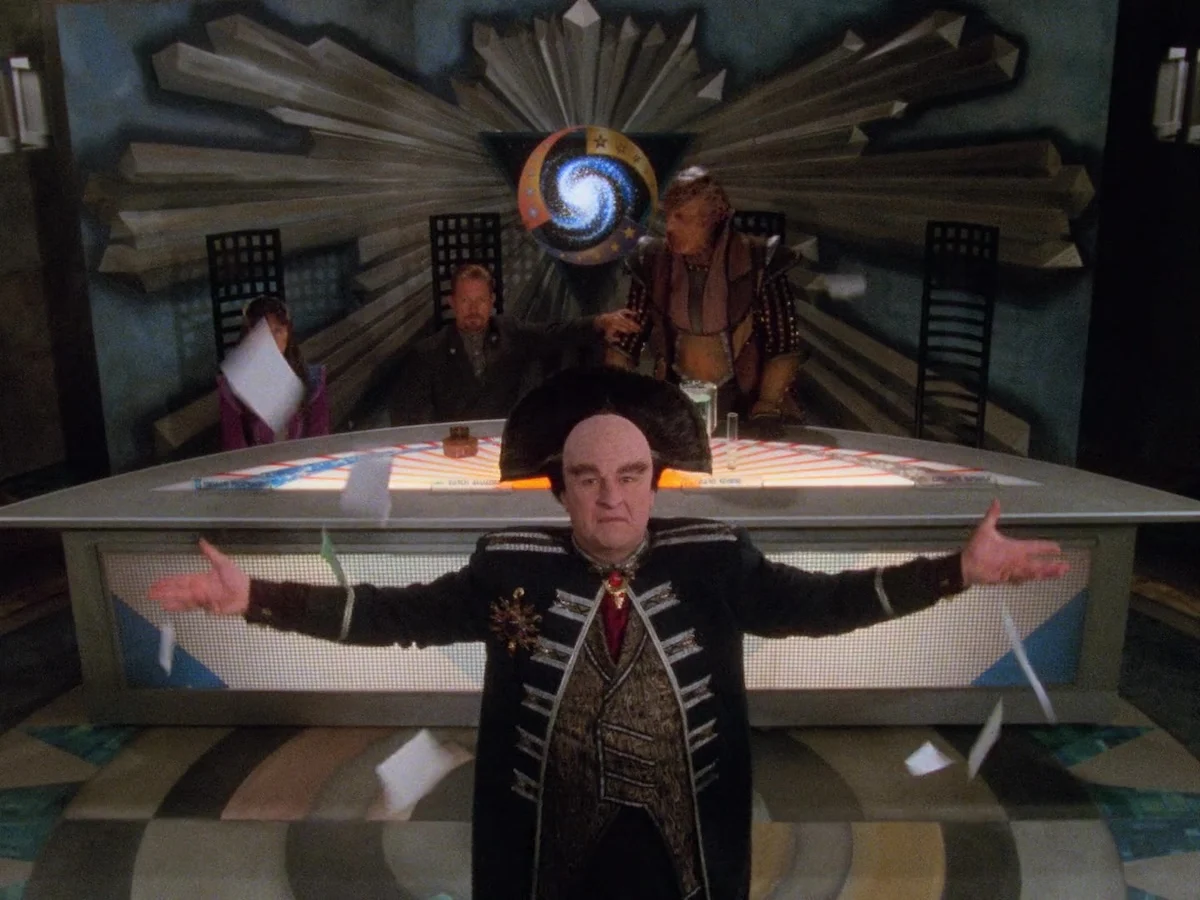
The Interstellar Alliance (IA) stands on the precipice of a devastating war following accusations of terrorism leveled against the Centauri Republic. The events of the episode "And All My Dreams, Torn Asunder," written by J. Michael Straczynski and directed by Goran Gajic, have irrevocably altered the political landscape of the galaxy, shattering fragile peace and igniting a conflict with potentially far-reaching consequences. The episode, the sixteenth of Babylon 5’s fifth season and originally aired on June 10, 1998, meticulously details the unraveling of diplomatic ties and the escalating tensions that culminated in a declaration of war.
The Seeds of Conflict: Accusations and Evidence
The gravity of the situation was palpable from the outset. Delenn, a key figure in the IA and a proponent of peace, found herself unable to rest, her thoughts consumed by the impending crisis. Similarly, Commander Jeffrey Sinclair exhibited a palpable reluctance to engage with the unfolding events, a subtle yet significant indication of the profound unease gripping the station’s leadership.
The IA Council convened under a cloud of suspicion. Notably, Ambassador Londo Mollari and his aide Vir Cotto were initially barred from entry by IA Security Chief Michael Garibaldi and Allan, underscoring the deep distrust that had taken root. Dr. Stephen Franklin, the chief medical officer, presented damning evidence: medical analysis confirming the use of Centauri weaponry in recent attacks. This was further corroborated by Garibaldi, who provided not only an analysis of the attack patterns but also physical evidence – a button recovered from an assailant during an incident on the Drazi homeworld. A crucial piece of the puzzle emerged with the revelation of a supposed attack on a Centauri cargo raider. However, the fact that the targeted vessel was a barely operational surplus ship with no loss of life or cargo strongly suggested a staged event, a calculated deception designed to mislead the Alliance.
Mollari’s Defense and the Unveiling Truth
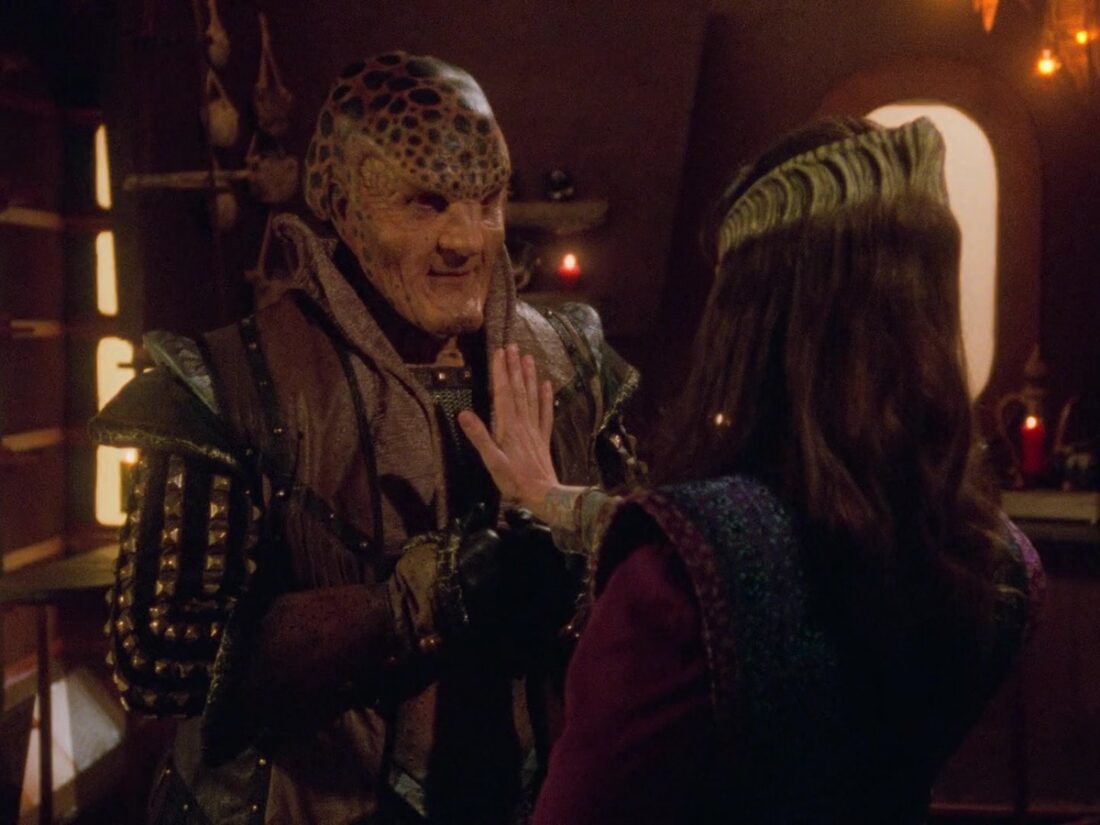
In the aftermath of the initial presentation, Franklin and Garibaldi visited Mollari’s quarters to deliver copies of their testimony. They encountered G’Kar, who clarified his role as Mollari’s bodyguard was not an act of pretense and that he would not testify to anything he observed during his service. Mollari, expressing gratitude for G’Kar’s discretion, then learned that the council was ready to hear from him and Vir.
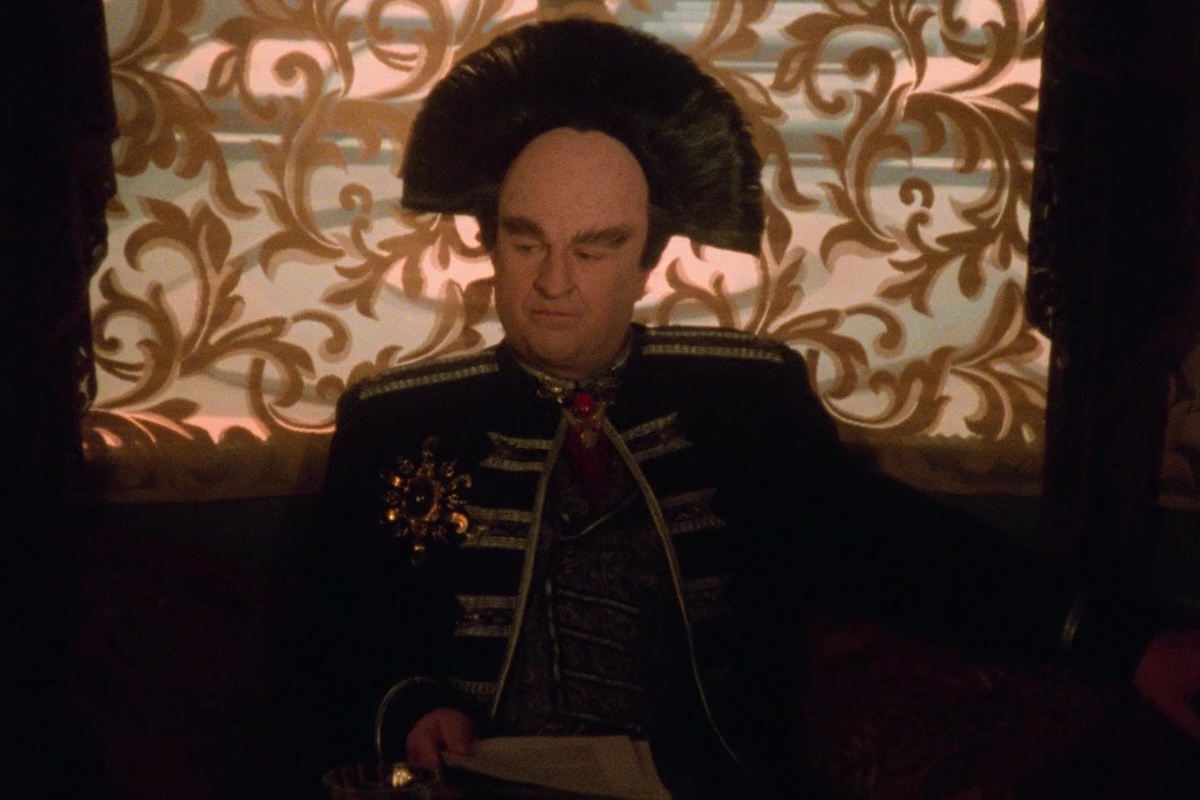
Upon re-entering the council chambers, Mollari vehemently dismissed the presented evidence as circumstantial and inconclusive. However, the IA council had withheld a critical piece of evidence, intending to present it with Mollari present. Lennier, a loyal associate of Delenn and a trusted figure within the Minbari hierarchy, then revealed recordings he had meticulously compiled. These recordings depicted Centauri military activity and, crucially, showed Centauri ships attacking innocent Brakiri cargo vessels. Faced with irrefutable visual proof, Mollari’s bluster evaporated. He quietly acknowledged the need to consult his government.
Admiral John Sheridan, the President of the Interstellar Alliance, seized the moment, issuing a stark ultimatum. He declared that the Centauri Republic had committed acts of terrorism against the IA and would be subjected to a full blockade until a formal apology and reparations were forthcoming.
Centauri Withdrawal and Escalating Hostilities
Privately, Mollari was aghast. He reiterated that the Centauri Republic had never engaged in attacks on civilian targets except during declared periods of war, and currently, no such state of war existed. Cholini, acting on behalf of the Centauri Regent, contacted Mollari, expressing the belief that the evidence was fabricated as part of a deliberate frame-up. Mollari pointed to Lennier’s unimpeachable credibility, but Cholini countered that this was precisely why the perpetrators – potentially the Narn – had gone to such lengths to stage the evidence, knowing Lennier’s testimony would be readily accepted by the IA.
Returning to the council chambers, Mollari presented the Centauri perspective, formally withdrawing the Republic from the Interstellar Alliance. He declared that the Centauri did not recognize the authority of the blockade and that any attempt to enforce it would be considered an act of war. He also announced his immediate departure from Babylon 5 for the Centauri homeworld. Sheridan warned that Mollari might never be welcome on the station again. Mollari instructed Vir to remain on Babylon 5 to serve as a communication conduit. G’Kar, without prior consultation, accompanied Mollari, resuming his role as bodyguard.
Meanwhile, on Babylon 5, Allan informed Garibaldi that Sheridan was seeking him. Allan quickly deduced that Garibaldi was heavily intoxicated. Garibaldi attempted to deflect by referencing his own past struggles, but Allan remained unmoved. Garibaldi then shifted to a more pathetic plea, requesting a few days to "get his shit together," a request Allan ultimately granted.
The Blockade and the Collapse of Order
Garibaldi eventually met with Sheridan, the plan being to utilize the White Stars to reinforce the blockade ships. Garibaldi’s responsibility was to coordinate the fleet and deploy them as Centauri vessels attempted to breach the blockade.
On Centauri Prime, Mollari and G’Kar met with Cholini. Cholini expressed displeasure at G’Kar’s presence. Mollari, in turn, was informed that the Regent was unavailable to meet with him.
The critical moment arrived when White Star 43 contacted Garibaldi on Babylon 5, reporting Centauri ships attempting to break the blockade. However, Garibaldi, having succumbed to his addiction, was passed out and unable to respond. Consequently, White Star 43 was forced to engage the Centauri alone, resulting in a brutal and costly battle with significant losses on both sides.

Vir attempted to contact Mollari, but Cholini informed him that the Prime Minister was indisposed. Dr. Franklin then escorted Vir to safety, recognizing the inherent danger he faced on the station. During their transit, they were ambushed by Brakiri vessels but managed to escape unharmed.
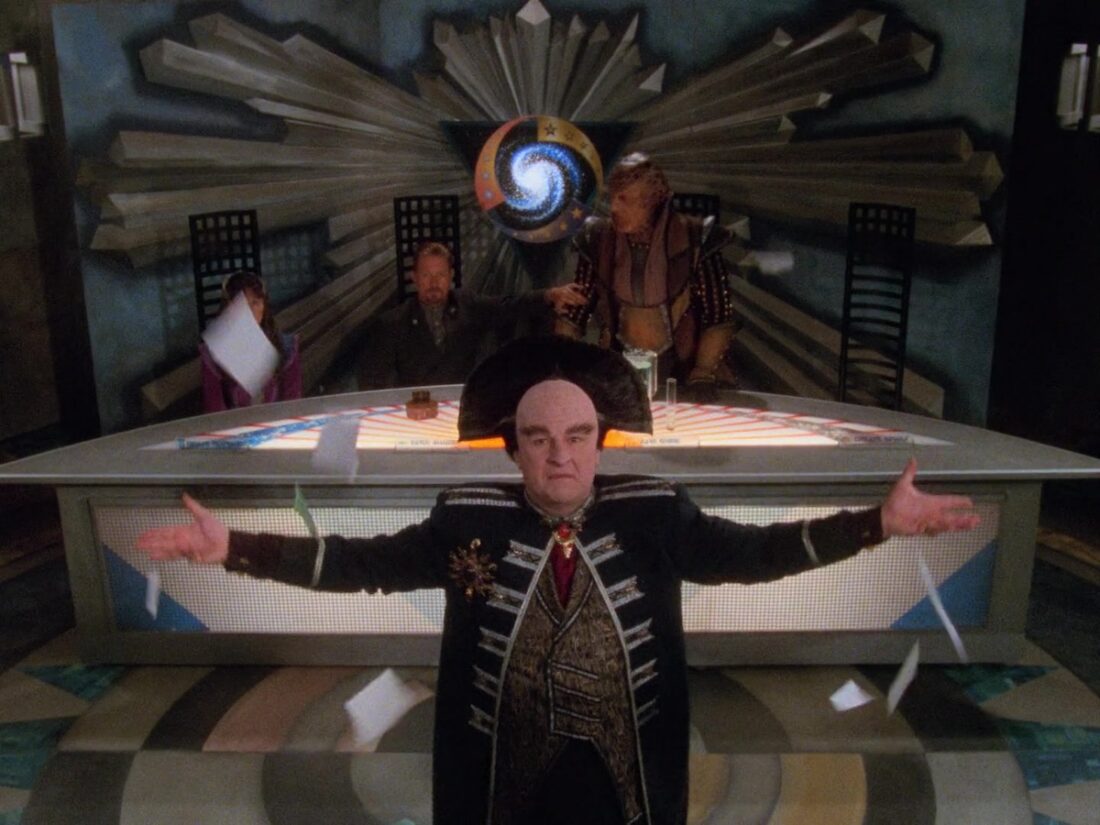
Back on Babylon 5, chaos reigned in the council chambers. A disoriented Garibaldi weakly tried to ascertain what had transpired and why White Star 43 had been deployed without backup. The assembled ambassadors were furious. Sheridan, finally losing his composure, silenced the chamber and delivered a scathing speech, lamenting the collective failure to embrace peace and cooperation, declaring that if war was what they wanted, then war they would have.
On Centauri Prime, Cholini informed Mollari that the IA had officially declared war on the Centauri Republic. Cholini insisted on G’Kar’s imprisonment due to his membership in the IA advisory council, deeming him a security risk. Mollari refused, citing G’Kar’s role as his bodyguard. Mollari confidently asserted that even Cholini would not dare imprison the Prime Minister. In a stunning turn of events, Cholini instead imprisoned Mollari in the same cell as G’Kar.
Sheridan found Delenn once again contemplating a candle flame. She spoke of life’s preciousness and the shared molecular composition of all beings, emphasizing that each life held equal value and that extinguished life was gone forever.
Analysis and Implications
The episode highlights the devastating consequences of unchecked ambition, deception, and the erosion of trust. The actions of the Centauri Republic, orchestrated by unseen forces perhaps linked to the Drakh, have plunged the galaxy into a new era of conflict. The episode’s narrative structure, with its interspersed historical vignettes of the Centauri Republic, underscores the cyclical nature of power and the tragic trajectory of a once-proud civilization.
The personal struggles of key characters, particularly Michael Garibaldi’s battle with alcoholism, are presented not merely as plot devices but as critical factors contributing to the unfolding disaster. His incapacitation during a vital moment directly led to the disastrous engagement of White Star 43, a stark illustration of how personal failings can have galaxy-altering repercussions. The episode’s ending, with Mollari and G’Kar imprisoned together, suggests a potential shift in their relationship, forged in shared adversity.
The Drakh’s influence is subtly but clearly implied through Cholini’s manipulative actions, keeping key figures isolated and controlling the flow of information to justify the IA’s evidence. This manipulative strategy successfully fostered an environment of suspicion and ultimately led to the fracturing of the Interstellar Alliance.
The episode concludes with the IA officially at war with the Centauri Republic. This marks a significant escalation in galactic affairs, moving beyond localized conflicts and into a full-scale interstellar war. The ramifications of this declaration will undoubtedly shape the remaining narrative of Babylon 5, testing the resolve of its heroes and the stability of the nascent Interstellar Alliance. The future of diplomatic relations, the fate of the Centauri people, and the very survival of the Alliance are now hanging precariously in the balance, a grim testament to "all my dreams, torn asunder."