The Premise: Reconstructing a Digital Day
In an era increasingly defined by the ephemeral nature of digital information, where the internet’s relentless scroll outpaces human comprehension and algorithmic filters obscure comprehensive understanding, Marcus Batto undertakes a seemingly impossible task. His film grapples with the inherent challenges of reconstructing a digital past, especially one as globally resonant as the day Michael Jackson died. Batto’s work is particularly timely given the "slow obsolescence of search engines," which have, over time, lost their archival fidelity to a combination of advertisements, search engine optimization (SEO), and the emerging dominance of artificial intelligence, making our digital history progressively blurrier. By meticulously curating and assembling footage from this singular day, Batto aims to capture a moment when the world’s diffuse energies converged into a discernible, collective online experience.
June 25, 2009: A Global Phenomenon
The sudden death of Michael Jackson on June 25, 2009, sent shockwaves across the globe, triggering an unprecedented outpouring of grief, disbelief, and immediate digital commemoration. Jackson, 50, collapsed at his Holmby Hills home in Los Angeles and was pronounced dead later that afternoon at UCLA Medical Center. The official cause of death was later determined to be acute propofol and benzodiazepine intoxication, administered by his personal physician, Dr. Conrad Murray, who was subsequently convicted of involuntary manslaughter.
The news broke swiftly, amplified by the then-burgeoning social media platforms and the relatively new phenomenon of widespread citizen journalism. Within minutes of initial reports, news outlets struggled to keep up with the public’s frantic search for information. Google searches for "Michael Jackson" reportedly surged to such an extent that the company’s servers initially flagged the activity as a denial-of-service attack. Twitter, Facebook, and YouTube became immediate hubs for real-time reactions, discussions, and tributes. It was a moment that underscored the internet’s burgeoning power as a global town square, capable of uniting millions in shared experience, even in grief.
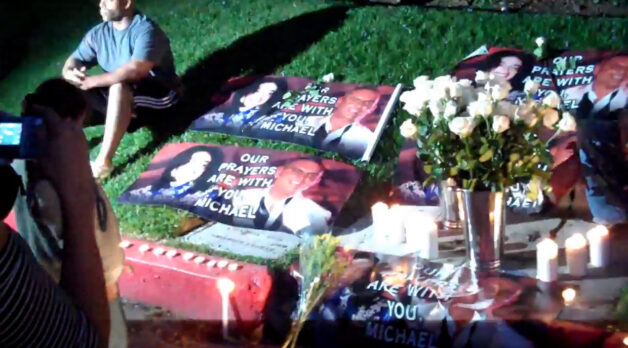
Across continents, fans gathered spontaneously, holding vigils, playing his music, and attempting to process the loss of an artist who had transcended music to become a cultural phenomenon. From impromptu dance tributes in city squares to quiet candlelit gatherings, the physical world mirrored the frantic activity online. The film’s evocative title, There’ll Likely Be Michael Jackson Vigils Throughout the Night, perfectly encapsulates this widespread, round-the-clock global response, both online and offline.
The Dawn of Digital Documentation and the "Innocence" of Early YouTube
Batto, 31, describes himself as an artist, archivist, programmer, and YouTube ethnographer. His interest in this specific period of online history is deeply personal and generational. He was twelve years old when the viral sensation "Charlie Bit My Finger" was uploaded to YouTube, placing him squarely in the demographic that witnessed and participated in the platform’s formative first decade. This era, particularly around 2009, marked a significant inflection point: the widespread adoption of front-facing cameras on devices and the corresponding rise of the YouTube vlog as a nascent genre.
This technological shift empowered ordinary individuals to become immediate documentarians of their own lives and reactions. As Batto observes, the "innocence" of this period is a central theme. "People didn’t care about how they looked on their webcam, or how they came off, in the same way they do today. They were just experimenting with this new technology," he notes. This unvarnished, often raw and unscripted content forms the backbone of Michael Jackson Vigils. Viewers witness a diverse tapestry of reactions: an emo teenager’s sarcastic tears, threats directed at blogger Perez Hilton (who initially dismissed Jackson’s death as a publicity stunt), and individuals processing the day’s other celebrity death, that of Farah Fawcett. One amateur film reviewer quaintly remarks, "One of Charlie’s Angels just became an angel herself," against a backdrop of a Halloween H20: 20 Years Later poster, highlighting the eclectic, often uncurated nature of early online content.
This period was characterized by a less self-conscious approach to digital self-presentation, a stark contrast to the highly curated and performance-driven online identities prevalent today. The internet, in 2009, was still perceived by many as a space for genuine experimentation and uninhibited expression, before the full weight of monetization, personal branding, and algorithmic scrutiny reshaped user behavior.
Marcus Batto: Artist, Archivist, Ethnographer
Batto’s journey into found-footage filmmaking began during the COVID-19 pandemic, leading to his ongoing Certain Moments To Remember series (2020–). This series, which Batto’s website describes as "bearing witness to subculture, shared experience, and social phenomena," showcases his unique ability to unearth compelling narratives from forgotten digital fragments.
A standout entry is RANDOM WEBCAM DANCE @ DA IMAC STORE (2023), a mesmerizing compilation of individuals dancing in front of Apple Store iMacs in 2011, utilizing the then-novel front-facing cameras. Set to Johnny Duncan and Jane Fricke’s 1978 rendition of "Stranger," the film juxtaposes a V-necked teen doing the robot in front of an iPad 2 advertisement with the melancholic crooning of "Stranger, could I believe in you?" This layered nostalgia evokes an "eerie sense of technological determinism," simultaneously celebrating the techno-utopian vision of Apple Stores and lamenting the "overpopulated graveyard of lost media."
Other notable works in the series include Flashmob Compilation (2023) and Maid of the Mist VII (2023), further demonstrating Batto’s fascination with collective, often ephemeral, online-IRL phenomena. The tension between compilation, "found-footage thing," and video art is a productive one, constantly explored in his oeuvre.
Batto’s short documentary Honeycomb (2024) further exemplifies his archival prowess. Composed entirely of found footage—vlogs, television broadcasts, and security camera recordings—it chronicles the 2020–22 phenomenon of catalytic converter theft in the United States. The "honeycomb" refers to the precious metal-rich core of the converter, targeted by thieves for platinum, rhodium, and palladium, which at one point commanded prices as high as $21,000 per ounce for pure rhodium. Batto draws a fascinating parallel between these "looters"—whom he playfully suggests could be seen as "archivists" or "programmers"—and his own artistic practice. Both pursuits, he argues, are driven by an "obsession with the untapped value sitting where it’s least expected," whether it’s precious metals beneath a parked car or overlooked digital artifacts buried deep within YouTube’s archives. This connection highlights a frantic drive to uncover and repurpose latent value, whether material or cultural.
The Challenges of Digital Archaeology
Creating Michael Jackson Vigils was an immense undertaking, echoing the challenges faced by fellow found-footage documentarians like Ian Bell with WTO/99 (2025). The sheer volume of available material proved daunting. "I have playlists that I’ve created that have maybe 800 videos," Batto reveals. The process of not only locating but also boiling down this vast digital ocean into a coherent narrative was a significant hurdle. He admits that even after a work-in-progress screening in June of the previous year, he "couldn’t stop finding videos," indicating the boundless nature of the digital archive he was attempting to contain.
The film’s primary "affective quality," as described in the original review, is a sense of overwhelm. Batto employs a distinctive visual device: a rotating prism, each side comprising a five-by-four grid of simultaneous videos from June 25, 2009. This allows twenty videos to play concurrently, mirroring the information overload of the early internet. The film abruptly keys in on individual clips—from the Botafumeiro swinging incense at a Spanish cathedral to ultrasound footage, to what appears to be refugees on a lifeboat—making the process of cataloging each scene "quickly become futile." This deliberate choice immerses the viewer in the chaotic, unmanageable reality of instantaneous global information flow, demonstrating Batto’s concern with the "global" and the increasing instability of the growing digital archive.
Themes and Implications: The Internet as a Collective Memory
Batto chose June 25, 2009, not out of personal devotion to Michael Jackson, but because it represented a rare moment when a significant portion of the world’s "diffuse energy was harnessed in one direction." He posits, "You always hear people saying, ‘Where were you when Michael Jackson died?’ In my lifetime, there hasn’t really been another death that was so effective, culturally." For many who appear in Batto’s film, the answer was "on the computer." Batto himself recalls being at a friend’s house, having just smoked weed for the first time, when the news broke: "Someone said that Michael Jackson died, and we all huddled around his desktop computer." This collective huddling around digital screens became the defining ritual of global mourning in the early 21st century.
The film serves as a double memorial: "for the King of Pop and for a moment in time where the internet’s cacophony could still sound something like a single chorus." This sentiment highlights a critical evolution in online interaction. In 2009, despite the burgeoning chaos, there was still a sense that major global events could create a unified, albeit diverse, online response. Batto’s film captures this fleeting period, contrasting it with today’s hyper-fragmented digital landscape.
A particularly poignant moment in the film captures mourners in Los Angeles inadvertently gathering around the Hollywood Walk of Fame star of British radio DJ Michael Jackson, rather than the "King of Pop" whose star was obscured by a red carpet for Sacha Baron Cohen’s Bruno premiere. This detail encapsulates the chaotic, sometimes misdirected, yet profoundly human response to a major cultural event in the digital age. It underscores the film’s subtle commentary on the search for meaning and connection in an era of information overload.
The Future of Digital Memory: A Fragmented Landscape
When asked about the feasibility of making a similar film about a more recent celebrity death, Batto is unequivocal: "today’s internet doesn’t create discernible moments in the same way." He laments, "It’s all so fleeting. You can’t really hold it anymore." This observation speaks to the accelerated pace of audiovisual history and the profound changes in online behavior. The rise of sophisticated algorithms, personalized feeds, and the sheer volume of content mean that collective attention is increasingly fractured. What once felt like a "single chorus" now resembles an infinite number of highly individualized echo chambers.
The film’s premiere was thoughtfully accompanied by a giveaway of refurbished third-generation iPod Touches, preloaded with the film and a curated playlist. This tangible artifact, a relic of the era the film portrays, further emphasized Batto’s commitment to archiving and preserving digital history. The anecdote of a Michael Jackson impersonator falling asleep during the screening, only to offer an "okay" assessment afterward, injects a touch of wry humor, perhaps hinting at the overwhelming nature of the film’s subject matter even for its most dedicated devotees.
Batto’s work evokes comparisons to early cinematic pioneers like Mitchell and Kenyon, whose late 19th-century "Local Films for Local People" captured the curious faces of British children encountering a movie camera for the first time. Batto’s contemporary subjects—the webcam-captured mourners—share a "profound innocence" with these historical figures, compressing the long century between 1897 and 2009, and making both eras feel a long way off from 2026. This parallel underscores Batto’s role as a digital anthropologist, tracing the evolution of humanity’s relationship with the camera and its capacity to document raw, unmediated experience.
Conclusion: Bridging the Gaps in Digital History
There’ll Likely Be Michael Jackson Vigils Throughout the Night is more than just a documentary; it is a critical piece of media archaeology. Marcus Batto, like the catalytic converter thieves he documented, operates at the end of a product’s lifecycle—in this case, the lifecycle of a particular mode of digital expression and archiving. His work spans critical gaps: between artist and archivist, between 2026 and 2009, and between the fleeting present and a rapidly receding past.
While Batto might be mournful for a lost digital innocence, he is also keenly aware of what valuable insights and cultural artifacts can still be "stripped for parts" from the internet’s vast, often overlooked, archives. His film stands as a testament to the power of found footage to illuminate not only historical events but also the evolving nature of human connection, grief, and self-expression in an increasingly digital world. It compels audiences to reflect on what we gain and lose as our lives become ever more entwined with the shifting sands of the internet.