
Peter Asher, a figure often found behind the scenes rather than in the spotlight, initially expressed a characteristic reluctance when approached about a documentary detailing his remarkable life and career. "I don’t think so," he recalled telling filmmakers Dayna Goldfine and Dan Geller several years ago, a sentiment he reiterated during a recent interview. His hesitancy stemmed from a belief that his journey, largely devoid of the typical rock ‘n’ roll excesses, might not translate into compelling cinema. "My life has been startlingly devoid of the standard rock ‘n’ roll drug-and-sex dramas," Asher explained. "So I thought a documentary about me isn’t something people will want to see. It sounds boring."
Yet, to suggest Asher’s story is anything but riveting would be a profound understatement. His influence on the music industry, particularly during the transformative 1970s, is undeniable, marked by pivotal achievements that reshaped popular music. Through his deep involvement with iconic singer-songwriters like James Taylor and Carole King, Asher was instrumental in fostering the "soft revolution" that saw this genre ascend to chart dominance. Furthermore, he played a significant role in defining the polished "LA sound," a hallmark of pristine productions for artists such as Taylor and Linda Ronstadt. His impact extended to elevating the status of studio musicians, fundamentally altering how audiences perceived and appreciated the artistry behind their favorite records. The documentary’s title, "Everywhere Man," aptly reflects his pervasive influence.
Beyond his professional accomplishments, Asher’s life has been intertwined with some of music’s most legendary, and at times tumultuous, relationships. He holds a unique position in the nexus of John Lennon and Yoko Ono’s iconic alliance, as well as the passionate, and ultimately fraught, connection between Marianne Faithfull and Mick Jagger. While his personal narrative may lack the sensationalism of drug addiction or destructive behavior, he has been a close observer and confidant to harrowing tales of substance abuse, mental health struggles, and even tragic loss.
A Mind Forged in Intellect and Early Exposure
Despite the dramatic narratives that often swirled around him, Asher himself projects an air of calm and intellectual engagement. Speaking via Zoom from his Malibu home, where he was recovering from a fractured leg, the 81-year-old producer exuded the warmth and clarity of a seasoned academic. His ability to articulate his experiences with precision and insight is a testament to a mind honed by a unique upbringing.
Asher’s intellectual inclination was deeply rooted in his family background. His parents were prominent figures in their respective fields. His mother, an accomplished oboe player, held a teaching position at London’s prestigious Royal Academy of Music. His father, an endocrinologist, achieved a significant medical milestone by being the first to identify Munchausen syndrome. In a remarkable display of humility and intellectual integrity, his father chose not to name the syndrome after himself, a trait Asher deeply admired. "He was a man of remarkable character," Asher reflected. "He thought it would be unreasonably egotistical to name a disease after yourself." Instead, he drew the name from the fictional Baron Munchausen, a character whose elaborate fabrications mirrored the psychological complexities of those exhibiting the syndrome.
This fortunate confluence of intellectual heritage was further enhanced by Asher’s striking appearance. His vibrant red hair, shared with his two sisters, Clare and Jane, attracted the attention of casting agents from a young age. This led to early forays into acting, including a role in "The Planter’s Wife," where he shared the screen with Hollywood luminary Claudette Colbert. "The fact that a real honest-to-God Hollywood star was playing my mother was incredibly exciting to me," Asher recounted, with a touch of youthful exuberance, adding, "Even more so when I got to kiss her, which I did vigorously."

The Beatles’ Inner Circle and the Genesis of a Career
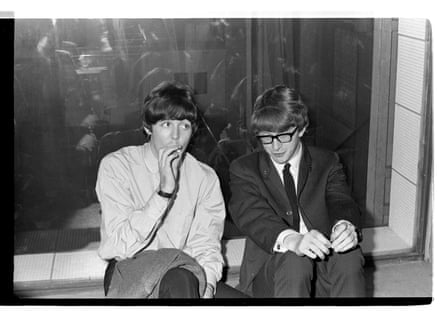
The Asher family’s connection to the world of music deepened through Jane’s burgeoning relationship with Paul McCartney. McCartney, a prodigious talent with an insatiable curiosity for all forms of music, found himself drawn not only to Jane’s charm but also to the intellectual stimulation offered by Peter and their erudite parents. "Paul was voraciously interested in music of all kinds, which included classical music," Asher explained. "My mother would say to him, ‘this is a clarinet, this is an oboe.’ That’s where he learned that a string quartet would be the right instrumentation for Yesterday."
This familial connection extended to George Martin, the Beatles’ esteemed producer, who had taken oboe lessons from Asher’s mother during his student days at the Guildhall School of Music & Drama. The Asher home at 57 Wimpole Street became a haven for McCartney during the Beatles’ meteoric rise to fame. It was within these walls that some of the band’s most iconic compositions took shape. "I imagine my mother would have been the first person to hear the song in its most primitive form," Asher mused, referring to "Yesterday." The creative energy extended to the family’s basement, where McCartney and John Lennon reportedly penned "I Want to Hold Your Hand."
However, it was another McCartney composition that directly launched Peter Asher’s own musical career. Having formed a duo with his friend Gordon Waller, inspired by the harmonies of the Everly Brothers, they lacked original material. McCartney, who had written a song he deemed too sentimental for the Beatles, "A World Without Love," offered it to the duo, soon to be known as Peter and Gordon. The song became an unprecedented success, soaring to number one on both the UK and US charts in 1964. This immediate triumph prompted Asher to leave university, a decision that, while understood by his generally supportive parents, caused them some concern. "I think they expected me to enter a respectable profession like being a doctor, rather than dropping out of university for absolutely no good reason except that I had a No 1 hit record," Asher admitted. "I thought that was a very good reason."
From Pop Star to Producer: A Transformative Shift
As Peter and Gordon, Asher was often cast as the "cute one," a label influenced by his elfin features and shy demeanor, complemented by his signature horn-rimmed glasses and distinctive fashion sense. This image, some have speculated, even contributed to the creation of Mike Myers’ character Austin Powers, a connection Asher playfully denies. Despite the duo’s success, Asher found the life of a performing pop star less fulfilling than he had anticipated. His creative energies were increasingly drawn to other avenues, leading him to co-found the Indica bookstore and art gallery with friends Barry Miles and John Dunbar. This venture inadvertently became a historical landmark, serving as the venue where John Lennon first encountered Yoko Ono.
Asher’s influence also extended to launching Marianne Faithfull’s career. At a party hosted by the Ashers, Faithfull, then married to John Dunbar, met Andrew Loog Oldham, the manager of The Rolling Stones. Intrigued by her presence, Oldham inquired about her singing ability, and upon receiving an affirmative answer, quickly signed her. This pivotal moment, while igniting Faithfull’s career, led to the dissolution of her marriage to Dunbar as she embarked on a relationship with Mick Jagger.
The creative drive that had propelled Peter and Gordon eventually led Asher to pursue a different path. While the duo achieved further hits, many of which were penned by external songwriters, Asher harbored a desire to move beyond performance. His transition into record production began serendipitously in 1966 when Paul Jones, the former lead singer of Manfred Mann, enlisted him to produce his debut solo album. Though the album did not chart significantly, the experience proved transformative for Asher. "It cemented in me the idea that I could, and should, be a record producer," he stated.
The Beatles’ Apple Corps and the Dawn of a New Era
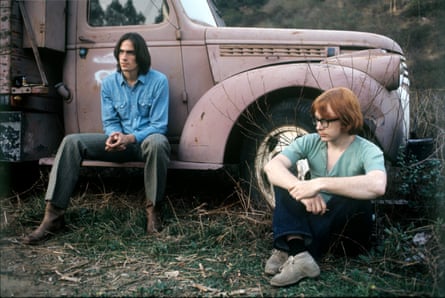
Asher’s burgeoning production career took a significant turn when The Beatles invited him to become the A&R chief of their newly formed record label, Apple Corps. His tenure at Apple saw him sign a roster of talented artists, including Billy Preston and Badfinger, and notably, the Modern Jazz Quartet, a group he deeply admired. However, the signing that would profoundly alter the trajectory of his career was that of a young American singer-songwriter named James Taylor. "Every aspect of James thrilled me," Asher recalled. "When I first asked him to play guitar I thought, ‘my God, here’s somebody who has the dexterity and stylistic elegance of a Julian Bream but with R&B changes.’ His voice managed to be really folky though he wasn’t singing folk music at all. Instead, he had this curious mix of the clarity of classical music with the harmonic element of jazz."
The self-titled album Asher produced for Taylor, while a showcase of his production prowess, was arguably over-orchestrated, potentially obscuring Taylor’s intimate performance style. "This was my audition as a producer, so I thought I’d better do some damn producing," Asher admitted. "I may have overdone it."
The inherent chaos within Apple Corps, a company still finding its footing, prompted the meticulously organized Asher to depart. He brought James Taylor with him, a move that coincided with a deeply personal tragedy. In 1969, Asher’s father took his own life, a devastating event that left the family profoundly shaken. His father had recently lost his position at the hospital where he worked and had fallen into a deep depression. Asher, however, remains circumspect about assigning a singular cause for his father’s decision. "It would be facile, and I don’t think useful," he stated, reflecting on the complexities of grief and loss.
Navigating Addiction and Ushering in the Singer-Songwriter Boom
In the aftermath of his father’s death, Asher channeled his focus into propelling James Taylor’s career forward. Relocating to Los Angeles, Asher swiftly secured Taylor a recording contract with Warner Bros. Records and took on both production and management responsibilities. This undertaking was particularly challenging given Taylor’s severe heroin addiction at the time. "I didn’t know much about junkies, but I did a bit of reading at the library to find out what I should do," Asher recounted. "I said to James, ‘how can I help?’"
Fortunately, Taylor’s ambition and brilliance proved to be as potent as his struggles with addiction. "It’s a terrifying story but it does have a happy ending," Asher noted. This resilience was instrumental in the creation of Taylor’s Warner Bros. debut, "Sweet Baby James," an album that became a commercial and critical success. It marked a pivotal moment, serving as the first singer-songwriter album to achieve widespread breakthrough, paving the way for a wave of similar successes from artists like Cat Stevens, Elton John, and Joni Mitchell.
Asher’s influence extended to Carole King’s transition from a renowned songwriter to a celebrated performer. In 1970, he invited King to open for James Taylor on tour, a significant step as she had never before performed a solo show. He also persuaded her to allow Taylor to record her song "You’ve Got a Friend," which became a number-one hit. "That was contrary to the normal rules of show business where you don’t give away a hit," Asher observed. "It was so generous of her."
Redefining Studio Musicianship and the "LA Sound"
Asher’s respect for the craft extended to the studio musicians who contributed to the albums he produced. He made a conscious effort to provide prominent credit on album sleeves to players like guitarist Danny Kortchmar and bassist Lee Sklar, a practice that was remarkably rare at the time. "At the time, I didn’t realize that was such a radical change," Asher admitted. "Before that, the photographer who took the album’s cover shot was more prominently displayed than the people who played on the record. I thought that was ridiculous."
This enhanced crediting not only elevated the profiles of musicians like drummer Russ Kunkel, effectively turning them into stars in their own right, but also educated listeners about the crucial role each instrument played in the overall sonic tapestry of a recording. This fostered a deeper appreciation for the intricate construction and nuanced details of popular music.
Asher applied this same meticulous approach to the string of hit albums he produced for Linda Ronstadt, whom he also managed. Prior to their collaboration, Ronstadt had released four commercially unsuccessful albums. Asher played a vital role in shaping her distinctive sound while also valuing her artistic instincts, a departure from previous producers who had often dismissed her input. "Prior to that, she was confronted with a lot of ‘don’t worry your pretty little head about that’ stuff," Asher recalled. "People thought you couldn’t be that good a singer and that beautiful and smart and well-read as she was. That did not compute in that era."
The polished and precise sound Asher achieved for Ronstadt and other artists became emblematic of the "LA sound." While some critics deemed it "too clean," Asher defended his approach. "I’m guilty of that, I guess. I do get hyper-hygienic when deciding if there’s extraneous notes or chords. I’m not very fond of muddle." This commitment to sonic clarity resulted in a string of chart-topping albums and earned Asher the Grammy for Producer of the Year on two occasions.
A Legacy of Collaboration and Enduring Influence
In the years since his groundbreaking work in the 1970s, Peter Asher has continued to lend his production expertise to a diverse array of artists, including Cher, Diana Ross, and Randy Newman. His most recent project involved producing Barbra Streisand’s 2025 duets album, where he masterfully paired her with the acclaimed Icelandic singer Laufey, an artist he holds in high regard. He also expresses considerable admiration for contemporary talents such as Raye and Rosalía.
As he approaches his 82nd birthday, Asher remains remarkably humble about his extraordinary career. When asked about the secret to his enduring success, his response is characteristically straightforward and insightful. "The secret is simple," he stated. "Work with incredibly talented people." This simple philosophy, coupled with his sharp intellect, discerning ear, and unwavering commitment to artistic integrity, has solidified Peter Asher’s legacy as a quiet architect of some of the most enduring and influential music of the past half-century. His story, far from being boring, is a compelling testament to the power of collaboration, keen observation, and an unwavering dedication to the art of music.