Wafa Mustafa’s childhood memories are steeped in the resonant melodies of Umm Kulthum, the legendary Egyptian singer whose music was a constant presence in her Syrian home. Her father, Ali, a man who cherished the arts, once encouraged her to transcribe the lyrics of a song she loved, a simple act that would later take on profound and tragic significance. Aiming to impress him, young Wafa chose "Aghadan Alqak," a poignant Umm Kulthum ballad translating to "Will I Meet You Tomorrow?" The lyrics, steeped in themes of longing, absence, and enduring love, resonated deeply with her, a sentiment she would later reflect upon with an almost prophetic eeriness. "The lyrics are literally about someone who’s gone, about the waiting for them and the love you have for them," Mustafa recalls. "It feels like I knew what was coming… as if I manifested my life since I was very young."
This haunting premonition would crystallize into a devastating reality in 2013. As the pro-democracy uprising convulsed Syria, Mustafa’s father, Ali, was abducted from a Damascus apartment by armed men and vanished without a trace. He was 23 years old, and that abduction marked the last time he was seen or heard from. For Wafa Mustafa, the song’s title became a daily, agonizing reality: the unending wait for a tomorrow that might bring news of her father, or at least an answer to the gnawing questions surrounding his fate.
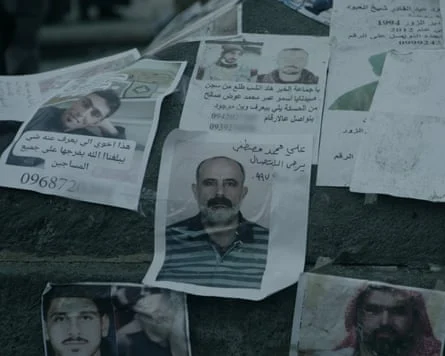
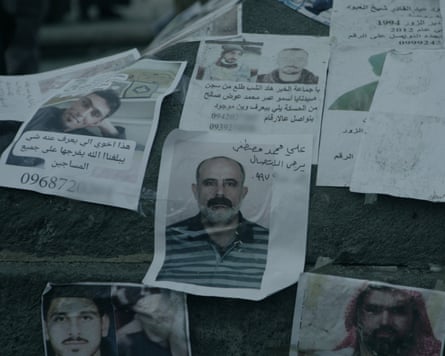
Mustafa’s ordeal is not an isolated tragedy in the Syrian landscape. The Syrian Network for Human Rights (SNHR) reports a staggering figure: over 177,000 individuals forcibly disappeared between 2011 and 2025. The vast majority of these cases involve arbitrary detention by forces loyal to the Bashar al-Assad regime or other armed factions, often leading to torture and death within notorious detention facilities. This systematic erasure of individuals has left deep scars on Syria’s estimated 25 million population, a nation already fractured by years of devastating conflict.
Now, approximately 18 months after the fall of the Assad regime and the emergence of a new leadership under Ahmad al-Sharaa, Mustafa’s mission remains unwavering: to champion the cause of Syria’s forcibly disappeared and to ensure their stories are not buried by the sands of time. Her fight for truth and justice has found a powerful new voice in a documentary short film, "Maybe Tomorrow," a collaborative project with her childhood friend, acclaimed documentary filmmaker Waad Al-Kateab. The film, named after the evocative Umm Kulthum song, serves as a poignant reflection of the enduring wait and the profound impact of enforced disappearances on individuals and families across Syria.
The Violence of Waiting: A Personal and Collective Trauma
"Maybe Tomorrow" offers an intimate and unflinching look at what Wafa Mustafa describes as "the violence of waiting." The documentary traces her journey, beginning in Berlin, her adopted home, and then extending to Syria following the regime change, as she relentlessly pursues any shred of information about her father. "Millions of people [in the world] are disappeared," Mustafa states with a profound sense of urgency. "But I only had this father, and he’s gone. And I cannot let him go."

The film’s narrative begins in 2020, marking the commencement of Mustafa’s extensive campaign to galvanize international attention on the plight of Syria’s disappeared. Even then, she was a prominent voice, addressing United Nations forums and organizing a solitary vigil outside a German courtroom where former Syrian intelligence officers were on trial for state-sponsored torture. Her activism predates the current political shifts, a testament to her enduring commitment.
Al-Kateab, who co-directed the Oscar-nominated "For Sama" with Edward Watts, envisioned this project as a similarly collaborative endeavor, but with a crucial distinction: Mustafa herself would be a co-director, owning and shaping her narrative. Al-Kateab’s realization during a promotional tour for "For Sama" in Tunisia was pivotal. "I saw the power of what we can do when we own our stories," she explains. "For me, that moment was so big, and I realised Wafa has to do her own film." She empowered her friend, urging her, "I want you to find your way of how you want to tell this story."
For Mustafa, who has cultivated a significant online presence with tens of thousands of followers since her youth, the film represents a condensed "memoir" of her life over the past six years. It poignantly captures the devastating toll that enforced disappearances inflict upon families, particularly those displaced and living in exile. Her hope is that the documentary will offer audiences a visceral understanding of "what it means to have your father disappeared and not know what happened – to just be told he’s dead, but not being able to accept it. And not being able to because there is nothing to accept."
Documenting Absence: Preserving Memory in the Face of Erasure
The film delves into the profound impact of such traumatic experiences on both individual and collective memory. In one poignant scene, Mustafa’s mother reflects on the fragility of memory, recounting her husband’s consistent plea to his daughters: "My daughters, you must write things down… document things." This directive resonates deeply with Mustafa, who diligently documents her experiences, often filming herself or collaborating with cinematographers when Al-Kateab is unavailable.
"Hope is a very, very dangerous thing," Al-Kateab cautions, emphasizing that Mustafa’s journey and the film’s narrative do not guarantee easy resolutions or happy endings. "This film is, at the end of the day, a tool," she states. "For Wafa, the impact [it can have] is the goal."
Mustafa articulates the core of her struggle: "The fight today is not just for the truth, accountability or even fighting for your loved ones to be alive, but also to prove that they existed." This imperative is magnified in a context where official narratives have actively sought to obscure and erase the extent of crimes and human rights violations committed in Syria. The lack of verifiable information leaves a void that Mustafa and countless others are desperately trying to fill.
A Global Struggle: Women Leading the Fight for the Disappeared
The film underscores that enforced disappearances are not confined to a single nation’s borders. "Millions of people [in the world] are disappeared," Mustafa reiterates, emphasizing the global nature of this human rights crisis. She highlights the particular role of women in leading the search for answers. While Amnesty International notes that men constitute the majority of victims of enforced disappearance globally, it is overwhelmingly women who spearhead the arduous and often heartbreaking quest to uncover what transpired in the critical minutes, days, and years following a disappearance.
"All of these crimes did not end with Assad fleeing the country and with the downfall of the Assad regime," Mustafa states, referencing ongoing massacres and enforced disappearances that have continued under Syria’s new leadership. This persistent violence underscores the deep-seated systemic issues that require sustained international scrutiny and action. "I don’t want other young women in Syria today to lose their fathers and live their lives in guilt, in the responsibility to save their fathers from authorities."
A Father’s Legacy: Love, Resilience, and Remembrance
Despite the immense personal pain associated with her father’s disappearance, Mustafa’s love for him shines through her actions. "My father was the first comrade I had," she says, her voice tinged with both sorrow and fierce pride. "Even if Ali Mustafa was not my father, I would have definitely done everything I’ve done for him, because he is worth it. He deserves the world, and he deserves to be remembered."
The documentary "Maybe Tomorrow" serves as a powerful testament to this enduring love and a vital tool in the ongoing fight for justice and remembrance. By sharing Mustafa’s deeply personal story, the film aims to amplify the voices of all those who have been silenced, ensuring that the memory of the forcibly disappeared in Syria, and indeed across the globe, will not fade into oblivion. The film’s premiere at the Sheffield DocFest marks a significant moment in bringing this critical issue to a wider international audience, fostering empathy and demanding accountability. The journey is far from over, but the resolve of individuals like Wafa Mustafa, fueled by love and an unyielding pursuit of truth, offers a beacon of hope in the darkest of circumstances.