As the calendar flips to 2026, legendary filmmaker John Carpenter, a name synonymous with groundbreaking horror and sci-fi cinema, is charting a course decidedly away from the director’s chair. Instead of helming new feature films, Carpenter is actively engaged in a multifaceted array of creative endeavors, demonstrating a continued and diverse impact on popular culture. This year finds him a prominent figure at fan conventions, lending his distinctive sonic touch to the score of the upcoming first-person shooter video game John Carpenter’s Toxic Commando, and embarking on tours with his signature synthesizer. Furthermore, he is collaborating on ambitious comic book projects, each accompanied by original heavy metal albums, and indulging in personal passions like watching sports and playing video games.
This prolific output across various media is entirely consistent with Carpenter’s career trajectory, which has consistently defied easy categorization. His unique artistic signature, often recognizable by its distinctive font choices and iconic synth scores, is built upon an ability to blend the uncanny with the mundane, the bizarre with the relatable. His filmography spans a remarkable range of genres and themes, from the visceral terror of Halloween to the satirical social commentary of They Live and the adventurous fantasy of Big Trouble in Little China. Carpenter himself has famously expressed a pragmatic and unfussy attitude toward his legacy, often joking in interviews about his willingness to see his films remade, so long as he is compensated. This pragmatic approach, he suggests, is simply a sensible way to profit from creative endeavors, especially considering he has himself engaged in remake projects.
Despite this seemingly casual stance, Carpenter has undeniably cultivated a significant and lasting legacy over the past five decades. Quantifying the precise influence of such a distinctive and unconventional director on pop culture is a complex task, yet his mark is undeniable across numerous domains. A compelling argument can be made for a significant overlap between the devoted fanbase of John Carpenter and enthusiasts of anime. Both spheres often celebrate frenetic energy, expansive science fiction concepts, and a willingness to embrace the unconventional. For fans of Carpenter’s cinematic universe who may be less familiar with anime, or conversely, for anime aficionados yet to discover the unique world of ’80s B-movies, this exploration offers curated suggestions for an eclectic cultural exchange, bridging the gap between Carpenter’s distinct aesthetic and the vibrant landscape of Japanese animation.
For Fans of Big Trouble in Little China – Space Dandy
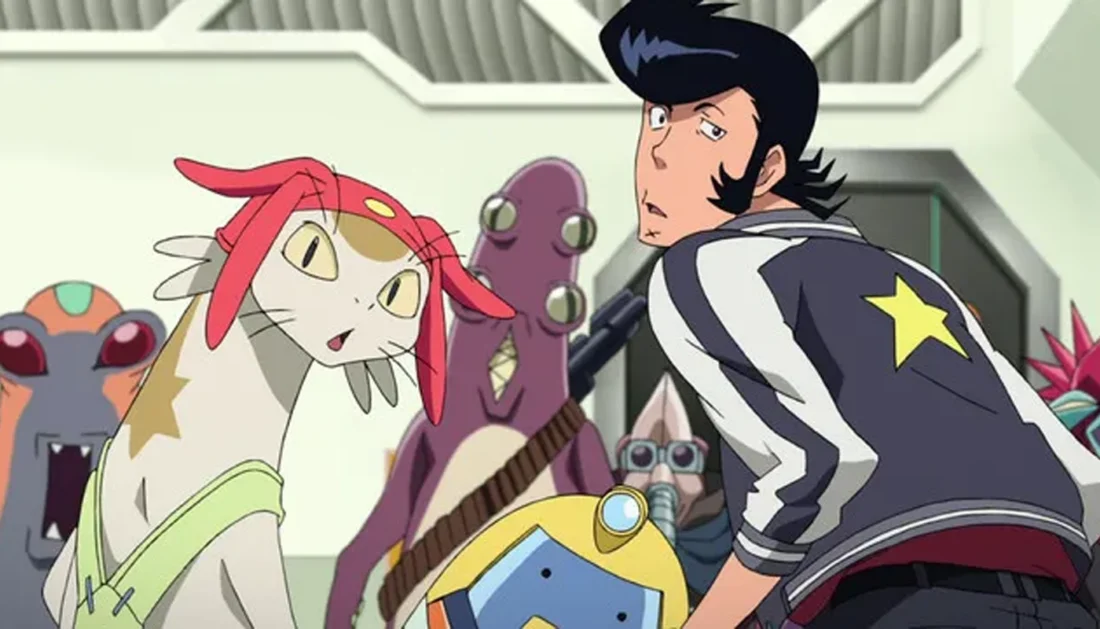
While many aficionados of director Shinichirō Watanabe would immediately point to Cowboy Bebop as a prime example of his "Space Western" work, a different, yet equally fitting, recommendation emerges when considering the specific sensibilities of John Carpenter. Carpenter harbors a long-standing admiration for the Western genre, a passion evident in his evocative soundtracks and his portrayal of rugged, often morally ambiguous, protagonists. However, he has rarely, if ever, produced a straightforward Western. Instead, Carpenter excels at transplanting Western archetypes into entirely different genres, placing them in unexpected circumstances. Jack Burton, the protagonist of Big Trouble in Little China, is a prime example – a truck driver, not a cowboy, who finds himself navigating a surreal and perilous new frontier.
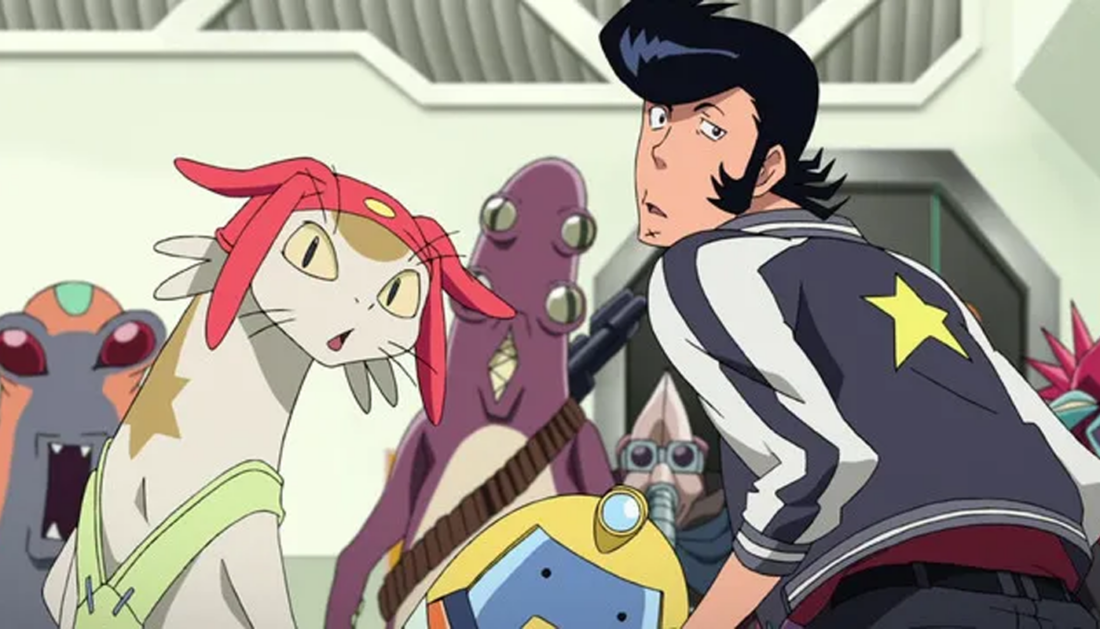
Big Trouble in Little China derives much of its enduring appeal from its sheer goofiness, a quality it shares with Space Dandy, often considered Watanabe’s more comedic counterpart to Cowboy Bebop. Space Dandy follows the titular character, a self-proclaimed alien hunter who drifts through the cosmos in search of rare species to collect bounties, his ultimate goal often being a visit to his favorite space-themed "Breastaurant." Dandy is far from a traditional hero; rather, he is a magnet for extraordinary events. Throughout the series, he nonchalantly triggers planetary explosions, becomes a universal zombie, accidentally time-travels billions of years into the future, and even opens black holes. These cosmic calamities barely faze him, not due to hidden depths or profound introspection, but because Dandy is fundamentally incapable of self-reflection. He is a character designed as a joke, ultimately rejecting an offer to become the god of a rebooted universe, content to simply be a "dingus" who wants to get paid and hang out at BooBies.
This profound lack of awareness regarding the universe’s dangers renders Dandy immune to fear. Similarly, Jack Burton, armed with little knowledge or curiosity about the mystical underworld of Chinatown, approaches its sorcery and ancient dangers with a similar detachment. David Lo Pan, the film’s antagonist, is not a figure of terror for Burton; he’s merely an eccentric old man with seemingly magical abilities. Burton’s primary concern is the recovery of his truck. The existence of an underground society filled with ancient sorcery and immortal martial artists is of little consequence to him, beyond its inconvenience. His reckless participation in the underworld’s conflicts often obstructs the film’s true hero, Wang. During the climactic battle, Burton is famously rendered unconscious after a bravado-fueled attempt to shoot the ceiling, resulting in falling debris. His iconic line, "I’m a reasonable guy, but I’ve just experienced some very unreasonable things," encapsulates his bewildered journey. At the film’s conclusion, faced with a choice between the girl and his truck, he unequivocally chooses his vehicle. The author’s observation that these two characters, "assholes" though they may be, are "subversive as hell," skating by on swagger and sarcasm, highlights their shared, unconventional appeal.
For Fans of They Live – Parasyte: The Maxim
John Carpenter’s 1988 cult classic They Live remains a potent piece of social commentary, celebrated for its iconic alley fight scene, unforgettable one-liners like "I have come here to chew bubblegum and kick ass, and I’m all out of bubblegum," and its relentless, driving soundtrack. The film’s visual aesthetic, featuring ghoulish aliens in red, white, and blue masks with asterisk eyes, and subliminal messages hidden on billboards urging viewers to "Obey," "Consume," and "Stay Asleep," has become deeply embedded in popular culture. However, it is arguably the film’s eternally relevant message concerning the insidious nature of unchecked capitalism and societal manipulation that remains its most powerful and enduring aspect. They Live posits a world where aliens secretly infiltrate human society, profiting from a system that preys on the disenfranchised, and questioning the validity of protests from the marginalized when the wealthy elite already control the world.
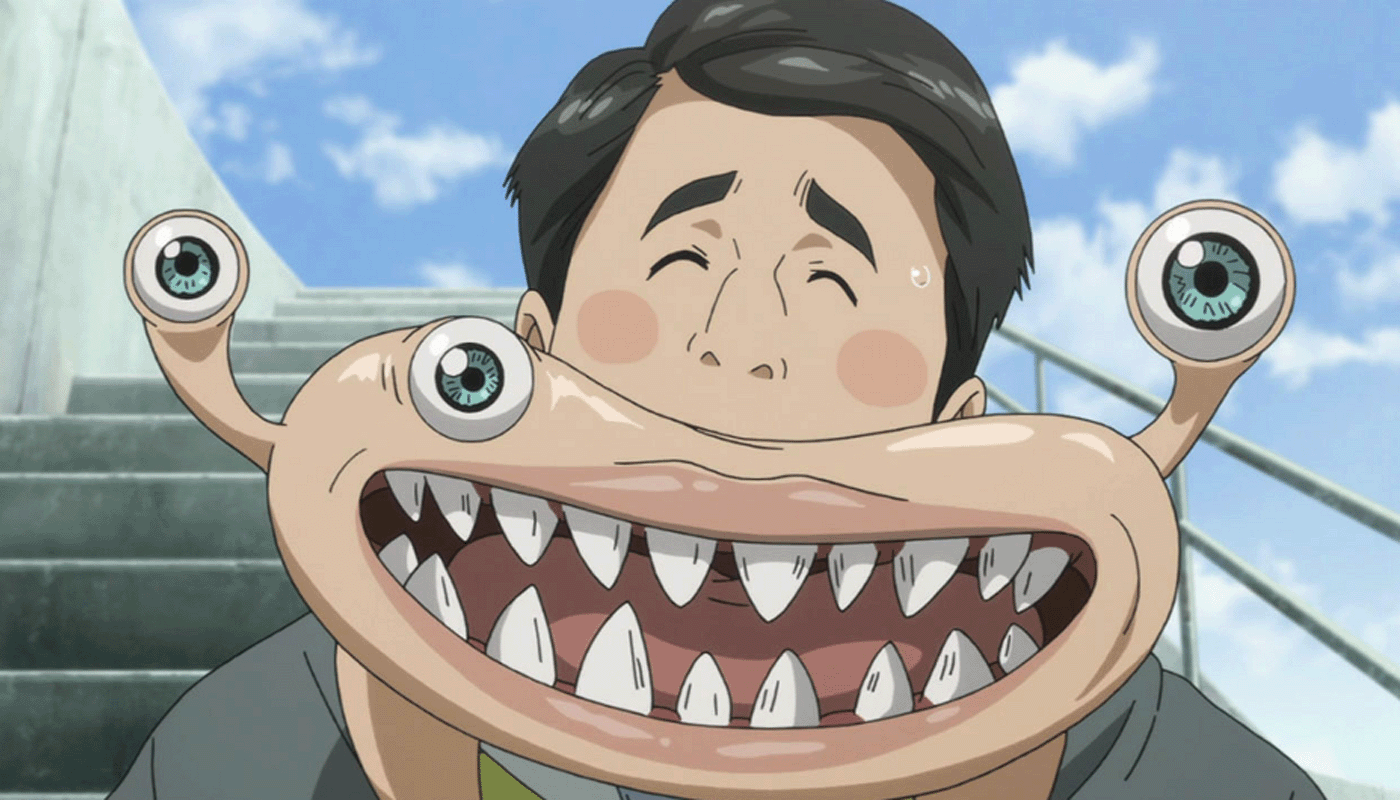
This theme of hidden invaders operating within human society finds a compelling parallel in the 1989 manga classic Parasyte: The Maxim. In this acclaimed series, aliens have already infiltrated 1980s Japan, inhabiting the bodies of unsuspecting individuals. While They Live directly critiques the avarice of Reagan-era America, Parasyte originated as a commentary on human egoism and the anthropocentric belief in human superiority. Mangaka Hitoshi Iwaaki aimed to create a narrative where humans are not inherently more important than any other species from an alien perspective. The story centers on Shinichi, a nerdy teenager whose attempt to be infected by a parasitic alien fails to reach his brain due to a headphone cable restricting blood flow, trapping the parasite in his hand. This parasite, named Migi, retains its own consciousness and reasoning abilities but lacks empathy for humanity, much like a human would not empathize with their dinner. Migi reveals to Shinichi that other parasites have invaded, replacing human brains, and will destroy them both if Shinichi’s human brain is discovered. Thus, an unlikely partnership is forged between two disparate beings forced to cooperate for survival.
While the aliens in They Live are not shapeshifters, the alien designs in Parasyte are heavily influenced by Japanese folklore, with parasites capable of reshaping their hosts’ bodies into monstrous forms, such as skulls morphing into bladed weapons. This element might evoke comparisons to John Carpenter’s The Thing, another film dealing with body horror and alien infiltration. However, thematically, They Live offers a stronger resonance with Parasyte. In They Live, the alien invaders serve as an allegory for the dehumanizing effects of capitalism. In Parasyte, they prompt philosophical inquiries into the nature of humanity and empathy. Despite their differences, both works, originating from the ’80s and ’90s respectively, urge viewers to critically examine the subtle monstrosities and casual inhumanity that often become normalized in daily life.
For Fans of The Thing – To Your Eternity
John Carpenter’s The Thing is widely regarded as one of his most perfectly realized films, a masterclass in tension, paranoia, and visceral horror. Similarly, the anime series To Your Eternity, while perhaps exemplifying flawed execution in certain aspects, shares a thematic kinship with Carpenter’s masterpiece. Both narratives commence in isolated, unforgiving landscapes. In The Thing, an extraterrestrial entity infiltrates a research facility in the Antarctic tundra, initially manifesting by mutating a dog. To Your Eternity, on the other hand, begins with an immortal, shapeshifting entity transforming into a wolf, becoming the companion of a young boy abandoned in a desolate, snow-covered village. A key shared element is the alien’s ability to adopt the appearance of other creatures it encounters.
While The Thing masterfully employs this ability to escalate horror and paranoia among its human characters, To Your Eternity utilizes it as a vehicle for exploring grief and memory. The boy, unable to escape the harsh environment, eventually succumbs to the elements, dying alone in his hut. The immortal entity, in turn, takes on his form, living on in his place and immortalizing a human being who would otherwise have been forgotten. This offers a profound contrast: The Thing is a creature incapable of empathy, a force of pure biological terror, whereas Fushi, the immortal protagonist of To Your Eternity, must learn and develop empathy to find meaning in its seemingly eternal existence. The juxtaposition of these two stories, despite their vastly different tones and executions, provides a unique lens through which to examine a classic science fiction trope – the alien entity – from two distinct yet complementary perspectives, one rooted in primal fear and the other in the search for human connection.

For Fans of Halloween – Monster
John Carpenter’s 1978 seminal work, Halloween, is widely credited as the progenitor of the slasher film genre. At the time of its release, the concept of a horror franchise built around a recurring serial killer was virtually non-existent. While subsequent sequels may have diluted its impact, the very idea of a single horror film spawning decades of profitable installments was groundbreaking. Michael Myers’ terrifying, silent stalk paved the way for the iconic figures of Freddy Krueger and Jason Voorhees.
Colloquial "slashers" do appear in anime, often integrated into broader narratives. Serial killer storylines are present in various seinen series, such as Durarara!!, Erased, and Psycho-Pass. However, horror in anime typically manifests differently than in many American films, often incorporating supernatural elements into the violence. While this is true for many slasher films, it’s crucial to remember that Halloween was notably devoid of ghosts or overt magic. Michael Myers’ terror stems from his very real, human nature. In the original film, despite limited screen time, his presence looms large over the seemingly idyllic suburban neighborhood. Effective serial killer horror relies on restraint, a quality not always inherent in anime’s often more expansive storytelling.
However, Monster, the critically acclaimed manga by Naoki Urasawa, stands apart. Revered internationally and recipient of prestigious awards like the Tezuka Award, Monster shares a chilling restraint with Halloween. Its primary antagonist, Johan Liebert, exerts a profound influence even when absent from scenes, manipulating others from the shadows and tormenting the disgraced surgeon Dr. Tenma. Tenma’s fateful decision to save Johan’s life as a boy inadvertently condemns him to face a calculating psychopath. The psychological terror in both Halloween and Monster converges on a singular, disturbing truth: the most terrifying monsters are often human, and tragically, all humans were once children. Michael Myers, implied to have suffered abuse, kills his own sister. Johan, a born murderer, kills his parents before his twin sister’s eyes. Both characters revisit the sources of their childhood torment to wreak havoc. Even two decades after its release, Monster remains remarkably distinct from most anime, much like Halloween redefined the possibilities of horror storytelling for its era.
For Fans of Escape from New York – Blood Blockade Battlefront
While the sequel Escape from LA may have been a disappointment, John Carpenter’s Escape from New York remains a compelling and enjoyable film. Its premise is undeniably audacious: in the near-future year of 1997, Manhattan has been transformed into a maximum-security prison. When convicts hijack Air Force One and capture the president, a gruff, eyepatch-wearing special agent named Snake Plissken is tasked with a daring rescue mission into this lawless urban fortress.

In a different, yet equally vibrant, vision of New York, a deity pierces an interdimensional rift, granting a young man named Leo god-tier weapons in exchange for his sister’s sight – a decidedly unbalanced transaction. This New York, rechristened Hellsalem’s Lot, is not a prison but a chaotic metropolis overrun by paranormal immigrants from another dimension known as the Beyond, who have reshaped the city’s landscape. Leo joins forces with a quirky team of investigators called Libra, helping them navigate the inevitable conflicts that arise in a city undergoing such a dramatic cultural upheaval.
Created by Yasuhiro Nightow, the visionary behind Trigun, Blood Blockade Battlefront is grounded in a specific, albeit fantastical, setting. Escape from New York, not filmed in actual New York, relied on clever cinematography, matte paintings, and models to create its illusion. Blood Blockade Battlefront, conversely, was conceived by an enthusiast from afar, likely influenced by films like Escape from New York during his formative years. This raises a question: do we all possess an idealized, media-informed vision of major cities like New York, a perception that persists until we experience these places firsthand? Both Blood Blockade Battlefront and Escape from New York thrive on settings that spiral into the extraordinary yet remain anchored by compelling characters and an unexpected sense of playful energy. Both narratives pay homage to a city that perpetually inspires new and unconventional ideas.
John Carpenter’s departure from filmmaking in 2026 is, admittedly, a loss for cinema. However, his continued engagement in other creative pursuits offers audiences a wealth of new material to enjoy. While his singular brand of filmmaking – characterized by its raw, dark, strange, and undeniably effective style – is notoriously difficult to replicate, it is reassuring to know that the world of anime offers a rich tapestry of stories that expertly navigate the boundaries between unsettling horror and timeless camp. This diverse landscape ensures that audiences seeking the unique thrills Carpenter’s work provided will continue to find compelling narratives that resonate with his enduring legacy.