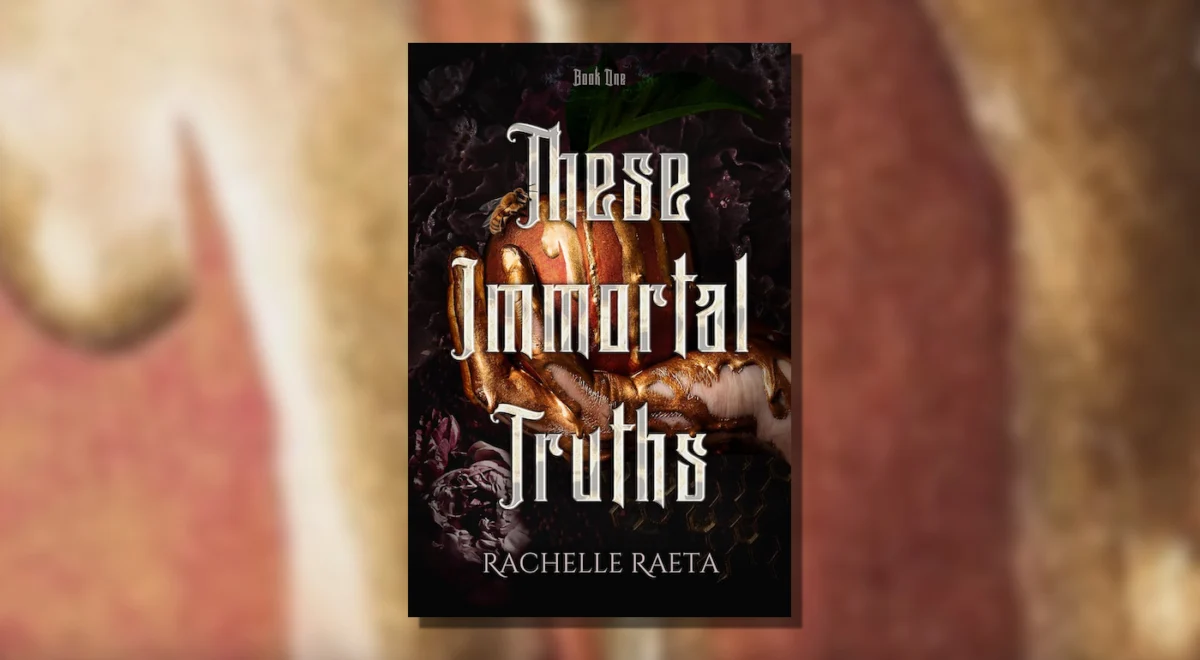
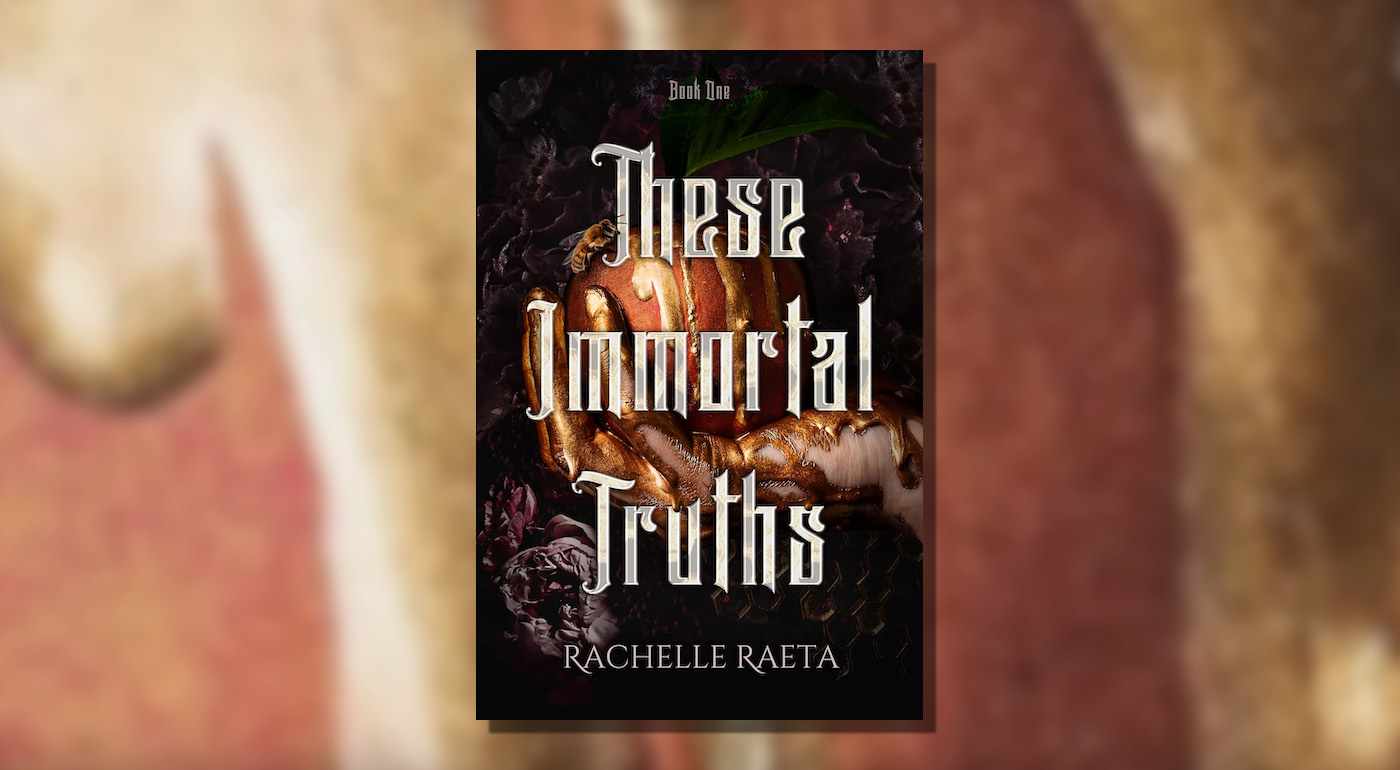
Tor Books is set to release a highly anticipated new hardcover edition of Rachelle Raeta’s powerful historical fantasy, These Immortal Truths, on June 30th. The meticulously crafted edition promises a luxurious reading experience, featuring sprayed edges, a distinctive case stamp, and intricately designed endpapers. The novel delves into profound questions about the nature of eternal life and the true meaning of living fully, a theme that has captivated early readers and critics alike.
The narrative centers on Anna, a young woman whose life has been defined by hardship and isolation. Accused of leprosy due to unusual pale markings on her skin, she has endured a life of solitude, her days consumed by the primal struggle for survival. Her world is irrevocably altered by a chance encounter with a mysterious and beautiful stranger, an act of profound kindness that becomes the catalyst for her extraordinary transformation. Suddenly, Anna finds her body untouched by time and harm, a newfound freedom she had never imagined. However, as decades and centuries unfurl, she witnesses the lives of those she cherishes slip away like grains of sand, leaving her with an enduring loneliness that only Khiran, the shapeshifting god who bestowed upon her immortality, can momentarily alleviate. Khiran’s presence offers a fragile anchor, a promise of return across the vast expanse of years and distance. Yet, Anna’s journey through eternity is far from simple; she is destined to uncover the profound beauty and perilous depths of a life unbound by the constraints of mortality.
A Glimpse into Anna’s Past: England, 1185
The opening pages of These Immortal Truths transport readers to England in the year 1185, immersing them in Anna’s earliest memories of loss and displacement. Her childhood is marked by the searing image of her home consumed by flames, a violent upheaval orchestrated by a warrior who forcibly removed her from its threshold. The acrid smoke and the searing heat are etched into her young mind, a stark contrast to the perceived safety of her former life. Even at a tender age, Anna understood that survival often depended on a delicate balance between truth and deception, a lesson reinforced by the stark realities of her world.
Her guardian, Fanny, a woman of gruff exterior but underlying compassion, instilled in Anna the understanding that some truths are too brutal to bear. The whispered gossip among the manor’s maidservants painted grim pictures of young women abducted and forced into servitude across the North Sea, a fate Anna narrowly avoided. Her own position within the manor, while arduous, offered a semblance of security. The manor’s warmth in winter and cool interiors in summer, coupled with regular meals of salted cod, venison, and roasted swan, provided a stark contrast to the potential starvation and suffering that plagued many in her era. However, this fragile stability was shattered when, at the age of fifteen, the peculiar pale markings appeared on her chest, spreading ominously across her body.
The Scapegoat of Sickness
The year 1185 was a period of significant agricultural vulnerability in England. Weak harvests and the pervasive spread of various ailments created an atmosphere of fear and suspicion within communities. It was within this climate of anxiety that Anna’s skin condition, though lacking any concrete evidence of contagion, became a focal point for blame. When a chambermaid first noticed the discolored patches, and word subsequently reached the lord of the house, Anna became an easy target. Despite the absence of any demonstrable harm caused by her condition and the passage of two years without any ill effects, the prevailing fear of sickness and the need for a scapegoat proved insurmountable. Anna, the "leper girl," was banished from the manor, her existence deemed a threat to the community.
Her exile led her to a remote part of the forest, where she managed to survive in an abandoned cabin, aided by meager provisions secretly supplied by Fanny. These small acts of kindness were crucial for her initial survival, allowing her time to learn the intricate language of the forest and to harness its resources. Though winters remained harsh and food supplies precarious, she persevered, her resilience forged in the crucible of her solitary existence. At twenty-seven summers, Anna grappled with the profound uncertainty of her identity, unsure if her name was a relic of her lost childhood or a label assigned by her captors. Yet, she remained alive and healthy, a stark contrast to many who faced death, starvation, or worse fates.
An Unforeseen Encounter and a God’s Gift
The narrative then shifts to a pivotal moment in Anna’s isolated existence. While gathering hawthorn berries in a secluded grove, a place she had learned to navigate and utilize for sustenance, she hears the approaching voices of men. Their angry shouts signal a pursuit, and Anna instinctively understands that whoever they are seeking is in grave danger. As she freezes, clutching her berry harvest, a rustle of leaves behind her announces a new presence. Turning, she encounters a stranger of striking beauty, adorned in richly colored silks, her presence a stark contrast to Anna’s worn attire. The stranger’s dark, deep eyes hold an enigmatic quality, and Anna immediately recognizes the palpable threat of the approaching men, their pursuit suggesting a matter of life and death.
In a moment of impulsive bravery, and with the soldiers closing in, Anna drops her berries and grasps the stranger’s hand, urging her to flee. The stranger, surprisingly agile and composed, follows Anna through the familiar terrain of the forest, a landscape she knows intimately from years of foraging and survival. They find refuge in Anna’s humble cabin, a small haven from the encroaching danger. Inside, after the immediate threat subsides, a poignant exchange unfolds. The stranger, who speaks fluent English, expresses gratitude for Anna’s timely intervention. When asked for her name, the stranger responds with an enigmatic "I have many names," and poses a curious question: "Which would you choose for me?"
This unusual request, coupled with the stranger’s serene demeanor despite the recent peril, leaves Anna bewildered. As the conversation deepens, Anna’s marked skin is revealed, a detail that elicits a frown of disdain from the stranger, not directed at Anna, but at the ignorance of those who would fear her condition. "Fools," the stranger declares, a statement that profoundly disarms Anna, who anticipates disgust and abandonment. The stranger’s lack of fear and her assertion that Anna’s condition is "not one of them" things to fear, mark a significant turning point.
The Mystery of the Taozi and the Dawn of Immortality
Anna, yearning for companionship, offers the stranger food. As they share a simple meal of dried fish and acorn biscuits, Anna notices the sweet, foreign fruit the stranger has produced – a Taozi, or "Persian apple." The fruit, unlike any Anna has ever encountered, possesses a unique characteristic: it lacks a seed. The stranger’s cryptic pronouncements about "priceless treasures that cannot be replicated" and the enigmatic nature of the fruit itself begin to sow a seed of wonder and unease within Anna. As the soldiers’ return becomes imminent, Anna urges the stranger to leave, fearing for their safety. The stranger, however, calmly observes Anna’s fear and her act of defiance in harboring a fugitive, stating, "Death will not come for you."
This promise, delivered with an otherworldly certainty, is soon tested. The soldiers arrive, breaking down Anna’s door and dragging her away. In the ensuing chaos, the stranger vanishes without a trace, leaving Anna with only the lingering taste of the foreign fruit and a dawning, terrifying realization: the stranger was not human. Her rescue, her enigmatic pronouncements, and her inexplicable disappearance point to a supernatural origin.
Anna is subsequently accused of witchcraft and consorting with the devil, a narrative fueled by the local priest and the villagers’ long-held fear and suspicion of her. They believe her survival in the woods is only possible through demonic aid. She is bound to a pyre on a desolate beach, facing a gruesome death by fire. As the flames begin to lick at her, a flicker of movement catches her eye. The stranger, now identified as Khiran, the shapeshifting god, appears, not on the pyre, but on a nearby branch. With a gesture and a whispered warning, Khiran intervenes. Anna’s skin, though burning, does not blister or blacken. The ropes binding her fray and snap. Her screams are swallowed by the roar of the fire and the crashing waves as her vision fades to black.
The Gift of Eternity and the Weight of Ages
Anna awakens on the beach, alive and miraculously unharmed, her body scorched but intact. The villagers are gone, leaving only their footprints in the sand as evidence of their grim intentions. Khiran appears, draping a cloak over Anna’s naked shoulders and reaffirming her promise: "Death will not come for you." This moment marks the true beginning of Anna’s immortal life, a gift bestowed by Khiran, intertwined with the profound experience of facing death and being reborn.
The excerpt concludes with a profound exploration of the implications of this newfound immortality. Anna’s life, once a desperate struggle for survival, is now an unending journey. The narrative poses questions about the true cost of eternal life: the inevitable loss of all loved ones, the profound loneliness of outliving generations, and the moral complexities of wielding such power. Khiran’s gift, while saving Anna from immediate death, fundamentally alters her existence, thrusting her into a timeless existence where the joys of life are amplified, but the pain of loss is magnified across millennia. The novel promises to explore these themes through Anna’s experiences across various epochs, her interactions with historical figures, and her enduring, yet complex, relationship with Khiran. The release of These Immortal Truths is poised to offer readers a sweeping saga of love, loss, and the enduring human spirit, even when unbound by the constraints of time.