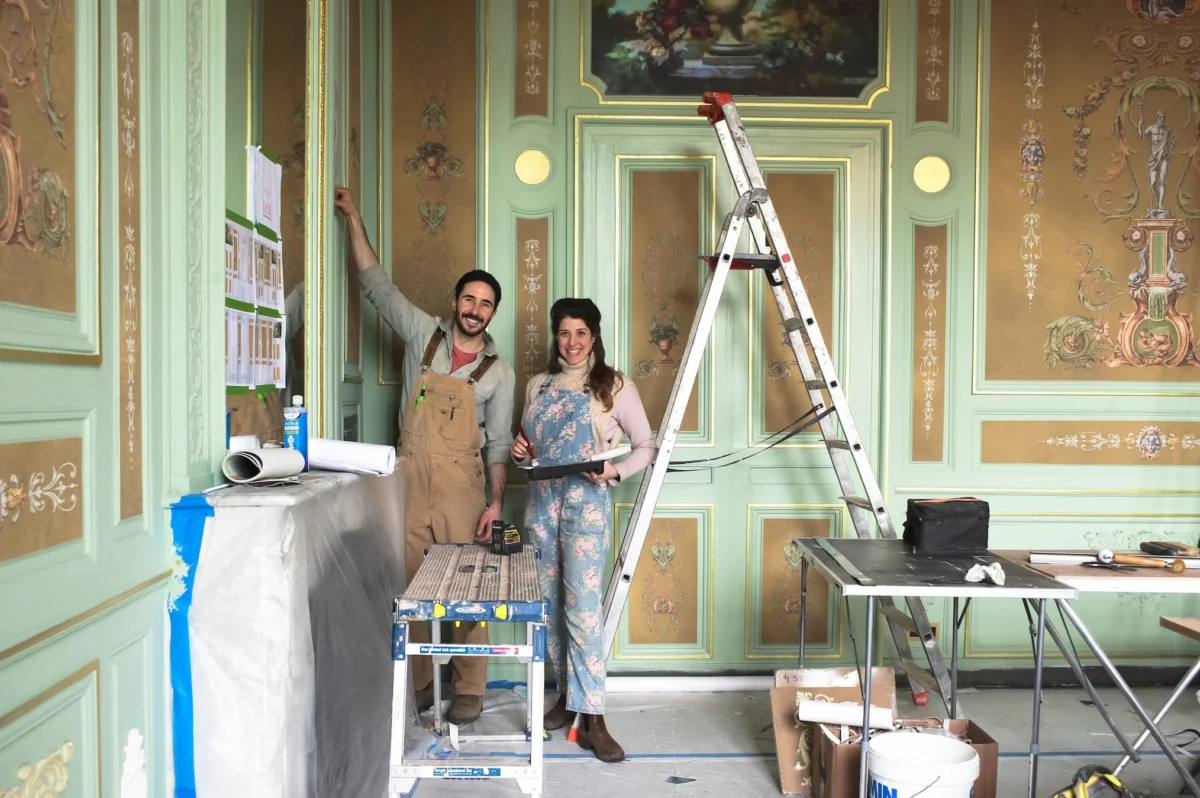
The landscape of international home renovation television shifted significantly during the June 2 episode of HGTV’s "Castle Impossible," as series leads Daphne Reckert and Ian Figueira shared the news of their first pregnancy. The announcement, delivered to Reckert’s grandmother during a poignant moment in the second season, marks a major transition for the couple who have become household names for their ambitious restoration of a 500-year-old chateau in Lésigny, France. This development introduces a new layer of complexity to their already high-stakes project, as the high school sweethearts navigate the challenges of historic preservation while preparing for the arrival of a new generation in their ancestral home.
The revelation occurred during a season that has already seen the couple tackle structural decay, bureaucratic hurdles, and the immense logistical demands of managing a 130-acre estate. For viewers who have followed Reckert and Figueira since their departure from California, the pregnancy news represents more than a personal milestone; it signifies the long-term commitment the couple has made to the property Reckert inherited from her late grandfather. As the renovation progresses, the focus of the project is expected to shift from purely structural restoration to creating a functional, safe family environment within a building that predates modern plumbing and electricity by centuries.
A Chronology of Heritage and Transformation
The journey of Daphne Reckert and Ian Figueira is one rooted in both personal history and radical lifestyle change. Before becoming the faces of "Castle Impossible," the pair lived a traditional life in California, where they were high school sweethearts. The trajectory of their lives changed fundamentally when Reckert inherited the Lésigny estate, a sprawling property located just outside the Parisian metropolitan area. The chateau, which has remained in the family for generations, represents a direct link to Reckert’s lineage, specifically her grandfather, whose legacy the couple is striving to honor through their restoration efforts.
The timeline of their endeavor began several years ago when the couple made the decision to relocate permanently to France. Moving from the modern infrastructure of California to a 130-acre French estate required a total immersion in local culture and construction standards. By the time "Castle Impossible" premiered its first season, the couple had already spent significant time stabilizing the structure. Season 2, currently airing on HGTV, has documented the more intricate phases of the renovation, including the restoration of historical masonry and the integration of modern utilities into the 500-year-old walls.
The June 2 announcement to Reckert’s grandmother—referred to affectionately as "Granny"—served as a narrative anchor for the season. The emotional weight of the scene highlighted the generational importance of the chateau. By sharing the news with the matriarch of the family, the couple underscored that the renovation is not merely a television project, but a mission to preserve a family seat for the child who will eventually inherit the legacy.
The Architectural and Financial Realities of French Restoration
Renovating a structure of the Lésigny chateau’s age involves far more than aesthetic upgrades. Under French law, buildings of historical significance are often subject to strict regulations overseen by the Architecte des Bâtiments de France (ABF). These regulations ensure that any changes made to the exterior or structural integrity of the building adhere to historical accuracy, using period-appropriate materials and techniques.
For Reckert and Figueira, this means that the renovation of the 500-year-old chateau is a capital-intensive and labor-intensive process. Supporting data from the French Ministry of Culture suggests that the maintenance of historic monuments can cost between 1% and 2% of the property’s total value annually, with major restorations often reaching into the millions of euros. While the couple has not publicly disclosed the exact budget of the Lésigny project, industry experts estimate that a 130-acre estate with a primary structure of this age requires specialized artisans—masons, carpenters, and roofers—who are trained in "patrimoine" (heritage) restoration.
The addition of a nursery and child-safe living quarters adds a unique challenge to this process. Historical chateaus were designed for defense and social hierarchy, not for modern child-rearing. The couple must now balance the preservation of original features, such as stone staircases and lead-paned windows, with the safety requirements of a 21st-century home. This includes addressing potential lead paint issues, modernizing heating systems for a nursery, and securing vast grounds that include wooded areas and water features.
Industry Impact and the Evolution of Renovation Media
The success of "Castle Impossible" and the public’s reaction to the pregnancy news reflect a broader trend in the home renovation television genre. Over the last decade, audiences have moved away from "quick-fix" renovation shows in favor of "slow TV" and long-form restoration projects. Shows like "Escape to the Chateau" and "Castle Impossible" tap into a fascination with European history and the "expat dream."
According to viewership data from HGTV and its parent company, Warner Bros. Discovery, international renovation shows consistently perform well among the 25-54 demographic. These programs offer a blend of travelogue, history, and DIY inspiration. The personal lives of the hosts often become as central to the show’s success as the renovations themselves. By documenting their pregnancy, Reckert and Figueira are deepening the audience’s emotional investment in the show. This transition from "young couple in over their heads" to "new parents building a future" provides a natural narrative arc that could sustain the series for several more seasons.
The "Castle Impossible" brand also benefits from the authenticity of the couple’s relationship. As high school sweethearts, their chemistry and shared history provide a stable foundation for the stresses of a major renovation. The pregnancy announcement serves to humanize the daunting task of managing 130 acres, making the couple more relatable to viewers who are also balancing career goals with family expansion.
Official Responses and Public Reception
While official statements from HGTV have remained focused on the celebratory nature of the news, industry insiders suggest that the network is prepared to adapt the show’s production schedule to accommodate the couple’s new reality. Production of Season 2 has continued, but the timeline for future filming will likely be adjusted to allow for maternity and paternity leave.
Fan reactions across social media platforms have been overwhelmingly positive, with many viewers expressing a sense of "growing up" with the couple. The announcement to "Granny" was particularly well-received, as it connected the historical nature of the chateau with the living history of the family. On platforms like Instagram and X (formerly Twitter), the hashtag #CastleImpossible trended following the June 2 episode, with fans speculating on how the chateau’s layout will be altered to accommodate the baby.
From a journalistic perspective, the reaction highlights the parasocial relationship viewers form with reality television personalities. Because Reckert and Figueira are seen as stewards of a historic monument rather than just homeowners, the public perceives the unborn child as the future guardian of the Lésigny estate, adding a layer of "dynastic" interest to the story.
Broader Implications for the Lésigny Estate
The long-term implications of this pregnancy for the Lésigny estate are profound. The inheritance of the chateau by Daphne Reckert was a turning point for the property, which might otherwise have fallen into disrepair or been sold to developers. With a child on the way, the "impossible" nature of the castle renovation takes on a new meaning. It is no longer just about finishing a project; it is about establishing a sustainable homestead.
The 130-acre grounds, which currently require extensive management, may see a shift in utility. Potential plans for the estate could include organic farming, event hosting, or the creation of a boutique guest house to generate the revenue necessary for the chateau’s upkeep. The presence of a child often necessitates a more stable income stream than television production alone can provide.
Furthermore, the integration of the couple into the Lésigny community is likely to deepen. In rural France, family and heritage are central to social life. By raising a child in the village, Reckert and Figueira are moving from being "the Americans at the chateau" to being permanent members of the local fabric. This cultural integration is often a key component of successful expat stories and will likely be a major theme in upcoming episodes of "Castle Impossible."
Conclusion: The Intersection of History and the Future
The pregnancy of Daphne Reckert and Ian Figueira is a milestone that transcends the typical tropes of reality television. It marks the convergence of a 500-year-old architectural history with the beginning of a new human life. As the couple continues to work on the Lésigny estate, the stakes have been raised from the preservation of stone and mortar to the cultivation of a family legacy.
As Season 2 of "Castle Impossible" continues on HGTV, viewers can expect a shift in tone. The frantic pace of renovation may be tempered by the practicalities of preparing for a newborn, but the commitment to the chateau remains unwavering. The story of Reckert and Figueira serves as a modern parable of the American spirit meeting European tradition, proving that even the most "impossible" projects are worth the effort when they are built for the next generation. The 130 acres in Lésigny are no longer just a renovation site; they are becoming a home in the truest sense of the word.