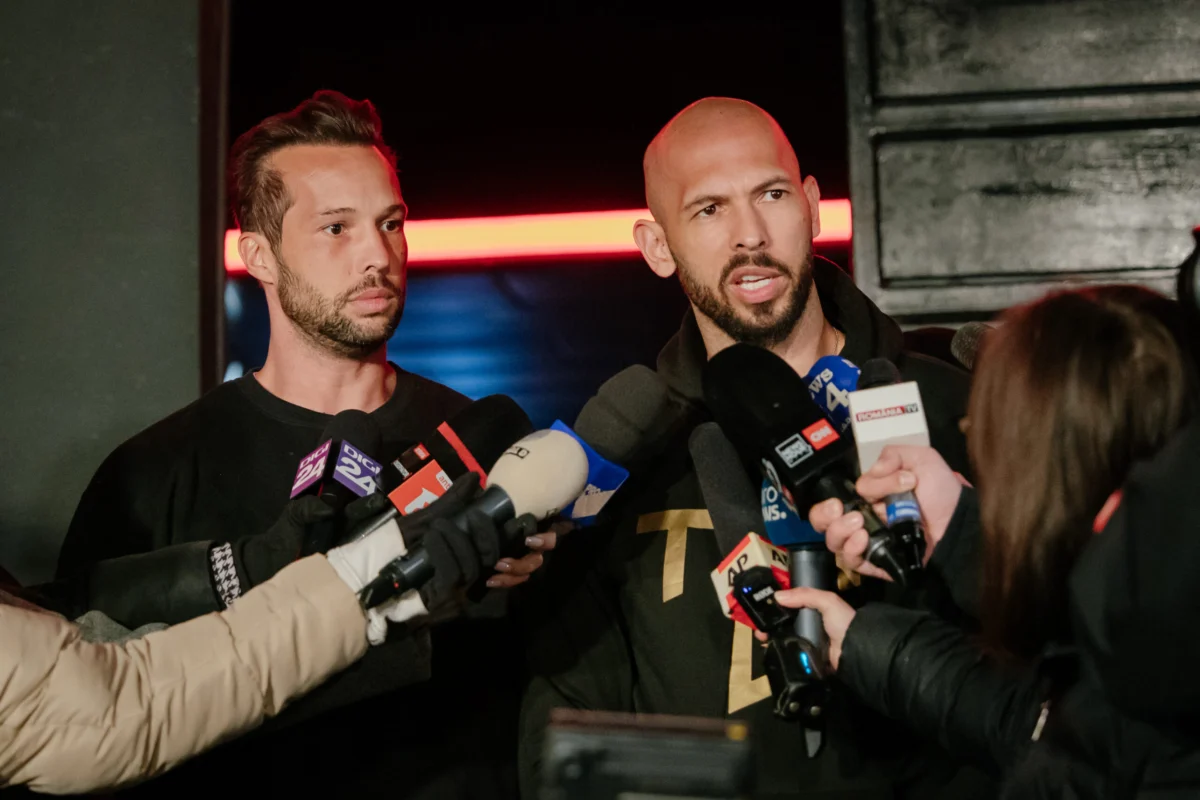
The U.S. Marshals Service confirmed the arrest of controversial social media personalities Andrew and Tristan Tate in Miami on Saturday, July 18, acting on a sealed warrant issued in coordination with international law enforcement. The arrests mark a significant escalation in the legal battles surrounding the brothers, who now face a litany of serious charges in the United Kingdom, including rape, human trafficking, and the possession of indecent images of children. Andrew Tate, 39, and Tristan Tate, 38, were taken into custody without incident, according to agency spokesperson Brady McCarron, and are currently being held pending a federal court appearance.
This latest development follows a formal announcement by the British Crown Prosecution Service (CPS), which declared its intention to seek the immediate extradition of the brothers to face trial in the U.K. The charges stem from an intensive investigation by the Bedfordshire Police, covering alleged criminal activity occurring between 2010 and 2017. As the legal proceedings move to the United States federal court system, the case highlights the complexities of international law, the reach of modern law enforcement, and the ongoing scrutiny of the Tate brothers’ global influence.
Detailed Breakdown of the New British Charges
The Crown Prosecution Service has authorized a total of 38 new charges against the Tate brothers, a substantial expansion of the previous allegations leveled against them in other jurisdictions. Malcolm McHaffie, the head of the special crime division at the CPS, released a formal statement outlining the gravity of the offenses. According to McHaffie, the decision to prosecute was reached after a thorough review of a comprehensive evidence file provided by the Bedfordshire Police.
The charges include multiple counts of rape, the facilitation of trafficking for the purpose of sexual exploitation, and offenses related to the distribution or possession of indecent images of a child. This new evidence has expanded the scope of the case to include at least seven alleged victims who have come forward regarding incidents that took place over a seven-year period. The CPS emphasized that these charges are separate from the ongoing legal matters in Romania, representing a distinct and localized effort by British authorities to hold the brothers accountable for actions allegedly committed on U.K. soil.
The inclusion of charges involving indecent images of a child adds a new and particularly severe dimension to the brothers’ legal jeopardy. While the Tates have long been associated with allegations of misogyny and adult-oriented exploitation, these specific charges carry heavy mandatory minimum sentences in the U.K. and represent a significant shift in the narrative surrounding their alleged criminal enterprise.
A Chronology of Legal Turmoil: From Bucharest to Miami
The arrest in Miami is the latest chapter in a multi-year saga that has seen the Tate brothers traverse several continents while under investigation. To understand the current situation, it is necessary to examine the timeline of their legal challenges:
- December 2022: Andrew and Tristan Tate were first arrested in Bucharest, Romania, alongside two Romanian nationals. They were accused of forming an organized criminal group to humanly traffic women, using the "Loverboy" method—a tactic involving the manipulation of women through promises of marriage or relationships to coerce them into producing pornographic content for financial gain.
- 2023: The brothers spent several months in Romanian custody before being moved to house arrest. During this period, they vehemently denied all allegations, claiming that the Romanian authorities had no physical evidence and were acting under political pressure.
- August 2023: The brothers were released from house arrest but remained under judicial control, which restricted their movement within Romania.
- February 2025: In a surprising legal turn, a Romanian court allowed the brothers to leave the country. Shortly thereafter, they relocated to Florida, establishing a base in Miami. This move was seen by many as an attempt to find a more favorable legal environment, given their dual British and U.S. citizenship.
- July 18, 2025: The U.S. Marshals Service executed the sealed warrant in Miami, effectively ending the brothers’ brief period of relative freedom in the United States.
The transition from Romania to the U.S. was initially framed by the Tate legal team as a return to their home country to seek justice through defamation lawsuits against their accusers. However, the U.K.’s move to intervene via the U.S. federal system suggests that the brothers’ international legal exposure is far greater than their defense had publicly acknowledged.
Defense Strategy: Allegations of Slander and Political Interference
The Tate brothers’ legal team has responded to the Miami arrests with a combative stance, characterizing the new U.K. charges as a coordinated attempt to silence their clients. Joseph McBride, an attorney representing the brothers, spoke to the Associated Press, describing the allegations as "filth and slander."
McBride argued that the timing of the U.K. charges is suspicious, coming as the brothers were pursuing defamation claims in American courts against individuals who had accused them of abuse. "They’re pulling out all the stops to make sure these guys never get their day in court," McBride stated. He further characterized the extradition request as a misuse of the U.S. Department of Justice, claiming that "America does not do Britain’s political dirty work."
The defense’s narrative centers on the idea that the Tate brothers are victims of a "Matrix"—a term Andrew Tate frequently uses to describe a supposed global establishment intent on suppressing his message of "masculinity" and "financial independence." By framing the legal proceedings as political persecution, the defense aims to appeal to the brothers’ massive online following, though such arguments carry little weight in a formal extradition hearing, which focuses primarily on the validity of the warrant and the existence of probable cause.
The Profile of the Accused: Influence and Controversy
Andrew Tate, a former professional kickboxer, rose to international notoriety through his appearances on reality television and his subsequent explosion on social media platforms like X (formerly Twitter), TikTok, and YouTube. Along with his brother Tristan, he built a digital empire centered on "Hustler’s University," an online academy that claims to teach men how to accumulate wealth and navigate modern relationships.

Tate’s rhetoric, often described as hyper-masculine and overtly misogynistic, has garnered him millions of followers while simultaneously leading to bans from several major social media platforms. Critics argue that his content encourages the objectification of women and provides a blueprint for the very types of exploitation he is now accused of in the U.K. and Romania.
The brothers’ influence is particularly strong among young men, a demographic that has increasingly turned to "manosphere" influencers for guidance. This cultural impact has made the legal proceedings against them a flashpoint for broader debates about free speech, online radicalization, and the accountability of digital creators.
Understanding the Extradition Process
The next phase of the legal process will take place in a Miami federal court. Under the 2003 Extradition Treaty between the United States and the United Kingdom, the process is governed by specific legal standards. Unlike a criminal trial, an extradition hearing does not determine guilt or innocence. Instead, the court must determine:
- Whether the offenses charged are covered by the treaty (dual criminality).
- Whether the person in custody is indeed the person sought by the foreign government.
- Whether there is sufficient evidence to provide probable cause that the person committed the crimes.
Given the severity of the charges—rape and child-related offenses—they easily meet the "dual criminality" requirement, as these are crimes in both the U.S. and the U.K. If the federal judge finds the extradition request valid, the final decision to surrender the brothers to British authorities rests with the U.S. Secretary of State.
While the defense may attempt to block the extradition by claiming the charges are politically motivated, U.S. courts typically maintain a high threshold for such defenses, especially when dealing with a close ally like the United Kingdom. The process can be lengthy, involving multiple appeals, but the brothers will likely remain in federal custody throughout the duration of the proceedings.
Broader Implications and International Cooperation
The arrest of the Tate brothers in Miami underscores a growing trend of international cooperation in policing high-profile digital figures. As influencers operate across borders, law enforcement agencies are increasingly utilizing mutual legal assistance treaties (MLATs) and international warrants to bridge jurisdictional gaps.
The involvement of the U.S. Marshals Service—a branch of the Department of Justice specializing in fugitive apprehension—signals that the U.S. government is taking the British request seriously. This case serves as a warning to other international figures that relocation to a different country does not necessarily provide immunity from prosecution in their home nations or previous places of residence.
Furthermore, the case has significant implications for victims of human trafficking and sexual assault. Advocacy groups have pointed to the Tate investigation as a landmark instance of authorities pursuing "digital-age" trafficking, where coercion and exploitation are facilitated through social media and online platforms. A successful prosecution in the U.K. would set a precedent for how modern legal systems handle influential figures accused of large-scale exploitation.
Future Outlook
Andrew and Tristan Tate are expected to remain in federal holding in Miami as they prepare for their initial court appearance early next week. The outcome of that hearing will dictate the pace of the extradition process. Should they be sent to the U.K., they will face a legal system that has recently overhauled its approach to sexual offense prosecutions, potentially leading to one of the most high-profile trials in recent British history.
In the meantime, the brothers’ assets, which were previously a point of contention in the Romanian case, may again come under scrutiny. Romanian authorities had seized millions of dollars in luxury cars, watches, and cash, much of which the brothers were attempting to reclaim. The new U.K. charges may lead to further asset freezes as part of the investigation into the financial gains derived from the alleged trafficking network.
As the legal drama unfolds, the global audience that either admires or reviles the Tate brothers will be watching closely. For the seven alleged victims in the U.K., the arrests in Miami represent a pivotal moment in a quest for justice that has spanned more than a decade. For the Tate brothers, it represents the most significant threat yet to their freedom and their carefully cultivated image of untouchability.