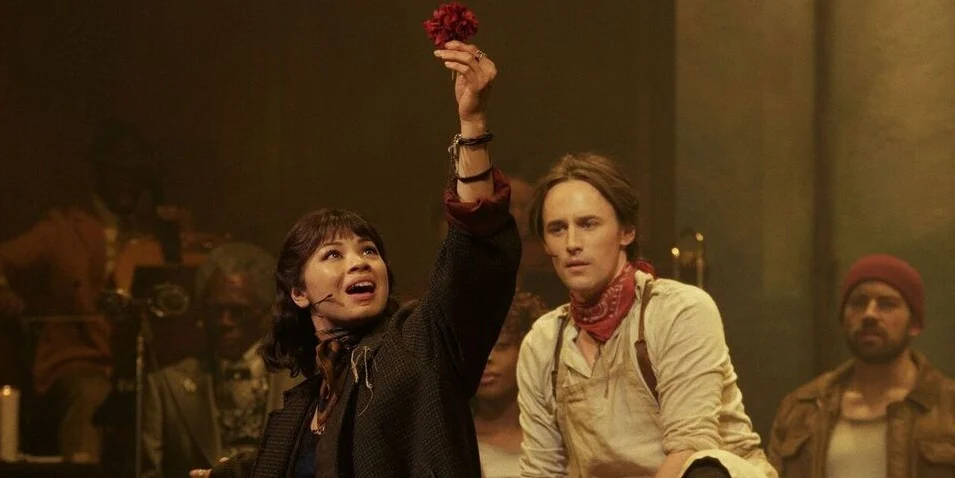
The release of the professionally captured stage production of Hadestown marks a significant milestone in the intersection of live theater and cinematic distribution. Filmed at the Lyric Theatre in London’s West End, this production serves as a definitive document of the musical that redefined the Broadway landscape during the 2018-2019 season. Directed for the screen by Brett Sullivan, the film captures the core of the production that earned eight Tony Awards, including Best Musical, and a Grammy Award for Best Musical Theater Album. Most notably, the capture reunites the five original principal actors from the Broadway company, providing a rare opportunity for global audiences to witness the performances that originated the show’s commercial and critical success.
The Evolution of a Modern Myth: A Chronological Overview
The journey of Hadestown from a localized community theater project to a global phenomenon is one of the most unique trajectories in modern musical theater history. The project began in 2006 as a "folk opera" concept by singer-songwriter Anaïs Mitchell, performed in various venues across Vermont. In 2010, Mitchell released a concept album featuring guest vocals from indie-folk icons like Justin Vernon and Ani DiFranco, which established the musical’s distinct sonic palette—a blend of American folk, indie rock, and New Orleans-inspired jazz.
The theatrical development accelerated when Mitchell partnered with director Rachel Chavkin in 2012. Over the next several years, the production underwent rigorous refinement through multiple iterations:
- Off-Broadway (2016): The show premiered at the New York Theatre Workshop, where it began to garner critical attention for its immersive staging and mythological reimagining.
- Edmonton, Canada (2017): A production at the Citadel Theatre allowed the creative team to expand the scale of the show.
- London’s West End (2018): The production moved to the National Theatre in London, serving as the final testing ground before its Broadway transfer.
- Broadway (2019): Hadestown opened at the Walter Kerr Theatre, where it became a box-office powerhouse and a critical darling, eventually winning the Tony Award for Best Musical.
The current cinematic capture, though filmed during the show’s return to the West End, serves as a retrospective of this decade-long development, immortalizing the specific chemistry of the original cast members who shaped the characters during their peak Broadway run.
Technical Execution and Cinematic Translation
Translating a live theatrical performance to film requires a delicate balance between preserving the original stage direction and utilizing the unique capabilities of the camera. Director Brett Sullivan, an experienced veteran of the "pro-shot" genre with credits including Waitress: The Musical and Newsies, employs a multi-camera setup designed to highlight the intricate details often missed by a live audience seated in the mezzanine or balcony.
Hadestown presents unique challenges for a film director due to its "meta-theatrical" nature. The show frequently acknowledges the audience and utilizes a revolving stage and a central descending elevator (the "cellar") to represent the transition between the world above and the industrial underworld of Hadestown. Sullivan utilizes high-angle shots to emphasize the geometry of the choreography and extreme low angles to enhance the imposing nature of Hades’ kingdom.
One of the most technically complex sequences, "Wait for Me," involves swinging lamps and a shifting set that creates a sense of a vast, treacherous journey. In the film capture, Sullivan uses tight tracking shots to follow Orpheus (Reeve Carney) through the darkness, alternating with wide shots that capture the rhythmic precision of the lighting design. This approach ensures that the emotional intimacy of the character’s struggle is not lost within the epic scale of the stagecraft.
The Significance of the Original Principal Cast Reunion
The primary draw of this specific capture is the return of the original Broadway principals. In the world of professional theater captures, it is rare to secure the entire founding cast, as contracts and schedules often diverge shortly after a show’s premiere. The presence of Reeve Carney, Eva Noblezada, André De Shields, Amber Gray, and Patrick Page provides a level of continuity and depth that is highly valued by historians and fans alike.
André De Shields, who won a Tony Award for his portrayal of Hermes, serves as the production’s narrator and moral compass. At the time of filming, De Shields’ performance had matured into a masterclass of kinetic energy and wisdom, embodying the "road to Hell" with a gravitas that anchors the entire narrative. Similarly, Patrick Page’s subterranean bass vocals as Hades and Amber Gray’s volatile, high-energy portrayal of Persephone offer a dynamic contrast that explores the complexities of a long-term marriage strained by power and neglect.
The central protagonists, played by Reeve Carney and Eva Noblezada, benefit from years of shared performance history. Noblezada, who received a Tony nomination for the role, portrays Eurydice with a pragmatic toughness that balances Carney’s ethereal, idealistic Orpheus. Their off-stage relationship—the two performers married following their time on Broadway—adds an unintended but palpable layer of emotional resonance to their performances, particularly in the tragic final act.
Musical Composition and Narrative Themes
At its core, Hadestown is a dual narrative that intertwines two classic Greek myths: the tragic romance of Orpheus and Eurydice and the seasonal cycle of Hades and Persephone. However, Anaïs Mitchell’s book and lyrics modernize these tales by introducing themes of climate change, labor exploitation, and the cyclical nature of human history.
The musical score is a departure from traditional Broadway "patter" or "belt" songs. Instead, it relies on atmospheric arrangements featuring a prominent trombone, accordion, and strings. The "Underworld" is characterized by industrial, rhythmic clanging and deep brass, representing the mechanical grind of Hades’ factory. In contrast, the world above is represented by the acoustic, soaring melodies of Orpheus’s lyre.
The narrative’s "meta" elements are perhaps its most profound contribution to the genre. By starting the show with the acknowledgment that "it’s a sad song" and "we’re gonna sing it again," the production invites the audience to find hope not in the outcome of the story, but in the act of telling it. This theme is particularly poignant in a filmed format, which, by its nature, allows the story to be replayed indefinitely.
Industry Impact and the Rise of the Pro-Shot
The release of Hadestown: The Musical occurs during a transformative period for the theater industry. Following the global pandemic, there has been an increased demand for high-quality digital captures of live performances. Productions like Hamilton on Disney+ and Waitress in cinemas have demonstrated that filmed versions of stage plays do not cannibalize ticket sales for live productions; rather, they expand the brand’s reach and create a new revenue stream.
For a production like Hadestown, which continues to run on Broadway and on national tours, the film capture serves several functions:
- Accessibility: It provides access to those who cannot afford Broadway ticket prices or who live outside of major touring hubs.
- Archival Preservation: It preserves the specific creative choices of the original team for future generations of performers and scholars.
- Educational Tool: It offers a resource for students of theater, music, and lighting design to study a Tony-winning production in detail.
Official responses from the theatrical community have been overwhelmingly positive, with many noting that the "pro-shot" format is essential for the long-term survival of the art form. By documenting the West End production with the Broadway cast, the producers have bridged the gap between two of the world’s most important theatrical centers.
Conclusion: A Legacy Immortalized
Hadestown: The Musical is more than a simple recording of a play; it is a sophisticated cinematic interpretation of a landmark work of art. By combining the lyrical genius of Anaïs Mitchell, the visionary staging of Rachel Chavkin, and the technical precision of Brett Sullivan, the film ensures that the "sad song" of Orpheus and Eurydice will continue to be sung for years to come.
As the credits roll on the 141-minute production, the message remains clear: the value of the human spirit lies in the courage to strive for a better world, even when the ending is already known. Through this capture, Hadestown secures its place in the digital canon of great American musicals, offering a timeless reminder of the power of song, the complexity of love, and the enduring necessity of hope.