The phrase "hard science fiction video games" can indeed be initially perplexing. It’s crucial to distinguish between games that are simply challenging and those that actively embody the rigorous subgenre of hard science fiction. This distinction is often blurred because many hard sci-fi titles are inherently difficult, and their relative scarcity compared to more fantastical sci-fi games contributes to this confusion. However, the genre is far from extinct. In fact, the past decade has witnessed a significant resurgence, largely driven by independent developers committed to creating the most scientifically accurate and deeply immersive experiences. These games, building on foundations laid decades ago, represent a vibrant evolution of the hard sci-fi genre in interactive entertainment, attracting a dedicated and passionate player base. While the focus here is on titles that adhere most closely to scientific principles, a few slightly more speculative entries are included to illustrate the breadth and depth of this under-discussed subgenre.
The Evolution of Scientific Realism in Gaming
The journey of hard science fiction within video games has been a gradual one, marked by pioneering titles that dared to push the boundaries of scientific accuracy and player engagement. Early games often relied on broad strokes of science, prioritizing narrative or gameplay mechanics over strict adherence to scientific laws. However, a dedicated contingent of developers recognized the potential for interactive experiences that not only entertained but also educated and inspired awe through their fidelity to scientific concepts. This movement, while nascent in its early stages, has blossomed into a rich tapestry of games that challenge players to think critically about physics, astronomy, engineering, and the very fabric of reality.
Frontier: Elite II (1993) – Laying the Groundwork for Realism
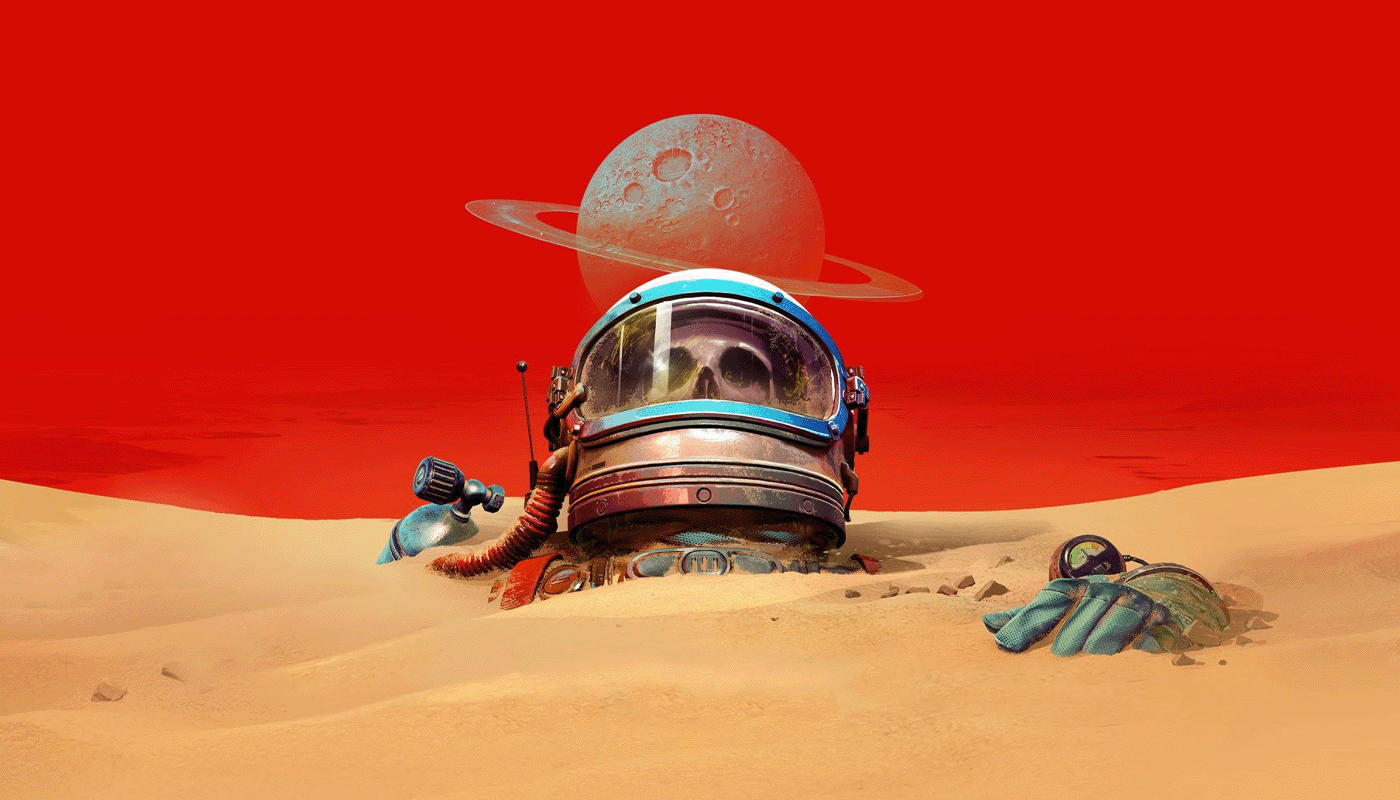
While 1984’s Elite is widely acknowledged as a groundbreaking open-universe game that introduced unprecedented player freedom and emergent gameplay, its sequel, Frontier: Elite II, truly propelled the hard science fiction video game genre into a new era. Released in 1993 by David Braben and Frontier Developments, Frontier: Elite II was a significant leap forward in simulating realistic spaceflight.
The game meticulously incorporated Newtonian physics to govern everything from celestial body movements to spaceship maneuverability. This meant that players had to contend with inertia, gravity, and orbital mechanics, a far cry from the arcade-style controls of many contemporary space games. The weight and mass of a ship directly influenced its acceleration and deceleration, and gravitational pulls from planets and moons were crucial factors in FTL jumps and combat maneuvers. While seemingly rudimentary by today’s standards, Frontier: Elite II‘s commitment to these principles forced players to fundamentally rethink how they navigated and interacted within a simulated universe. It demonstrated that a challenging, scientifically grounded experience could still be profoundly engaging and spark a sense of wonder, setting a benchmark for future hard sci-fi titles.
Sid Meier’s Alpha Centauri (1999) – Speculative Science in a Civilization Framework
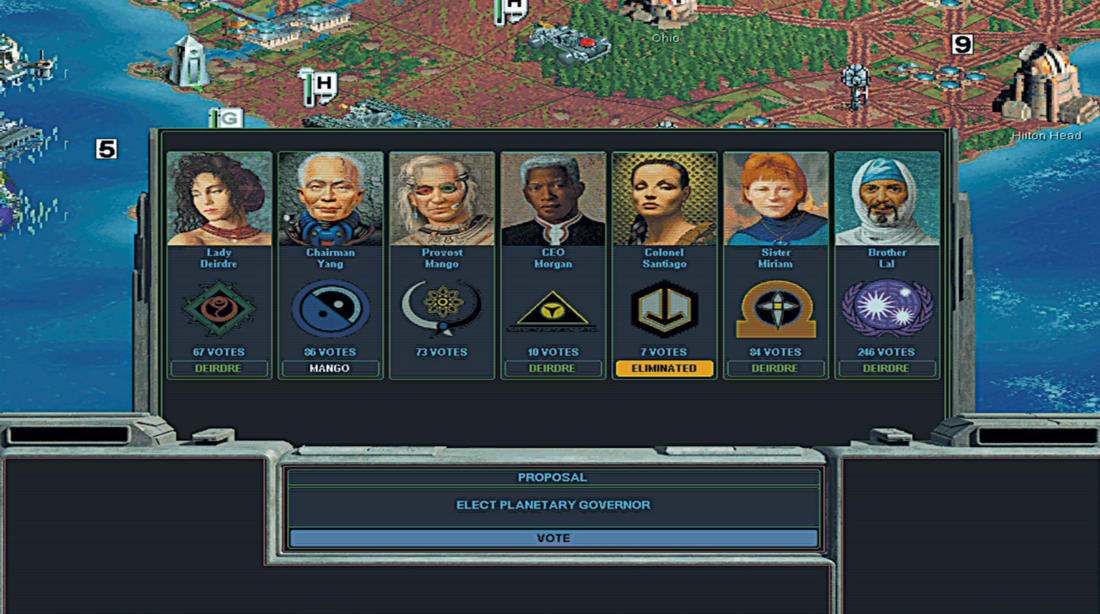
Released in 1999 by Firaxis Games, Sid Meier’s Alpha Centauri offers a fascinating, albeit slightly less rigidly "hard," approach to science fiction. While not as strictly bound by immediate physical laws as some other titles on this list, it draws heavily on plausible, aspirational scientific concepts and societal evolution. Developed by the same team behind the Civilization series, Alpha Centauri uses a similar engine but transplants the gameplay to the alien planet Chiron.
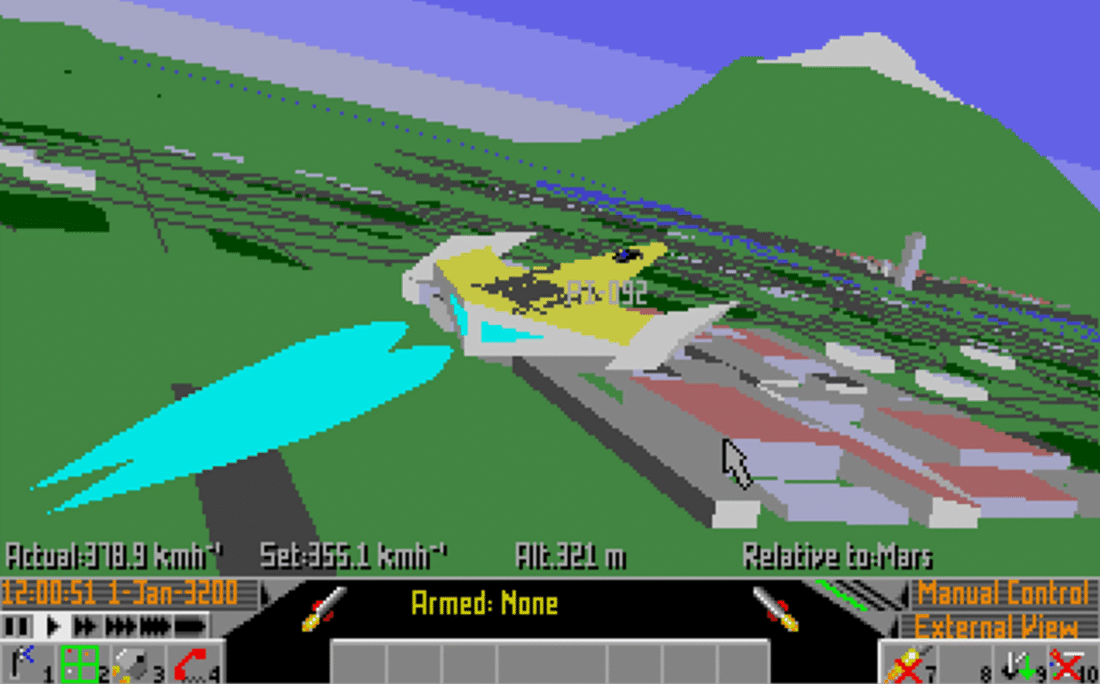
The game’s strength lies in its exploration of hypothetical hard-science technological advancements and their societal implications. Concepts like terraforming, advanced AI, genetic engineering, and sustainable interstellar colonization are not mere plot devices but integral mechanics. Players guide a faction of human settlers, forging a new civilization while grappling with scientific, philosophical, and political challenges. The game’s narrative and gameplay are deeply rooted in the idea of humanity’s potential future, imagining a civilization a few centuries from now. This speculative yet grounded approach, combined with its addictive gameplay loop, makes Alpha Centauri a compelling examination of hard sci-fi logic within a slightly more speculative framework, earning it a place among the genre’s notable entries.
Kerbal Space Program (2015) – The Joy of Orbital Mechanics
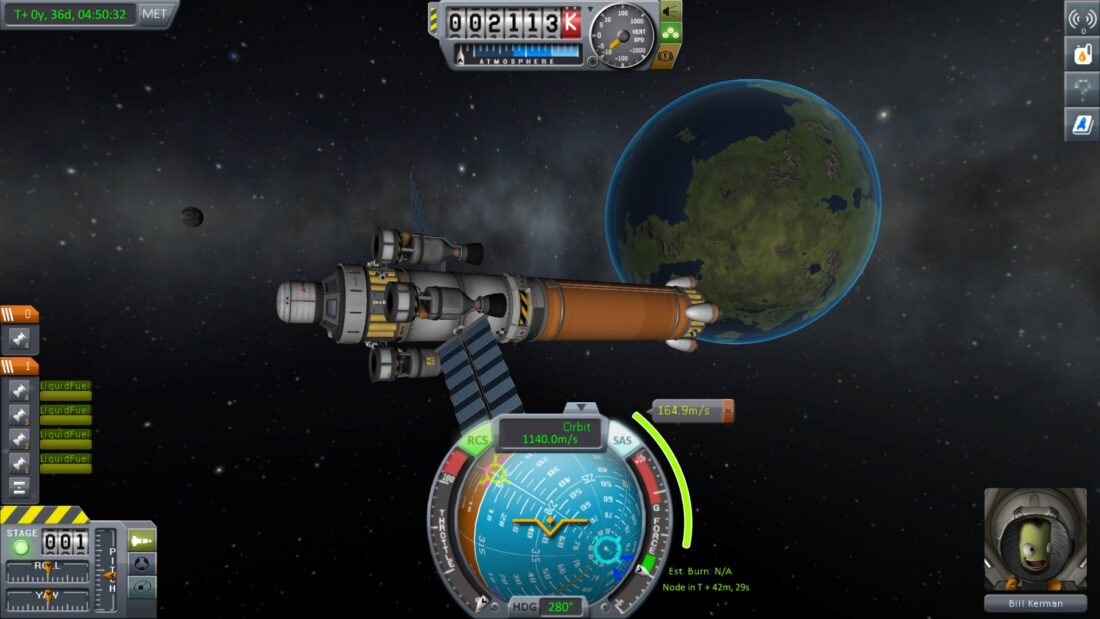
Despite its charmingly cartoony aesthetic and its cast of diminutive, green alien protagonists, Kerbal Space Program (KSP) stands as one of the most robust and scientifically accurate space simulation games ever created. Developed by Squad and released in its full version in 2015, KSP places players in charge of a fledgling space program for the Kerbal species.
The game’s primary appeal lies in its surprisingly complex and realistic simulation of orbital mechanics and rocket science. Players must design, build, and launch rockets, carefully considering factors such as thrust-to-weight ratio, fuel efficiency, atmospheric drag, and orbital trajectories. The moment a player successfully achieves orbit, performs a rendezvous with another spacecraft, or lands on a celestial body is a testament to their understanding of fundamental physics and engineering principles. While the visual presentation might suggest a lighter experience, the underlying mechanics are deeply rooted in real-world spaceflight. This juxtaposition of cute visuals and rigorous scientific simulation is KSP’s genius, making the often-frustrating process of learning orbital mechanics an immensely rewarding and joyous experience. Its success has spawned a dedicated community of players who share designs, tutorials, and passion for space exploration, highlighting the game’s significant educational and inspirational impact. The developers have consistently updated the game, adding more complex systems and celestial bodies, further solidifying its reputation as a premier hard sci-fi simulation.
Children of a Dead Earth (2016) – Uncompromising Space Combat Realism
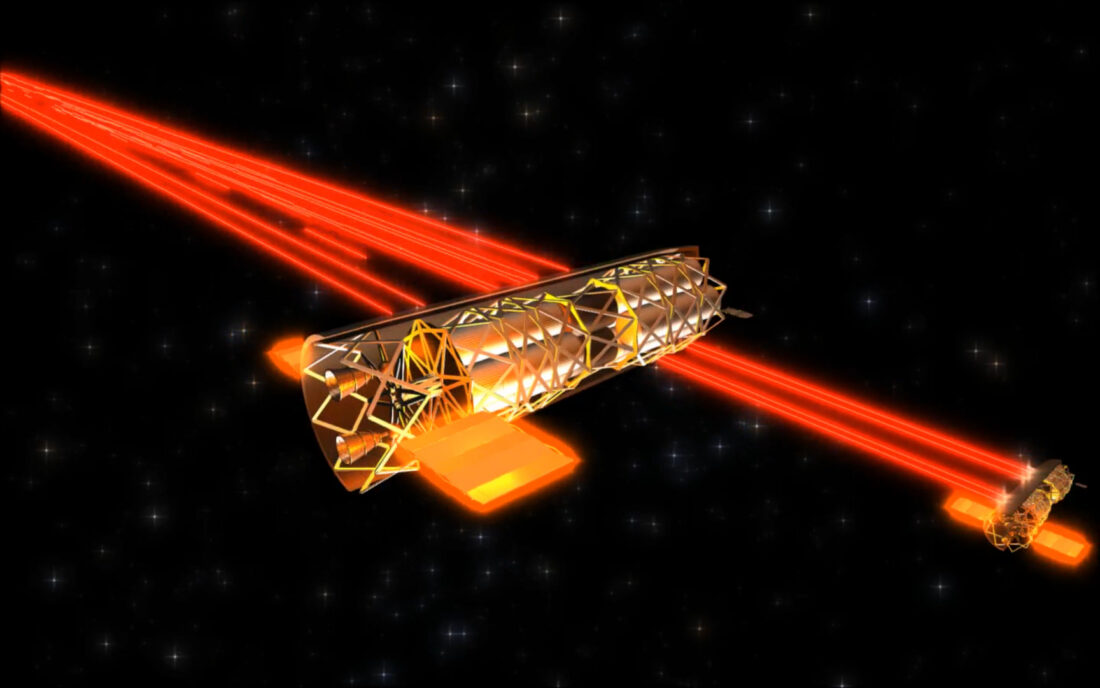
For players seeking the pinnacle of scientific accuracy in space warfare, Children of a Dead Earth (CoDE), released in 2016 by Q Switched Productions, LLC, offers an unparalleled experience. Billed as "The Most Scientifically Accurate Space Warfare Simulator Ever Made," CoDE demands that players consider every conceivable aspect of commanding a fleet in the vastness of space.
The game’s commitment to realism is staggering. It aims for a near 1:1 simulation of space travel and combat, accounting for factors like projectile ballistics in a vacuum, orbital mechanics for fleet positioning, energy management for ship systems, and the effects of radiation and micrometeoroids. The developers have meticulously documented and justified every scientific concept within the game in a comprehensive document, showcasing the depth of their research and dedication. Navigating CoDE’s intricate menus and submenus can be a daunting task, often requiring players to grapple with complex calculations and strategic planning just to adjust a ship’s radiation shielding. However, this complexity is precisely its strength, offering a deeply rewarding experience for those who invest the time to master its systems. The game’s unforgiving nature and its commitment to scientific fidelity have cultivated a dedicated fanbase that appreciates its uncompromising approach to simulating the harsh realities of space combat.
Surviving Mars (2018) – A Welcoming Entry into Planetary Colonization
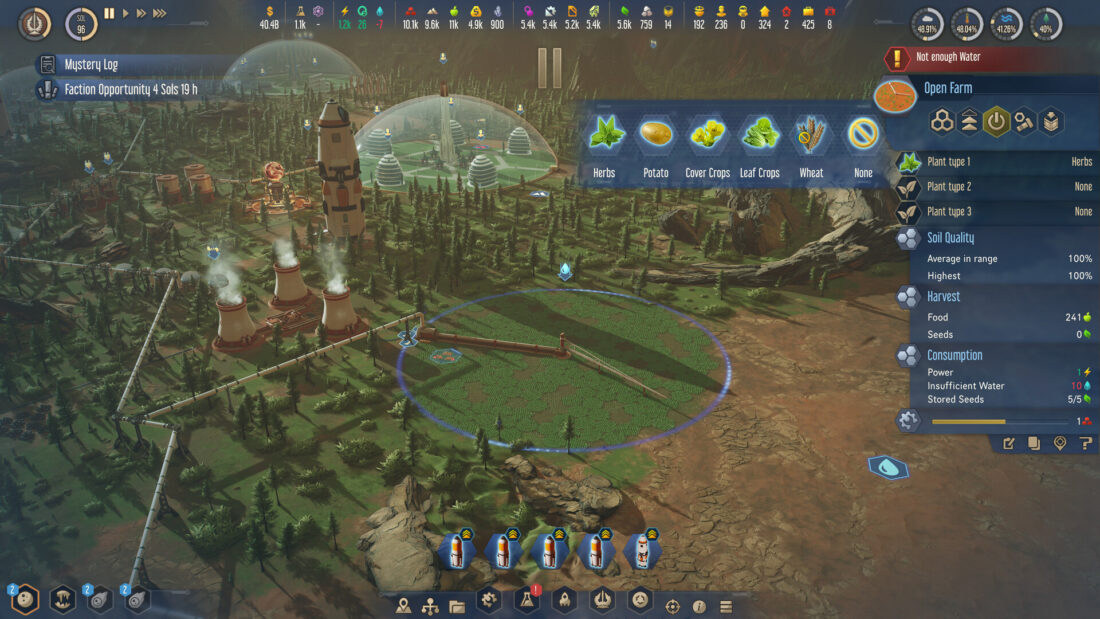
Surviving Mars, released in 2018 by Haemimont Games and published by Paradox Interactive, offers a more accessible yet still scientifically grounded take on hard science fiction, focusing on the challenges of establishing a human settlement on the Red Planet. Drawing inspiration from films like The Martian, the game presents a realistic portrayal of Mars’ environment and the logistical hurdles of colonization.
While sharing similarities with traditional city-building titles like Tropico (also developed by Haemimont Games), Surviving Mars integrates more complex scientific and survival elements. Players must manage resources, establish life support, and contend with Mars’ hostile atmosphere, dust storms, and the psychological toll on colonists. The core challenge lies in creating a self-sustaining habitat in an environment utterly inimical to human life. While it may not delve into the extreme physics simulations of other titles, its focus on realistic environmental challenges, technological progression, and resource management provides an engaging and educational experience. Surviving Mars serves as an excellent entry point for those curious about the practicalities of off-world colonization, demonstrating that hard sci-fi can be both thought-provoking and inviting.
Hardspace: Shipbreaker (2022) – The Blue-Collar Future of Space Salvage
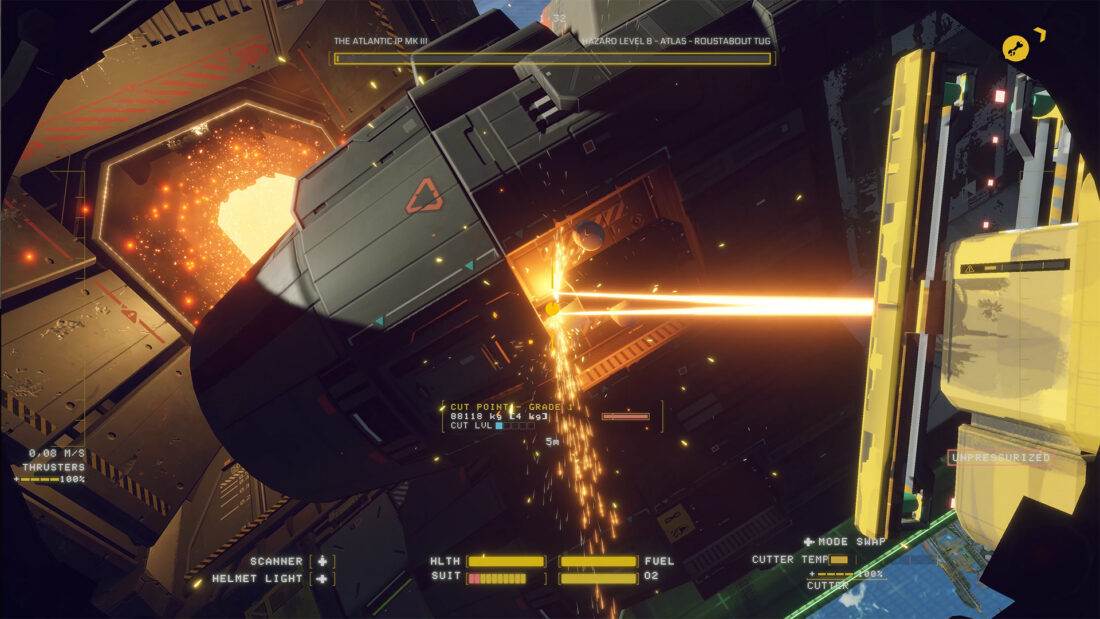
The concept of "blue-collar hard sci-fi" is a fascinating niche, and Hardspace: Shipbreaker, released in 2022 by Blackbird Interactive and published by Focus Entertainment, masterfully explores this territory. The game presents a gritty, realistic vision of the future where salvaging derelict spacecraft is a dangerous, low-paying job.
Players take on the role of an indentured worker for the omnipresent Lynx Corporation, tasked with dismantling massive, abandoned starships to pay off a crippling debt. The work is depicted as tedious, physically demanding, and fraught with peril. The game compellingly conveys the inherent dangers of this hypothetical profession through a risk-reward system that forces players to meticulously plan each cut, decompression, and component removal. One wrong move can lead to catastrophic explosions, environmental hazards, or the loss of valuable salvage. This grounded portrayal of a future workforce, combined with its intricate ship-dismantling mechanics, makes Hardspace: Shipbreaker a unique and compelling hard sci-fi experience. It highlights how even grand sci-fi concepts can have a mundane, challenging reality for the average worker, all while being surprisingly fun.
Nebulous: Fleet Command (2022) – Tactical Space Combat Simulation
For enthusiasts of military science fiction, Nebulous: Fleet Command, released in 2022 by Eskyrim Ltd. and published by Hooded Horse, offers a deep and realistic simulation of space fleet combat. The game focuses on strategic command and control, emphasizing the intricacies of managing a fleet in a hostile environment.
Unlike many space combat games that abstract away resource management, Nebulous places a significant emphasis on the minutiae of operating advanced warships. Players must monitor and maintain radar systems, deploy electronic countermeasures, manage power distribution, and precisely control their ships’ movement to exploit tactical advantages. The simulation extends to realistic projectile ballistics and the impact of heat management on ship performance. The developers have strived to create a combat experience that mirrors the complexity of commanding a submarine fleet, but on a grander, interstellar scale. This dedication to detail and tactical depth makes Nebulous: Fleet Command a standout title for players who appreciate a challenging and intellectually stimulating space combat simulation.
The Invincible (2023) – Atmospheric Hard Sci-Fi Narrative
Released in 2023 by Starward Industries and published by 11 Bit Studios, The Invincible offers a different flavor of hard science fiction, prioritizing atmosphere and philosophical exploration over intricate gameplay mechanics. Based on the novel of the same name by Stanisław Lem, the game invites players into a world that feels deeply rooted in scientific possibility while maintaining a sense of mystery and wonder.
Players assume the role of an astrobiologist searching for a lost crew on a mysterious planet. While often categorized as a "walking simulator" due to its narrative-driven focus, The Invincible distinguishes itself through its commitment to scientific inquiry. Players utilize various scientific tools to analyze the environment, interact with alien flora and fauna, and piece together the events that transpired. The game emphasizes that science is not just about cold logic and facts but also about curiosity, appreciation for life, and the exploration of possibilities. Coupled with its striking retrofuturistic aesthetic, The Invincible demonstrates that hard sci-fi can be as much about evoking a feeling and a sense of hope through scientific exploration as it is about complex simulations.
IV: Rings of Saturn (2023) – The Ultimate Asteroid Mining Simulator
IV: Rings of Saturn, released in 2023 by Kodera Software, represents a modern masterpiece of hard science fiction gaming, focusing on the hypothetical endeavor of asteroid mining. This title goes to extraordinary lengths to provide the most scientifically accurate representation of such an operation.
The game places players in command of a small excavation ship operating in a rich mining region. From this core premise, players can build a corporate empire, uncover lingering mysteries, or simply enjoy the methodical process of resource extraction. The developers at Kodera Software pride themselves on the game’s absolute dedication to scientific realism, stating that every technological concept is "real" and even generally accepted sci-fi tropes are avoided if they deviate from scientific plausibility. The logical consistency of every action and its consequences is paramount, forcing players to consider the ramifications of decisions both large and small. Rings of Saturn is undeniably a niche entry within an already niche genre, likely to alienate players seeking more immediate gratification. However, for those who persevere through its demanding mechanics, it offers a rich and rewarding experience that celebrates the intelligence and dedication of its creators, proving that even hypothetical scientific endeavors can be deeply engaging.
Terra Invicta (2026) – An Ambitious Grand Strategy of Alien Contact
Scheduled for release in 2026 and developed by Long War Studios (the team behind the acclaimed XCOM: Enemy Unknown Long War mod), Terra Invicta promises to be one of the most ambitious and deep examinations of an alien invasion scenario ever presented in any medium. The game begins with a fractured humanity, divided into seven factions following the arrival of an alien race. Players will lead one of these factions, charting a course for humanity’s future.
Terra Invicta expands exponentially on the strategic depth of its modding predecessors. The game is characterized by an overwhelming array of possibilities and intricate mechanics that players must navigate before executing even the smallest decisions. This complexity is intentional, aiming to simulate the multifaceted challenges of global political, technological, and military maneuvering in the face of an existential threat. While potentially daunting and even obtuse at times, Terra Invicta aims to offer an unparalleled experience in strategic sci-fi gaming, pushing the boundaries of what is possible in interactive storytelling and simulation. Its promise of a truly deep and consequence-driven grand strategy game has generated significant anticipation within the hard sci-fi gaming community.