The release of Enola Holmes 3 marks a significant milestone for Netflix’s original film strategy, solidifying the franchise as a cornerstone of the platform’s young adult and family-oriented programming. Directed by Philip Barantini and written by Jack Thorne, the third installment in the series follows the titular detective, played by Millie Bobby Brown, as she navigates the transition from adolescence to adulthood. This chapter attempts to balance the whimsy of a Victorian mystery with the gravity of historical political movements, taking the action from the foggy streets of London to the sun-drenched landscapes of Malta. While the film retains the charm and fourth-wall-breaking energy of its predecessors, it introduces a more complex, albeit crowded, narrative structure that reflects the maturing sensibilities of its lead character and its primary audience.
The Evolution of the Enola Holmes Franchise
The Enola Holmes series, based on the novels by Nancy Springer, first debuted in September 2020. At the time, it served as a breakout vehicle for Millie Bobby Brown outside of her career-defining role in Stranger Things. The first film reached an estimated 76 million households within its first 28 days, making it one of Netflix’s most-watched original films. The success of the sequel, Enola Holmes 2, which integrated the historical 1888 Matchgirls’ Strike, proved that the audience had an appetite for mysteries that blended fiction with real-world social issues.
In this third entry, the stakes are shifted toward the personal. The story picks up approximately one year after the events of the second film. Enola is no longer just a runaway seeking her mother; she is an established detective in her own right, grappling with the societal expectations of 19th-century England. The central conflict arises from her impending marriage to Lord Tewkesbury, played by Louis Partridge. This plot point serves as a vehicle to explore the legal and social constraints placed on women during the Victorian era, specifically the concept of "coverture," where a woman’s legal rights were subsumed by those of her husband upon marriage.
Narrative Overview and Chronology of Events
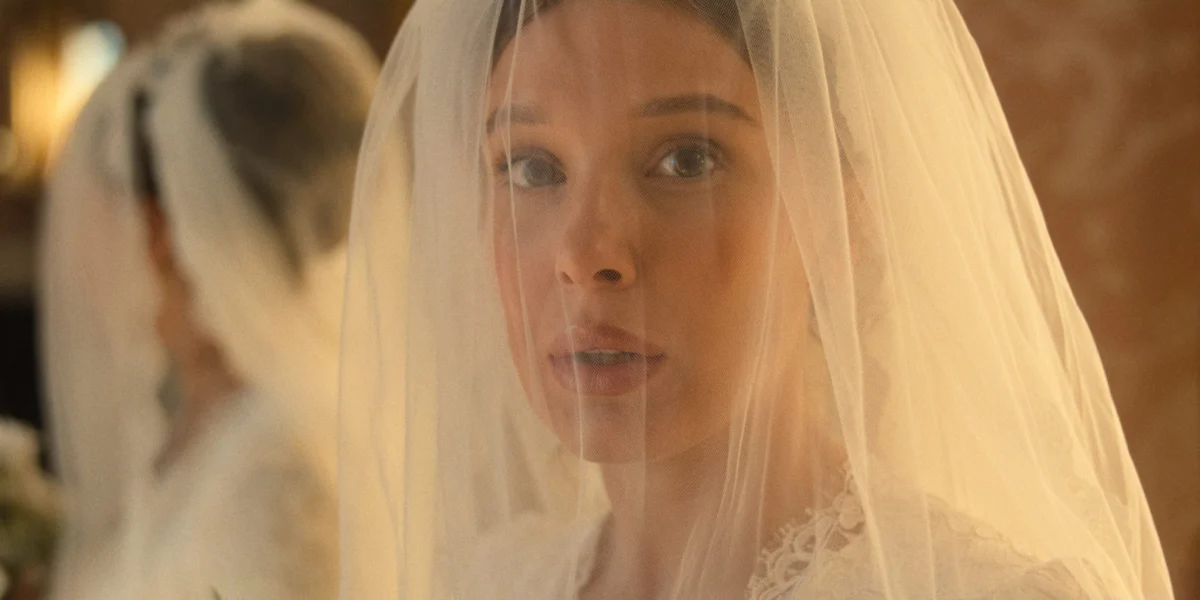
The film begins with a high-octane sequence that sets a frantic tone for the remainder of the 107-minute runtime. On the morning of her wedding to Tewkesbury, Enola finds herself questioning the loss of her independence. Before she can reach the altar, she is thrust into a chase involving a masked figure who is revealed to be Dr. John Watson, portrayed by Himesh Patel. This encounter serves as the catalyst for the film’s primary mystery: the disappearance of Sherlock Holmes.
The timeline of the film is heavily reliant on non-linear storytelling. Frequent flashbacks are employed to provide context for Enola’s relationship with Sherlock and their past collaborations. These sequences depict a protective, if occasionally curmudgeonly, Sherlock, allowing Henry Cavill to further humanize a character traditionally portrayed as cold and analytical. The discovery that Sherlock has been kidnapped leads Enola to investigate a web of corruption involving stolen military artifacts and a conspiracy tied to the First Anglo-Afghan War.
The investigation eventually takes the cast to Malta. The Mediterranean setting is not merely aesthetic; it is central to the plot, as the narrative weaves in the historical tensions of the Maltese people’s desire for liberation from British colonial rule. This international scope broadens the franchise’s horizons but also introduces a significant number of subplots that the film must resolve within its limited duration.
Technical Execution and Directorial Style
Philip Barantini, known for the high-tension, "one-shot" style of the film Boiling Point, brings a distinct visual energy to Enola Holmes 3. However, the transition to a large-scale period mystery has resulted in a stylistic shift that has divided early critics. The film utilizes a rapid-fire editing technique characterized by quick cuts and frequent visual "explainers" designed to keep pace with the attention spans of a digital-native audience.
While this approach ensures the film never lingers too long on a single scene, it has been noted for creating a "nauseating" effect during action sequences. The use of flashbacks is particularly dense in this installment. According to production data, the film utilizes nearly double the number of archival and flashback clips compared to the first film. This stylistic choice aims to reinforce the franchise’s continuity but, in practice, often interrupts the momentum of the current mystery.
Writer Jack Thorne, who previously collaborated with Barantini on the crime drama Adolescence, attempts to ground the film in "heavy" topics. The screenplay addresses:
- The First Anglo-Afghan War: Exploring the military cover-ups and the human cost of 19th-century imperialism.
- Colonial Resistance: The burgeoning movement for Maltese independence.
- Women’s Autonomy: The internal struggle of a professional woman facing the traditional requirements of a noble marriage.
- Familial Legacy: Lord Tewkesbury’s unresolved grief and complicated relationship with his late father.
Character Dynamics and Performance Analysis
Millie Bobby Brown continues to anchor the series with a performance that has matured alongside her. At 20 years old, Brown brings a level of gravitas to Enola that was absent in the more lighthearted first film. Her chemistry with Henry Cavill remains a highlight of the production. Cavill’s Sherlock Holmes is presented here as a more vulnerable figure, and the sibling dynamic—characterized by mutual respect and typical brotherly disapproval of her fiancé—provides the film’s emotional core.
The supporting cast is bolstered by the return of Helena Bonham Carter as Eudoria Holmes. Her portrayal of the eccentric, revolutionary mother continues to serve as a foil to the more structured lives of her children. Sharon Duncan-Brewster also returns as Mira Troy (an anagram for Moriarty), maintaining her position as a formidable intellectual adversary for the Holmes family. Himesh Patel’s Watson is given more screen time here, suggesting a potential shift toward a more traditional Holmesian ensemble should the franchise continue.
Historical Context and Implications
By setting the film against the backdrop of the First Anglo-Afghan War (1839–1842) and the British occupation of Malta, the production team continues its trend of using "Enola Holmes" as a gateway for younger viewers to engage with historical themes. The First Anglo-Afghan War was a disastrous period for the British Empire, marked by the retreat from Kabul and significant military failures. Using this as a plot point for a "military cover-up" adds a layer of historical realism to the otherwise fictional mystery.
Furthermore, the focus on Malta’s liberation movement highlights a lesser-known aspect of Victorian-era geopolitics. During this period, Malta was a vital naval base for the British, but local sentiment was often at odds with colonial administration. By integrating these themes, Thorne and Barantini attempt to elevate the film from a standard detective story to a critique of the era’s power structures.
Industry Impact and Future Outlook
The "Enola Holmes" franchise represents a successful pivot for Netflix in an era where theatrical franchises are struggling. By leveraging a high-profile star and a recognizable intellectual property (the world of Sherlock Holmes), Netflix has created a "streaming tentpole" that rivals traditional studio releases in terms of production value and star power.
Data from streaming analytics suggests that the "Enola Holmes" series has a high "stickiness" rating, meaning viewers who watch the first film are highly likely to complete the sequels. This loyalty is crucial for Netflix as it faces increasing competition from Disney+ and Warner Bros. Discovery. The inclusion of Himesh Patel as Watson and the unresolved threads regarding Mira Troy suggest that the "Enola Holmes Cinematic Universe" has ample room for expansion, potentially through spin-offs or a fourth main-line film.
However, the critical reception of the third film’s "overstuffed" nature serves as a cautionary note for the series’ future. As the stories become more ambitious, they risk losing the focused, character-driven charm that made the 2020 original a hit. The balance between educational historical subplots and the core mystery is a delicate one, and in Enola Holmes 3, the scales tip toward a narrative density that may challenge some viewers.
In conclusion, Enola Holmes 3 is a testament to the growth of its lead actress and the ambition of its creative team. While the film’s frantic editing and thematic overcrowding may hinder its cohesion, its commitment to exploring the complexities of womanhood and the dark corners of history ensures it remains a cut above standard adolescent fare. As Enola Holmes continues to redefine what it means to be a lady and a detective, the franchise remains a vital, if occasionally chaotic, component of the modern streaming landscape.