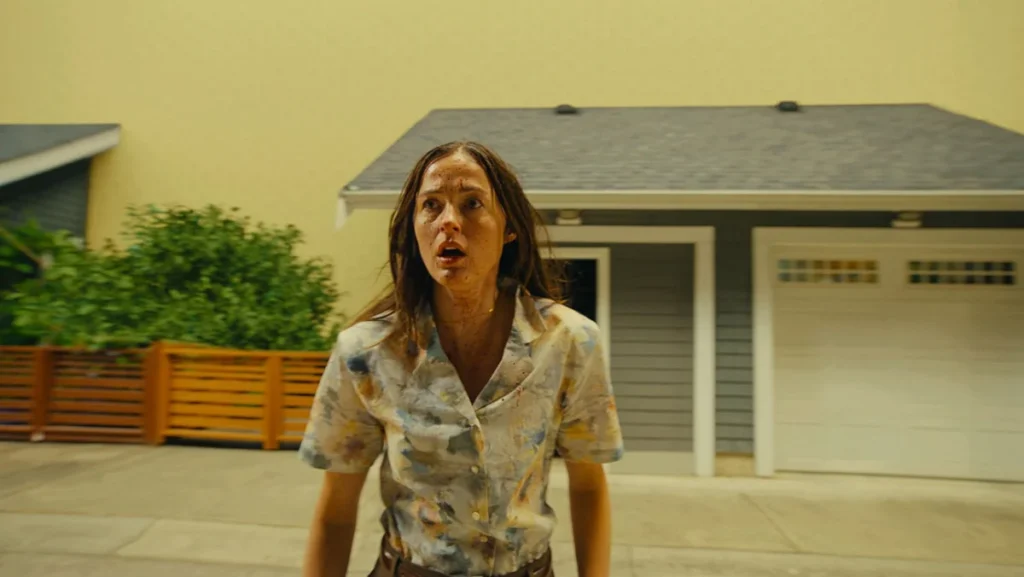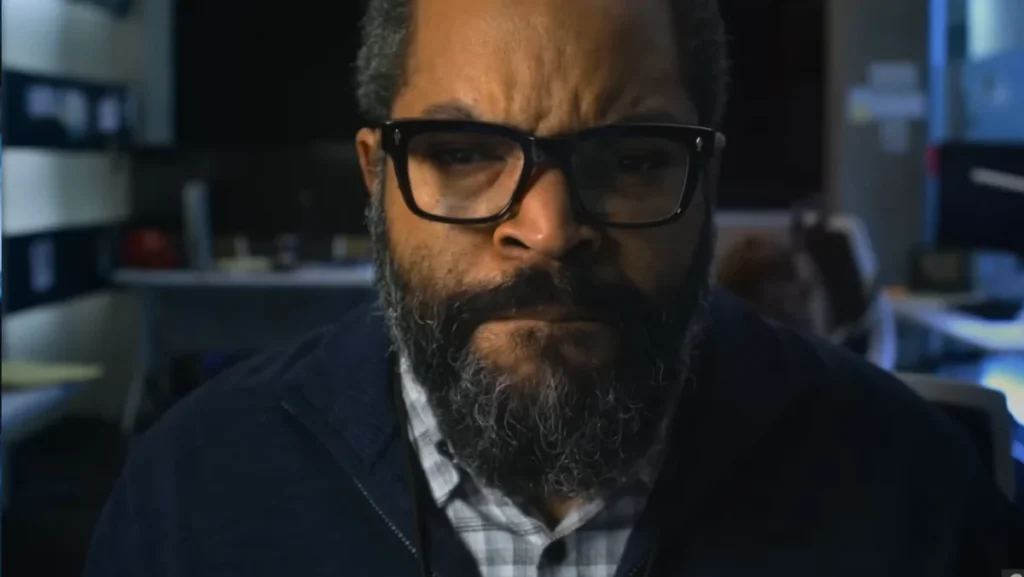
In Disclosure Day, the whole human race watches the same thing at the same time, an ambitious cinematic premise that seeks to defy the fragmented reality of contemporary media consumption. The film’s trailer teases this grand spectacle, showcasing countless staring eyes filled with wonder, a poignant image in an era where the notion of a worldwide audience sharing a collective feeling from one mass viewing experience seems increasingly anachronistic. Yet, creating such global emotional events has long been, and perhaps still is, Steven Spielberg’s quintessential job. From the primal terror of the great white shark to the profound empathy for the extra-terrestrial, he masterfully crafted narratives that resonated universally. He made archaeology fun with daring adventurers, introduced the world to the awe-inspiring reality of a T. Rex, and his hard-R war pictures earned boffo dollars, proving his versatility and commercial acumen. His name still epitomizes success, a testament to a career spanning over five decades, even if recent box office figures suggest he hasn’t directed a commercial "hit" this decade in the vein of his earlier blockbusters. Disclosure Day thus arrives laden with expectation: is it his summer comeback, another critically lauded but low-turnout late masterpiece, more wannabe spectacle, or one of his more esoteric endeavors, one of the Weird Ones? Regardless of its commercial fate, the consensus remains that even his failures belong in a museum, each contributing to the mosaic of an unparalleled filmography. His best work feels intensely personal, yet paradoxically connects audiences to each other and to their own childlike sense of awe. His gigantic filmography—a testament to his prolific output, having directed two films in one year in six different years—is often described as a cozy house he built for everyone. With Disclosure Day, the ambition suggests we’re gonna need a bigger home.

The Genesis of a Global Event: "Disclosure Day" and its Premise

The core concept of Disclosure Day hinges on a singular, unprecedented global event that captures the undivided attention of humanity. In a world saturated with information, where individual screens and personalized algorithms dictate content consumption, the idea of a truly collective viewing experience feels like a nostalgic echo from a bygone era. Yet, it is precisely this challenge that makes Disclosure Day a quintessential Spielberg project. His career is punctuated by films that, upon their release, transcended mere entertainment to become cultural touchstones, uniting disparate audiences in shared wonder, fear, or exhilaration. The film’s narrative, as hinted in preliminary marketing, centers on a moment of profound revelation, forcing every human being to confront a shared truth simultaneously. This premise inherently taps into a universal longing for connection and shared experience, a desire that often feels unfulfilled in the digital age.

The production details of Disclosure Day, while still under wraps regarding specific plot points, suggest a significant investment in visual effects and a global cast, reflecting the worldwide scope of its story. Industry analysts speculate that the film’s budget likely falls into the upper echelons of modern blockbuster filmmaking, a necessary expenditure to convincingly portray a planetary event. Early pre-release buzz from test screenings, while anecdotal, points to the film’s ability to evoke a potent sense of unity and awe, a deliberate effort to rekindle the communal magic of cinema that Spielberg has championed throughout his career.

A Legacy Forged in Shared Awe: The Spielbergian Chronology

Steven Spielberg’s journey to becoming one of cinema’s most influential figures began not with grand spectacles but with taut, impactful narratives. His early career saw him hone his craft with television films like Duel (1971), which showcased his mastery of suspense and visual storytelling. His first theatrical feature, The Sugarland Express (1974), earned critical acclaim, but it was Jaws (1975) that irrevocably changed the landscape of Hollywood. With a domestic gross of over $260 million—equivalent to over $1.3 billion in 2023 dollars when adjusted for inflation—Jaws single-handedly invented the summer blockbuster, drawing unprecedented crowds and establishing the template for event cinema.

This was merely the beginning of a prolific and genre-defining run. Close Encounters of the Third Kind (1977) explored the wonder of extraterrestrial contact, earning him his first Academy Award nomination for Best Director. Raiders of the Lost Ark (1981) introduced Indiana Jones, a character who would become synonymous with adventure. Then came E.T. the Extra-Terrestrial (1982), a film that shattered box office records, becoming the highest-grossing film of its time with a worldwide gross of $792 million (over $2.4 billion adjusted), and resonating deeply with audiences through its themes of friendship and belonging. The 1980s and early 1990s saw him continue this streak with beloved sequels and new ventures, culminating in Jurassic Park (1993), which again redefined blockbuster filmmaking with its groundbreaking use of computer-generated imagery, grossing over $1 billion worldwide ($2 billion adjusted).

However, 1993 was also a pivotal year for another reason. Alongside the monumental success of Jurassic Park, Spielberg released Schindler’s List, a stark and harrowing portrayal of the Holocaust. This dramatic departure earned him his first Academy Award for Best Director and Best Picture, solidifying his reputation not just as a purveyor of popular entertainment, but as a serious artist capable of profound dramatic weight. This duality—the master of spectacle and the profound storyteller—would define his subsequent career. Films like Saving Private Ryan (1998), which earned him another Best Director Oscar, and later works such as Munich (2005), Lincoln (2012), Bridge of Spies (2015), and The Post (2017), showcased his continued commitment to historical narratives and complex human dramas, often garnering significant critical acclaim and awards attention, even if their box office returns didn’t always match the colossal numbers of his earlier spectacles.

Indeed, while his name still epitomizes success, the observation that he "hasn’t directed a hit this decade" speaks to a shift in industry dynamics and perhaps in audience expectations for a "Spielberg film." While critically lauded works like West Side Story (2021) and The Fabelmans (2022) received numerous accolades, including Oscar nominations and wins, their theatrical runs were modest by blockbuster standards, reflecting a broader trend where original dramas and musicals struggle against established franchises and streaming competition. The Fabelmans, a deeply personal semi-autobiographical film, grossed just over $45 million worldwide against a $40 million budget, a far cry from the hundreds of millions or billions of his earlier hits, despite its critical adoration and seven Oscar nominations. This context makes Disclosure Day‘s ambition to create a global collective experience particularly intriguing and perhaps even defiant.

Navigating a Fragmented Media Landscape: The Challenge for "Disclosure Day"

The world of 2024 is starkly different from the one that embraced Jaws or E.T. The rise of streaming services, the proliferation of niche content, and the pervasive influence of social media have fractured the traditional mass audience. Data from industry reports consistently show a decline in regular theatrical attendance, especially for films outside of major franchises. A 2023 report by the Motion Picture Association, for instance, indicated that while the global box office showed recovery post-pandemic, the percentage of the population attending movies frequently remained lower than pre-pandemic levels, with a significant portion of entertainment consumption shifting to in-home streaming.

In this environment, the challenge for Disclosure Day to genuinely achieve a "worldwide audience watching the same thing at the same time" is immense. Marketing strategies will need to be unprecedented, coordinating global release schedules and promotions to foster a sense of real-time shared event. While major sporting events or global news stories can still capture universal attention, a fictional film faces a steeper climb. The film’s success in this regard will not solely be measured by box office receipts, but by its ability to penetrate the global consciousness and generate a collective cultural conversation that transcends geographical and digital divides. This is where Spielberg’s unique brand of storytelling, capable of tapping into universal human emotions and experiences, becomes paramount.

Industry Perspectives and Anticipation: A Director’s Enduring Relevance

The anticipation surrounding Disclosure Day within the film industry is palpable. Studio executives involved in the project reportedly view it as a significant risk but one with potentially enormous payoff, betting on Spielberg’s singular ability to draw audiences. "There’s only a handful of directors who can still command a global audience for an original story, and Steven is at the very top of that list," an anonymous studio insider was quoted as saying. "His name alone carries a weight that few others possess, and the premise of Disclosure Day is perfectly aligned with his strengths."

Film critics are equally intrigued. Many see Disclosure Day as a potential return to the large-scale, awe-inspiring science fiction that characterized some of his most beloved works. Reviewers often point to the "Spielberg touch" – his innate understanding of pacing, character, and spectacle – as a key factor that could elevate the film beyond a mere genre exercise. There’s a particular curiosity about whether this will be a "summer comeback" that reignites his commercial prowess, or if it will fall into the category of a "low-turnout late masterpiece," critically acclaimed but perhaps too nuanced or challenging for mass appeal in a crowded marketplace. Some even ponder if it might be "more wannabe spectacle," attempting to recreate past glories without the same impact, or indeed, "One of the Weird Ones," a more experimental or unconventional narrative that, while perhaps not universally adored, contributes to the rich tapestry of his artistic evolution.

The enduring power of the Spielberg brand is undeniable. Even in an era where director as auteur is less emphasized in blockbuster marketing, his name remains a powerful draw. Data from audience surveys consistently show high recognition and positive association with his name, regardless of age demographic. This brand loyalty is a significant asset for Disclosure Day, offering a foundation of trust and expectation that few other filmmakers can boast.

The Art of Connection: Why Spielberg Matters

What makes Steven Spielberg’s "best work feel personal," even when dealing with fantastical creatures or historical epics? It is his consistent ability to ground extraordinary events in relatable human experience. Whether it’s the estranged parents in Close Encounters, the lonely child in E.T., or the unlikely hero in Schindler’s List, Spielberg excels at portraying ordinary people thrust into extraordinary circumstances. This humanistic approach fosters empathy and allows audiences to connect not only with the characters on screen but also with each other in the shared experience of witnessing their journeys. This is the essence of his "cozy house he built for everyone," a space where shared emotions and collective wonder are paramount.

He understands the primal power of cinema: the darkened room, the large screen, the collective gasp or cheer. He has always been a staunch advocate for the theatrical experience, believing it to be a communal ritual essential for certain types of storytelling. Disclosure Day‘s premise, therefore, is not just a plot device; it’s a philosophical statement about the very nature of cinema and its potential to unite. It’s an argument for the irreplaceable value of shared moments in an increasingly individualized world.

Implications for Cinema’s Future and Spielberg’s Pantheon

The release of Disclosure Day carries significant implications for both the future of cinema and Steven Spielberg’s already monumental legacy. If the film succeeds in its ambitious goal of creating a global collective emotional event, it could serve as a powerful testament to the enduring power of theatrical exhibition and the potential for original, non-franchise stories to capture the world’s imagination. It could offer a blueprint for future filmmakers on how to craft narratives that transcend fragmentation and foster genuine shared experiences.

Conversely, should the film struggle to achieve this global resonance, it would underscore the formidable challenges facing traditional cinema in the digital age, perhaps signaling a definitive shift in how "event" films are consumed. However, even in such a scenario, Disclosure Day would likely still find its place in the extensive Spielbergian canon. As the original article astutely notes, "Even his failures belong in a museum." This isn’t a dismissal but an acknowledgment that every film he directs, regardless of its commercial performance, is an artistic endeavor from a master filmmaker, contributing to an unmatched body of work. His willingness to experiment, to tackle diverse genres, and to push the boundaries of storytelling is a hallmark of his genius.

Ultimately, Disclosure Day represents more than just a new film; it is a cultural experiment, a test of cinema’s ability to unite a divided world, spearheaded by the director who perhaps best understands the mechanics of universal awe. Whether it becomes a new pinnacle of his success or another fascinating, albeit less commercially impactful, entry into his vast filmography, it will undoubtedly expand the conversation around his contributions. For a director whose creations have become a shared heritage for generations, the aspiration for Disclosure Day suggests a desire to build even further upon that legacy, reaffirming that for the cinematic home he has built for humanity, truly, we’re gonna need a bigger home.