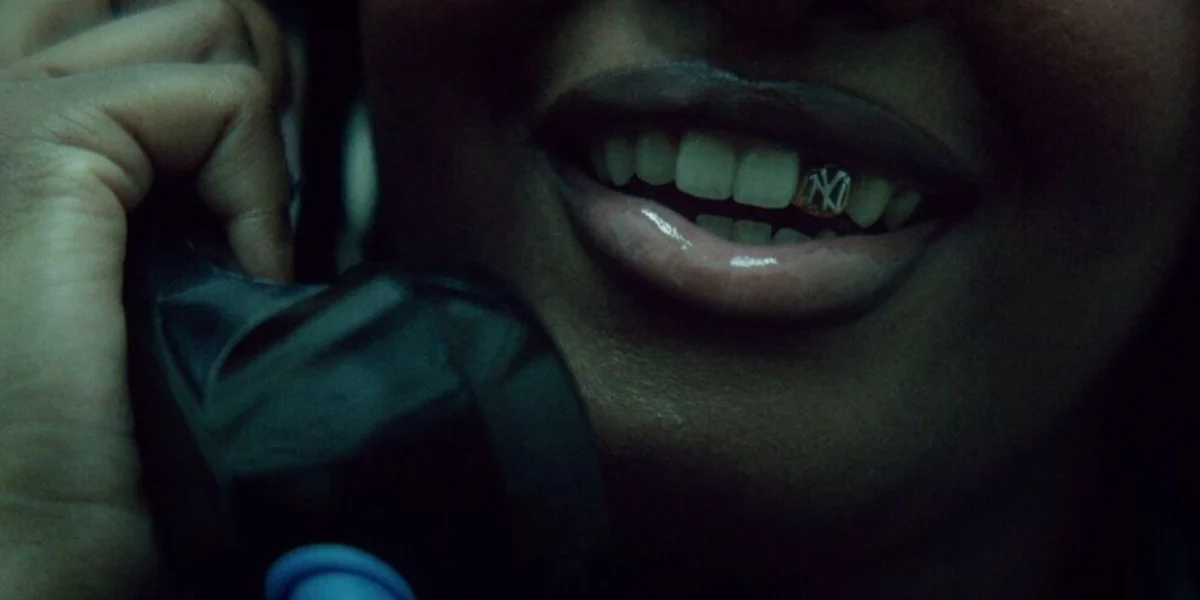
The documentary film Mouth Full of Golds serves as a definitive historical record of Eddie Plein, the innovator widely credited with the creation and popularization of "grillz" within the hip-hop community. Directed and written by Lyle Lindgren, the 83-minute feature explores the intersection of dental craftsmanship, African American cultural expression, and the commercial evolution of the music industry. Through a combination of previously unseen archival footage and contemporary interviews with figures such as A$AP Rocky, Mike Tyson, and Goldie, the film documents how a niche fashion choice in the 1980s transformed into a global multi-million-dollar industry and a primary visual signifier of hip-hop success.
The Genesis of a Cultural Phenomenon
The narrative of Mouth Full of Golds centers on Eddie Plein, known professionally as "Famous Eddie," a Surinamese immigrant who arrived in New York City with a vision that would fundamentally alter the aesthetic of urban music. During the early 1980s, the hip-hop movement was transitioning from a localized New York subculture to a national powerhouse. Plein identified a gap in the market for customizable, removable gold dental jewelry. Operating out of the Colosseum Mall in Jamaica, Queens—a legendary hub for hip-hop fashion—Plein began crafting "gold caps" that could be slipped over existing teeth, providing a temporary yet ostentatious display of wealth.
This innovation was pivotal. Prior to Plein’s work, dental gold was often a permanent fixture associated with necessity or older generations. By making the pieces removable and customizable with diamonds and intricate engravings, Plein turned dentistry into a high-fashion accessory. The documentary highlights how his early clientele included nascent superstars like Just-Ice and Big Daddy Kane, whose adoption of the "fronts" helped cement the look as an essential component of the hip-hop uniform.
Chronology of the Grillz Movement
The film meticulously tracks the geographic and cultural spread of Plein’s influence, following a timeline that mirrors the expansion of hip-hop itself:
- 1980s: The New York Foundation: The era of the "Colosseum Mall" where Plein established his reputation. This period was defined by thick gold chains and the initial introduction of gold caps as a status symbol in the burgeoning crack-era economy of New York.
- Early 1990s: The Atlanta Migration: As the New York scene became saturated and competitive, Plein moved to Atlanta, Georgia. This move proved prescient, as the "Dirty South" was on the verge of its own cultural explosion. Opening "Famous Eddie’s" in Atlanta, he became the primary jeweler for the Dungeon Family, including Outkast and Goodie Mob.
- Late 1990s to early 2000s: Mainstream Saturation: The documentary notes the shift as the grillz phenomenon moved from the streets to the charts. While Plein remained a foundational figure, the mid-2000s saw the trend reach a fever pitch with artists like Nelly and Paul Wall, the latter of whom turned the Houston "ice" culture into a global brand.
- 2010s to Present: High Fashion Integration: The final act of the film examines the modern era, where grillz have moved beyond hip-hop. Interviews with fashion icon Michele Lamy and jeweler Dolly Cohen illustrate how Plein’s street-born invention is now featured on Parisian runways and worn by pop icons like Rihanna and Beyoncé.
Technical Craft and Documentary Structure
Lyle Lindgren’s approach to the material is characterized by a "workmanlike" dedication to historical accuracy. The film relies heavily on "talking head" interviews, a traditional documentary technique that provides a platform for eyewitness accounts. While some critics have noted that the cinematography of these contemporary interviews is somewhat static—lacking the visual flair often associated with the high-gloss world of jewelry—the strength of the film lies in its archival curation.
The 83-minute runtime is densely packed with rare footage from the 1980s and 90s, offering a raw, unvarnished look at the early days of the hip-hop industry. This footage provides a stark contrast to the polished, digital world of today, highlighting the "pre-internet" era where trends moved through physical spaces like malls and clubs rather than social media feeds. The editing, while functional, serves to bridge the gap between Plein’s "rise and fall" narrative, ensuring that the pace remains brisk without sacrificing the depth of the historical context.
Supporting Data and Economic Impact
The documentary provides an implicit look at the economic scale of the industry Plein birthed. In the early 1980s, a simple gold cap might cost between $50 and $100. By the 2000s, custom grillz encrusted with VVS diamonds were fetching prices ranging from $10,000 to over $100,000.
Market data suggests that the custom jewelry sector of the "urban" market grew exponentially between 1995 and 2010, directly correlating with the rise of the Southern hip-hop sound. Eddie Plein’s move to Atlanta allowed him to tap into a market that would eventually dominate the Billboard charts. The film suggests that while Plein may not have captured the full commercial value of the industry he created—a common theme among innovators in the music business—his influence is the "beating heart" of a multi-billion dollar aesthetic.
Statements and Perspectives from Industry Figures
The inclusion of high-profile subjects provides a multifaceted view of Plein’s legacy. A$AP Rocky, a modern standard-bearer for hip-hop fashion, speaks to the cyclical nature of the trend and how Plein’s original designs continue to inform current "street-luxe" aesthetics. Rocky’s participation underscores the respect the younger generation holds for the pioneers of the craft.
Mike Tyson offers a different perspective, representing the crossover of the "tough" aesthetic into the mainstream sports world. His presence in the documentary serves as a reminder that the grill was not just a musical accessory but a symbol of a specific type of American masculinity and success.
Conversely, the inclusion of Dolly Cohen—a jeweler known for her work with Givenchy and high-profile celebrities—validates Plein’s work as legitimate art. Cohen’s perspective helps elevate the narrative from a story about "teeth" to a story about sculpture, metallurgy, and the evolution of human adornment.
Broader Impact and Cultural Implications
Mouth Full of Golds does more than profile a single man; it analyzes the death of the "monoculture." Lindgren’s film argues that in the pre-internet age, figures like Eddie Plein could shape an entire culture’s visual identity through word-of-mouth and physical presence. Today, the fragmentation of the internet has made such a singular impact more difficult to achieve.
The documentary also touches upon the social implications of the grill. For decades, gold teeth were used by mainstream media as a shorthand for criminality or "thug" culture. The film challenges this narrative by presenting Plein as a dignified craftsman and a businessman. It frames the grill as a "mask of wealth" and a form of cultural armor, reclaiming the narrative from those who viewed it through a purely pejorative lens.
Furthermore, the film addresses the "rise and fall" of Eddie Plein with a sense of poignant realism. Unlike many documentaries that focus on tragic endings, Mouth Full of Golds portrays Plein as a survivor. His struggle to adapt to the digital age and the shifting landscape of the jewelry business is presented not as a personal failure, but as a reflection of the volatile nature of the fashion and music industries.
Conclusion and Final Analysis
As a piece of documentation, Mouth Full of Golds is an essential viewing for those interested in the history of hip-hop and the sociology of fashion. While the filmmaking itself remains grounded in conventional documentary tropes—opting for informative clarity over stylistic experimentation—the magnetic personality of Eddie Plein carries the feature.
The film successfully positions Plein as an unsung hero of the music industry. By the end of the 83-minute runtime, it is clear that the "mouth full of golds" seen on modern red carpets is a direct descendant of the gold caps crafted in a Queens mall forty years ago. Lindgren has produced a respectful, thorough ode to a man who literally changed the face of a culture, ensuring that while Eddie Plein may have once been anonymous to the masses, his contribution to the history of art and music will no longer go unrecorded.