The acclaimed Japanese manga series, "Witch Hat Atelier," penned and illustrated by Kamome Shirahama, has successfully transitioned to the animated screen, premiering its much-anticipated television adaptation on April 6, 2026. This cinematic rendition, produced by BUG FILMS and helmed by director Ayumu Watanabe, marks a significant milestone for a franchise that has already garnered critical acclaim and a substantial global readership since its serialization began in Kodansha’s Morning Two magazine in July 2016. As of April 2026, the manga boasts 16 tankobon volumes, with its worldwide circulation, including digital editions, exceeding 7.5 million copies by March 2026.
Origins and the Genesis of a Unique Magic System
Kamome Shirahama, a prodigious talent who honed her craft as an illustrator before embarking on her manga career, conceived "Witch Hat Atelier" from a profoundly imaginative premise: the very act of drawing as magic. This foundational idea permeates the series, shaping a meticulously crafted fantasy world where spells are not an inherent ability but a learned skill, performed through the precise drawing of intricate runes, signs, and glyphs using a special magical ink. Shirahama’s background in illustration is palpable in the manga’s breathtaking artwork, which often feels like a masterclass in visual storytelling, laying the groundwork for the anime’s ambitious visual design. Her prior experience lent her a unique perspective on depicting complex magical effects and the nuanced expressions of her diverse cast, allowing her to build a world that is both fantastical and grounded in artistic principles.
Manga’s Journey and Industry Recognition
Since its debut, "Witch Hat Atelier" has not only captivated readers but also garnered significant industry accolades. The series received the prestigious Harvey Award for Best Manga in both 2020 and 2025, a testament to its compelling narrative and artistic excellence. Further solidifying its international appeal, it was honored with the 2020 Eisner Award for Best U.S. Edition of International Material, Asia. These awards underscore the manga’s widespread critical acceptance and its impactful contribution to the global comics landscape. The consistent publication schedule in Morning Two and the steady release of tankobon volumes have cultivated a dedicated fanbase, eagerly following Coco’s journey and the unfolding mysteries of the magical world. The impressive sales figures, particularly the surge past 7.5 million copies by March 2026, highlight the manga’s commercial success and its robust presence in a competitive market, signaling a strong foundation for the anime adaptation to build upon.
The World of the Zozah Peninsula: A Society Defined by Magic and Secrecy
The narrative of "Witch Hat Atelier" unfolds in the enchanting yet rigidly controlled Zozah Peninsula, a realm where magic is not an innate gift but an art form, accessible only through the precise drawing of specific patterns with special ink. This profound knowledge was once freely available, a common thread in the fabric of daily life. However, a series of catastrophic events – devastating wars, natural disasters, and uncontrolled magical incidents – culminated in a pivotal historical moment known as the Day of the Pact. This epochal event led to the establishment of the Great Hall of Witches, an authoritarian institution that seized control of all magical knowledge. Under its stringent decree, only authorized witches are permitted to practice magic, safeguarding its secrets from the "unknowing" – ordinary people who are forbidden from learning the truth. The consequences for those who inadvertently stumble upon magical knowledge are severe, often involving the erasure of their memories, enforcing a strict societal hierarchy and maintaining a fragile peace built on enforced ignorance. This intricate world-building creates a compelling backdrop for the story, immediately raising questions about freedom, control, and the nature of power.
Coco’s Unconventional Path to Witchcraft
At the heart of this meticulously constructed world is Coco, a young, aspiring dressmaker’s daughter who harbors a secret, fervent dream of becoming a witch. Her aspirations are deemed impossible by society, as she has been repeatedly told that only those born with magical aptitude can wield such power. Her life takes an unforeseen turn when she encounters Qifrey, a traveling witch, whose performance of a spell she secretly witnesses. This encounter sparks a realization that a mysterious book she acquired from a masked figure years prior contains authentic magical instructions. In a moment of youthful curiosity and naive ambition, Coco attempts to use the book, inadvertently casting a powerful spell that tragically encases her mother and their home in crystal.
Witnessing this catastrophic display, Qifrey, recognizing Coco’s raw talent and the dangerous potential of her uncontrolled magic, takes her under his wing as an apprentice. His motivations are twofold: to help Coco find a way to reverse the spell and restore her mother, and to investigate the enigmatic Brimmed Caps, a clandestine group of rogue witches who vehemently reject the restrictive rules of the Great Hall and are rumored to be behind the dissemination of forbidden magical knowledge. Coco’s journey thus becomes a quest for both personal redemption and a deeper understanding of the magical world’s political and ethical complexities.
Life at the Atelier and Emerging Challenges
Within the confines of Qifrey’s atelier, Coco embarks on a rigorous training regimen alongside three other apprentices: the fiercely competitive Agott, the amiable Tetia, and the reserved Richeh. Their training is overseen not only by Qifrey but also by Olruggio, Qifrey’s longtime friend and a key figure in the Great Hall, whose presence adds another layer of scrutiny and potential conflict. As Coco delves deeper into the intricacies of magic, mastering the art of drawing spells, she unwittingly becomes a focal point for the Brimmed Caps. Their growing interest in her suggests she may hold a pivotal role in their overarching goal of returning magic to unrestricted use, setting the stage for an escalating conflict that threatens to unravel the carefully maintained order of the Zozah Peninsula.
Complex Character Dynamics and Thematic Depth
While "Witch Hat Atelier" features significant action sequences, its true strength lies in its intricate character development and profound thematic exploration. Each character is imbued with a rich background that heavily influences their present actions and motivations, weaving together a complex tapestry of interacting narratives. Coco’s initial trauma stemming from her accidental spell and the overarching themes of responsible versus irresponsible use of power serve as a powerful catalyst for the narrative, but they are merely the beginning.
Agott, initially presented as Coco’s antagonist, gradually reveals herself as a deeply struggling individual. Her past experiences compel her to constantly strive for a greatness she is unsure she can achieve, making her one of the series’ most compelling figures. Her internal conflict provides poignant commentary on self-imposed pressure and the relentless pursuit of perfection, resonating with audiences who understand the burden of high expectations.
Qifrey, Coco’s enigmatic mentor, emerges as a fascinating and morally ambiguous character. While he serves as a protective figure for his young apprentices, willing to go to extreme lengths to ensure their safety, he also harbors numerous secrets and a darker, less benevolent side. This duality adds considerable depth to his character, blurring the lines between hero and anti-hero and keeping viewers perpetually engaged.
The gradual entanglement of the Brimmed Caps with the individual backstories of all the characters further enriches the narrative, adding layers of intrigue and drama. The series expertly builds tension, culminating in a finale that allows both the narrative and action to reach their apex in a truly impressive fashion. The subtle introduction of a burgeoning romance towards the season’s end, coupled with the constant threat posed by the "Magic Police" – the enforcers of the Great Hall’s rules – and the ongoing effort to conceal magic’s universal accessibility, collectively elevate the narrative’s tension and solidify its exceptional quality. The series masterfully explores themes of freedom of knowledge, the ethics of power, and the individual’s struggle against societal control, all wrapped within a captivating fantasy framework.
Anime Adaptation: A Visual and Auditory Masterpiece
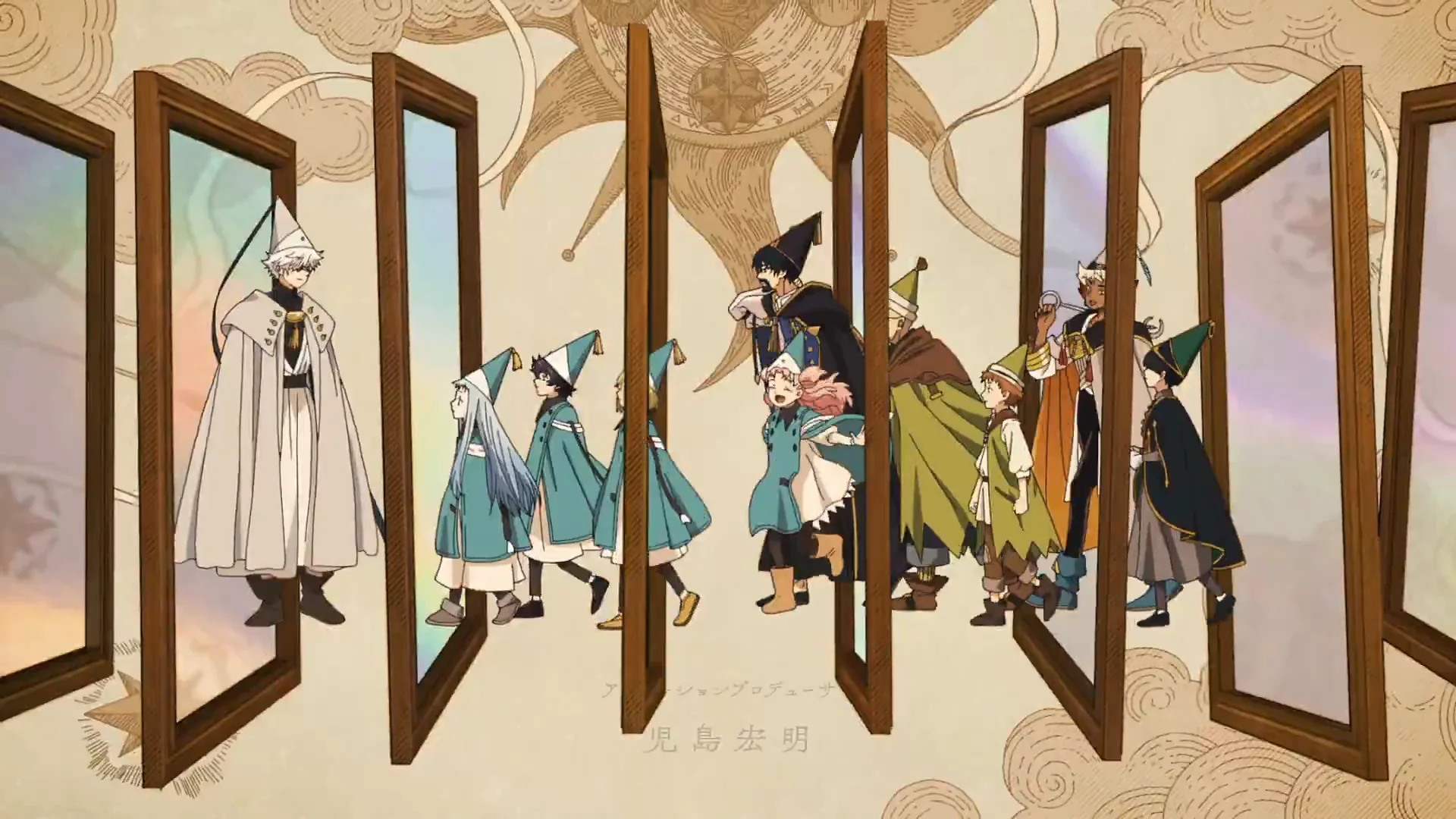
The anime adaptation, brought to life by BUG FILMS, has been widely lauded for its exceptional animation quality. Every aspect, from the fluid movement of the characters to the dynamic impact of their actions on the environment, and the exhilarating battle sequences, is rendered with impressive precision. The seamless translation of the manga’s detailed panels into vibrant, moving images is a testament to the studio’s artistry. Kairi Unabara’s character designs are particularly noteworthy, showcasing a high level of detail and individuality for each character. The intentional inclusion of some characters with an almost androgynous appearance is skillfully integrated into the story’s visual language, reflecting a nuanced approach to character representation that aligns with the series’ broader themes of individuality and self-discovery. While Qifrey’s design may draw inspiration from iconic figures like Kakashi, he remains a distinct and original creation. The overall artistic direction, while maintaining a PG-13 approach, skillfully balances artistic depth with accessibility, ensuring broad appeal without compromising its intricate visual storytelling. The musical score by Yuka Kitamura further enhances the viewing experience, with compositions that perfectly capture the wonder, tension, and emotional depth of the narrative.
Franchise Expansion and Enduring Legacy
The successful anime adaptation significantly broadens the "Witch Hat Atelier" franchise’s international reach, bringing the enchanting world of the Zozah Peninsula to weekly streaming audiences globally via platforms like Crunchyroll. This global exposure is poised to introduce a new wave of fans to Shirahama’s intricate narrative and stunning artwork, further boosting manga sales and cementing the series’ status as a prominent fantasy title. The franchise’s expansion also includes the spin-off series, "Witch Hat Atelier Kitchen," which has been delighting readers in Morning Two since November 2019, showcasing the versatility and enduring appeal of the core concept.
With its engaging plot, richly developed characters, profound thematic explorations, and visually stunning animation, "Witch Hat Atelier" has quickly emerged as one of the standout titles of the season. Its ability to weave complex character arcs with a compelling overarching narrative, coupled with its unique magic system and thought-provoking societal commentary, positions it as a work with the potential to leave a lasting impact on the fantasy genre. Indeed, critical reception suggests that "Witch Hat Atelier" is well-equipped to carry forward the legacy of beloved fantasy epics, potentially achieving a similar level of global recognition and enduring influence as iconic series like "Naruto," by offering an elevated and sophisticated narrative experience. The series not only entertains but also invites viewers to ponder deeper questions about power, freedom, and the true nature of magic.