The cinematic landscape has long struggled to successfully bridge the gap between interactive gaming and feature-length storytelling, a notoriously difficult tightrope walk that has frustrated filmmakers for decades. While massive financial successes such as The Super Mario Bros. Movie demonstrate that audiences will turn out in droves for recognizable intellectual properties, these blockbusters rarely challenge narrative boundaries or achieve critical acclaim. Video game adaptations frequently falter under the weight of excessive exposition, convoluted lore, or a fundamental misunderstanding of what makes the source material engaging to players in the first place. Instead of attempting a direct, 1:1 translation of complex game canons, modern directors are increasingly turning toward a philosophy of capturing the visceral essence, atmospheric tension, and foundational spirit of the games.
This challenging arena is now being tackled by filmmaker Zach Cregger, whose latest project injects a high-concept, tension-fueled horror aesthetic into one of Capcom’s most enduring franchises. Working from a screenplay co-written alongside Shay Hatten, Cregger delivers a briskly paced, 90-minute thrill ride that reimagines the survival-horror mythos through a distinctly stylized lens. Featuring an ensemble cast led by Austin Abrams, Zach Cherry, Kali Reis, and Paul Walter Hauser, the film attempts to carve out a unique space in a franchise that has previously seen mixed box office and critical results under filmmakers like Paul W.S. Anderson. By stripping away extraneous lore in favor of pure, relentless momentum, Cregger’s adaptation aims to rectify past cinematic missteps while offering a fresh perspective on a familiar apocalyptic landscape.
Main Facts and Plot Overview
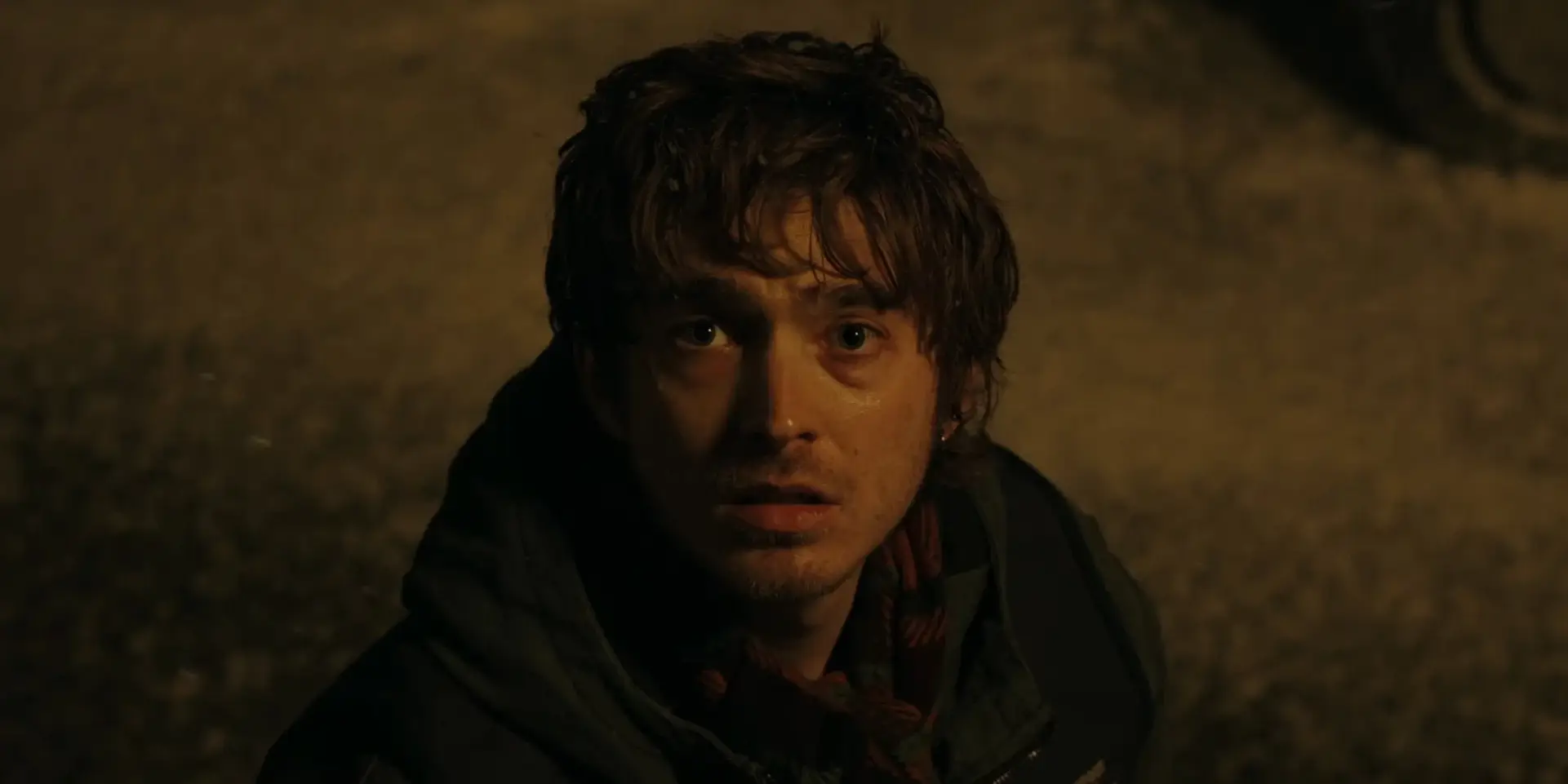
The narrative kicks off on a freezing, desolate winter night, establishing an immediate atmosphere of isolation and dread. Austin Abrams stars as Bryan, an unassuming courier whose mundane professional life involves transporting sensitive organic materials for medical conglomerates. His evening is immediately complicated by personal tension, specifically an unresolved conversation with his partner regarding her impending pregnancy—a domestic grounding element that he promises to revisit once his shift concludes. However, his schedule is abruptly upended by a high-priority, late-night dispatch requiring an urgent delivery to Raccoon City, a sprawling metropolis situated on the remote outskirts of town.
As Bryan navigates treacherous, ice-slicked roads, the situation quickly escalates from a routine delivery job into a fight for survival. His vehicle strikes a pedestrian in the middle of a deserted street, but the seemingly mortally wounded woman displays terrifying resilience, initiating a relentless pursuit following a subsequent crash. This harrowing collision serves as the inciting incident for a grueling gauntlet of terror. Thrust into the epicenter of an unfolding viral outbreak, Bryan must battle through swarms of mutated, grotesque creatures while racing toward an elusive sanctuary. The plot functions essentially as a cinematic translation of level-based survival progression, where every corner turned introduces a new threat and every corridor navigated heightens the claustrophobic stakes.
Behind the Camera: Directorial Evolution and Visual Aesthetics
Zach Cregger’s transition into the horror genre represents one of the more fascinating career trajectories in modern filmmaking. Having initially risen to prominence through a background in comedy, Cregger has methodically honed a distinct voice as a master of suspense, following a trajectory not entirely unlike Jordan Peele. With each successive project, his command over visual storytelling has sharpened, culminating in what is arguably his most accomplished display of technical proficiency behind the camera.
Working alongside veteran cinematographer Dariusz Wolski, Cregger constructs an oppressive, deeply atmospheric visual language. Wolski utilizes negative space, prolonged shadows, and deliberate pacing to evoke a constant sense of omnipresent danger. The camera frequently lingers on empty, dimly lit corridors, slowly creeping around corners to reveal the grotesque horrors lurking within the gloom. Furthermore, the film incorporates subtle nods to its interactive roots through dynamic camera movements, including rapid whip pans and first-person perspectives during high-stakes armed encounters. The opening sequence—featuring Bryan driving alone on a winding, snow-blanketed highway—serves as a direct homage to classic survival horror video game introductions, immediately establishing an interactive aesthetic that primes the audience for the tension to follow.
Creature Design and Practical Scale
The first half of the film thrives on a high-energy, fast-paced momentum that leans heavily into fan service without ever feeling overly intrusive. Viewers familiar with the source material will spot subtle Easter eggs scattered throughout the environments, such as the iconic typewriter or specific green botanical elements that hold immense significance for longtime fans of the franchise. The set pieces are meticulously crafted to mimic the progression of a video game campaign, featuring aggressive, biomechanical antagonists whose bodies contort and warp in disturbing ways.
The creature design draws clear inspiration from classic body horror, bearing a distinct stylistic resemblance to John Carpenter’s The Thing, a tonal influence that also bleeds into the film’s brooding, synth-infused score. The carnage is rendered with a visceral, uncompromised intensity. A standout sequence involving a young girl trapped inside a recreational vehicle showcases Cregger’s penchant for hyperbolic, creative gore, maximizing both shock value and emotional impact. These technical achievements underscore the director’s maturation, proving that his eye for visceral terror has only grown more refined.
The Narrative Friction: Tone and Pacing Challenges
Despite its technical triumphs and inventive set pieces, the film’s primary stumbling block lies within its screenplay. While the characterization of Bryan is intentionally stripped-down and minimal, it remains functional enough to anchor the narrative. The major friction stems from the infusion of Cregger’s comedic sensibilities into the storytelling framework. While horror and comedy have historically enjoyed a symbiotic relationship—with laughter serving as a natural psychological release valve following moments of intense fear—the tonal transitions here frequently prove jarring.
Cregger and Hatten frequently inject quirky, self-deprecating asides and deadpan internal monologues for Bryan as he processes his horrific surroundings. Initially subtle, these comedic beats gradually expand into more pronounced digressions. A notable example involves an extended exposition sequence featuring Paul Walter Hauser inside a stationary vehicle. While intended to pivot the narrative toward a new set piece, the scene severely disrupts the film’s momentum, highlighting a reliance on convenient narrative contrivances rather than organic character motivation. As the film barrels toward its third act, the sheer volume of illogical character choices begins to weigh down the otherwise thrilling momentum, making the journey toward the finale feel occasionally laborious.
Performances and Character Dynamics
Austin Abrams anchors the chaotic proceedings with a grounded, highly engaging screen presence. He successfully taps into an endearing, slightly out-of-depth oddball energy that realistically captures the panic and frustration of an ordinary civilian thrust into an apocalyptic scenario. The attempted emotional framing involving his impending fatherhood provides a semblance of high-stakes personal drama, though the execution occasionally stalls the film’s otherwise breakneck pacing.
Ultimately, Abrams does not rely on heavy physical action until the escalating stakes of the final act demand it. Instead, his charm and expressive performance keep the audience invested in his survival against increasingly insurmountable odds. While the role does not require sweeping dramatic range, Abrams delivers precisely what the high-concept premise demands, serving as an effective audience surrogate through the carnage.
Broader Industry Implications and Franchise Impact
The release of Cregger’s adaptation arrives at a critical juncture for Hollywood’s ongoing attempts to conquer the video game adaptation market. Historically, studios have oscillated between slavish adherence to source material that alienates general audiences and sweeping creative liberties that infuriate purists. Cregger’s approach attempts a middle ground: retaining the atmospheric dread, creature mechanics, and environmental storytelling that define the games, while filtering them through an auteur-driven horror lens.
When comparing this project to Cregger’s previous directorial efforts, distinct stylistic patterns emerge. Both Barbarian and Weapons successfully balanced off-kilter social awkwardness and dark humor without entirely undercutting their underlying terror, largely due to carefully managed tonal shifts and powerhouse supporting performances from actors like Justin Long and Amy Madigan. In contrast, the tonal fluctuation within this adaptation proves more volatile, resulting in a slightly uneven world-building experience.
Nevertheless, the film succeeds where many predecessors have failed by prioritizing visceral dread, arresting practical creature design, and committed lead performances over convoluted exposition. While die-hard purists may continue to debate whether any film can truly capture the labyrinthine lore of the original games, Cregger’s bold interpretation represents a significant step forward. By injecting genuine auteur vision and technical craftsmanship into a notoriously difficult genre exercise, the project proves that horror and video game adaptations can find common ground, paving a promising path for future cinematic explorations of interactive media.