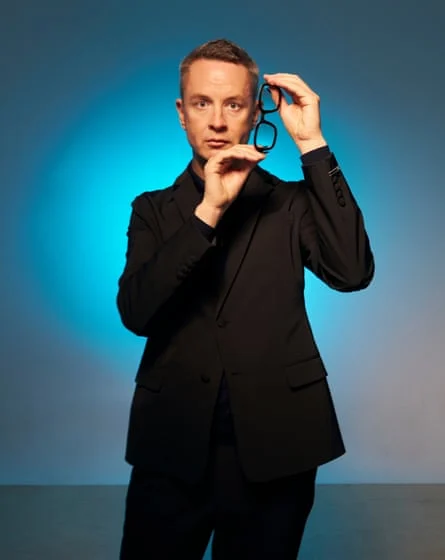
The intersection of mortality and art has long served as a visceral core for the cinematic works of Danish filmmaker Nicolas Winding Refn. Known for visually arresting, hyper-stylized features such as Drive, Bronson, and The Neon Demon, the director has built a reputation on exploring the darkest margins of human psychology. However, the most profound narrative arc of Refn’s recent career did not unfold on a soundstage, but inside a surgical theater. Following a life-saving medical emergency in 2023, Refn faced a profound personal and professional reckoning that ultimately birthed his latest feature, the Tokyo-set dream-collage Her Private Hell.
The Genesis of a Medical Emergency
The sequence of events leading to Refn’s near-death experience began in the summer of 2023. While actively engaged in production on a promotional campaign for luxury fashion house Prada in Italy, the 50-year-old director noted a persistent and debilitating exhaustion. Observers, including one of his daughters, remarked upon his visibly ashen pallor, though the filmmaker initially attributed these symptoms to standard occupational fatigue and the rigorous demands of international production schedules.

Upon returning to his primary residence in Copenhagen, Refn sought formal medical evaluation. Diagnostic testing revealed a critical cardiac anomaly: a severely compromised heart valve that had resulted in internal bleeding, filling his lungs with fluid. Medical specialists delivered an austere assessment, informing the director that he was in acute organ failure and required immediate, major open-heart surgery. Refn was given a strictly enforced two-week window to prepare for the procedure, during which he was presented with the clinical choices regarding prosthetic valve replacements.
Refn’s initial response to his mortality mirrored the detached, theatrical composure characteristic of his cinematic protagonists. Instructed by medical personnel to draft a formal will, he engaged in stark discussions regarding the finality of life with his wife of three decades. Yet, behind the stoic facade, the director confronted the psychological abyss common to sudden life-threatening diagnoses. The impending procedure cast a long shadow, forcing a complete re-evaluation of his artistic trajectory and personal legacy.
Chronology of a Crisis and Rebirth
The timeline of Refn’s health crisis and subsequent creative renaissance spans a carefully structured sequence of physical vulnerability and artistic re-engagement:

- Summer 2023: Refn experiences severe fatigue while working on a Prada campaign in Italy; symptoms are initially misattributed to overwork.
- Summer 2023 (Post-Travel): Medical examination in Copenhagen reveals a broken heart valve and fluid accumulation in the lungs, leading to an immediate surgical prognosis.
- Late Summer 2023: Refn meets with a specialized surgical team; options for mechanical versus biological valve replacement are evaluated.
- Autumn 2023: A high-precision, minimally invasive telescopic surgical procedure is performed, bypassing the need for traditional ribcage division.
- Late 2023 to Early 2024: A rigorous three-month physical rehabilitation period ensues, serving as the crucible for Refn’s psychological recovery and the conceptualization of Her Private Hell.
- 2025–2026: Post-recovery production culminates in the premiere of Her Private Hell, a polarizing multi-narrative fantasia exploring themes of paternal protection and generational anxiety.
The Technological Intervention and Theatricality of Surgery
True to his penchant for striking visual aesthetics, Refn approached his medical ordeal through a distinctly cinematic lens. Rejecting conventional patient passivity, the director requested formal video documentation of the open-heart procedure itself—a request initially met with institutional skepticism before medical staff relented. The resulting footage, featuring high-contrast views of exposed cardiac muscle and precision surgical instruments, mirrors the graphic visceral imagery historically associated with his filmography.
A critical turning point in the medical timeline occurred prior to the operation when Refn was introduced to a lead surgeon renowned for advanced, minimally invasive techniques. Utilizing a telescopic approach that avoided the invasive trauma of splitting the sternum, the surgical team successfully repaired the damaged valve. Refn frequently characterizes this technical precision as a form of divine intervention, marking a boundary between terminal decline and renewed artistic purpose.
Following the successful intervention, Refn underwent a three-month physical rehabilitation phase characterized by profound physical pain and a necessary rebuilding of basic motor functions. Rather than demoralizing the filmmaker, this enforced vulnerability stripped away his creative burnout. Before the health crisis, Refn admitted to experiencing a profound existential stagnation, questioning his purpose upon reaching the milestone age of 50. The successful cardiac repair functioned as a catalyst, dissolving his creative apathy and instigating a renewed urgency to produce challenging art.

Her Private Hell: An Analysis of the Director’s New Vision
The thematic consequences of Refn’s recovery are directly embedded in his latest directorial effort, Her Private Hell. Starring Sophie Thatcher as Elle—an actress attempting to bridge a fractured relationship with her powerful film-mogul father by producing an avant-garde science fiction project—the film deliberately blurs the boundaries between diegetic reality, fictional narrative, and psychological hallucination.
The project also features Charles Melton as Private K, an American serviceman in postwar Japan consumed by the pursuit of a mythical urban predator known as the Leatherman. This character dynamic draws heavily upon Refn’s personal anxieties regarding fatherhood, specifically the protective instincts elicited by watching his daughters navigate growing independence. The filmmaker coins the term "dadsploitation" to describe the pervasive cultural and cinematic fascination with patriarchal protectionism, noting its primal appeal across diverse ideological spectrums.
Despite the heavy thematic exploration of violence and paternal responsibility, Refn maintains that the film is fundamentally an exercise in camp, high-contrast aesthetics, and formalist play. Constructed as a mosaic of interlocking stylistic vignettes rather than a linear narrative, Her Private Hell actively rejects the standardized formatting demanded by contemporary streaming algorithms.
Industry Implications and Critical Reception
Her Private Hell has predictably elicited polarized responses from international film critics, reinforcing Refn’s longstanding status as a divisive figure within the global cinematic landscape. While detractors point to a perceived prioritization of style over conventional narrative coherence, supporters celebrate the film as a daring, uncompromising fantasia that challenges the homogeneity of modern algorithmic content creation.
Refn remains indifferent to critical consensus, asserting that art should incite debate rather than passive consumption. In an era dominated by automated recommendations and multi-tasking entertainment consumption, the director positions his work as an intentional friction point—an artifact designed to demand the undivided cognitive engagement of the audience.
Furthermore, Refn’s public reflections on his near-death experience have sparked broader industry discussions regarding the physical toll of high-intensity filmmaking and the systemic pressures placed upon directors within the studio and independent financing models. By openly addressing cardiac health, mortality, and the psychological fragility of aging creators, Refn has contributed to a growing dialogue concerning wellness and longevity among prominent cultural figures.

Looking toward the future with a renewed sense of mission, the Danish auteur remains anchored in the present moment, unburdened by metaphysical speculation. Having stared directly into the mechanics of his own mortality, Nicolas Winding Refn continues to view cinema not merely as a profession, but as the essential medium through which he translates the raw, chaotic experience of survival into enduring visual art.