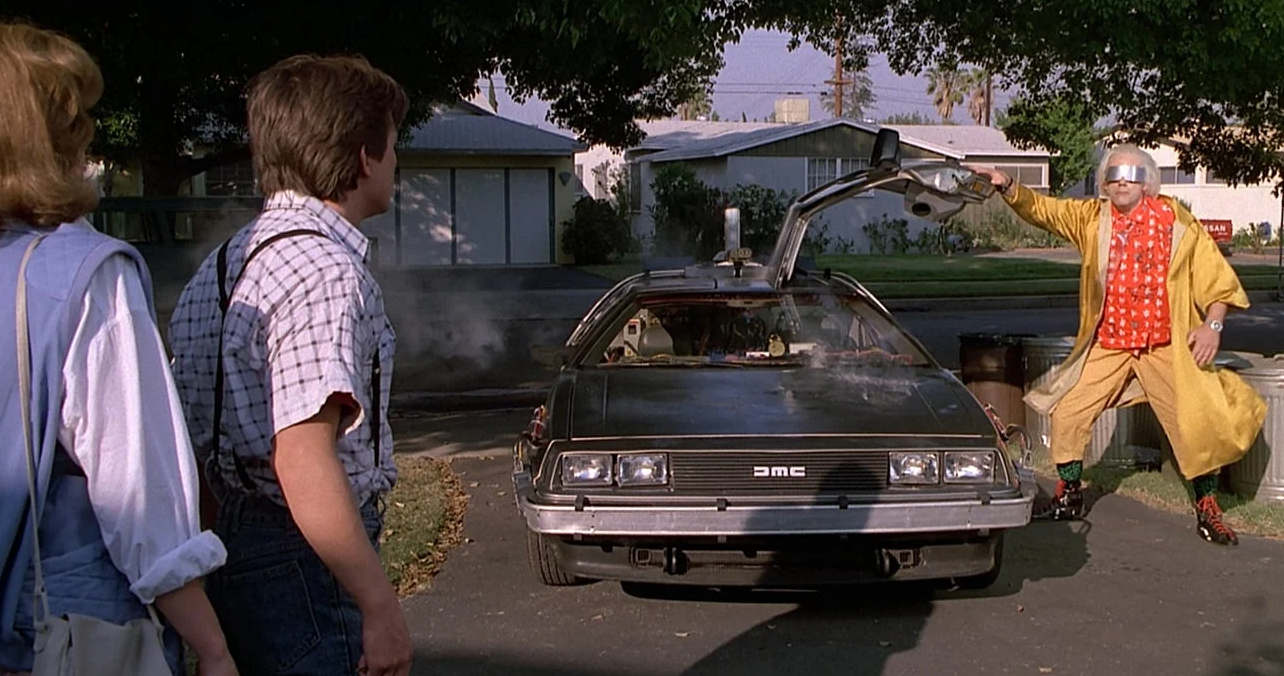
Decades after capturing the global imagination with a high-concept sci-fi adventure, franchise co-creator and screenwriter Bob Gale has provided fans and cinema historians with a rare glimpse into the evolutionary process of one of Hollywood’s most successful sequels. In conjunction with the publication of his latest compendium, Back to the Future: The Complete Screenplay, Gale has permanently transitioned a long-rumored, alternate draft of Back to the Future Part II to a publicly accessible digital platform. While the document had previously surfaced in very limited, unofficial capacities, its widespread availability via official promotional channels offers a fascinating case study in screenwriting, narrative iteration, and the arduous development cycle inherent to major studio blockbusters.
The decision to publish the primary draft brings renewed attention to the meticulous crafting of the 1989 time-travel classic. For film scholars and devotees of the trilogy, examining the discarded narrative pathways illuminates the difficult choices screenwriters face when constructing sequels to globally beloved cultural touchstones. As the entertainment industry increasingly embraces transparency through the public archiving of pre-production materials, Gale’s release provides an invaluable window into the creative decisions that ultimately shaped contemporary cinema history.
Substantial Narrative Divergences in the Alternate Sequel
The most striking departure in Gale’s original draft involves the destination and historical context of Marty McFly’s time-travel intervention. In the released theatrical version of Back to the Future Part II, Marty and Dr. Emmett Brown travel back to 1955 to retrieve the stolen Sports Almanac from a young Biff Tannen, meticulously weaving their mission around the events of the first film to avoid a catastrophic paradox. However, the newly available draft charts a fundamentally different course: Marty journeys not to 1955, but forward into the turbulent socio-political landscape of 1967.
In this alternate iteration, Marty’s mission to neutralize Biff’s technological advantage hits an immediate roadblock when local law enforcement demands identification. Lacking contemporaneous documentation for the era, Marty is promptly detained by authorities who mistake him for a suspected Vietnam War draft dodger. The plot thickens when Marty is subsequently bailed out of jail by his mother, Lorraine, who in this timeline is characterized as an active anti-war protester. This inadvertent encounter places Marty at the center of the counterculture movement, where he accidentally transforms into a prominent symbol for the political resistance of the late 1960s.
Industry observers have noted structural parallels between this sequence and director Robert Zemeckis’s later cinematic triumph, Forrest Gump (1994). In both narratives, a bewildered protagonist inadvertently stumbles into defining historical movements, accidentally shaping major cultural milestones while remaining fundamentally detached from the ideological gravity of the era.
Complications Involving Temporal Paradoxes and Romance
The narrative complications multiply following Marty’s release from custody. The bail money utilized by Lorraine was originally earmarked for a romantic weekend getaway with George McFly—a trip explicitly required for Marty’s conception. Consequently, Marty’s interference preemptively erases his own existence, forcing him to orchestrate a romance between his teenage parents for a second time, albeit under entirely different historical circumstances.
While the theatrical release also tackled the theme of Marty interacting with his parents’ past, it did so through a self-referential, meta-narrative lens wherein Marty fought diligently to avoid crossing paths with his 1955 self. The 1967 draft, conversely, forces Marty into a direct, unmediated repetition of the matchmaking beats that defined the first installment. Script analysts have pointed out that while this choice underscored Gale’s early instinct to anchor the sequel in familiar comedic territory, it ultimately threatened to structurally duplicate the dramatic climax of the 1985 original, a risk that Zemeckis and Gale ultimately chose to mitigate in the final editing stages.
The Evolution of Doc Brown and the 1960s Time Machine Operation
Perhaps the most significant mechanical alteration in the draft concerns the iteration of Dr. Emmett Brown utilized to solve the plot’s temporal crises. Rather than relying entirely on the guidance of the present-day Doc, Marty enlists the assistance of the 1960s version of the scientist, who is depicted working as a local university professor in Hill Valley.
The narrative crisis is triggered when the futuristic Mr. Fusion device onboard the DeLorean suffers critical damage upon arrival in the 1960s. To generate the massive electrical surge required to reactivate the time machine, the 1960s Doc Brown devises an elaborate scheme utilizing high-voltage power lines suspended above a local canyon. In a characteristically eccentric touch for the franchise, the draft script attributes the genesis of this volatile scientific breakthrough to Doc Brown’s experimental consumption of LSD—a humorous nod to the cultural zeitgeist of the era.
However, the plan goes awry during execution. Marty and the 1985 Doc Brown realize too late that the 1960s scientist failed to account for the additional weight of a second passenger inside the DeLorean. To achieve the necessary power-to-weight ratio for temporal displacement, the characters are forced to jettison essential vehicle components along with Marty’s satchel containing the Sports Almanac.
The discarded items tumble from the sky, with the DeLorean door and the Almanac landing squarely on the property of the Peabody family—the same farmers terrorized by Marty in the original film’s 1955 sequence. While the Almanac is quickly incinerated in a domestic fire, the discarded gull-wing door ultimately finds its way into a local museum dedicated to extraterrestrial phenomena, established near the canyon. In a circular narrative beat, a mature Mr. Peabody spots Marty and Doc returning to the 1960s while preparing to deliver a public address at the museum in 1985, cementing his status as an eccentric local authority on alien life.
Chronology of Development and Historical Context
To fully understand the significance of this script release, it is necessary to examine the timeline of the Back to the Future franchise’s production cycle:
- July 1985: Back to the Future premieres in theaters, becoming a massive critical and commercial success, ultimately grossing over $380 million worldwide against a modest $19 million budget.
- 1987–1988: Universal Pictures greenlights a simultaneous production for Back to the Future Part II and Part III. Bob Gale and Robert Zemeckis begin drafting the intricate, interconnected scripts required to manage simultaneous multi-era storylines.
- Late 1988: Early script drafts, including the 1967 Vietnam-era iteration, undergo studio review. Creative concerns regarding pacing, thematic repetition, and the potential alienation of family audiences prompt Gale and Zemeckis to pivot toward the 1955 revisit seen in the final film.
- November 1989: Back to the Future Part II is released theatrically, introducing audiences to the complex mechanics of alternate 1985 timelines and futuristic Hill Valley.
- Present Day: Bob Gale curates the definitive collection, Back to the Future: The Complete Screenplay, utilizing public platforms to permanently archive the original 1967 draft for academic and fan review.
Critical Analysis and Industry Implications
The publication of Gale’s early draft provides vital insight into the mechanics of screenwriting for major intellectual properties. Sequels to high-concept blockbusters frequently face the "diminishing returns" paradox: filmmakers must balance the audience’s desire for familiar tropes with the demand for innovative narrative escalation.
By evaluating the 1967 draft alongside the theatrical cut, media analysts can observe how screenwriting teams navigate creative dead ends. The decision to abandon the 1967 setting averted what could have been an over-reliance on political satire, a tonal shift that might have distanced the franchise from its core demographic of family and adventure filmgoers. Instead, the final version of Back to the Future Part II pioneered a dizzying, recursive narrative structure that forced characters to navigate overlapping versions of the same historical weekend, establishing a gold standard for modern cinematic time-travel rules.
Furthermore, the release underscores a growing trend within the entertainment industry: the monetization and preservation of pre-production drafts as collectible artifacts. As physical publishing models adapt to digital ecosystems, authors and screenwriters increasingly leverage historical script archives to drive interest in companion literary projects.
While the 1967 draft remains an interesting "what-if" scenario that ultimately failed to pass studio and creative muster, its permanent preservation ensures that future generations of filmmakers and fans will appreciate the iterative labor required to build timeless cinematic masterpieces. Whether or not audiences will ever witness a visual adaptation of the 1960s Doc Brown and his painted campus van remains unlikely, but the availability of Gale’s script guarantees that this alternate timeline will forever hold a documented place in cinematic lore.