The intersection of youth activism and cinema has historically yielded some of the most visceral coming-of-age narratives on film. When political unrest serves as a backdrop, the natural friction between the idealism of the young and the immovable structures of inherited authority becomes a potent canvas. In Jelena Maksimović’s feature film Until the Day Ends, this intersection is not merely a constructed set piece; it is a living, breathing reality. Developed against the backdrop of real-world, student-led anti-government demonstrations in Serbia, the film captures a nation in flux, utilizing ongoing civil disobedience to imbue its opening sequences with an urgency that few scripted dramas can genuinely manufacture. Yet, as the film transitions from the volatile streets of Belgrade to the quiet, abstract expanses of nature, it navigates a challenging shift in tone and narrative momentum.
The Story and Character Dynamics
Belgrade, as depicted in Until the Day Ends, is a metropolis profoundly divided. Amid occupied university buildings and congested, tense streets, Lena—portrayed with a fierce naturalism by Lena Trifunović—fights relentlessly for a political reality she believes can be fundamentally reshaped. As an anarchist student deeply embedded in the activist infrastructure, Lena’s identity is inextricably bound to the collective resistance against the state.
Operating within the same gritty neighborhood is Stefan, played by Andrija Krivokapić. Hailing from a working-class background, Stefan is initially unmoored by political convictions, torn between the mundane survival of his daily existence and the gravitational pull of the protests echoing outside his window. The narrative catalyst arrives through a seemingly ordinary transaction: Stefan helps Lena’s brother sell a piano that once belonged to their deceased father.
This initial meeting sparks immediate friction, rooted in their disparate worldviews. However, as Stefan finds himself inexorably drawn into the periphery of the demonstrations, a volatile sequence of events on a particularly chaotic night forces the pair to flee Belgrade together. What begins as a collision of socio-political ideologies swiftly morphs into an unlikely romance, framing personal intimacy against the wider canvas of national upheaval.
The supporting cast—including Irina Hotomski, Stefan Tarabić, and Miodrag Miša Dragičević—adds layers of authenticity to the ensemble. However, while the characters are grounded by the capable performances of the actors, the screenplay by Jelena Maksimović, Ivan Salatić, and Olga Dimitrijeviæ occasionally struggles to sustain the intellectual and emotional tension between its two leads once the political backdrop recedes.
Chronology and Production Context: The Reality of Serbian Protests
To fully understand the atmospheric weight of Until the Day Ends, one must examine the real-world timeline that birthed it. Serbia’s recent history has been punctuated by wave after wave of student-led and civic anti-government protests, driven by widespread public frustration over governance, electoral integrity, environmental degradation, and institutional corruption. These movements have frequently transformed the capital of Belgrade into a flashpoint of police intervention, student occupations, and mass street marches.
During the production of Until the Day Ends, these real-world demonstrations were not merely historical footnotes or distant news items; they were occurring in real time around the film sets. Maksimović and her crew made the bold choice to integrate the unfolding civic unrest directly into the production schedule. Real students and non-professional activists who were actively participating in the actual protests were brought before the camera, blending seamlessly with the central fictional characters.
This guerrilla-style filmmaking approach yields some of the film’s most striking and unforgettable sequences. In one masterfully executed scene, the camera tracks a single paving stone as it is passed rapidly from hand to hand among anonymous figures in the crowd, culminating in its propulsion toward a police line. By anchoring the camera’s perspective to an inanimate object rather than a singular heroic face, the sequence brilliantly illustrates how individual agency dissolves into the collective, uncontrollable momentum of a mob.
Narrative Arc and Structural Analysis
Despite a visually potent and immediate opening act, Until the Day Ends faces significant structural hurdles as its 91-minute runtime progresses. The film is sharply divided into two distinct halves: the urban, chaotic realism of the Belgrade protests and the tranquil, metaphorical journey into the Serbian countryside.
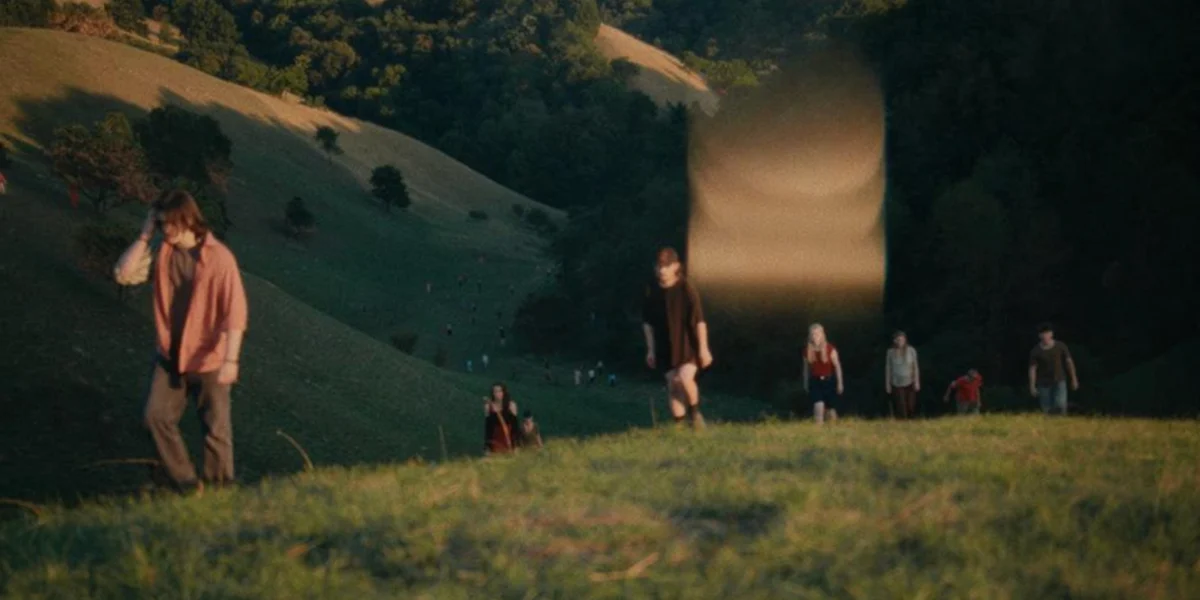
Once Lena and Stefan abandon the demonstrations and leave the city behind, the narrative loses much of its forward momentum. The deliberate pacing slows down considerably, and the socio-political youth drama transforms into an abstract, atmospheric meditation on darkness, silence, and nature. This tonal shift inadvertently exposes the limitations of the central romance.
Despite their contrasting ideologies and socio-economic backgrounds, Lena and Stefan fail to generate sufficient psychological friction to carry the narrative once the external pressures of the protest movement dissipate. Lena’s character, initially introduced as a sharply defined and formidable political actor, gradually loses her ideological sharpness, becoming somewhat vague as the story progresses. Furthermore, certain narrative choices regarding the portrayal of the activists—such as depicting young revolutionaries consuming drugs before a major demonstration—risk leaning into familiar, reductive tropes of rebellious youth rather than exploring the complex sociological reality of modern political resistance.
Cinematography and Direction
Jelena Maksimović’s background as an acclaimed film editor is palpably felt in the visual rhythm of Until the Day Ends. Operating behind the camera, Maksimović demonstrates a sophisticated command of cinematic language, fluidly transitioning between static, composed framing and restless, handheld camera movements.
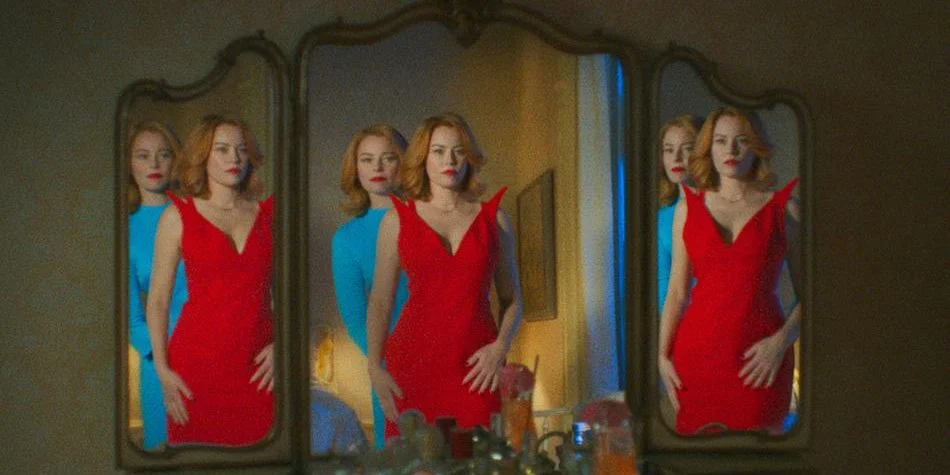
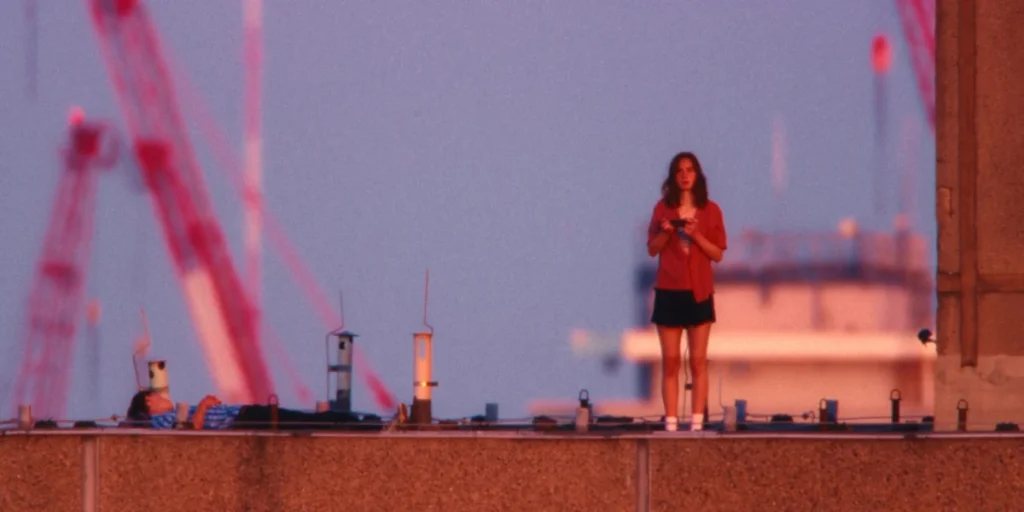
The aesthetic choices in the first half of the film—leveraging harsh urban lighting, striking lens flares, and the oppressive shadows of the Belgrade night—effectively mirror the internal psychological states of a generation caught between political disillusionment and fervent hope. The city feels palpably unsettled, vibrating with the latent anger and uncertainty of contemporary Serbian youth.
However, as the narrative shifts from the urban sprawl to the natural world, Maksimović’s visual confidence occasionally crosses the threshold into self-consciousness. The imagery becomes increasingly deliberate; lingering shots and overt camera movements begin to draw attention to themselves, substituting genuine character development with heavy atmospheric mood. While the visual artistry remains undeniable, the stylistic shift underscores a growing disconnect between form and content.
Fortunately, the film regains some of its formal footing by the time dawn breaks. The final sequences offer some of Maksimović’s most resonant imagery, culminating in a cautiously hopeful conclusion that ties back to the thematic core of renewal. Yet, the fragmented nature of the journey leaves the emotional payoff somewhat diluted.
Broader Impact and Implications
Until the Day Ends arrives at a critical juncture for European independent cinema, particularly within the Balkan region. As political polarization deepens across Eastern and Southeastern Europe, filmmakers are increasingly tasked with finding authentic ways to articulate the frustrations of younger generations who feel disenfranchised by legacy political structures.
From an analytical standpoint, Maksimović’s feature serves as both a triumph of immediacy and a cautionary tale regarding narrative coherence. The film proves that fiction can successfully absorb the raw energy of real-world protest movements, creating moments of documentary-level authenticity on screen. However, it also highlights the inherent danger of relying too heavily on ambient atmosphere to carry a narrative when the core character arcs fail to evolve in tandem with their environment.
For audiences and critics alike, Until the Day Ends will likely be remembered as a bold experiment in hybrid filmmaking—a project where the collision between scripted drama and real civic upheaval yielded moments of breathtaking brilliance, even if the subsequent journey struggled to maintain its initial trajectory. Maksimović undeniably establishes herself as a distinctive visual stylist with a fierce eye for sociopolitical texture, leaving industry observers eager to see how she applies these formidable technical skills to future cinematic endeavors.