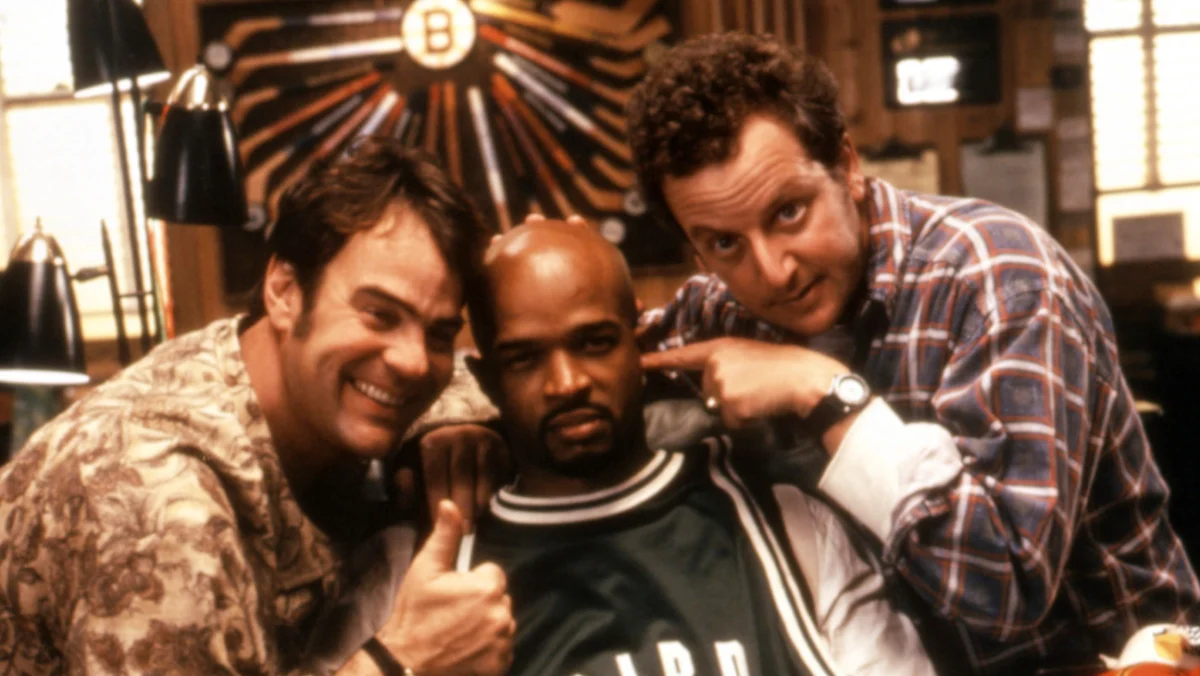
Just as Boston Celtics fans presumably didn’t relish seeing their rival New York Knicks defeat the Spurs in this year’s NBA Finals, they also might not want to be reminded that the Beantown-focused basketball comedy Celtic Pride had trouble scoring with audiences 30 years ago. The film, which premiered on April 19, 1996, starred comedic stalwarts Dan Aykroyd and Daniel Stern as two fervently devoted Celtics fans whose misguided loyalty leads them to inadvertently kidnap Utah Jazz standout Lewis Scott, played by Damon Wayans, in a desperate, last-ditch effort to help their beloved team clinch Game 7 of the NBA Finals. This comedic premise, blending fervent sports fandom with slapstick absurdity and a dash of moral ambiguity, emerged from a unique convergence of burgeoning comedic talent and a particular cultural moment for both basketball and filmmaking.
The Genesis of a Fanatic Fable: From Concept to Screenplay
The idea for Celtic Pride sprang from a desire to capture the intense, sometimes irrational, passion of sports fans, particularly those in a city like Boston, renowned for its deep-rooted athletic loyalties. The film’s narrative centers on Mike O’Hara (Dan Aykroyd) and Jimmy Flaherty (Daniel Stern), two archetypal Bostonians whose lives revolve around the Celtics. Their plan to kidnap an opposing team’s star player, Lewis Scott, on the eve of a pivotal Game 7, was designed to push the boundaries of sports fanaticism into overtly comedic, yet ethically questionable, territory.
This audacious concept was brought to life by a nascent but already influential creative team. Tom De Cerchio, who made his feature directorial debut with Celtic Pride, took the helm after having exited the production of the Jim Carrey-led Ace Ventura: When Nature Calls midway through. De Cerchio’s entry into the director’s chair for a Disney-backed comedy signified a significant step in his career, albeit one that would face considerable challenges.
Crucially, Celtic Pride marked an early screenwriting credit for Judd Apatow, who would later become one of Hollywood’s most prolific and successful writer-directors and producers. Apatow collaborated on the movie’s story with his friend, comedian Colin Quinn. This period, the mid-1990s, was a formative one for Apatow, who was then establishing himself in the comedy world, primarily as a writer and producer for television shows like The Ben Stiller Show and The Larry Sanders Show. His work on Celtic Pride offered an early glimpse into his ability to blend character-driven humor with broader comedic strokes, a hallmark of his later successes.
De Cerchio fondly recalls the collaborative atmosphere during script rewrites, often taking place at Apatow’s home, which Apatow had recently purchased from his mentor, the legendary comedian Garry Shandling. This anecdote highlights the interconnected web of comedic talent in Los Angeles at the time. De Cerchio recounted how, after a week of intense script work, Apatow needed to fly to the Vancouver set of Happy Gilmore to help his former roommate, Adam Sandler, with "punch-up" – a common practice in comedy where writers are brought in to refine jokes and improve dialogue. “Rather than shun me, Judd immediately invited me to hang out with Adam, [producer] Jack Giarraputo and the rest of their crew,” De Cerchio tells THR. “I’ve never laughed that hard in my life. Judd is a mensch, through and through.” This interaction underscores Apatow’s generous spirit and the collegial nature of the comedy scene, where emerging talents supported one another across various projects, laying the groundwork for future collaborations and enduring friendships that would shape Hollywood’s comedic landscape for decades.
Assembling the Cast: Comedic Veterans and Rising Stars
The film’s success hinged significantly on its cast, which featured a blend of established comedic actors and a rising star in Damon Wayans.
Dan Aykroyd and Daniel Stern were chosen to embody the fanatic Celtics duo. Aykroyd, a Saturday Night Live alumnus and star of classics like Ghostbusters and The Blues Brothers, brought a signature deadpan intensity and a knack for playing obsessive characters. His portrayal of Mike O’Hara, the more seemingly composed but equally deranged of the two, leaned into his ability to deliver absurd lines with unwavering conviction. Daniel Stern, known for his roles in Home Alone and City Slickers, offered a more physically expressive and often exasperated comedic style as Jimmy Flaherty, complementing Aykroyd’s more subdued madness. Their chemistry as bumbling kidnappers and fervent sports fanatics was central to the film’s comedic premise.
Damon Wayans was cast as Lewis Scott, the kidnapped Utah Jazz star. At the time, Wayans was a prominent figure in comedy, having achieved fame on In Living Color and starred in films like Major Payne and The Last Boy Scout. His role in Celtic Pride required him to play the straight man to Aykroyd and Stern’s antics, while also embodying the physical prowess of an NBA player. To prepare for the role, Wayans underwent rigorous training with college basketball players Kevin Bennett and Burt Harris Jr. This intense regimen was critical for him to credibly portray an elite athlete, especially given the film’s significant on-court action. Wayans’ dedication to authenticity was evident, though not without its challenges. “All I remember is the pain,” Wayans famously said back then about the grueling shoot that often involved 12-hour days on the court. “Even guys in the NBA don’t play basketball for 12 hours a day.” This quote highlights the physical demands placed on actors in sports films, often far exceeding the typical training schedules of professional athletes due to the nature of film production.
Filming at a Historic Arena: The Boston Garden’s Last Hurrah
A pivotal aspect of Celtic Pride‘s production was its decision to film extensively at the legendary Boston Garden, the former home of the Celtics. This choice imbued the film with an undeniable sense of authenticity and historical weight. The Boston Garden, a venerable arena steeped in sports history, was slated for demolition shortly after the film’s production wrapped, making Celtic Pride one of the last major productions to capture its unique atmosphere.
The Garden, opened in 1928, was more than just a venue; it was an icon, famous for its parquet floor, cramped dimensions, and raucous crowds. It had witnessed 16 of the Celtics’ 17 NBA championships and was synonymous with basketball greatness. Filming there for a month allowed the production to leverage the actual environment where countless legendary games had been played, providing a visceral backdrop for the fictional NBA Finals depicted in the movie. This commitment to location enhanced the realism of the basketball sequences and tapped into the deep emotional connection Boston fans had with the arena.
Adding to this authenticity were the cameos by actual Celtics legends: Larry Bird, Bob Cousy, and Red Auerbach. Bird, one of the greatest players in NBA history, along with Cousy, a foundational star, and Auerbach, the iconic coach and executive, represented the pinnacle of Celtics glory. Their brief appearances were not just fan service; they served to anchor the film within the real history and reverence surrounding the Boston Celtics franchise. For fans watching, these cameos provided a knowing wink and further cemented the film’s connection to the sport’s true heroes. The presence of these figures underscored the film’s ambition to be a genuine homage to basketball culture, even within its comedic framework. The extensive use of local extras from Boston further contributed to the film’s authentic feel, filling the stands with genuine passion and capturing the essence of the city’s sports faithful.
Release and Critical Reception: A Disappointing Score
Disney released Celtic Pride on April 19, 1996, hoping to capitalize on the burgeoning popularity of sports-themed comedies and the star power of its lead actors. However, the film’s theatrical run proved to be a significant disappointment. It garnered a meager $9 million at the domestic box office against an estimated production budget of $20 million, marking it as a commercial flop. When adjusted for inflation, this figure translates to approximately $19 million in 2024, still far below the threshold for a profitable studio release.
The critical response was largely unfavorable, contributing to its poor box office performance. The Hollywood Reporter‘s review, for instance, noted that the film suffered from “uneven” tonal shifts. This particular criticism likely stemmed from the film’s struggle to balance its broad, slapstick comedy with the potentially darker implications of its central premise – kidnapping. While intended to be humorous, the act of abduction, even for comedic effect, presented a narrative challenge that perhaps alienated some viewers or critics expecting a more straightforward sports comedy. Other common criticisms likely centered on the pacing, the believability of the plot even within a comedic context, and whether the humor consistently landed. The film struggled to find its audience in a crowded cinematic landscape that included other comedies and major blockbusters.
The release period of April 1996 saw Celtic Pride competing against a diverse range of films. It opened alongside Fear, a thriller starring Mark Wahlberg and Reese Witherspoon, and was quickly overshadowed by major releases like Primal Fear, James and the Giant Peach, and the continued success of films like The Birdcage. Later in the spring, blockbusters like Twister and Mission: Impossible would dominate the box office, making it even harder for smaller comedies to gain traction.
For director Tom De Cerchio, the film’s underperformance was particularly disheartening, especially given his efforts to connect with the local community during production. He fondly remembers bonding with the Boston extras who filled the arena scenes, expressing his regret over the film’s outcome: “I’m still bummed for them that the film didn’t come out better.” This sentiment reflects the personal investment and passion that often goes into filmmaking, where commercial and critical results do not always align with the artistic intentions or the effort expended by the cast and crew.
The Broader Context: Sports Comedies of the 1990s and Celtic Pride‘s Legacy
Celtic Pride emerged during a fascinating era for sports comedies in Hollywood. The 1990s saw a surge in films that blended athletic narratives with comedic elements, ranging from family-friendly fare like Little Giants (1994) and Space Jam (1996) to more adult-oriented comedies like Happy Gilmore (1996), Kingpin (1996), and later, critically acclaimed dramas with comedic undertones like Jerry Maguire (1996).
These films often tapped into the inherent drama and humor of competition, fandom, and the eccentric personalities within sports. Celtic Pride attempted to carve out its niche by focusing on the extreme end of fan devotion. However, its comedic approach to a serious crime like kidnapping might have been a miscalculation in a genre that often thrived on underdog stories, slapstick physical comedy, or heartwarming tales of redemption. The film’s failure at the box office suggests that audiences, while receptive to sports comedies, might have found its premise either too outlandish or too ethically murky for lighthearted entertainment.
Despite its initial commercial and critical shortcomings, Celtic Pride holds a curious place in the filmographies of its key players. For Dan Aykroyd and Daniel Stern, it was another entry in their long careers, perhaps not a highlight, but indicative of the type of mainstream comedic work they were pursuing in the mid-90s. For Damon Wayans, it demonstrated his versatility beyond sketch comedy, showcasing his ability to handle a leading role that required both physical commitment and a comedic foil’s restraint.
However, the film’s most significant long-term impact might be seen through the lens of Judd Apatow’s burgeoning career. While Celtic Pride itself didn’t achieve widespread success, it served as an early stepping stone for Apatow. His involvement, alongside his work on Happy Gilmore and various television projects, was instrumental in developing his comedic voice and building the network of talent that would define his later, immensely successful productions like The 40-Year-Old Virgin, Knocked Up, and Superbad. The experience on Celtic Pride, even if the film underperformed, provided valuable lessons in script development, production dynamics, and working with established stars, all of which would inform his future work as a director and producer.
Thirty years on, Celtic Pride remains a fascinating artifact from a specific moment in Hollywood and NBA history. It’s a testament to the passionate, sometimes irrational, nature of sports fandom, and a reminder that even films with considerable talent behind and in front of the camera can sometimes struggle to connect with an audience. Its legacy is perhaps less about its immediate impact and more about the careers it touched and the glimpse it offers into the creative ecosystem of 1990s comedy, an ecosystem that would eventually spawn some of the most influential comedic voices of the 21st century.