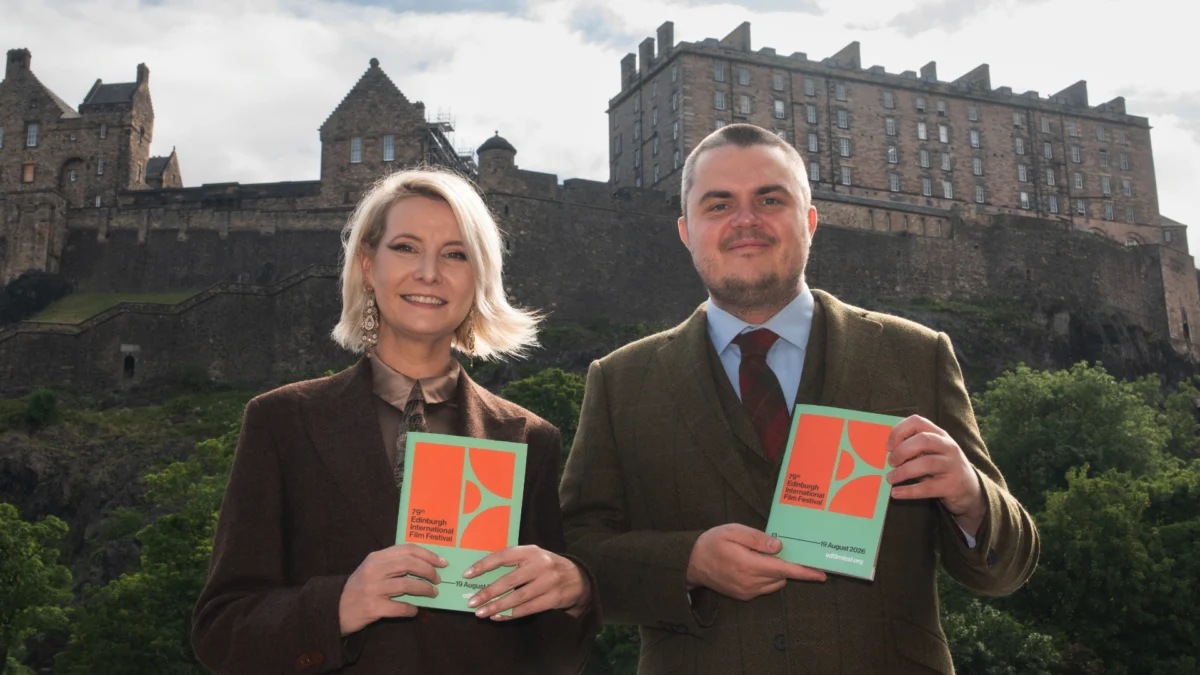
The 2026 Edinburgh International Film Festival (EIFF) has officially unveiled its highly anticipated lineup, with Festival Director Paul Ridd declaring it their strongest competition slate since the event’s significant reboot three years ago. Speaking to The Hollywood Reporter, Ridd expressed immense pride in the achievements of the 2024 and 2025 editions, but confidently asserted that this year’s program "is really kind of surpassing expectations," signaling a pivotal moment for one of the world’s oldest continuously running film festivals.
A New Era of Leadership and Vision
This marks the third year at the helm for Paul Ridd and Festival Producer Emma Boa, a tenure characterized by strategic navigation through an increasingly complex and often volatile global film industry. In an era where intellectual property (IP), entrenched nepotism, and the rapidly advancing capabilities of artificial intelligence frequently dominate the discourse and resource allocation, Ridd and Boa have deliberately doubled down on their core mission: championing emerging filmmakers and celebrating original, compelling storytelling. Their approach seeks to carve out a vital space for independent cinema, positioning Edinburgh as a crucial launchpad for the next generation of cinematic talent. This commitment is not merely philosophical; it is demonstrably reflected in the meticulously curated program for 2026.
The Hyped-Up Competition Slate: A Beacon of Originality
The festival’s much-anticipated competition schedule stands as a testament to this modus operandi, showcasing a diverse array of bold, fresh narratives. Among the highlights is Lindsay Ryan’s comedic debut, Capsized, starring the acclaimed Rhys Ifans, which promises a humorous exploration of a houseboat holiday gone awry. Thom Lunshof presents his feature debut, First Zone, a compelling vision of a woman navigating a flooded and desolate post-apocalyptic landscape, a timely reflection on environmental anxieties and human resilience. Paul Wright contributes Mission, a psychological portrait featuring George MacKay, known for his intense performances. Rounding out an exciting selection is Simon Rynink’s 1999-set Out There, starring the versatile Michael Sheen, who joins a motley crew of misfits to unravel a UFO conspiracy in a sleepy Welsh town. These films, among others in competition, underscore EIFF’s dedication to nurturing distinctive directorial voices and stories that push boundaries.
A Broader Panorama: World Premieres and Special Screenings
Beyond the core competition, the 2026 EIFF promises its customary comprehensive program, featuring an almighty batch of world and U.K. premieres, the ever-popular Midnight Madness genre selections, and a rich offering of live-action and animation shorts. Notable international premieres include Gregg Araki’s highly anticipated I Want Your Sex, featuring Olivia Wilde and Cooper Hoffman, and Nicolas Winding Refn’s latest, Her Private Hell. From the festival circuit, Hirokazu Kore-eda’s Cannes-premiering Sheep in the Box will make its U.K. debut, adding further international prestige.
The festival also plans a series of high-profile "In Conversation" events, designed to offer unique insights into the craft and industry. Ewan McGregor is slated to make a special appearance to commemorate the 30th anniversary of the iconic Scottish film Trainspotting, a seminal work that significantly impacted his career and British cinema. Esteemed polymath Kenneth Branagh will impart his wisdom, drawing from his extensive career in theatre and film, while influential U.S. producer Christine Vachon, a titan of independent production, will share her invaluable experiences. These events bridge the gap between emerging talent and established legends, offering inspiration and practical knowledge.
The Sundance North Star: A Legacy of Independent Cinema
Ridd openly acknowledges the profound influence of the Sundance Film Festival and its late, great founder, Robert Redford, on Edinburgh’s revitalized vision. He recounted his experience at Sundance this past January, where the memorials and discussions around Redford’s immense legacy resonated deeply. "Anyone coming away from that [would be] moved not only by his passing but also by the immense legacy that he’s left with that festival," Ridd told THR. For EIFF, particularly in its rebooted phase, Sundance serves as a "north star," inspiring its ambition to become a leading platform for independent filmmakers, emerging voices, and new talent, providing both a curatorial and commercial launchpad.
This philosophy is concretized through prestigious awards such as the Sean Connery Prize for Feature Filmmaking Excellence and the Therma Schoonmaker Prize for Shorts, both designed to identify and celebrate new voices. Ridd highlighted the tangible success of this strategy, noting a "really strong success rate" in the past year, where seven out of ten films from their competition slate secured U.S. or U.K. distribution, or both. This echoes Sundance’s legendary role in launching films like Sex, Lies and Videotape in the 1990s, a trajectory EIFF aspires to replicate. The festival’s commitment is to offer a "proper world premiere launch" and "enable some possibilities" for filmmakers, whether for their current projects or future endeavors.
Edinburgh’s Enduring Connection to Scottish Cinema
While international in scope, EIFF remains deeply rooted in its Scottish identity, serving as a vital showcase for national talent. The 2026 edition proudly opens with Louis Paxton’s The Incomer, a film Ridd acquired at Sundance this past January. Its selection as the opening night feature underscores the festival’s commitment to fierce, independent voices, a trait shared with previous Scottish openers like The Outrun and Eva Victor’s Sorry, Baby. Ridd expressed delight that both the opening and closing films for 2026 are Scottish, marking a "fantastic moment for Scottish cinema."
Beyond these high-profile slots, the festival will feature a "bonanza" of Scottish films, including premieres of Bel, Borges and Me, Douglas Gordon by Douglas Gordon, and The Education of Jane Cunning. Ridd attributes this exciting surge in Scottish filmmaking to the "amazing work that is being done at a Screen Scotland level" and within the wider national infrastructure. This period of robust activity in Scottish film and TV production is seen as a direct result of concerted efforts over recent years to cultivate and support local talent, solidifying Edinburgh’s role as the "home of independent cinema in the U.K."
The Inaugural UK Film Conference: Navigating the Future

A significant new addition to the 2026 festival is the inaugural U.K. Film Conference, scheduled for the Saturday of the event. Building on previous successful industry workshops, this conference aims to foster a broader conversation about the future of independent film. It will kick off with a high-profile discussion between Ben Roberts, CEO of the British Film Institute (BFI), and Clare Binns, Creative Director of Picturehouse, setting a crucial tone for the day’s agenda. Open to industry pass holders, press, and the public, the conference will tackle the complexities facing independent cinema today, including the challenges and opportunities presented by evolving distribution models and audience consumption habits.
The timing of this conference is particularly pertinent, given the recent successes of original, non-IP works like Obsession and Backrooms. Ridd noted that these films provide a "boost to the sense that independent film and new voices and non-IP work have potential," offering a glimmer of optimism in an often challenging landscape. The conference will serve as a vital forum for stakeholders to collaborate on strategies that ensure the continued vitality of independent storytelling.
Genre’s Ascendance: Learning from Obsession and Backrooms
The commercial success of genre films, particularly independent horror titles like Obsession and Backrooms, has undeniably piqued the interest of EIFF programmers. Ridd acknowledged genre as a "big part" of the festival’s programming, evident in its Midnight Madness, out-of-competition, and even competition lineups. What truly excites the festival director about these films is not just their success as original, non-IP genre works, but also the emergence of filmmakers from "a kind of different space, a different tradition of working through YouTube and coming up with content that way."
The trajectory of films like Obsession, which originated as an acquisition out of the Toronto International Film Festival’s (TIFF) Midnight Madness section, exemplifies the potential for festivals to act as critical launchpads for global phenomena. Ridd lauded Peter Kuplowsky and the TIFF team for their support of Obsession, which led to its "huge global phenomenon." This success highlights an "interesting new horizon" for film festivals, emphasizing the value of curatorial foresight in identifying and nurturing films that resonate with audiences, regardless of their traditional origins or star power.
The Global Stage: EIFF’s International Profile and Industry Dynamics
As an "international film festival," EIFF inherently engages with the global industry, recognizing the importance of maintaining a "taut string" connecting Edinburgh with filmmaking hubs worldwide, including the U.S. Christine Vachon’s participation, for instance, not only brings her immense expertise but also facilitates invaluable networking opportunities between her and the emerging filmmakers in EIFF’s program. This international engagement is crucial for developing the festival’s profile and fostering collaborations that transcend national borders.
Addressing concerns about studio "sit-outs" at other major festivals like Berlin and Cannes, Ridd maintained that EIFF has not experienced similar pushback from distributors. He noted the "quality and breadth and range, and even the star quality of the official competition" at Cannes, suggesting that while the conversation about studios’ evolving release strategies and engagement with festivals is "much, much bigger," EIFF still clearly demonstrates its value as a launchpad. The festival’s ability to facilitate distribution deals and generate awards buzz for films underscores its continued relevance in the global festival circuit.
Art, Politics, and Platform: EIFF’s Stance
The contemporary landscape of film festivals is increasingly intertwined with global geopolitics, a reality brought into sharp focus by controversies at recent events, such as talent being pressed for political opinions at Berlin. Ridd clarified EIFF’s stance, emphasizing that the festival serves as "a platform for work," not a "mouthpiece." While acknowledging the "very difficult and brutal and conflicted world" we inhabit, he believes that "naturally the art that emanates out of that world will reflect it and refract it and engage with it."
EIFF’s mission is to be that platform, showcasing work that engages with politics, presents diverse perspectives, and reflects the complexities of contemporary issues. The focus remains on the artistic expression itself, allowing films to initiate conversations and challenge viewpoints, rather than dictating a singular narrative. This approach aims to foster meaningful engagement with cinematic art as a reflection of the human condition, without imposing specific political agendas on talent or the festival itself.
Edinburgh’s Unwavering Identity: A Cradle of Creativity
Despite the recent news of the Edinburgh TV Festival’s relocation to Manchester, Ridd emphatically dismissed any notion of EIFF following suit. "Absolutely not," he stated, highlighting his personal commitment to Edinburgh since early 2024 and the team’s deep connection to the city. He underscored Edinburgh’s unique position as "the biggest arts festival in the world" during August, a period of unparalleled cultural vibrancy where EIFF actively "cross-pollinates audiences" with the Fringe and other festivals.
The idea of moving the film festival out of this "cradle of creativity" would be "madness" to the EIFF team. The festival’s identity is inextricably linked to Edinburgh’s rich cultural tapestry, providing an unparalleled backdrop for cinematic celebration and discovery. This unwavering commitment ensures that the Edinburgh International Film Festival will continue to thrive in its historic home, offering a unique blend of independent spirit, international scope, and a deep appreciation for the art of filmmaking.
In conclusion, the 2026 Edinburgh International Film Festival is poised to solidify its place on the global circuit as a crucial launchpad for up-and-coming directors, while also providing the necessary blend of Hollywood presence and industry dialogue to generate significant buzz. Under the guidance of Paul Ridd and Emma Boa, EIFF is not just surviving but thriving, proving that a dedicated focus on original storytelling and emerging talent can indeed surpass expectations, even in the most challenging of times.