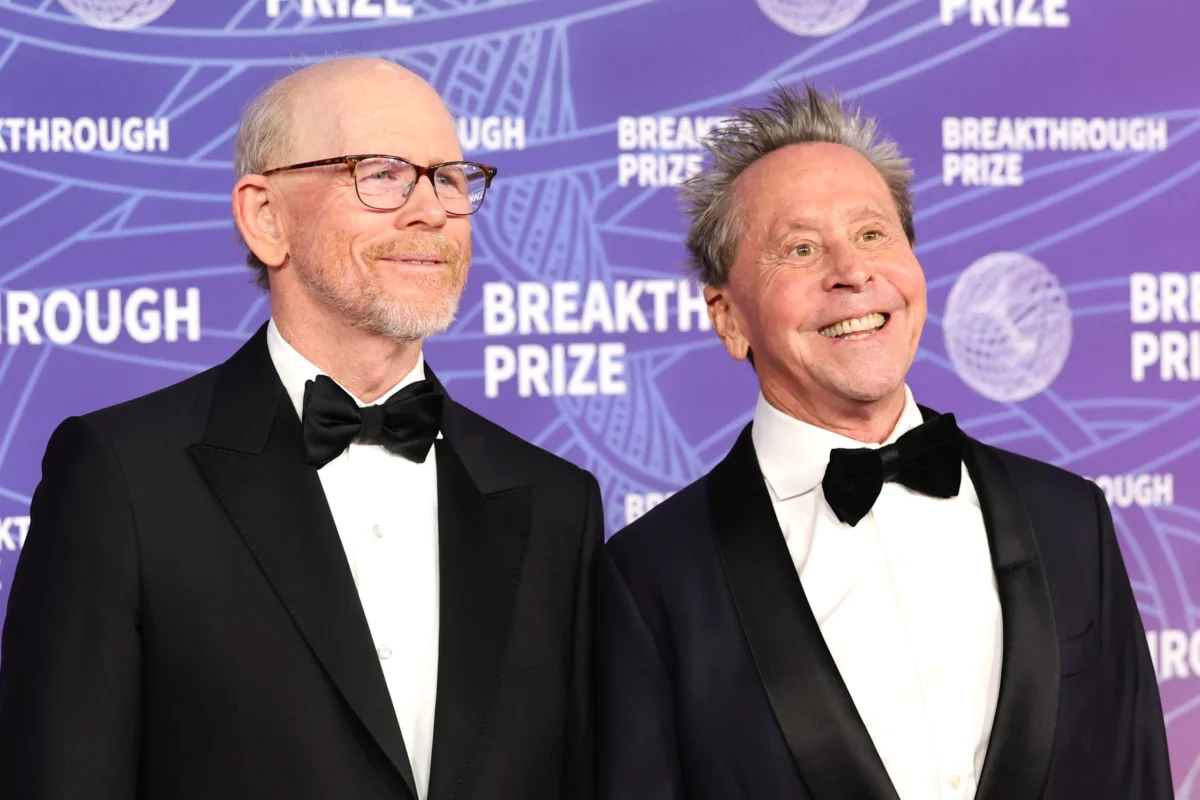
In a significant development for fans of Dr. Seuss’s beloved holiday classic, veteran filmmakers Ron Howard and Brian Grazer have officially confirmed they are developing a sequel to their 2000 blockbuster, How the Grinch Stole Christmas. The announcement, which includes the eagerly anticipated return of Jim Carrey in the titular role, emerged during a wide-ranging conversation at the UCLA Entertainment Symposium. Speaking with The Hollywood Reporter editor-in-chief Maer Roshan, Howard, slated to direct again, revealed that the concept for a follow-up has been a long-standing consideration, finally garnering enthusiastic support from their core creative team. This news marks a compelling return to one of Hollywood’s most memorable adaptations, nearly a quarter-century after its initial release.
The Return of the Grinch: A Quarter-Century in the Making
The original live-action How the Grinch Stole Christmas, released in November 2000, was a monumental undertaking. Directed by Ron Howard and produced by Brian Grazer through their Imagine Entertainment banner, the film brought Dr. Seuss’s iconic tale to life with an unprecedented scale and a then-record-breaking budget of $123 million. It starred Jim Carrey as the Grinch, alongside Taylor Momsen as Cindy Lou Who and Jeffrey Tambor as Mayor Augustus Maywho. Despite receiving mixed critical reviews, the film was a massive commercial success, grossing over $345 million worldwide and becoming the sixth-highest-grossing film of 2000. It also earned an Academy Award for Best Makeup, a testament to the transformative artistry that brought the Grinch and the Whos of Whoville to the big screen.
The enduring popularity of the Grinch character, first introduced in Dr. Seuss’s 1957 book and immortalized in the 1966 animated television special, has led to numerous adaptations. However, the 2000 live-action film holds a unique place due to its ambitious scale and Jim Carrey’s distinctive portrayal. The decision to revisit this particular iteration, with its original creative forces and lead actor, underscores Hollywood’s increasing reliance on established intellectual property and the power of nostalgia. Howard articulated the enthusiasm surrounding the project, stating, "It’s something we’ve thought about for a long time, and you know what, it’s an idea that got all five or six of the brain trust excited. So it’s worth a try." This carefully considered approach suggests a commitment to honoring the legacy of the original while exploring new narrative possibilities within Whoville.
Jim Carrey’s Grueling Transformation and Unprecedented Commitment
One of the most remarkable aspects of the sequel’s announcement is Jim Carrey’s willingness to reprise his role, especially given the notoriously challenging production of the first film. Howard and Grazer recounted the intense physical and psychological toll the Grinch costume and makeup inflicted on Carrey during the 2000 production. Just two weeks into filming, Carrey, renowned for his immersive performances, expressed his inability to endure the extensive prosthetic makeup, green fur suit, and uncomfortable contact lenses required to embody the character. He famously offered to return his $20 million salary, with interest, indicating the severity of his discomfort.
Grazer, demonstrating the creative problem-solving acumen that has defined his four-decade partnership with Howard, suggested Carrey take the weekend to reconsider. In a truly unconventional move, Grazer revealed he enlisted the help of an expert who trains State Department personnel in surviving torture. This specialist flew out to meet Carrey, employing techniques designed to help individuals cope with extreme duress. While other attempts, such as bringing in comics to amuse the star, had failed, this unique intervention proved effective. "On Monday he said, ‘No, I’m gonna stick with it.’ They developed a method for Jim to diffuse the pain," Grazer explained.
Howard further elaborated on Carrey’s extraordinary resilience: "Mostly he just toughed his way through it and he also wouldn’t downgrade the costume, or wouldn’t not wear those contact lenses; that was before CGI could easily replace and color his eyes and things like that. He did go through this, he did learn a lot from this expert, talked a lot about it and relied upon those techniques, and really muscled through it." Howard concluded with high praise, stating, "And by the way, I’ve never been more in awe of an actor creating a character and performance in any film I’ve done." This anecdote not only highlights Carrey’s profound dedication to his craft but also underscores the incredible practical effects work by makeup artist Rick Baker, whose team earned an Oscar for their efforts. Carrey’s decision to return, despite these past struggles, speaks volumes about the creative appeal of the sequel’s concept and his enduring connection to the character.
Imagine Entertainment: A Four-Decade Partnership Shaping Hollywood
The longevity and success of Ron Howard and Brian Grazer’s partnership at Imagine Entertainment are legendary in an industry often characterized by fleeting collaborations. For 40 years, the duo has consistently delivered a diverse slate of acclaimed films and television series, demonstrating a rare blend of creative vision and business acumen. Their extensive filmography includes Academy Award-winning dramas like Apollo 13 (1995) and A Beautiful Mind (2001), comedies such as Splash (1984) and Parenthood (1989), and critically acclaimed television series including Arrested Development and 24. This consistent output has cemented Imagine’s status as a powerhouse production company.
Their partnership, which they proudly stated has never involved a single shouting match, is built on mutual respect and a complementary skill set. Howard, initially known as a child actor on The Andy Griffith Show and Happy Days, transitioned into a highly respected director. Grazer, a prolific producer, has a keen eye for compelling stories and a knack for navigating the complexities of film financing and production. Their enduring collaboration provides a stable foundation for ambitious projects like the Grinch sequel and allows them to navigate the seismic shifts occurring within the entertainment industry. Their joint appearance at the UCLA Entertainment Symposium offered a unique glimpse into their perspectives on these evolving challenges and opportunities.
Navigating a Shifting Media Landscape: From YouTube Auteurs to AI Integration
Beyond the Grinch sequel, Howard and Grazer delved into broader discussions about the contemporary entertainment landscape, offering insights that reflect their extensive experience and forward-thinking approach.
The Rise of YouTube Filmmakers: A New "Easy Rider" Moment?
The duo addressed the recent success of young YouTube filmmakers, citing examples like Obsession and Backrooms, which have garnered significant attention online. Ron Howard drew a compelling parallel to the "Easy Rider" moment of the late 1960s, a period when independent, counter-culture films like Dennis Hopper’s Easy Rider challenged established Hollywood norms and ushered in a new generation of filmmakers. Howard believes a similar "generational shift" is occurring, with "YouTube-born, talented filmmakers" demonstrating an "incredibly effective, organic… cultural tone." He noted that he had begun working with such young auteurs years before their mainstream recognition, highlighting their "chops" developed through "hours and hours and hours" of filming. This perspective emphasizes the democratization of content creation and the potential for new voices to emerge from non-traditional platforms.
Brian Grazer, while acknowledging the phenomenon, expressed a more cautious view. He insisted that Hollywood simply "chasing after YouTubers won’t work," viewing the current trend as a "newer version" of formats seen in previous generations. His skepticism underscores the challenge of translating viral online success into sustainable, high-budget studio productions. Both agreed that the ultimate question for these emerging talents is whether they will "choose the right stories" to sustain their careers beyond initial virality. This debate reflects a critical tension in Hollywood: balancing the appeal of established talent and proven formulas with the need to embrace innovation and new creative pipelines.
The Enduring Power of Star Appeal and Streamer Challenges
The conversation also touched upon the ever-relevant topic of star power in an increasingly IP-driven industry. Grazer highlighted Leonardo DiCaprio and Zendaya as two contemporary standouts whose presence can still "make or break a movie." DiCaprio’s consistent critical and commercial success, coupled with Zendaya’s burgeoning global appeal across film and television and her strong social media presence, exemplify the kind of talent that commands attention and draws audiences in an era of fragmented viewership. This perspective contrasts with the prevailing trend of studios prioritizing established franchises and intellectual property over individual star vehicles, suggesting that a select few still possess significant box office magnetism.
The filmmakers also critiqued the "risk-averse business model" of streaming platforms. This model, often driven by data analytics and a focus on subscriber retention over groundbreaking cinematic achievement, can stifle creative ambition and lead to a homogenization of content. Grazer further voiced concerns about the U.S. government’s "sluggish response" to the industry’s economic troubles, particularly in the wake of recent labor disputes and the broader economic downturn. His pointed comment that "Currently" Donald Trump might wield more influence over the industry’s fortunes than Netflix co-CEO Ted Sarandos, while provocative, can be interpreted as a broader critique of the political and economic climate’s impact on Hollywood’s stability and ability to innovate. It reflects a sentiment among some industry veterans that external forces, including governmental policy and economic conditions, often dictate the industry’s health as much as internal creative decisions.
The Inevitability and Ethical Integration of Artificial Intelligence
Perhaps one of the most forward-looking segments of the symposium discussion revolved around Artificial Intelligence (AI) and its burgeoning role in filmmaking. Both Howard and Grazer acknowledged AI as an "inevitability" that holds the potential for both significant assistance and potential harm to the industry.
Brian Grazer shared a practical application, revealing his personal use of AI to develop story ideas. "I use AI to build stories, and that actually speeds things up so much. So if I have an idea for a movie — I started as a writer, Ron did as well — you can build your idea with Claude, you can build the whole thing into an incredible outline," he explained. He emphasized the dramatic efficiency gains, suggesting that developing an idea to a pitch-ready outline could be reduced from "a year" to "one week." Crucially, Grazer maintained that AI does not replace human creativity, stating, "You still need a screenwriter — I always believe you need a screenwriter 100 percent." His view positions AI as a powerful accelerant in the early stages of creative development, freeing up human writers for the nuanced work of character, dialogue, and emotional depth.
Ron Howard echoed the sentiment of "promise" but tempered it with a dose of realism, noting, "right at this point, I’m not seeing a lot of efficiencies that you can really apply to a project today." He stressed the paramount importance of "ethical use of these tools and best practice and be responsible about it." Howard’s perspective aligns with the industry-wide dialogue concerning copyright, fair compensation, and the potential displacement of human labor. Their combined insights offer a balanced view: AI is a tool with immense potential to streamline certain processes, but its integration must be guided by careful consideration of its ethical implications and its role in augmenting, rather than supplanting, human artistic endeavors.
The Unyielding Drive: No Plans for Retirement
Despite their decades of achievement and the dynamic shifts within their industry, neither Ron Howard nor Brian Grazer has any intention of retiring. Their enduring passion for filmmaking remains palpable. Brian Grazer framed his work as a "hobby," emphasizing his love for "puzzle solving" – a fitting description for the complex challenges of bringing cinematic visions to life. He noted their prolific output, stating, "we made five or six movies this year," indicating a continued commitment to active production.
Ron Howard articulated his motivation by reflecting on the competitive nature of his profession. "The one thing that I’ve always told myself is a lot of people want my job, and if I get to the point where I’m blasé about it, I’m phoning it in, I’m lazy, I don’t want to face it, then I’m going to let them have the job," he asserted. His continued engagement stems from a deep well of enthusiasm: "But right now I don’t mind getting up at five in the morning and dealing with the cast. Those are adventures for me. They’re life experiences, and I enjoy the collaborations above all else." This profound dedication to the craft, the thrill of new projects, and the collaborative spirit that defines their partnership underscore why Howard and Grazer remain vital forces in Hollywood, continuing to shape its future while revisiting cherished classics like How the Grinch Stole Christmas. Their journey exemplifies a blend of artistic integrity, business acumen, and an unyielding passion for storytelling that continues to captivate audiences worldwide.