The 28th Shanghai International Film Festival (SIFF) drew to a close on Saturday night, culminating in a celebration of emerging voices and a forward-looking dialogue on the industry’s future, particularly the transformative role of artificial intelligence. Chinese filmmaker Zhong Kaifeng made a resounding formal introduction to the global cinematic stage, claiming the prestigious Golden Goblet award for his debut feature, Atlantic Rhapsody. This recognition not only marked a personal triumph for the 29-year-old director but also underscored SIFF’s dedicated mission this year to champion young talent and spotlight the burgeoning creative landscape of Chinese and Asian cinema.
A Golden Goblet for a Bold Debut
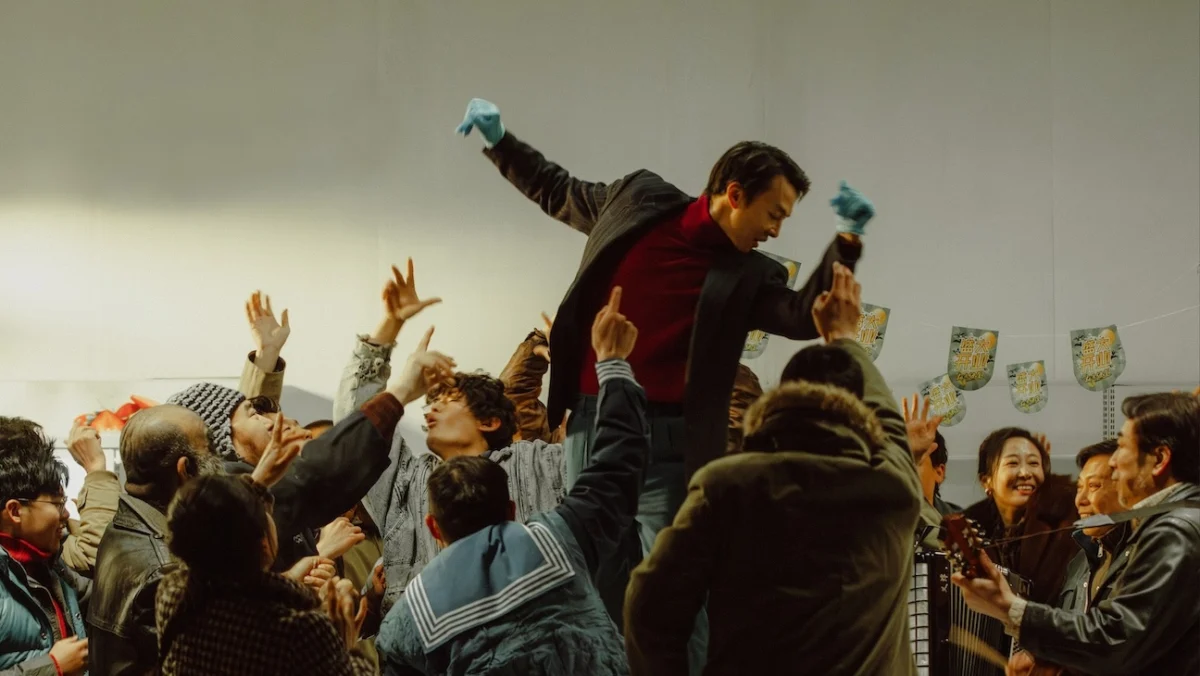
Zhong Kaifeng’s Atlantic Rhapsody, a profound exploration of a young man’s search for meaning amidst the vastness of northern China, captivated the Golden Goblet jury, which was led by the venerable Hong Kong star Tony Leung Chiu-wai. The jury lauded the film as a "uniquely compelling visual experience," praising its "bold experimental approach [that] explores the absurdity of human life." For Zhong, this top honor at one of Asia’s most significant film festivals transcended mere artistic validation; it served as a profound affirmation of his journey and artistic conviction. Accepting the award, he articulated the film’s philosophical core and his personal interpretation of the win: "I want to say that Atlantic is not a definition, it does not provide answers – but today it seems to have given me an answer, and that answer is to persist, to love, to work hard, and then to believe." This statement resonated deeply, framing the award not as a final destination but as a powerful impetus for continued artistic endeavor. The triumph of a debut feature in such a prominent international competition is a testament to SIFF’s commitment to unearthing and celebrating fresh perspectives, signaling a potential new influential voice in Chinese cinema.
Nurturing the Next Generation: SIFF’s Strategic Imperative
The elevation of Zhong Kaifeng’s debut film to the highest honor was perfectly aligned with SIFF’s overarching objective for its 28th edition: to place young filmmakers front and center. This strategic focus permeated every aspect of the festival, from its curated screenings to its robust support initiatives. Another significant recognition of emerging talent came through the Asian New Talent awards, where first-time director Gong Yiwen received critical acclaim for her heartwarming coming-of-age drama, Her First Taste. This film, a product of the SIFF Project initiative designed to foster young filmmakers, was celebrated by the Asian New Talent jury for its "patient observation and sensitivity to the textures of ordinary life," which they declared "announce a new exciting voice in Asian cinema." They further commended Her First Taste as a "memorable work about young love and coming of age, balancing emotional restraint with deep resonance, and marking Gong Yiwen as a filmmaker of great promise."
SIFF’s commitment to new talent is not merely ceremonial but deeply structural. The festival boasts a comprehensive ecosystem of programs aimed at cultivating the next generation of cinematic storytellers. Key among these are the SIFF ING Young Filmmakers Program and the SIFF YOUNG & Shanghai Young Filmmakers Support Program, which provide invaluable mentorship from industry stalwarts like acclaimed actress Joan Chen and director Wen Muye. These initiatives serve as crucial incubators, offering emerging artists the resources, guidance, and platforms necessary to bring their visions to fruition. The tangible success of these programs is evident in the impressive statistic that 78 productions nurtured through SIFF initiatives in previous years have gone on to secure cinema releases. This year’s lineup further showcased this success, with several titles originating from the SIFF Project initiative, including Wan Bo’s suspense-filled drama Strangers in the Mountain (selected for the Asian New Talent competition), along with Peng Chen and Xu Wei’s Desert Beneath the Ocean and Kangdrun’s Linka Linka, both featured elsewhere in the festival’s diverse program. This sustained investment in emerging artists solidifies SIFF’s role as a vital launchpad for Chinese and regional cinematic talent, ensuring a vibrant future for the industry.
A Festival of Stars, Tributes, and Global Connections
The 28th Shanghai International Film Festival unfolded over a dynamic 10-day period, commencing with an opening night that dazzled attendees with a constellation of global and local stars. Among the luminaries gracing the red carpet were Golden Goblet jury head Tony Leung and the recently Oscar-minted Michelle Yeoh. Yeoh, celebrated for her historic Best Actress win for Everything Everywhere All at Once, was present to promote her latest feature, This Is My Time, marking her eagerly anticipated return to Chinese-language productions after nearly a decade. Other notable figures included jury members Guan Hu and Xin Zhilei, adding further weight to the festival’s international appeal and artistic credibility.
Beyond the glitz and glamour, SIFF also paid heartfelt homage to industry veterans whose contributions have shaped the cinematic landscape. A particularly touching moment was the lifetime achievement award bestowed upon Lisa Lu, the iconic actress known for her roles in films such as Crazy Rich Asians. Celebrating her 100th year by the local calendar, Lu radiated grace and vitality on the red carpet, embodying a living legacy of Chinese cinema. Similarly, legendary director Zhang Yimou was honored for his "outstanding" contribution to Chinese cinema, a fitting tribute to a filmmaker whose oeuvre has garnered international acclaim and profoundly influenced contemporary Chinese storytelling. These tributes served as powerful bridges between cinema’s rich past and its promising future, inspiring both established and emerging artists.
The festival’s extensive program encompassed approximately 1,600 screenings of some 420 films, presented across venues throughout Shanghai and extending into the surrounding Yangtze River Delta region. The closing film, Zhang Disha’s The Decisive Moment, made its world premiere on Sunday, offering a final cinematic experience before the curtain officially fell. The diverse selection captivated audiences of all ages, featuring sold-out screenings of critically acclaimed hits from major international festivals, including Pawel Pawlikowski’s Fatherland from Cannes. A particular highlight for film enthusiasts were the meticulously curated retrospectives dedicated to cinematic masters like Ken Loach, Billy Wilder, and the timeless icon Marilyn Monroe. These rare opportunities to experience international classics in their stunning 4K-rendered glory on the big screen generated palpable delight and underscored SIFF’s commitment to both contemporary cinema and its historical lineage.
The international character of the festival was further exemplified by the Golden Goblet for Best Director, awarded to Moroccan filmmaker Yassine El Idrissi for his wonderfully humorous film, Halima. El Idrissi’s poignant narrative about a woman who steadfastly refuses to succumb to the constraints of age or circumstance resonated deeply with the jury and audiences alike. His acceptance speech encapsulated the universal appeal of storytelling, asserting, "It proves that we are all the same. We just need some translation." This statement perfectly articulated SIFF’s role as a global platform, fostering cross-cultural understanding and celebrating the shared human experience through the art of film.
Navigating the Future: AI and the Evolving Film Landscape
Beyond the celebration of artistic achievement, the 28th SIFF served as a critical forum for addressing the most pressing challenges and opportunities facing the global film industry, with artificial intelligence emerging as a dominant and "lurking presence" in discussions. The festival hosted a series of panels that brought together industry heavyweights, academics, and technologists to thoroughly examine the multifaceted pros and cons of AI’s integration into filmmaking. Discussions ranged from high-level theoretical explorations to practical applications, with panel titles such as "Smart Tech, Immersive Worlds, the Next Film Revolution" and "When AI Learns to Create, What Grounds Cinema." The pervasive nature of the topic meant that AI trickled into almost every panel, reflecting its undeniable impact on all facets of production, distribution, and consumption.
Crucially, SIFF went beyond theoretical discourse by providing concrete, often live, demonstrations of AI’s capabilities, aiming to demystify the technology and clarify its practical applications for filmmakers. The innovative AI Backlot initiative paired traditional filmmakers with AI upstarts, challenging them to collaboratively create a short film within a month. This unique setup, presented in a "gamer" style, allowed the public to observe the creative process unfold in real-time, offering unprecedented transparency into the human-AI collaboration. Chinese filmmaker Hou Zuxin, a participant in the program, articulated the transformative experience, stating it was "like I entered a whole new world." This proactive engagement with AI positions SIFF not just as a cultural event but as a thought leader in navigating the technological shifts reshaping the cinematic medium, fostering an environment of innovation and informed adaptation. The festival’s willingness to tackle such a complex and potentially disruptive topic head-on demonstrates its foresight and commitment to guiding the industry through this new frontier.
A Vision for Global Collaboration and Creative Resilience
As the curtain descended on the 28th edition, festival head Chen Guo, Managing Director of the Shanghai International Film & TV Events Center, reflected on SIFF’s achievements and its broader significance. While expressing a natural "reluctance to see the festival come to an end," she affirmed that the event had successfully fulfilled its core mission of "aligning global and domestic resources" and "building industrial pathways to bring projects to fruition." Her assessment highlighted SIFF’s dual role as both a cultural showcase and a vital industry platform, facilitating connections and fostering collaborations that extend far beyond the festival’s 10-day run.
Chen Guo contextualized SIFF’s importance within the current global landscape, acknowledging that "the global film industry remains in a prolonged period of adjustment, and creators are in growing need of encouragement." In this challenging environment, she emphasized that "as one of the most prominent film festivals in Asia, SIFF holds special significance this year by providing spiritual support and renewed confidence for Chinese-language filmmakers." The festival, she noted, serves as a crucial gathering point where filmmakers "witness the dedication of their peers and the breakthroughs of emerging talents, sustaining their creative passion through diverse films and sincere exchanges." This emphasis on community and mutual encouragement underscores SIFF’s role as a nurturing ground for artistic resilience.
Looking ahead, Chen Guo expressed optimism for SIFF’s enduring impact, articulating a vision for increased international engagement. "We hope this year’s festival also gives global industry a closer look at what drives these filmmakers – their creative convictions and their long-term vision for Chinese films," she stated. This invitation to understand the impetus behind Chinese cinematic creation is coupled with a clear aspiration for future partnerships: "And we hope it leads to more lasting, win-win partnerships across borders." This forward-looking perspective solidifies SIFF’s position not merely as an annual event but as a strategic enabler for global cinematic dialogue and collaboration, committed to shaping a dynamic and interconnected future for film. The festival’s blend of celebrating established and emerging talent, addressing technological advancements, and fostering international exchange firmly establishes its prominence as a pivotal event in the global film calendar.