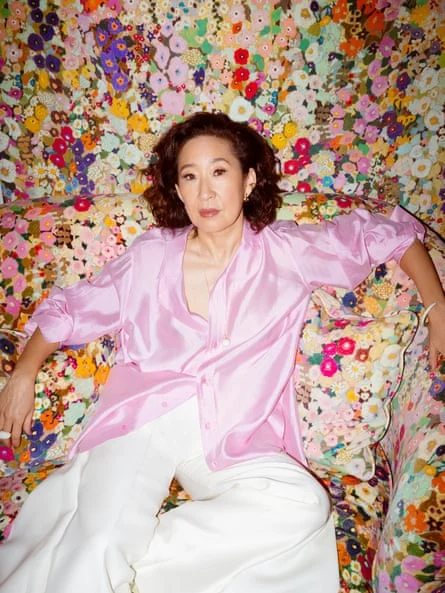
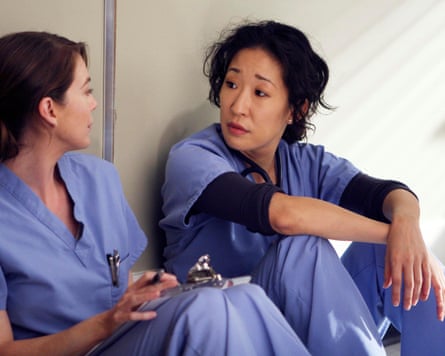
Sandra Oh, the acclaimed actress whose journey from the iconic Dr. Cristina Yang in "Grey’s Anatomy" to the complex Eve Polastri in "Killing Eve" has captivated global audiences, is currently immersing herself in the rigorous world of theatre, taking on the challenging role of Alice in a modern adaptation of Molière’s "Le Misanthrope" at London’s National Theatre. Her return to the stage marks a deliberate pivot in her illustrious career, a move that reflects a profound evolution in her artistic ambitions and a deepening commitment to collaborative storytelling.
Oh, 54, radiates an infectious energy, even as she describes the demanding early stages of rehearsals. "It’s just the fucking process of it," she exclaims, her voice filled with a mix of exhaustion and exhilaration after the first full run-through of the play. "We just finished our first stagger-through, which if anyone is an actor – it’s early days, so the fact we made it through was great. It’s brutal." Her experience in the Lyttelton Theatre, she notes, has already been illuminating. "You can really hear verse. It’s not just about volume or speed. It’s not even solely about intention. You learn so much just being in that space."
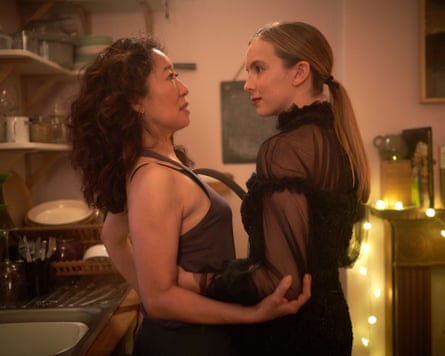
This London engagement represents a significant chapter for Oh, who spent over a month immersed in rehearsals. Her presence in the city evokes memories of her transformative role in "Killing Eve," a show that redefined her career and cemented her status as a leading lady. The series, which premiered in 2018, became a global phenomenon, lauded for its intricate plot, compelling characters, and the electric chemistry between Oh’s Eve Polastri and Jodie Comer’s Villanelle. The show not only garnered critical acclaim and numerous awards but also significantly impacted Oh’s professional trajectory, propelling her into a new echelon of global stardom.

"Le Misanthrope," adapted by Martin Crimp, offers Oh a gender-flipped portrayal of the titular character, a novelist weary of the insincerity and flattery that permeates her social circle. This theatrical endeavor follows her recent foray into the stage with a lauded performance as Olivia in a star-studded "Twelfth Night" at New York’s Delacorte Theater last summer, and her debut at the Metropolitan Opera in "La Fille du Régiment" in the autumn. For Oh, the transition to theatre, and specifically to an institution like the National Theatre, is a welcome embrace of a more collaborative artistic environment. "Unlike the sometimes fraught me-me-meism of screen work," she observes, "working in theatre in general and at the National in particular is a collaborative thing." She adds, with a characteristic dry wit, "not least, because no one does it for the money." This shared dedication, she believes, fosters an atmosphere where "everyone has to bring their best and most open selves. And everyone else loves watching everyone succeed."
A Career of Evolution and Empowerment
Sandra Oh has emerged as a formidable presence in Hollywood, a testament to her enduring talent and her growing influence with age. She has become a vocal advocate for emerging performers and a candid voice in an industry often characterized by artifice. Her interviews reveal a woman who is not only funny and insightful but also remarkably generous with her wisdom.
Looking back, Oh has spoken candidly about navigating the challenges of racism as an Asian woman in the acting world. In a 2018 interview with The New Yorker, she recalled the persistent hurdles, noting, "It’s like being able to get over a bad boyfriend. They’re not going to call. Just move on and hang out with the young women who want you to be their mom." This sentiment underscores a shift towards agency and self-determination. More recently, in a conversation with The New York Times, she articulated a profound sense of being "deep into this very rich middle part of [my] life," where she feels empowered to question her past choices and embrace her role as the "captain of the ship." This introspection and self-possession are palpable in her current artistic choices.
The Genesis of a Star: From Canada to Hollywood
Oh’s early career in Canada was marked by significant success, laying the groundwork for her eventual global recognition. After graduating from the National Theatre School of Canada in Montreal, she was immediately cast in the 1994 Canadian premiere of David Mamet’s "Oleanna." This was followed by a critically acclaimed leading role in the TV movie "The Diary of Evelyn Lau," a poignant portrayal of a teenage runaway. Her talent was further recognized in the CBC biopic of Adrienne Clarkson, a distinguished journalist and former Governor General of Canada, where Oh took on the titular role. Her performance in the film "Double Happiness" earned her a Best Actress award at the Genies, Canada’s equivalent of the BAFTA Awards.
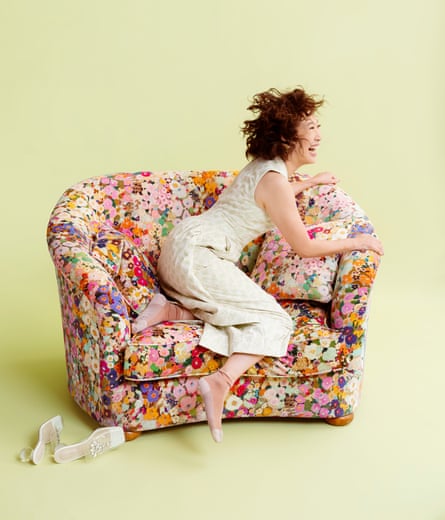
Despite this early acclaim, the move to Hollywood presented a starkly different landscape. Upon arriving in Los Angeles, Oh was informed by an agent that opportunities for Asian actresses were scarce, suggesting she return to Canada to achieve greater fame. This initial setback, however, did not deter her. She drew strength from the few visible people of color on screen and the pioneering spirit of artists like Yoko Ono. Key moments of encouragement during this challenging period proved invaluable. In 1997, while accepting a CableAce Award for her role in the HBO show "Arliss," she met Alfre Woodard, who offered words of profound encouragement: "Keep going, baby." Similarly, Jamie Foxx, whom she encountered at another awards ceremony, offered similar words of support. These encounters, though brief, provided crucial affirmation, underscoring the impact of mentorship and the power of a simple, heartfelt endorsement.
The "Killing Eve" Phenomenon: A Career-Defining Role
The true ascent to leading lady status for Sandra Oh arrived with "Killing Eve." The series, based on Luke Jennings’ "Villanelle" novellas, saw Oh portray Eve Polastri, an intelligence agent whose obsessive pursuit of the psychopathic assassin Villanelle, played by Jodie Comer, ignites a dangerous and exhilarating cat-and-mouse game. The show, penned initially by Phoebe Waller-Bridge, was lauded for its sharp writing, stylish direction, and the captivating dynamic between its two leads.
Oh’s portrayal of Eve was widely praised for its nuance and depth. She masterfully conveyed Eve’s intelligence, her growing obsession, and her moral complexities, making her a deeply relatable and compelling character. The series not only garnered critical acclaim, including multiple Emmy nominations for Oh, but also cemented her as a global icon. The success of "Killing Eve" not only redefined her career but also opened doors for more diverse and complex roles for actors of Asian descent in mainstream media.
This period of intense success was also marked by further explorations in television, including her role in Netflix’s "The Chair," a comedy-drama exploring the challenges faced by a woman of color in academia.
Embracing the Stage: "Le Misanthrope" and the Power of Theatre
Oh’s current engagement with "Le Misanthrope" signifies a deliberate and celebrated return to the theatrical roots that first ignited her passion for acting. The play, a cornerstone of French classical comedy, satirizes the superficiality and hypocrisy within Parisian society, particularly among artists and intellectuals. Martin Crimp’s modern adaptation, by translating the 17th-century verse into contemporary language while retaining its poetic structure, presents a fresh and relevant interpretation for today’s audiences.
Oh’s role as Alice, a novelist who struggles with the pervasive dishonesty around her, resonates deeply with her own public persona and her vocal advocacy for truth and authenticity. The play’s central themes of sincerity versus pretense, and the social cost of speaking one’s mind, are particularly pertinent in the current cultural climate.
"Molière set it in his theatre milieu where there are artists and writers and gossip," Oh explains. "It’s a lot about hypocrisy and Alice’s own search for honesty and truth, which has meaning in 2026 – the difficulty in finding truth. I hope it has a wider meaning about what it is to want to tell the truth, want to be honest, and how difficult it is." She further elaborates on the character’s predicament: "In the play, Alice gets into trouble for speaking her mind, and I need to figure out what that means – not only for the character. What does it mean to speak your mind at this time of your life? What is it about a woman who speaks her mind and then gets shot down because of it?"
Her preparation for the role, she notes, involves embracing the physicality of theatre. "I like dancing; I like moving my body. I think there are answers in the body. I think there are things that are trapped in the body." This holistic approach to performance, combining mental and physical preparation, is characteristic of her dedication to her craft.
Navigating Life, Relationships, and Resilience
Beyond her professional achievements, Sandra Oh is known for her thoughtful insights into life, relationships, and personal growth. She is a proponent of therapy and maintains a strong network of long-standing friendships, which she actively nurtures. Her upbringing as a middle child in a family of Korean immigrants in Canada has, she believes, shaped her into a "bringer-inner" and a "keeper of people," someone who values harmony and community.
"I have to tell you," she shared, recounting a joint therapy session with a childhood friend, "it was really hard." This experience highlights her belief in the necessity of confronting difficult truths within relationships. "I feel like the people who are closest to me have to be able to confront things." This approach, while potentially challenging, fosters deeper connections and mutual understanding.
Oh’s perspective on fame is grounded and pragmatic. She acknowledges the pressures and speculation that accompany public life but emphasizes that "nothing is free." Her advice to those overwhelmed by attention is simple: "You can always go away." Yet, she admits to never having been particularly vulnerable to addiction, framing her past struggles as "normal lows, like being heartbroken or depressed because you don’t know what to do – normal things."
Her daily regimen includes meditation, which she describes as a source of profound self-discovery: "Everything you need to figure out in life is found sitting on that cushion." This practice, coupled with her emphasis on physical movement and "body work," contributes to her overall well-being and her ability to embody diverse characters.
A Voice for Authenticity and Representation
Sandra Oh has consistently used her platform to champion authentic representation, particularly for Asian cultures in the entertainment industry. Her impassioned speech at a Stop Asian Hate rally in Pittsburgh, where she declared, "I am proud to be Asian. I belong here," resonated widely. In a 2022 essay, she reflected on the progress made, noting, "For the first time, I’m finally getting film roles where my character’s name is Korean." This personal journey mirrors the broader industry shift towards greater diversity and inclusivity.
Her support for political figures like Zohran Mamdani, the Mayor of New York, further illustrates her commitment to social progress and her belief in the power of representation to inspire hope and change. Witnessing the positive impact Mamdani had on the diverse cast of "Twelfth Night" deeply moved her, highlighting the significance of seeing leaders who reflect the communities they serve.
The Alchemy of Experience: Finding Purpose and Presence
Oh’s reflections on her career arc and personal growth reveal a woman who has learned to transmute past challenges into sources of strength and wisdom. "All the work that you’re doing, on your own time, with your own heart, in the middle of the fucking night," she muses, "That doubt? And the raw depression? And the questioning, and the anger? It’s alchemising into something." This process of internal alchemy has led her to a profound understanding of self and a detachment from rigid identity. "There is no self," she concludes, "Meaning you don’t have to be tied to self. But that’s not easy."
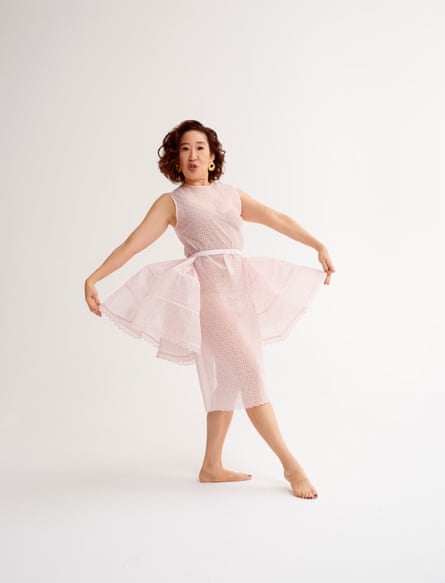
As she navigates the demanding schedule of "Le Misanthrope," Oh finds joy in the present moment and the collaborative spirit of the theatre. Her playful act of creating stickers of her co-stars, pulling funny faces, exemplifies her ability to foster camaraderie and lighten the intense atmosphere of production. This dedication to creating community, even in small gestures, is a hallmark of her approach to her work and her life.
The privilege of focused dedication is something she cherishes. "I’m allowed to concentrate on that one thing. I’m doing this for a purpose. It’s a privilege to be able to focus on that. Then hopefully you deliver." For Sandra Oh, this journey is not merely about performance; it is about purpose, presence, and the continuous, exhilarating pursuit of artistic truth.
Le Misanthrope is showing at the Lyttelton Theatre at the National Theatre, London, until August 1st.