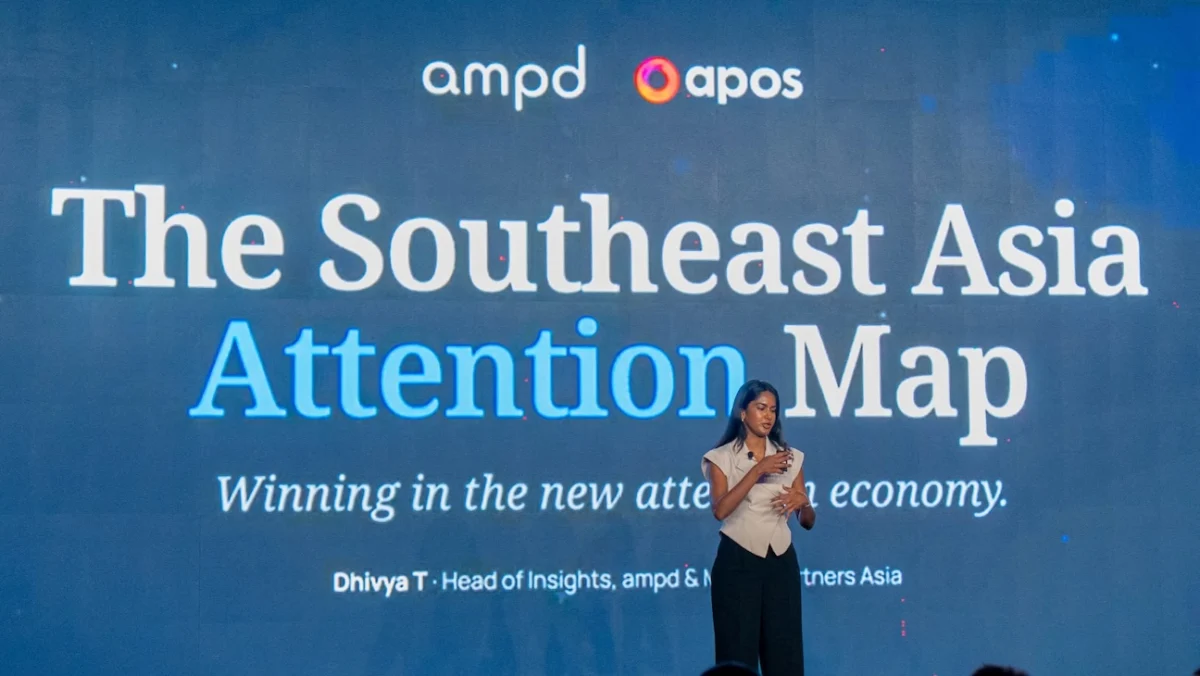
Despite the billions of dollars in capital and the vast libraries of original content poured into the Southeast Asian market by global and regional streaming giants, premium video continues to command a strikingly small fraction of the region’s digital attention. According to recent data presented at the APOS conference in Bali, premium video-on-demand (VOD) services account for only 8 percent of the total time consumers spend on their screens. This revelation, delivered by Dhivya T., head of insights at ampd—the data research arm of Media Partners Asia (MPA)—has sent ripples through the executive circles of the media industry, signaling a fundamental shift in how Southeast Asians interact with mobile devices and traditional television.
The findings highlight a disconnect between the aggressive content strategies of major platforms and the actual behavioral patterns of the modern consumer. In a region where mobile-first connectivity is the norm, the "primetime" window has effectively collapsed, replaced by a fragmented, all-day "grazing" habit that blends social media, messaging, short-form video, and serialized microdramas into a single, continuous stream of consciousness. For companies courting the hundreds of millions of potential subscribers in Indonesia, Thailand, the Philippines, Vietnam, and Malaysia, the challenge is no longer just about producing high-budget spectacles; it is about finding a way to penetrate a digital ecosystem dominated by "fast-attention" formats.
The Death of Primetime and the Rise of the Restless Screen
The ampd research indicates that premium VOD users in Southeast Asia spend approximately five hours per day on mobile leisure activities. However, the slice of that time dedicated to premium streaming remains remarkably thin and, more importantly, static. Regardless of the time of day, the share of attention held by premium video hovers consistently between 7 and 8 percent. This lack of fluctuation suggests that the traditional concept of "evening primetime"—where families or individuals gather for dedicated viewing sessions—has been eroded by the ubiquity of the smartphone.
Dhivya T. noted that consumers now move fluidly between various app categories without a single one dominating a specific time slot. This "grazing" behavior means that a user might jump from a WhatsApp conversation to a TikTok scroll, then to a Netflix episode, and back to an Instagram Reel within a single hour. The data further reveals that even when users are engaged in long-form viewing, their attention is rarely undivided. Approximately one-third of all premium viewing sessions involve a "second screen," typically a local mobile app.
This phenomenon, described by ampd as the "restless screen" versus the "committed screen," suggests that the mobile phone is not necessarily replacing the television. Instead, the two are "stacked." While a high-quality drama may be playing on a large screen, the viewer is simultaneously engaged in "fast-attention" activities on their handheld device. This duality presents a unique challenge for advertisers and content creators who are used to the "lean-back" experience of traditional cinema and television.
Categorizing Attention: Fast vs. Slow
The ampd presentation divided user habits into two distinct psychological categories: fast attention and slow attention. Fast attention comprises social media, messaging, and short-form video. This content is "served" to the user, driven by sophisticated algorithms that provide a constant scroll of quick hits designed for immediate gratification. Slow attention, by contrast, is the intentional, "lean-back" committed viewing that a consumer chooses for themselves, such as a feature film or a serialized premium drama.
"Fast wins the most minutes in the day," Dhivya explained during the Bali conference. "Slow wins the deepest ones."
The strategic implication for streamers is that they can no longer treat the fast-attention layer as a mere marketing tool. Instead, the fast-attention world is where audiences and brands are now built from the ground up. The ampd data suggests that for a premium service to win those "deep minutes," it must first establish roots in the algorithm-driven "fast" world. The traditional marketing funnel—where awareness leads to consideration and then to a subscription—is being compressed into a single layer where culture is created and monetized simultaneously.
The Microdrama Phenomenon and Funnel Collapse
One of the most significant trends discussed at the APOS summit this year is the sudden surge of the "microdrama." These are ultra-short, mobile-first serialized stories, often with episodes lasting only a minute or two, designed specifically for vertical viewing and pay-per-episode monetization. By integrating the narrative hooks of premium storytelling—such as cliffhangers and high-stakes emotional arcs—with the delivery mechanism of short-form video, microdramas have successfully bridged the gap between fast and slow attention.
Dhivya T. argued that the microdrama "collapses the funnel." It captures the user’s attention in the fast-attention layer (where they are already spending the majority of their time) and provides an immediate path to monetization without requiring the user to commit to a monthly subscription or exit their preferred social-style interface.
Industry analysts at the conference noted that microdramas are becoming the "new top-of-funnel" for premium content. They allow studios to capture attention with polished, professional stories and monetize them on the spot, while also serving as a pipeline to steer the most engaged viewers toward longer-form, higher-budget versions of the same intellectual property. This shift transforms the fast-attention layer from a place of mere awareness to a primary source of revenue.
Regional Content Trends: Local vs. Global
The ampd research also provided a granular look at which types of content are winning across different Southeast Asian markets. The data shows a clear trend: in markets where the local film and television industry has reached a certain scale, homegrown stories are beginning to outperform international imports, including the historically dominant South Korean dramas (K-dramas) and Hollywood fare.
In Indonesia and Thailand, local titles are currently leading the charts. Indonesia’s horror genre, in particular, has shown remarkable resilience and growth. Viral threads on social media platforms like X (formerly Twitter) have repeatedly been adapted into theatrical and streaming hits. A prime example is "KKN di Desa Penari," which originated as a viral thread before becoming a record-breaking cinematic phenomenon.
Thailand, meanwhile, has emerged as the region’s most successful exporter of content. Thai productions reached 6.4 million viewers across other Southeast Asian markets, spanning genres from crime thrillers and horror to the globally popular "Boys’ Love" (BL) romance category.
Conversely, in Malaysia and the Philippines, U.S. and South Korean content still hold the top spots. However, the Philippines is being identified by analysts as the region’s next major growth market. While local Philippine hits are currently performing exceptionally well domestically, they have yet to achieve the same level of regional "travel" as Thai or Indonesian content, representing a significant untapped opportunity for platforms looking to scale.
Case Studies in "Fast-to-Premium" Success
The presentation highlighted several case studies demonstrating how the "fast world" can be leveraged to create "premium" banking.
- Backrooms (A24): On a global scale, the horror hit Backrooms serves as a blueprint. Directed by 20-year-old YouTuber Kane Parsons and based on a 4chan meme, the project transitioned from a viral internet sensation to a major studio production under A24, eventually earning over $260 million worldwide.
- My Dearest Assassin (Netflix Thailand): In the regional context, Netflix’s Thai film My Dearest Assassin successfully leveraged the massive social media following of its star, Baifern. By tapping into her 13-million-follower reach on Instagram, the platform was able to convert social media engagement directly into streaming viewership.
- Indonesian Horror: The transition of Indonesian horror from "X threads" to the big screen and then to premium streaming platforms illustrates how "winning the conversation" on social media is now a prerequisite for commercial success in the premium space.
Implications for the Future of Streaming in Southeast Asia
The data presented at APOS Bali suggests that the strategy for streaming services in Southeast Asia must evolve. The goal is no longer simply to grow the 8 percent share of screen time, but rather to meet the specific needs of a consumer who lives in the fast-attention layer.
For the major players—Netflix, Disney+, Viu, and various local platforms—the path forward involves several key shifts:
- Monetizing the Conversation: Building engagement in social and short-form spaces is no longer optional. Platforms must find ways to "earn" within the fast layer, whether through microdramas, ad-supported tiers, or social-commerce integrations.
- Content Stacking: Recognizing that users are distracted, content must be designed to capture attention quickly and maintain it, or alternatively, to complement the "second screen" experience.
- Hyper-Localization: As local content in Indonesia and Thailand continues to outperform imports, investment in local creators who understand the "fast world" of their specific markets will be crucial.
- Regional Export: Platforms that can successfully package Thai or Indonesian content for a regional or global audience will have a significant competitive advantage.
As Dhivya T. concluded in her presentation, winning the culture and the conversation is the core of building deeper engagement. In the rapidly shifting digital landscape of Southeast Asia, monetization is increasingly following the path of the algorithm, and the streamers who fail to adapt to the "fast world" may find themselves permanently relegated to that small, 8 percent slice of the consumer’s day.