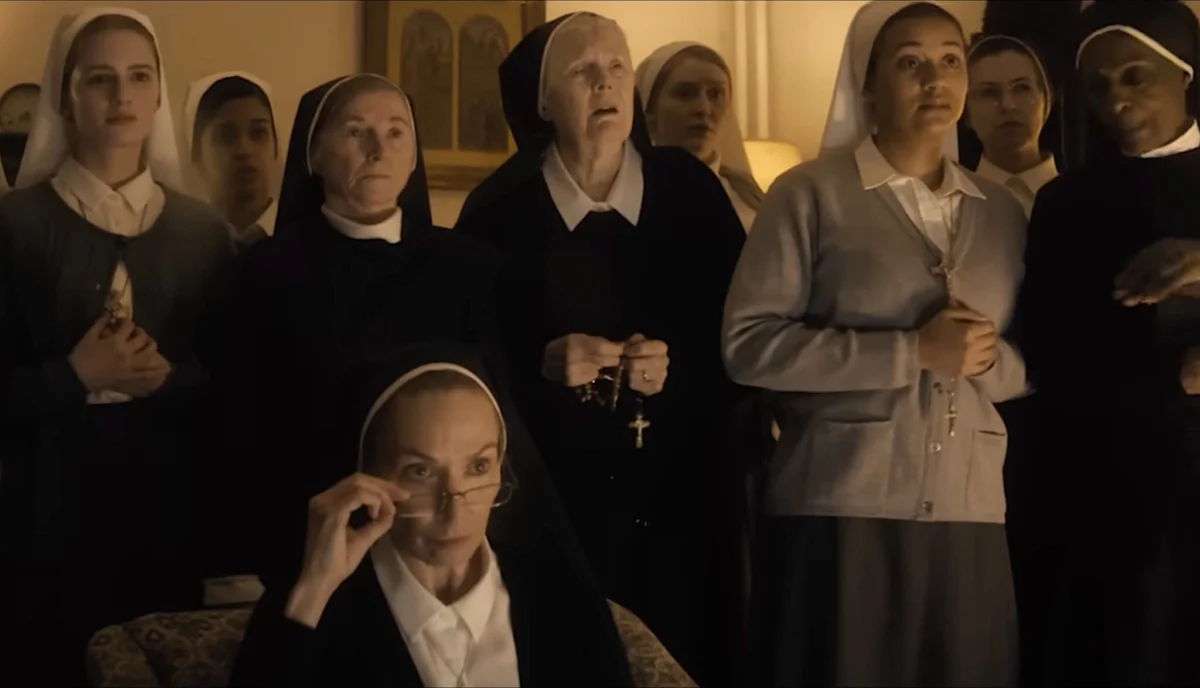
The latest cinematic offering from director Steven Spielberg, "Disclosure Day," presents a narrative rich with theological undertones and complex questions about humanity’s place in the universe. Building upon Spielberg’s recurring engagement with themes of faith and the divine, as seen in films like "Close Encounters of the Third Kind," "E.T. the Extra-Terrestrial," and "War of the Worlds," "Disclosure Day" attempts to weave a conversation about religion and belief into its science fiction framework. Co-written with David Koepp, the film delves into the profound impact of alien contact on human understanding, particularly concerning faith and the concept of divine intervention. However, the critical reception suggests that while the film introduces these profound themes, its exploration may fall short of the depth required for a truly resonant examination.
The Genesis of Extraordinary Gifts
"Disclosure Day" introduces two primary characters who experience extraordinary transformations following encounters with the unknown, events that are coded with a distinct sense of the divine.
Daniel Kellner, a 20-year-old college student, undergoes a profound, almost synesthetic awakening in his understanding of mathematics. This newfound ability allows him to perceive equations and alien languages as intrinsically linked to a universal mathematical language. This transformative experience, however, comes at a personal cost, leading to social isolation and the unsettling realization that significant portions of his childhood are lost to him. His gift, while illuminating the underlying structure of reality, alienates him from his human connections until he meets Jane.
In parallel, Margaret Fairchild experiences a different kind of supernatural empowerment. Following an encounter with an uncanny cardinal, she gains instantaneous fluency in multiple languages. This linguistic mastery is soon complemented by an uncanny ability to perceive intimate details about individuals by looking into their eyes, discerning their innermost thoughts and priorities. This gift, described by some critics as a fusion of empathy and telepathy, allows Margaret to instantly understand and articulate people’s troubles and potential solutions.
Gendered Gifts and Divergent Paths
The film’s portrayal of these extraordinary abilities highlights a distinctly gendered approach to both the gifts themselves and the characters’ reactions to them. Daniel’s mathematical prowess is channeled into becoming a skilled hacker. After a period of incarceration, he is depicted as driven to disclose the alien truth to the world, seemingly without full consideration for the potential chaos this might unleash. Having seen his life irrevocably altered by the knowledge of extraterrestrial existence, he appears poised to inflict a similar upheaval on humanity.
Margaret, conversely, initially embraces her gift, though it causes her discomfort. She dispenses wisdom and offers solace by reminding people of their loved ones. Unlike characters who might exploit such an advantage, Margaret seemingly never considers "using" her power for personal gain or withholding crucial information. Her response to all individuals is characterized by compassion, even when the emotional burden becomes overwhelming.
Religious Parallels and Biblical Allusions
The "gifts" bestowed upon Daniel and Margaret can be readily interpreted through a religious lens. Daniel’s experience of understanding the universe’s underlying language echoes the concept of mystical knowledge, akin to Neo’s awakening in "The Matrix." Margaret’s ability to speak and understand various languages without prior learning strongly resembles glossolalia, or "speaking in tongues," a phenomenon described in the Book of Acts as a gift bestowed upon Jesus’ followers on the Day of Pentecost. In this biblical narrative, the Holy Spirit enabled the apostles to communicate in unknown languages, facilitating the spread of the Gospel and signifying divine favor. In contemporary religious practice, glossolalia is often viewed as a direct line of communication with the divine, a manifestation of spiritual empowerment.
The film’s imagery and thematic exploration lean heavily into Christian symbolism, particularly in its allusions to the Tower of Babel narrative. This Genesis story recounts humanity’s attempt to build a tower reaching the heavens, an endeavor unified by a single language. God’s response was to confuse their languages and scatter them, thereby fragmenting human communication and preventing further unified, potentially hubristic, endeavors. Margaret’s gift, by transcending language barriers, can be seen as a thematic counterpoint to the biblical tragedy of Babel, suggesting a potential for renewed unity through divine or extraterrestrial intervention.
The Unasked-For Revelation and the Question of Consent
A central critique of "Disclosure Day" revolves around the film’s treatment of choice and consent. Both Daniel and Margaret receive their extraordinary abilities without being asked if they desire them. This passive reception of profound change is presented as a significant issue, especially in a narrative that ostensibly explores themes of consent and the public’s right to knowledge. The film’s exploration of these ideas, according to some analyses, lacks sufficient depth to fully grapple with their implications.
Jane: The Nexus of Faith and Doubt
The character of Jane emerges as a pivotal figure in the film’s theological discourse. Initially introduced as Daniel’s girlfriend, their conversations often serve as exposition dumps. After Daniel rescues her from the clandestine Wardex organization, they seek refuge in the St. Clare of the Dawn monastery, revealing Jane’s past as a nun-in-training. Her reticence to discuss this period is attributed to a fear of being perceived as peculiar, but Daniel’s surprise at her religious beliefs highlights a perceived disconnect. His question about her departure from the nunnery, linking it to a loss of faith, elicits her response about losing her "calling," a distinction that goes largely unexplored by Daniel, despite its potential to ignite further dialogue on the nuances of faith and vocation.
The visual presence of Jane’s large, ornate crucifix, a significant piece of religious iconography, further complicates Daniel’s apparent ignorance of her spiritual background. The discrepancy between her prominent display of faith and Daniel’s lack of recognition raises questions about the characters’ interpersonal awareness and the film’s commitment to consistent character development.

Catholic Symbolism and a Constricted Discussion
"Disclosure Day" utilizes Jane’s background as a nun-in-training to facilitate its discussions on religion. However, the film’s choices in framing these conversations have been noted as peculiar. The central thesis of the movie—the intersection of religious faith, belief in aliens, and the public’s right to know—is introduced but not fully developed. Jane’s immediate assertion that the disclosure of extraterrestrial life will shatter humanity’s belief in a supreme being, stating, "People have been raised to believe in a supreme being, and now you want to show us actual supreme beings? … the world can’t handle both," is presented as a deeply personal crisis.
However, critics argue that this perspective is overly generalized and fails to acknowledge the diverse spectrum of human belief systems. The film’s tendency to apply Jane’s individual crisis to a universal reaction, coupled with its reliance on Catholic characters to represent all religious perspectives, is seen as a significant limitation, straitjacketing the spiritual discussion. The film’s limited engagement with non-Catholic or non-religious viewpoints, despite its Jewish filmmaker and agnostic screenwriter, is a point of contention.
The MacGuffin, Torture, and Empathy
The film’s exploration of choice and consent escalates through scenes involving torture, inextricably linking these themes with faith and spirituality, particularly in Jane’s arc. The alien "MacGuffin," an object of immense power, is introduced with an air of mystery. Its capabilities are revealed gradually, suggesting it can induce a form of aggressive mental intrusion, or "diving."
When Daniel attempts to share his knowledge with Jane, he presents a montage including a historical anecdote about Nixon and alien corpses, and subsequently, a harrowing torture scene. While the audience does not witness the torture directly, the alien’s screams and Jane’s horrified reaction underscore the brutality. This scene is crucial, as it showcases Jane’s immediate empathy for the alien, irrespective of any perceived threat. Her distress on behalf of the alien invites the audience to extend similar empathy.
The narrative then shifts to Jane herself becoming a victim of torture, both physical and mental. While Daniel is subjected to less severe interrogation, Jane endures significant physical harm and mental intrusion. This disparity in suffering, for characters who are both central to the mission, raises questions about the film’s thematic priorities.
Faith Under Duress: The Crucifix and Stigmata
During her interrogation, Jane, in distress, clutches her ornate crucifix. The scene becomes ambiguous, with the possibility that her tormentor, Noah Scanlon, manipulates her actions. However, the interpretation that Jane is using the crucifix to ground herself, transforming it into a symbol of stigmata through self-inflicted wounds, is strongly suggested. Scanlon exploits her faith, referencing the miracle of St. Clare of Assisi’s bilocation to assert his own omnipresence, thereby fueling Jane’s fear of technological superiority eclipsing divine belief.
Scanlon’s manipulation escalates as he twists her faith, quoting Jesus’ words in Gethsemane to coerce her into betraying Daniel. This scene is particularly potent, highlighting a horrific perversion of a moment of profound faith and acceptance. The film critiques this by contrasting Jesus’ voluntary walk into his own death with Scanlon’s forced coercion of Jane, emphasizing the absence of choice in her predicament. This moment, according to critics, encapsulates the film’s central thematic promise, which is ultimately left unfulfilled.
The Unfulfilled Potential of Religious Imagery
The film’s consistent reliance on Catholic imagery, while potent in specific scenes like Jane’s interrogation, is seen as a missed opportunity for broader spiritual exploration. The absence of other religious traditions or secular perspectives limits the film’s capacity to engage with the multifaceted nature of human belief. The use of the sign of the cross by a character encountering Margaret’s powers, for instance, implies a specific interpretation of Margaret’s abilities within a Catholic framework, a connection that remains unexplained for Margaret herself.
The film’s concluding word, "Listen," carries significant weight as the Hebrew word "Shema," the opening of a foundational Jewish prayer. This subtle nod to Judaism, present despite the film’s overt Christian symbolism, is noted by some as a potentially overlooked layer of meaning, acknowledging a broader spiritual heritage. However, this connection is overshadowed by the film’s predominantly Catholic-centric visual language.
A Missed Opportunity for Deeper Dialogue
The film’s exploration of Jane’s personal crisis following her failed attempt to use her faith as a shield is another area flagged for underdeveloped potential. Her conversation with Sister Maura, while offering some reassurance about humanity’s place in a divinely created, vast universe, is conducted over the phone and lacks the depth required to fully explore the profound existential questions raised. The constant interruptions of mundane life during this crucial conversation, while intended to reflect reality’s intrusion, also serve to pull the audience out of the moment, preventing a deeper engagement with Jane’s internal struggle.
This lack of sustained focus on Jane’s emotional and spiritual journey hinders the impact of her eventual heroic actions. Her decision to save the day, an act of faith in humanity, is bolstered by Sister Maura’s assurances, but the film fails to fully explore the internal transformation that underpins this choice. A comparative analysis with the phone call scene in "Wake Up Dead Man" highlights this deficiency, where emotional shifts are given space to resonate and inform character decisions.
In conclusion, "Disclosure Day" presents a compelling premise, interweaving extraterrestrial contact with profound questions of faith, choice, and the nature of truth. While the film showcases Spielberg’s characteristic thematic depth and masterful storytelling, its exploration of these complex religious and philosophical ideas is, by many accounts, constrained by a narrow focus on specific religious imagery and an underdeveloped engagement with the profound implications of its own thematic explorations. The film leaves audiences with a sense of what might have been, a testament to the power of its initial questions, even as it falls short of providing truly satisfying answers.