The Town That Takes marks the feature-length directorial debut of actor Britt Bankhead, a project that blends elements of supernatural horror, historical mystery, and domestic drama. Scheduled for a limited theatrical release beginning July 10, 2026, the film is produced by Bankhead Productions and represents a significant transition for Bankhead from his established acting career into the realm of filmmaking. The production has recently unveiled its official trailer and promotional materials, signaling a marketing push aimed at enthusiasts of indie horror and folklore-based thrillers. The narrative centers on a troubled Army veteran, Dean Richardson, who finds himself entangled in a series of unexplained disappearances in a remote backwoods town, all of which appear to be linked to one of North America’s oldest and most enduring mysteries: the disappearance of the Roanoke Colony.
Narrative Overview and Character Dynamics
The screenplay, co-written by Britt Bankhead and Jon Blaze, focuses on the psychological and physical journey of Dean Richardson. Following the sudden death of his ex-wife, Richardson attempts to bridge the emotional distance between himself and his twelve-year-old son, Wyatt, portrayed by Nico Tirozzi. The film positions their journey as an attempt at reconciliation that is violently interrupted when they stop in a secluded community. The atmosphere of the town is defined by a palpable sense of dread and the recurring presence of the word "Croatoan," a reference that serves as the film’s primary link to historical folklore.
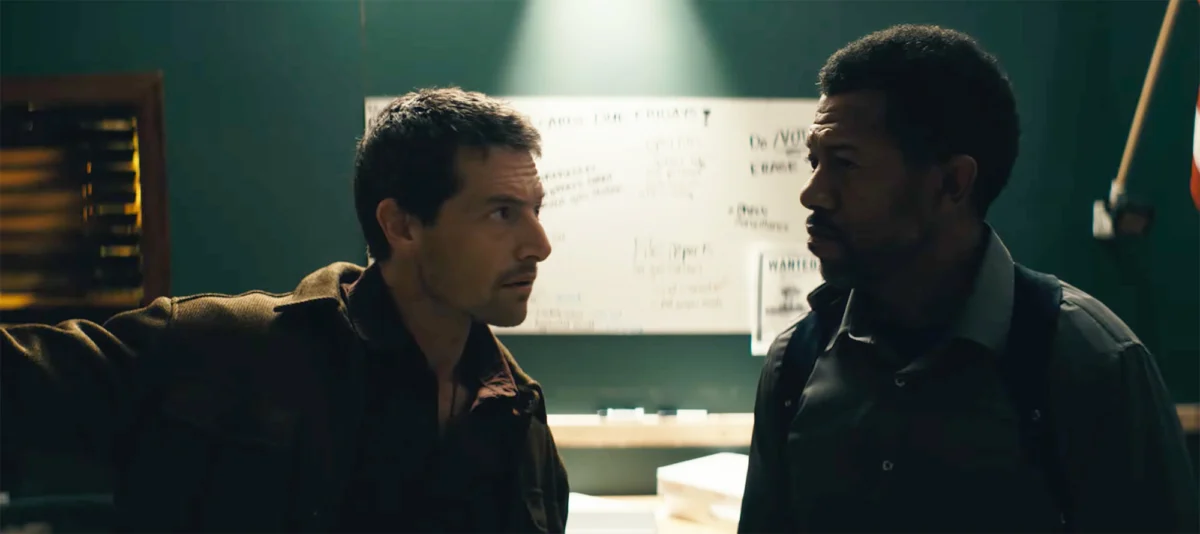
The plot intensifies when a local motel clerk is discovered murdered. Due to his status as an outsider and his military background, Richardson is quickly identified as the primary suspect by local authorities. The stakes are elevated when Wyatt disappears, forcing Richardson into a desperate search that requires him to form an uneasy alliance with local law enforcement. Miles Mussenden stars as veteran Detective Douglas O’Shea, while the cast is rounded out by Grace Patterson, Mike Markoff, and Nico Tirozzi. The interaction between the veteran detective and the "outsider" veteran provides a procedural framework through which the more supernatural elements of the story are filtered.
Historical Context: The Roanoke Colony and the Croatoan Mystery
To understand the thematic foundations of The Town That Takes, one must examine the historical event that serves as its inspiration. The Roanoke Colony, often referred to as the "Lost Colony," was an enterprise financed by Sir Walter Raleigh in the late 16th century. In 1587, a group of approximately 115 English settlers, led by John White, landed on Roanoke Island off the coast of what is now North Carolina.

The chronology of the Roanoke mystery provides the "ancient evil" backstory referenced in the film’s synopsis:
- July 1587: The settlers arrive at Roanoke Island. Shortly after, John White’s daughter gives birth to Virginia Dare, the first English child born in the Americas.
- August 1587: Due to a lack of supplies and rising tensions with local indigenous tribes, White returns to England to gather resources.
- 1588–1589: The Anglo-Spanish War prevents White from returning to the colony, as every available English vessel is pressed into service against the Spanish Armada.
- August 1590: White finally returns to Roanoke. He finds the settlement completely abandoned. There are no signs of a struggle or a hurried departure. The only clues left behind are the word "CROATOAN" carved into a sturdy post and the letters "CRO" carved into a nearby tree.
In the context of the film, this historical disappearance is not merely a backdrop but a recurring curse. The Town That Takes posits that the "Croatoan" phenomenon was not a singular event in 1590 but a cyclical force that continues to claim victims in the modern era. By grounding a contemporary thriller in 16th-century history, the filmmakers tap into a tradition of "folk horror" that explores how the sins or mysteries of the past manifest in the present.
Production Background and Directorial Vision
Britt Bankhead’s move into the director’s chair follows his work on the series Winchester, where he both acted and directed an episode. This experience appears to have informed the atmospheric and character-driven approach seen in the trailer for The Town That Takes. Produced by Bankhead and Grace Patterson, the film emphasizes practical locations and a gritty, low-light aesthetic to enhance the sense of isolation inherent in "backwoods" horror.
The choice of a limited theatrical release starting in July 2026 suggests a strategic counter-programming move. While mid-summer is typically dominated by high-budget studio blockbusters, there is a consistent market for independent horror films that offer a more intimate, suspenseful experience. The production did not follow the traditional film festival circuit prior to its release announcement, opting instead for a direct-to-market approach through Bankhead Productions.
Casting and Thematic Implications
The casting of Miles Mussenden as Detective Douglas O’Shea brings a level of veteran presence to the production. Mussenden, known for his roles in high-profile television dramas, provides the necessary foil to Bankhead’s Dean Richardson. The film explores the theme of "the dangerous man"—a trope often applied to veterans in cinema—and subverts it by making the protagonist the victim of a town’s collective paranoia and an ancient supernatural force.

The relationship between Dean and Wyatt Richardson serves as the emotional core of the film. Horror cinema frequently uses the "endangered child" motif to heighten stakes, but here it is intertwined with the protagonist’s quest for redemption. Richardson is not just fighting to save his son from a physical or supernatural threat; he is fighting to prove his worth as a father after years of estrangement.
Analysis of the Folk Horror Genre in 2026
The Town That Takes arrives at a time when the "folk horror" subgenre is experiencing a resurgence. This genre typically involves a protagonist from the modern, rational world entering a remote location where ancient, pagan, or folkloric beliefs still hold sway. By utilizing the Roanoke legend, the film connects itself to a specifically American brand of folk horror—one that deals with the anxieties of colonization, the vastness of the wilderness, and the fear of the unknown that defined the early European experience in North America.
From a technical standpoint, the trailer suggests a focus on suspense over "jump scares." The use of the remote town as a character in itself—a place that "takes"—aligns with films like The Wicker Man or Midsommar, where the environment is as much a threat as any individual antagonist. The inclusion of "impossible encounters" and "unexplained deaths" suggests that as the procedural investigation led by Detective O’Shea hits a wall, the film will pivot into more overt supernatural territory.
Chronology of the Film’s Development and Release
The development of The Town That Takes has followed a deliberate timeline, moving from script to screen within the independent production ecosystem:
- Screenplay Completion: Co-written by Bankhead and Blaze, focusing on a modernization of the Croatoan myth.
- Production Phase: Filming took place in remote locations to ensure an authentic "backwoods" atmosphere, emphasizing the isolation of the setting.
- Post-Production: Focus was placed on sound design and a muted color palette to enhance the thriller elements.
- Trailer Launch (June 2026): Bankhead Productions released the first look at the film via digital platforms, generating interest through the historical Roanoke connection.
- Theatrical Release (July 10, 2026): The film debuts in select theaters across the United States.
Industry Impact and Market Reception
The success of independent horror often relies on "word-of-mouth" and the ability to capture a specific niche. By focusing on a well-known historical mystery, The Town That Takes has a built-in hook for audiences interested in "unsolved mysteries" and "true crime" history. The decision to release the film in July—a month usually reserved for high-octane action—indicates a belief in the film’s ability to serve as a sophisticated alternative for adult audiences.

Market analysts suggest that the indie horror sector remains one of the most profitable segments of the film industry relative to budget. Films that manage to blend emotional stakes (such as the father-son dynamic) with high-concept horror (the Roanoke curse) often find longevity on streaming platforms following their initial theatrical runs.
Conclusion and Broader Implications
The Town That Takes represents an ambitious attempt to synthesize American history with modern cinematic horror. By revisiting the 1590 disappearance of the Roanoke settlers, Britt Bankhead and his team have tapped into a narrative that has haunted the American psyche for centuries. The film’s focus on a "town that takes" suggests a broader commentary on how communities can become insular and how history, if left unresolved, can manifest as a predatory force.
As the film prepares for its July 10, 2026, release, it stands as a testament to the viability of independent filmmaking. It prioritizes atmosphere, historical resonance, and character development over the spectacle of big-budget horror. Whether Dean Richardson can save his son and clear his name remains to be seen, but the film’s exploration of the "Croatoan" mystery ensures that it will be a point of discussion for those fascinated by the intersection of history and the macabre. For Bankhead, this directorial debut will likely serve as a defining moment in his career, establishing his voice as a filmmaker capable of handling complex, genre-bending narratives.