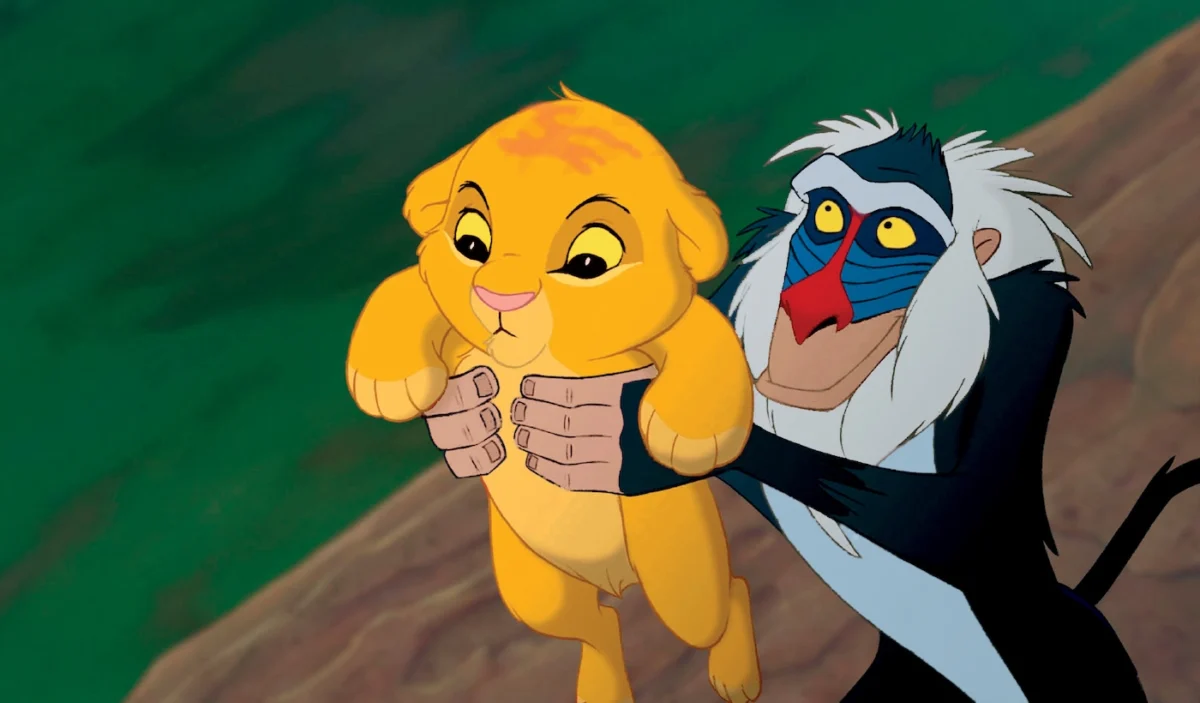
Fifty years after the release of Bambi, Disney once again captivated audiences with a story of talking animals, solidifying its place as an instant classic and a monumental commercial success, this time with a pride of lions. The Lion King, released in 1994, masterfully employed a narrative structure reminiscent of its animated predecessor, dedicating the initial portion to the protagonist Simba’s tender childhood. This idyllic period is shattered by a profound tragedy, propelling Simba into a journey of self-discovery and eventual ascent to his father’s throne. This archetypal coming-of-age narrative, known in literary circles as a Bildungsroman, resonated deeply with a global audience.
Genesis and Influences
While Disney is renowned for adapting literary works, The Lion King stands apart as an original screenplay. However, its thematic DNA can be traced to influential sources. At a considerable remove, Felix Salten’s Bambi shares the foundational element of a young protagonist navigating a world of natural beauty and inherent danger. More directly, the film’s central conflict between the noble King Mufasa and his villainous brother Scar bears a striking resemblance to William Shakespeare’s Hamlet. The tragic arc, where Simba is manipulated into believing he is responsible for his father’s death, mirrors Hamlet’s own descent into guilt and vengeful pursuit of justice. The revelation of Scar’s true treachery only at the film’s climax underscores this Shakespearean parallel.
The development of The Lion King began in the early 1990s. Directors Roger Allers and Rob Minkoff, along with co-directors Brenda Chapman and Barry Cook, spearheaded the creative vision. The script, penned by Irene Mecchi, Jonathan Roberts, and Linda Woolverton, was a collaborative effort that aimed to blend profound themes with accessible entertainment. Initial story concepts explored a more mature and darker tone, but the filmmakers ultimately steered towards a narrative that balanced the gravitas of loss with the optimism of redemption, ensuring its broad appeal.
A Modern Fairy Tale with Traditional Values
As is characteristic of Disney’s animated output, The Lion King presents a world with a deliberately limited "body count," while maximizing emotional resonance. The film’s portrayal of family dynamics reflects a distinctly Fifties American ideal, characterized by a nuclear unit. While a brief nod is made to the reality of lion social structures where females are the primary hunters, the on-screen depiction centers on a seemingly traditional family: a devoted, albeit submissive, mother; a strong, authoritative father; and a single offspring. This idealized family unit eschews the complexities of multi-cub litters or the more communal dynamics of a lion pride, opting instead for a simpler, more easily digestible model for its target audience.
The narrative also incorporates a strictly binary and heterosexual love story, echoing the romantic arc seen in Bambi. Simba encounters Nala as a cub, their childhood bond blossoming into love. This union culminates in the birth of a new prince, symbolizing the cyclical nature of life and the perpetuation of the kingdom. This thematic element is powerfully underscored by the film’s iconic, award-winning song, "Can You Feel the Love Tonight," with music by Elton John and lyrics by Tim Rice, which perfectly encapsulates this burgeoning romance and the film’s overarching message of continuity.
A Rich Tapestry of Supporting Characters
Beyond the central lion family, The Lion King boasts a memorable ensemble of subsidiary animal characters, each contributing to the film’s charm and narrative propulsion. Zazu, the king’s loyal majordomo, is depicted as a red-billed hornbill, a species native to the African savanna. He serves not only as a trusted advisor and guardian but also as an occasional babysitter, exhibiting a more serious demeanor than many typical Disney sidekicks, underscoring his significant role within the kingdom’s hierarchy.
Providing a crucial dose of comic relief and philosophical counterpoint are Timon the meerkat and Pumbaa the warthog. These two unlikely companions befriend the exiled Simba after his father’s death, offering him a life philosophy of "Hakuna Matata" – no worries. Their bond, presented as a deeply platonic and devoted friendship, defies traditional social groupings; there is no warthog herd or meerkat colony, just the two of them, navigating life as inseparable companions. Their mentorship saves Simba during his lowest point, and their memorable songs, including "The Lion Sleeps Tonight" (a rendition of "Wimoweh") and "Hakuna Matata," have become enduring anthems. Their popularity even led to their own successful television series, further cementing their status as beloved Disney characters.
Commercial and Cultural Impact
Released on June 24, 1994, The Lion King was an immediate critical and commercial triumph. It grossed over $763 million worldwide during its initial theatrical run, becoming the highest-grossing film of 1994 and one of the highest-grossing animated films of all time. Its success extended far beyond the box office. The film garnered two Academy Awards for Best Original Score (Hans Zimmer) and Best Original Song ("Can You Feel the Love Tonight").
The film’s impact was not limited to its initial release. It spawned a franchise that has generated billions of dollars for Disney. This includes:
- Sequels and Prequels: The Lion King II: Simba’s Pride (1998) and The Lion King 1½ (2004) explored further adventures within the Pride Lands.
- Live-Action Remake: A photorealistic computer-animated remake, directed by Jon Favreau, was released in 2019, achieving significant box office success. This remake also featured its own prequel, Mufasa: The Lion King (2024).
- Television Series: Numerous animated series, such as Timon & Pumbaa and The Lion Guard, expanded the universe and introduced new characters.
- Stage Musical: The Broadway adaptation of The Lion King, which premiered in 1997, became the third longest-running show in Broadway history, earning multiple Tony Awards and continuing to captivate audiences worldwide.
- Merchandise and Theme Park Attractions: The film’s characters and themes have been extensively integrated into Disney’s vast merchandising empire and theme park experiences.
Archetypal Storytelling and African Celebration
At its core, The Lion King is a powerful exploration of universal archetypes. Simba embodies the "chosen child," the "fated king," and the quintessential hero on a transformative journey. His path from infancy through profound hardship and loss to hard-earned triumph is a narrative that has resonated across cultures and millennia. He learns a crucial lesson about the deceptive nature of appearances and the weight of responsibility. His exile and subsequent return to reclaim his birthright from tyrannical leadership represent the restoration of order and the triumph of good over evil, a narrative that speaks to enduring human aspirations for peace and prosperity.
What elevates The Lion King beyond a mere collection of familiar tropes is its exceptional execution. The masterful blend of distinctive characters, compelling voice acting, unforgettable music, and a vividly realized setting creates an immersive experience. The film is a vibrant celebration of Africa, opening with its iconic theme song in Zulu, "Nants’ Ingonyama," which translates to "Here Comes the Lion." The audience’s enthusiastic reception to this opening, even after understanding its meaning, highlights the film’s ability to connect on an primal level. The majestic parade of animals saluting the new king at the beginning and end of the film represents key species of the African continent, moving beyond Western-centric narratives to showcase a rich and diverse ecosystem. This deliberate choice imbues the film with a sense of the exotic and the extraordinary, prompting viewers to engage more deeply with the familiar archetypes presented.
The Lion as a Symbol
The lion itself carries a long and potent history in Western lore and legend, often symbolizing royalty, power, and divine authority. As the "king of the heraldic animals," its presence in The Lion King is far from accidental. It is highly probable that the screenwriters were aware of C.S. Lewis’s creation of Aslan, the lion avatar of the Christian Messiah in The Chronicles of Narnia. The echoes of Aslan’s noble bearing and his role as a spiritual guide for protagonists in Narnia likely influenced the depiction of Mufasa and, by extension, Simba’s destiny. These deep-seated archetypal resonances, whether direct or indirect, imbue The Lion King with a profound power, contributing to its status as one of the most beloved and enduring animated films of its era, featuring characters that have become indelible icons in popular culture.