Next month, Christopher Nolan’s highly anticipated adaptation of Homer’s epic poem, The Odyssey, is poised to make a grand entrance into cinemas worldwide. Industry projections suggest this nearly three-hour cinematic event is on track to mirror the phenomenal success of Nolan’s previous directorial achievement, Oppenheimer, which not only captivated audiences and garnered nearly a billion dollars at the global box office but also swept the Academy Awards, securing seven coveted Oscars.
However, before audiences can embark on Nolan’s visual journey through the trials of Odysseus, a groundbreaking new audiobook version of the ancient Greek epic has been released. This ambitious production features the vocal talents of a frequent and celebrated collaborator of Nolan’s: the legendary Sir Michael Caine. Caine, who has partnered with Nolan on eight films, including the iconic Dark Knight trilogy, lends his distinctive voice to this rendition of Homer’s timeless tale.
The Iconic Voice Enters the AI Era
At 93 years old, Sir Michael Caine announced his retirement from acting at the Red Sea Film Festival in Saudi Arabia last December. This marked his fourth public declaration of retirement, a testament to his enduring presence and perhaps the inherent difficulty of stepping away from a beloved craft. This latest retirement, however, seems particularly unlikely to be final, especially in light of a significant deal the actor struck shortly before his announcement, licensing an AI version of his voice.
In November 2025, Caine, alongside fellow Hollywood heavyweight Matthew McConaughey, became one of the most prominent figures to align with ElevenLabs, an artificial intelligence company specializing in audio generation and voice cloning. Valued at an impressive $11 billion, ElevenLabs operates an "Iconic Voice Marketplace," enabling brands, studios, and creators to license the distinct vocal likenesses of celebrities for various projects.

This technological advancement signifies a profound shift in the entertainment landscape. Tools like those developed by ElevenLabs mean that even after an actor’s passing, their voice can continue to be utilized in new advertisements, films, or even on navigation devices. Such licensing agreements, pending estate approval, can theoretically extend for perpetuity, offering a novel dimension to an artist’s legacy and potential posthumous earnings.
A Precedent Set by AI’s Digital Twins
While many within the film and television industry express skepticism regarding the rapid advancement of AI in creative fields, exemplified by the emergence of entirely fabricated virtual stars like Tilly Norwood, some actors have embraced the technology with a broader scope than just their voices. Bruce Willis, who retired from acting in 2022 following a diagnosis of frontotemporal dementia, has seen his "digital twin" appear in a Russian telecommunications advertisement. More recently, the estate of the late actor Val Kilmer has granted approval for an AI rendition of his voice and likeness, set to feature in the upcoming Western film As Deep as the Grave. This trend indicates a growing willingness among established and emerging artists to explore the potential of digital replication.
The Enduring Resonance of Michael Caine’s Voice
Sir Michael Caine’s voice is undeniably one of the most recognizable and frequently imitated in British cinema history. Its distinctive cadence and character have been a hallmark of his extensive career. The comedic "Caine-off" featured in Steve Coogan and Rob Brydon’s travelogue series, The Trip, where the duo playfully compete to deliver the most accurate impression, often cited as a highlight of the films, even saw them upstaged by the man himself during a performance at the Royal Albert Hall in 2014.
The newly released Odyssey audiobook is a monumental undertaking by ElevenLabs, clocking in at an impressive 13 hours. It is described as the company’s inaugural in-house production and billed as "the company’s first cinematic multicast audiobook, combining Sir Michael Caine’s official AI voice replica, a full cast performance, original music and immersive sound design." This ambitious production aims to leverage cutting-edge technology to bring Homer’s epic to a modern audience.
Artistic Choices and Technological Execution
While Christopher Nolan’s cinematic interpretation of The Odyssey reportedly draws inspiration from Emily Wilson’s influential 2017 revisionist translation, ElevenLabs opted to utilize the text translated by William Cullen Bryant in the 1870s. The company confirmed that no academics were directly involved in the translation choice, though they acknowledged that ensuring the correct pronunciation of ancient Greek names was a "painstaking process."
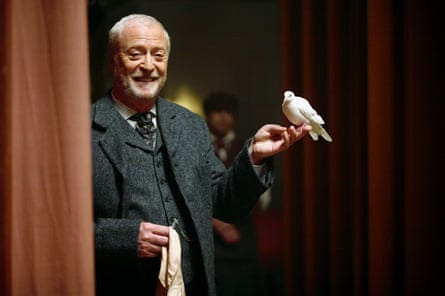
In a statement, Sir Michael Caine expressed his profound connection to the source material: "One of the greatest stories ever told. For nearly three millennia, its themes of perseverance, loyalty, temptation and the enduring call of home have resonated across cultures and generations. By bridging classical storytelling with digital innovation, this timeless epic is reimagined for modern audiences, brought vividly to life through ElevenReader’s cutting-edge technology. It was a pleasure to be a part of ElevenProductions’ retelling of The Odyssey."
Dustin Blank, who leads partnerships at ElevenLabs, lauded Caine’s prescient decision to enter into an agreement with the company. "Bravo to him for recognising this is where technology is going," Blank stated to The Guardian. "He’s a leader in this space because he’s been a part of crafting the first steps and his own legacy."
The audiobook production process employed a unique remuneration model for its supporting voice artists. These individuals, who remained uncredited, were compensated based on the quantity of text their voices contributed, measured by the number of letters of the alphabet spoken. To date, approximately 22 million individuals have been paid through this system. Notably, members of ElevenLabs’ "Iconic" voice range retain the power of veto over projects in which their voices are utilized.
The selection of supporting cast members involved an "audition" process from ElevenLabs’ existing voice library. For instance, Blank explained that for the role of Athena, the producers sought a voice that was "wise, but subtly emotive." Once a suitable voice was identified, the team could "really hear that person. And they made the words come alive on the page."
The Nuances of AI Narration
The opening chapter of the audiobook, made available for free listening, features Sir Michael Caine’s narration. His AI-generated voice is remarkably lifelike, characterized by a calm, respectful, and seemingly uniform tone. While consistent, this intonation is arguably more homogenous than what might be expected from a traditional human performance, and at times, even more even than some of the other voices employed in the production, such as a notably "fruity" portrayal of Zeus.
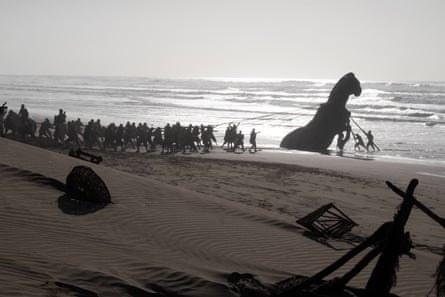
Blank defends the company’s approach by referencing the oral and vernacular origins of the epic poem, originally transcribed between 725 and 675 BC. "This story has been around for thousands of years," he remarked. "It has already travelled through all different types of technology and retelling. So we view this as a continuation of that."
The production itself was remarkably swift, with four producers completing the 13-hour audiobook in six weeks. ElevenLabs highlights this as a significant acceleration compared to the traditional months of casting, recording, sound design, and post-production typically required for such projects.
Addressing concerns about the potential displacement of creative professionals, Blank argues that the narrative of AI simply minimizing creative roles is shortsighted. "Human ingenuity is creating these prompts and putting the pieces together," he asserted, "and we’re hiring new types of jobs to support this." He further suggested that AI technologies will enable more content to enter production, thereby injecting more capital into the industry and creating new avenues for individuals to enter the creative sphere. "The goal is, with this type of technology being in the hands of more people, that there will be more product out there and more opportunity for people to get through the door."
Future Horizons in Audio Production
Looking ahead, ElevenLabs is exploring further collaborations, with audiobook adaptations of classic texts preceding major film releases becoming a potential model. Projects such as upcoming installments of the Dune franchise and Netflix’s adaptation of Pride and Prejudice are being considered. "We’ve toyed around with some of those and we’re thinking about who we would want to cast in them," Blank revealed. "It has to be something that pushes the ball forward, not AI for AI’s sake."
Blank also expressed openness to collaborations with prominent directors who could spearhead creative direction and mixing. He is particularly enthusiastic about the prospect of productions featuring unconventional casting, such as gender-flipped interpretations of classic works. "I love that idea – and we should," he enthused.
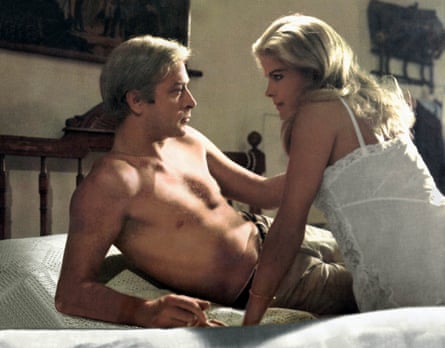
Sir Michael Caine, a six-time Oscar nominee and two-time winner, boasts a career spanning over 150 films. His roles in classics like Alfie, Get Carter, Zulu, The Man Who Would Be King, Educating Rita, and Hannah and Her Sisters have cemented his status as one of the world’s most beloved and prolific stars. Known for his pragmatic approach to filmmaking, Caine has often prioritized commercial viability, famously remarking on his role in the poorly received Jaws: The Revenge that while the film itself was terrible, the financial rewards were "terrific."
Caine’s retirement pronouncements have been a recurring theme throughout his later career. He first declared his intention to retire after the 2009 film Harry Brown, only to return 24 films later for Best Sellers in 2021. He then appeared in the historical drama Medieval (2022) and garnered critical acclaim for his role in The Great Escaper (2023), portraying a D-day veteran embarking on a solo journey to Normandy.
Despite stating to The Guardian in 2023 that The Great Escaper would be his final film, Caine had previously mentioned potential involvement in a biopic about Charles Darwin. However, Anthony Hopkins has since been announced as the star of that project, which is currently in production. Caine’s rumored return in The Last Witch Hunter 2 alongside Vin Diesel also appears unlikely to materialize.
A Personal Touch Beyond AI
While Caine provided narration for the audio versions of his memoirs in 2010 and 2018, other narrators, such as Eddie Marsan, took over for his 2024 book Don’t Look Back, You’ll Trip Over: My Guide to Life and his 2023 thriller novel, Deadly Game.
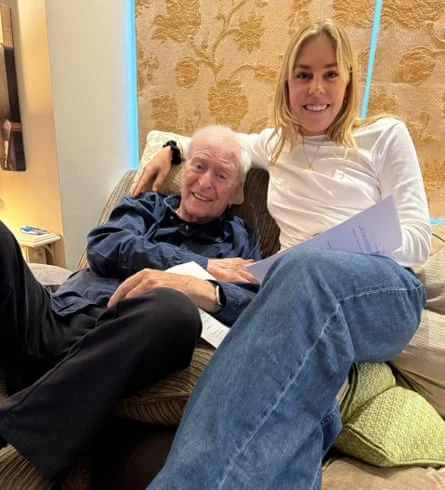
However, Caine did lend his non-AI vocals to a short film titled Bobby, which is slated for premiere this autumn. Isabella Webber, the writer-director of Bobby, shared that Caine recorded narration for the film at his London flat in the month prior to signing his deal with ElevenLabs. The film is based on the story of a man who participated in the Dunkirk evacuation.
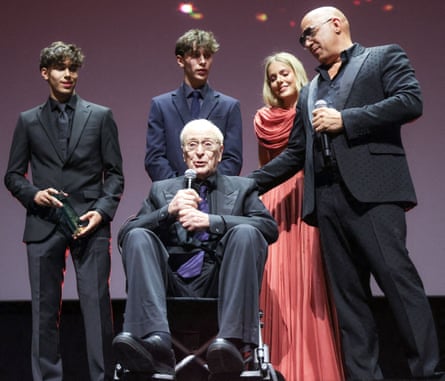
Webber explained that she was inspired to approach Caine after hearing him discuss his father’s experiences at Dunkirk on a podcast. After connecting with Caine’s wife, Shakira, Webber learned that the actor was interested but that scheduling a day was challenging due to his age and health. "I had the script and a microphone in my bag and just didn’t leave Chelsea Harbour [where Caine lives] for about three weeks," Webber recounted. "Then one day I got a phone call and went to his flat."
During their meeting, after a period of casual conversation, Webber presented the script. "And the minute I got it in front of him, he just lit up," she recalled. "We spent a good hour together while he read the poem. He’d read a line and then ask my opinion, and I was like: ‘I don’t need to be directing you, Michael!’"
Webber believes that allowing Caine creative freedom yielded exceptional results. "He gave me so many different versions and tones. The inflection and pacing of a performance can convey so many different things. When actors do stuff that you weren’t expecting, and in a way that you weren’t expecting, it elevates the script to another league. It isn’t just a voice; it’s a lifetime of experience."
The trailer for Bobby features a brief snippet of Caine’s voiceover: slow, gravelly, imperfect, and imbued with immense character. "The humanity and the happy accidents give you things you’d never be able to predict," Webber observed. "Whereas the thing with AI is that everything’s predictable." This sentiment underscores the ongoing debate about the irreplaceable value of human artistry in the face of rapidly advancing technological capabilities.