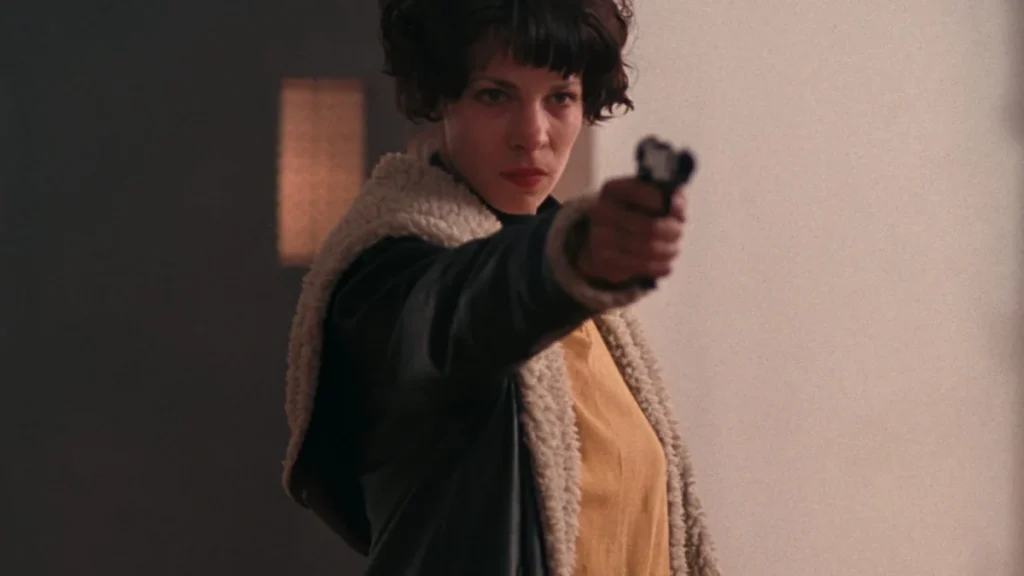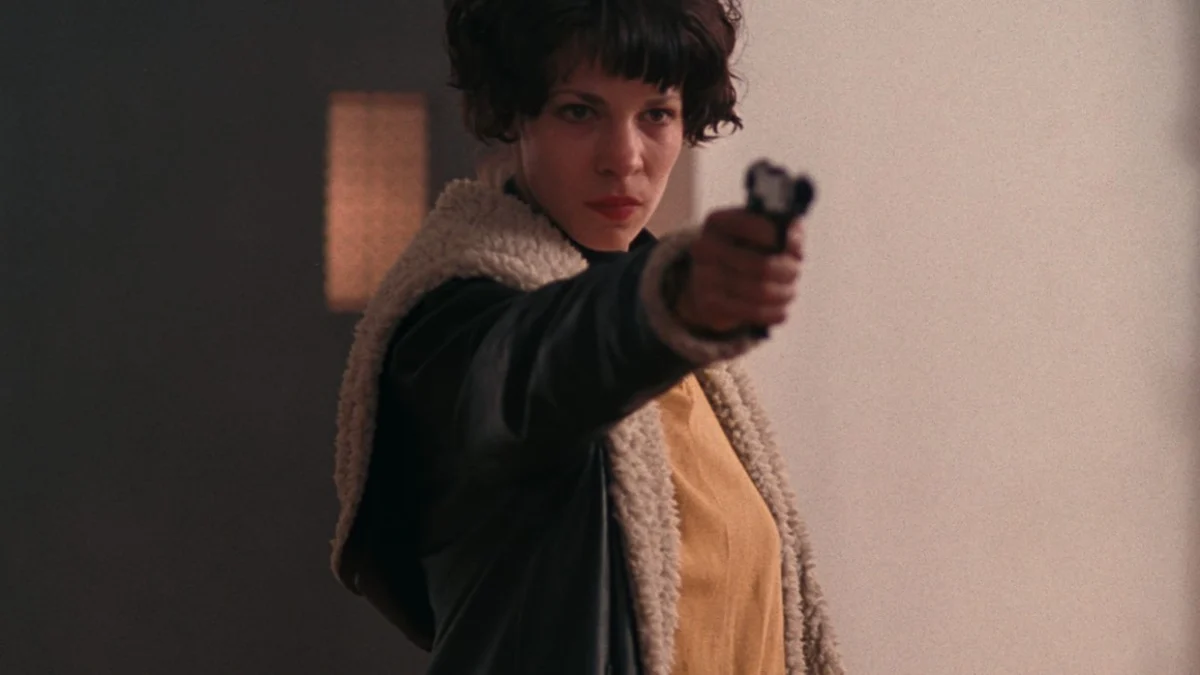
Mary Harron’s seminal 1996 debut feature, I Shot Andy Warhol, is returning to screens in a meticulously crafted 4K restoration, offering a renewed lens on one of the 20th century’s most enigmatic figures, Valerie Solanas. Before gaining widespread acclaim for her incisive portrayal of toxic masculinity in American Psycho (2000), Harron embarked on a different, yet equally compelling, exploration of New York’s cultural underbelly and the fringes of radical feminism. The film, which solidified Lili Taylor’s status as a muse of 1990s independent cinema, delves into the life of Valerie Solanas, the radical feminist who attempted to assassinate pop art icon Andy Warhol in 1968, and whose SCUM Manifesto remains a potent, if controversial, document of radical feminist thought.
The Genesis of a Provocative Portrait
The journey to bring Solanas’s story to the screen was a protracted one for Harron, rooted in a fascination with the collision of avant-garde art and radical ideology. Harron, who began her career at the BBC directing comedic parodies and satires, found herself drawn to narratives of societal outsiders. Her initial exposure to Solanas and the SCUM Manifesto came through her research for a documentary on Andy Warhol, where she stumbled upon a copy in a left-wing bookstore. The manifesto, which she described as a "lightning bolt," immediately captivated her with its "brilliant" and "darkly comic" sensibility, a far cry from the prevailing perception of it as merely a "weirdo outlier" among significant feminist texts of the era.
In the late 1980s and early 1990s, when Harron was conceiving the film, the SCUM Manifesto had a limited, niche audience primarily within radical feminist circles. It hadn’t achieved the broader cultural recognition it would later gain through re-publications and adaptations, including a graphic novel version. Harron was particularly struck by Solanas’s sophisticated writing style, comparing its elegance to Evelyn Waugh, and her "spot on" irony. Beyond the initial shock value, Solanas’s incisive "dissection of the absurdity and injustice of modern society, built on this assumption of female inferiority," resonated deeply with Harron, who confessed to still "struggling against a lot of condescension" even in the 80s.
The process of securing funding for such an explicitly feminist and unconventional subject was challenging. Harron was fortunate to receive initial support from a BBC producer, securing £100,000, which allowed her to develop the project. Her eventual partnership with New York independent film pioneers Christine Vachon and Tom Kalin proved instrumental in bringing the film to fruition, marking a significant moment in the burgeoning indie scene of the mid-90s.
Crafting the Aesthetic: Poetic Realism and Period Authenticity
I Shot Andy Warhol eschewed traditional biopic conventions, opting instead for a "poetic realism" that captured the raw energy and gritty glamour of 1960s New York. Harron and her cinematographer, Ellen Kuras, drew inspiration from contemporary films like Larry Clark’s Kids (1995) for its naturalistic, available-light aesthetic. To ensure historical authenticity without succumbing to stylized period reconstruction, Harron immersed herself in documentary sources from the era, including magazines and real-life photography from agencies like Magnum. For the film’s stark hotel sequences, she specifically cited the influence of Diane Arbus’s photography, emphasizing "negative space, empty rooms, just a couple of things on the wall."
The cast, a veritable who’s who of 90s indie talent, further cemented the film’s authentic feel. Lili Taylor, as Valerie Solanas, delivered a performance characterized by a "deadpan swagger," portraying Solanas as an uncontainable and undeniable outsider. Jared Harris embodied Andy Warhol with a nuanced fragility, a quality Harron had observed during her own brief encounters with the artist. The ensemble also featured Martha Plimpton, Michael Imperioli, and Stephen Dorff as the iconic Candy Darling, all contributing to a vibrant portrayal of the decade’s independent arts scene. The soundtrack, featuring bands like Yo La Tengo and Pavement, underscored the film’s contemporary indie sensibility, a decision necessitated by Lou Reed’s refusal to license Velvet Underground songs. John Cale, a founding member of the Velvet Underground, ultimately composed the score, lending an authentic yet distinct musical voice to the film.
The 4K Restoration: A Renewed Visual Experience
The new 4K restoration, supervised by cinematographer Ellen Kuras, breathes new life into Harron’s debut. Harron, having watched the playback without sound, noted how the restoration magnifies Kuras’s "beautiful lighting and the colors." The original aesthetic, a deliberate blend of "gritty and beautiful," is now rendered with enhanced clarity, allowing viewers to appreciate the subtle interplay of realism and a "slightly magical world" within The Factory’s infamous walls. The restoration ensures that the film’s visual integrity, which aimed for a naturalistic yet artful portrayal of its setting, remains impactful for contemporary audiences.
Valerie Solanas and the Enduring Power of the SCUM Manifesto
At the heart of I Shot Andy Warhol lies Valerie Solanas and her incendiary SCUM Manifesto. The film, much like the manifesto itself, refuses easy categorization. Solanas’s text has enjoyed a complex and evolving cultural life, claimed and reinterpreted by various feminist factions, radicals, and even, controversially, by some associated with Trans-Exclusionary Radical Feminism (TERFs). Harron’s intention was never to "settle" the question of Solanas’s seriousness or sanity, but rather to keep it "productively open." She views the manifesto as a work that shares elements with satire, akin to Jonathan Swift’s A Modest Proposal, yet is not a "completely self-contained work of satire with a specific political goal." Its power, for Harron, lies in its refusal to be reconciled, its blend of "brilliant and fantastically well-written" insights with "disturbing and awful" pronouncements.
Harron recounts her profound connection to Solanas’s "longing to make something" and her frustration at not having a platform to express herself, mirroring Solanas’s own struggles. Solanas, often dismissed as simply "crazy," was a figure ahead of her time in her critique of societal structures. Her manifesto’s opening line, "Life in this society being, at best, an utter bore…", struck Harron as elegantly written and deeply resonant. The film captures Solanas’s relentless efforts to disseminate her manifesto—famously priced "Two dollars for men, one dollar for women"—and produce her play, Up Your Ass, highlighting her desperate yearning for recognition and control over her own intellectual property. This struggle for agency is a central theme, as Harron notes Solanas’s legitimate grievances against figures like publisher Maurice Girodias, who, despite discovering many writers, notoriously withheld royalties.
The Factory, Warhol, and a Gendered Economy
The film navigates the mythologized world of Andy Warhol’s Factory through Solanas’s outsider perspective. Jared Harris’s portrayal of Warhol, as Harron intended, is not a villain but a complex figure of "incredible fragility and elusiveness." Harron, who met Warhol twice, noted his "intense interest in people" followed by a disorienting withdrawal, a dynamic that could cause those "hungry-for-attention people" to "go off the deep end." This "flawed human being," capable of both cruelty and sensitivity, could spot talent but also ruthlessly discard those who became "too much trouble."
The Factory itself, in Harron’s depiction, functioned with the "ruthlessness of a Hollywood studio," readily replacing "difficult" stars like Edie Sedgwick. However, Harron also acknowledges Warhol’s groundbreaking role in elevating individuals typically "shut out" by mainstream society, such as drag queens and trans women like Candy Darling and Jackie Curtis. He offered them a fleeting form of stardom, "slipped" a gay sensibility into the mainstream, and, in doing so, "changed America." Yet, Harron suggests this inclusion was not without its complexities, noting that Warhol sometimes found "trans men easier to deal with than biological women," a potential source of "rage for Valerie."
The question of Solanas’s potential transphobia is addressed with historical nuance. While Solanas held an "essentialist philosophy" rooted in biology, viewing men as "missing a chromosome and therefore biologically inferior," Harron cautions against imposing contemporary "ideology or language" onto a 1968 mindset. She emphasizes that Solanas was "friends with all these people" in the Factory, despite her theoretical framework. Harron finds Solanas’s "analysis of politics and power, the way people conform to absurd stereotypes" to be the most brilliant aspect of her work, rather than her biological theories. While acknowledging that some contemporary critics interpret the SCUM Manifesto as trans-affirming, Harron, while personally finding it a "stretch," remains "open to it," believing "people get what they need from a text like that, and interpret it the way they need to for now."
Harron’s Vision: A Chronicler of Outsiders
I Shot Andy Warhol established Mary Harron as a director deeply drawn to "loners, outsiders, people who have been disregarded or despised." This thematic preoccupation would continue in her subsequent films, notably American Psycho, which also explores a distinct "New York pathology." Harron views all her films, in a "weird way," as comedies, even if darkly so. Her experience as a woman filmmaker in the 90s, navigating a male-dominated industry with an explicitly feminist subject, further cemented her resolve to trust her instincts against opposition—a crucial lesson learned over her seven years of directing before her debut feature.
The film’s enduring relevance is underscored by its resonance with younger generations. Harron’s daughters, in their late teens and early twenties when they saw the film recently, praised her handling of "gender politics," a testament to the film’s timeless approach.
Contemporary Resonance and Lasting Impact
The rerelease of I Shot Andy Warhol arrives at a moment of heightened feminist discourse, where "feminist rage and debates about what forms it’s allowed to take are very live." Harron observes the dramatic shifts in cultural attitudes towards feminism since the 90s, from a period of "backlash" to a more recent, intense and "brutal, clumsy backlash" that feels almost beyond parody. She is keenly interested in whether the film will "strike a chord" in the current socio-political climate, where the conversations around gender, power, and radical expression are more urgent than ever.
The film’s conclusion, which highlights the SCUM Manifesto‘s status as a "classic radical feminist text" rather than Solanas’s tragic biographical end in a welfare hotel, was a point of contention during its initial release. Harron admits to still having a soft spot for the "bleakness" of the biographical note, preferring to "focus on the poignance at the end than do anything more ideological." However, she acknowledges that the manifesto’s widespread discussion and re-publication since the film’s release have provided "more justification" for the chosen ending, making it "true in a way it wasn’t 30 years ago."
In an age of internet culture, where individuals can "make your own fame" and find niche audiences in ways unimaginable in the 1960s, Valerie Solanas might have "thrived." Her ability to articulate a potent, albeit extreme, critique of society, combined with her innate outsider charisma, could have found a powerful platform today. This contemporary reflection underscores the enduring power of Harron’s film, not just as a historical document, but as a commentary on the eternal struggle for voice, recognition, and the complex, often volatile, intersection of art, identity, and social justice. I Shot Andy Warhol remains a vibrant, challenging, and profoundly relevant work, inviting continuous engagement with its provocative questions.