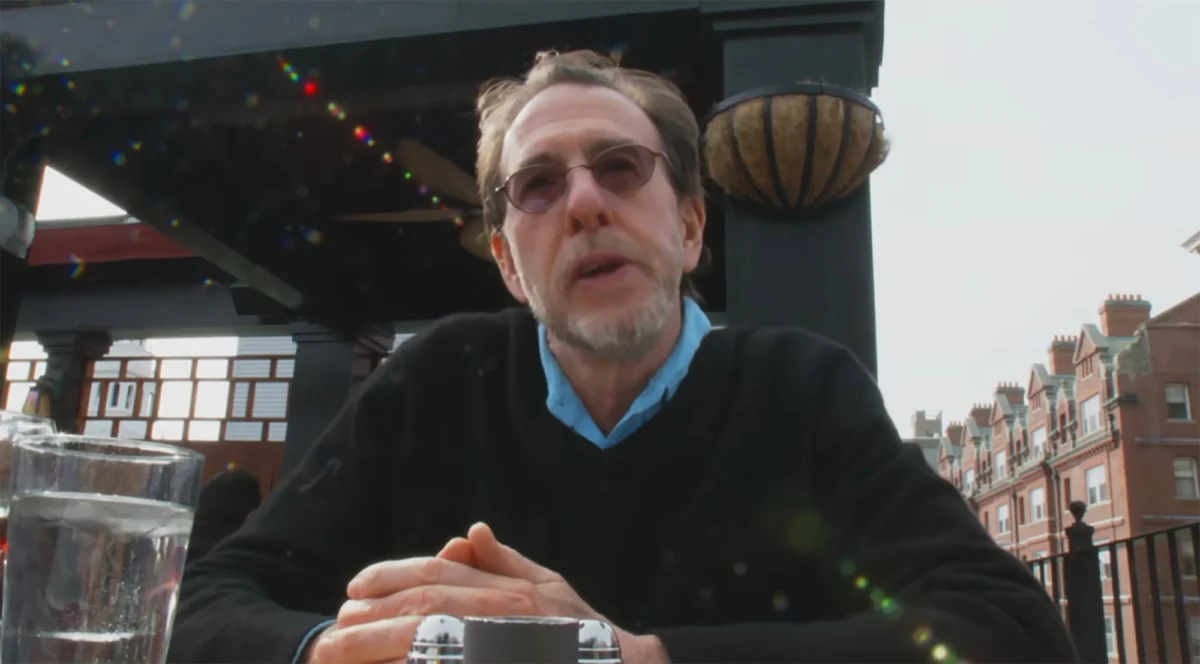
The arrival of the official trailer for Remake marks the return of Ross McElwee, one of the most influential figures in the history of American personal documentary filmmaking. After a fourteen-year hiatus from feature-length directing, McElwee’s latest work serves as both a meta-cinematic exploration of his own legacy and a devastatingly personal memorial to his late son, Adrian. Distributed by Music Box Films, the documentary is scheduled for a select theatrical release in the United States on July 10, 2026. The film arrives following a prestigious festival trajectory that began at the 2025 Venice Film Festival and continued through the 2026 True/False Film Festival, where it garnered significant critical acclaim for its emotional depth and structural complexity.
The Narrative Core: From Fiction to Tragic Reality
Remake centers on a multi-layered premise that initially appears to be a professional retrospective. The documentary begins by chronicling a commercial attempt to adapt McElwee’s 1986 masterpiece, Sherman’s March, into a fictionalized Hollywood feature. Sherman’s March, which originally set out to track the path of General William Tecumseh Sherman’s Union army but famously detoured into a meditation on the director’s own neuroses and failed romances, remains a cornerstone of the "first-person" documentary genre.
In Remake, the narrative shifts when McElwee’s son, Adrian, becomes involved in the prospect of the fictional adaptation. Having grown up as a recurring subject in his father’s films, Adrian viewed the project as an opportunity for his father’s work to reach a broader, mainstream audience. However, as the production of the fictional film stalled in the "development hell" typical of the industry, a more urgent and tragic story began to unfold in real-time. Adrian, who had begun to follow in his father’s footsteps by experimenting with cinematography, fell into a deepening struggle with mental health challenges and substance abuse.
The film takes a somber turn as it documents Adrian’s eventual death from a fentanyl overdose. This tragedy transforms the project from a documentary about a movie into a profound "remake" of a father’s understanding of his son. Utilizing decades of home movies and Adrian’s own recorded footage, McElwee constructs a "hall of mirrors" that examines what the camera captures versus what remains hidden in the shadows of domestic life.

The Evolution of the McElwee Style
To understand the significance of Remake, it is necessary to contextualize Ross McElwee’s contributions to the cinematic arts. For over forty years, McElwee has pioneered a specific form of autobiographical cinema. His filmography, which includes titles such as Charleen (1977), Time Indefinite (1993), Six O’Clock News (1997), and Bright Leaves (2003), is characterized by a dry, self-deprecating wit and a philosophical inquiry into the passage of time.
McElwee’s work is often cited alongside other masters of the essay film, such as Agnès Varda and Chris Marker. His technique involves a "direct cinema" approach where the filmmaker is also the protagonist, navigating the complexities of Southern identity, family lineage, and the inherent intrusiveness of the camera lens. In Remake, this style reaches a pinnacle of maturity. The film does not merely present a linear biography of Adrian; instead, it uses the vast McElwee archive to show the "shifting contours" of a family over forty years.
Industry analysts note that Remake serves as a thematic bookend to Sherman’s March. While the 1986 film was about a young man looking for love and purpose, the 2026 film is about an elder filmmaker grappling with the finality of loss and the limitations of his craft to "save" those he loves.
Chronology of Production and Festival Recognition
The development and release timeline of Remake reflects the slow, deliberate process of independent documentary craftsmanship.
- 2012–2024: Following the release of Photographic Memory (2011), McElwee began the long process of digitizing and reviewing thousands of hours of 16mm film and digital video. During this period, the events surrounding Adrian’s addiction and the attempted Sherman’s March adaptation occurred.
- August 2025: Remake made its world premiere at the 82nd Venice International Film Festival. It was screened in the "Orizzonti" (Horizons) section, which focuses on films that represent the latest aesthetic and expressive trends in international cinema.
- March 2026: The film was featured as a centerpiece at the True/False Film Festival in Columbia, Missouri, a premier venue for non-fiction cinema. Critics at the festival noted the film’s "immense soulfulness" and its "unflinching look at the opioid crisis."
- June 2026: Music Box Films released the official trailer and poster, generating significant buzz among cinephiles and documentary enthusiasts.
- July 10, 2026: The scheduled theatrical premiere in select markets including New York City, Los Angeles, and McElwee’s home region in the American South.
Societal Context: The Opioid Crisis and Mental Health
While Remake is a personal story, it resonates within a broader American crisis. The inclusion of Adrian’s struggle with fentanyl aligns the film with a national conversation regarding the opioid epidemic. According to data from the Centers for Disease Control and Prevention (CDC), synthetic opioids (primarily fentanyl) have been a leading cause of overdose deaths in the United States for several years, with annual fatalities exceeding 70,000 in recent reporting cycles.

The film’s exploration of mental health and addiction within an artistic, middle-class family challenges the stereotypes often associated with substance abuse. By showing Adrian’s creative potential and his father’s desperate attempt to connect through the lens, Remake provides a human face to statistics that are often presented in purely clinical terms. This societal relevance is expected to make the film a significant candidate for the 2027 awards season, particularly in the Best Documentary Feature categories.
Critical Reception and Industry Implications
Early reviews from the festival circuit have been overwhelmingly positive. Critics have highlighted the film’s ability to balance the intellectual rigor of McElwee’s earlier work with a new, raw emotionality. Variety described the film as "an exceptionally tragic but immensely soulful portrait of a father’s grief," while The Hollywood Reporter praised the "expert weaving of family, love, death, and legacy."
The film also raises important questions about the ethics of documentary filmmaking. McElwee’s quote in the trailer—"People don’t want to see a film about me, they want to see a film about what I see"—underscores the tension between the filmmaker as an observer and as a participant. The film asks whether the act of recording a life can inadvertently create a distance between the parent and the child, a theme that has sparked discussion among documentary scholars.
From a business perspective, the acquisition of Remake by Music Box Films is a strategic move. The distributor has a history of handling prestigious, thought-provoking documentaries and foreign films, such as The Act of Killing and Ida. Their involvement suggests a "prestige" rollout, focusing on art-house theaters and long-term streaming availability for educational and institutional audiences.
Technical Aspects and Archival Significance
The production of Remake involved a massive archival undertaking. The film utilizes a mix of 16mm film, Hi8 video, MiniDV, and high-definition digital footage. This technological progression acts as a visual metaphor for the passage of time. The grainy, warm tones of Adrian’s childhood in the 1990s contrast sharply with the crisp, clinical clarity of the modern digital footage capturing his later years.

The film was produced by Giant Squid and Mark Meatto, along with McElwee himself. The editing process is reported to have taken several years, as the team had to navigate the delicate balance of honoring Adrian’s memory without veering into sentimentality. The result is a film that is "exceptionally tragic but immensely soulful," according to early viewers, maintaining the integrity of McElwee’s artistic voice while allowing for a profound revelation of personal pain.
Conclusion and Future Impact
As Remake prepares for its July 2026 release, it stands as a testament to the power of the documentary form to process grief and preserve legacy. Ross McElwee has created more than a film; he has created a living archive that bridges the gap between a father and a son who is no longer there to speak for himself.
The film’s release is also expected to renew interest in McElwee’s back catalog. Music Box Films has hinted at a retrospective series to coincide with the release of Remake, potentially including 4K restorations of Sherman’s March and Time Indefinite. For a new generation of filmmakers, Remake will likely serve as a masterclass in how to use personal history to speak to universal truths about time, loss, and the enduring bond of family.
By retracing Adrian’s final years and reckoning with what the camera both captured and missed, Ross McElwee has ensured that his son’s story—and his own—remains part of the permanent record of American cinema. Remake is not just a film about a tragedy; it is a film about the persistence of love through the medium of light and shadow.