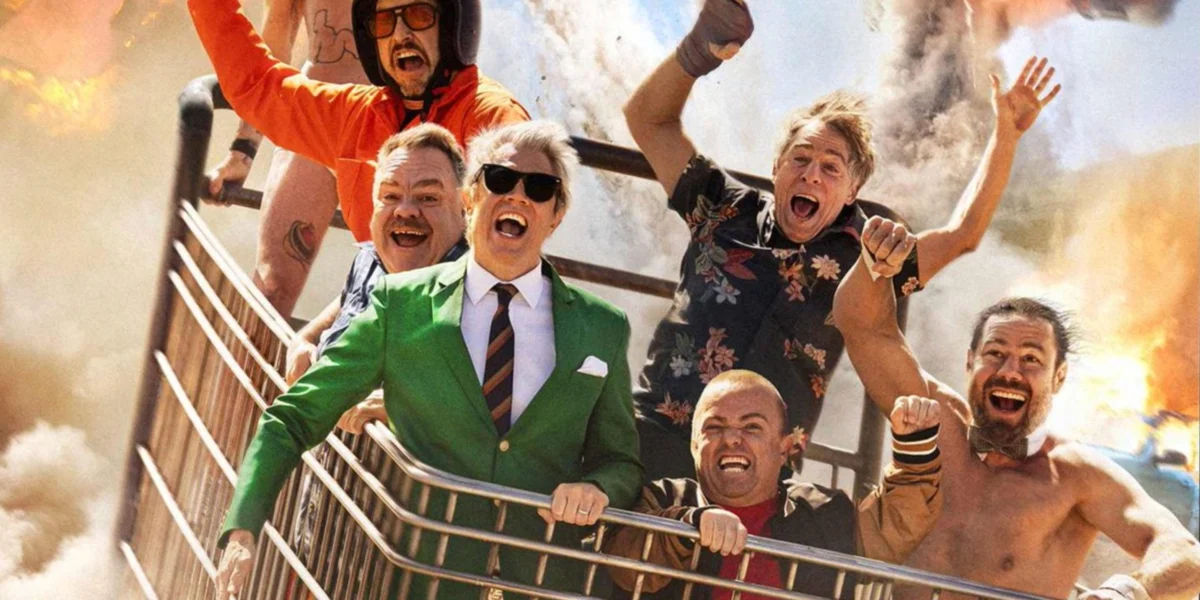
The release of Jackass: Best and Last marks the definitive conclusion of a cultural phenomenon that has spanned over a quarter of a century, transitioning from a controversial cable television program to a multi-million dollar cinematic franchise. Directed by long-time collaborator Jeff Tremaine and featuring the original core cast alongside a new generation of performers, the 92-minute feature serves as both a retrospective of the group’s hazardous history and a final exhibition of high-stakes physical comedy. The production concludes a journey that began in the late 1990s, effectively closing the book on a brand of entertainment that redefined the boundaries of reality television and stunt performance.
Production Overview and Cinematic Context
Jackass: Best and Last arrives as a direct successor to the commercial and critical success of 2022’s Jackass Forever. The film is structured to provide a dual experience: it offers never-before-seen archival footage from the franchise’s inception while introducing a limited series of new stunts performed by the aging original crew and their younger counterparts. Director Jeff Tremaine, who has steered the franchise since its 2000 debut on MTV, utilizes a non-linear narrative approach that blends contemporary high-definition footage with the grainy, low-fidelity aesthetics of the early 2000s.
The cast features the primary ensemble that has remained largely intact for 25 years, including Johnny Knoxville, Steve-O, Chris Pontius, Wee Man, Dave England, Danger Ehren, and Preston Lacy. They are joined by the "new blood" introduced in the previous installment: Rachel Wolfson, Jasper Dolphin, Dark Shark, Poopies, and Zach Holmes. This iteration of the franchise also includes a significant appearance by Paul Walter Hauser, the award-winning actor, signaling the brand’s enduring pull within the Hollywood establishment.
A Chronological Evolution of the Jackass Franchise
To understand the weight of Jackass: Best and Last, one must examine the timeline of the franchise’s development, which mirrors the evolution of digital media and reality entertainment.
- 1999–2000: The Inception. Born from the convergence of Big Brother magazine and the CKY crew, Jackass premiered on MTV in October 2000. It was immediately met with high ratings and intense parental scrutiny.
- 2002: The Transition to Film. Jackass: The Movie was released, proving that the low-budget aesthetic could translate to the box office, earning over $79 million on a $5 million budget.
- 2006–2010: The Golden Era. With Jackass Number Two (2006) and Jackass 3D (2010), the franchise embraced higher production values and more elaborate set pieces, solidifying its place in pop culture.
- 2011: The Turning Point. The tragic death of original cast member Ryan Dunn in a car accident cast a long shadow over the franchise, leading to a decade-long hiatus from primary film production.
- 2022: The Resurrection. Jackass Forever introduced a new generation of performers, acknowledging the physical limitations of the original cast while proving the format’s continued relevance.
- 2026: The Final Chapter. Jackass: Best and Last serves as the formal "curtain call," addressing the mortality of the performers and the legacy of their work.
The Physical and Medical Reality of Aging Performers
A central theme of Jackass: Best and Last is the palpable reality of physical aging. Now in their 50s, the original members of the crew face significantly higher risks than they did during the franchise’s MTV era. Medical data and historical injury reports from the set indicate that the toll of two decades of concussions, bone fractures, and internal injuries has reached a critical threshold.
The film highlights this reality by including footage of Johnny Knoxville’s first attempt at a bull-fighting stunt—a sequence that resulted in a brain hemorrhage and permanent cognitive changes. This inclusion serves as a sobering reminder of the stakes involved. Unlike previous entries where the cast appeared nearly invincible, this final installment emphasizes their vulnerability. The presence of gray hair, wrinkles, and visible scars underscores a narrative of endurance rather than youthful recklessness. Consequently, the newer stunts in the film, such as the "robo-rectal exam" and a hazardous variation of the game Twister, often lean more toward psychological shock and elaborate "gross-out" humor rather than the high-impact collisions that defined their youth.
Archival Discoveries and Unseen History
One of the primary draws of Jackass: Best and Last is the integration of scrapped footage that was previously deemed too dangerous or legally precarious for television broadcast. Filmmaker Jeff Tremaine provides context for these clips, explaining why certain acts of "foolery" were withheld by studio legal departments during the early 2000s.
The film also addresses the complicated history of the ensemble, specifically the involvement of Bam Margera. Despite his public legal disputes and removal from Jackass Forever, Margera’s legacy is acknowledged through the release of archival footage that he eventually approved. This inclusion is viewed by industry analysts as a move toward closure for the "Jackass family," ensuring that the franchise’s history is presented as holistically as possible.
The retrospective segments are often framed by the cast members themselves. Scenes of Steve-O and Wee Man reminiscing about their most cherished (and most painful) moments provide a documentary-style depth that distinguishes this film from its predecessors. This self-reflection offers a rare glimpse into the psychological bonds formed through shared trauma and public humiliation.
The New Generation and the Future of the Format
While the film focuses on the original crew’s departure, it also reinforces the presence of the new members. Poopies, Zach Holmes, and Jasper Dolphin are given significant screen time, performing the more physically demanding tasks that the older cast can no longer safely execute. Poopies, in particular, has emerged as a standout, often taking the brunt of the "damage" in a manner reminiscent of a young Steve-O.
However, the film also acknowledges the difficulty of "passing the torch." The chemistry of the original Gen X "counter-culture" group—skaters and social outcasts who disregarded social norms—is difficult to replicate in the modern era. The film explores this tension, ultimately suggesting that while the Jackass brand may live on in spirit through social media and independent creators, this specific iteration of the collective is irreplaceable.
Broader Impact and Cultural Implications
The legacy of Jackass extends beyond mere entertainment. Sociological analysis of the franchise often points to it as a "pure depiction of friendship." Beneath the layers of bodily fluids and physical harm lies a profound sense of camaraderie and unconditional support. The "Best and Last" installment leans into this sentiment, featuring moments of genuine emotion, such as Knoxville’s visible distress on the first day of filming or Preston Lacy’s vocalized wish that Ryan Dunn could have witnessed the finale.
From a commercial perspective, Jackass remains one of the most successful low-overhead franchises in Hollywood history. By utilizing a "guerrilla" filmmaking style and relying on personality-driven content rather than expensive CGI or A-list scripts, the franchise has consistently delivered high returns on investment.
- Jackass: The Movie (2002): $5M budget / $79.5M box office.
- Jackass Number Two (2006): $11.5M budget / $84.6M box office.
- Jackass 3D (2010): $20M budget / $171.7M box office.
- Jackass Forever (2022): $10M budget / $80.5M box office.
The finality of Jackass: Best and Last is expected to drive significant viewership on streaming platforms and in select theatrical releases, as the "nostalgia factor" for Gen X and Millennial audiences remains high.
Conclusion: The Closing of a Cultural Door
Jackass: Best and Last concludes with a grand finale that encapsulates the franchise’s spirit—a chaotic, dust-filled sequence involving a giant cart and explosive force. It serves as a maudlin yet fitting end to a journey that has defied the expectations of critics and censors alike for twenty-five years.
As the cast members depart, leaving behind a trail of broken bones and cinematic records, the film stands as a testament to a specific era of American subculture. While the stunts were often dismissed by contemporary critics as "damaging displays of juvenility," the franchise’s longevity suggests a deeper resonance with audiences who found value in its raw, unscripted honesty. With the release of this final series of stunts, the Jackass crew effectively retires, cementing their place as the ultimate icons of an era where the only thing more important than the prank was the person standing next to you.