Adapted from Kim Seung-ok’s critically acclaimed novel of the same name, Kim Soo-yong’s “Night Journey,” premiering in 1977, proved to be remarkably ahead of its time, presenting a cinematic vision that challenged the prevailing social norms of its era. Decades later, following its meticulous restoration by the Korean Film Archive in 2011, the film continues to resonate as a powerful and striking portrait of female desire, profound loneliness, and the pervasive hypocrisy embedded within patriarchal South Korean society. Its unflinching frankness in addressing these complex themes maintains a startling modernity, compelling contemporary audiences to confront its enduring relevance.
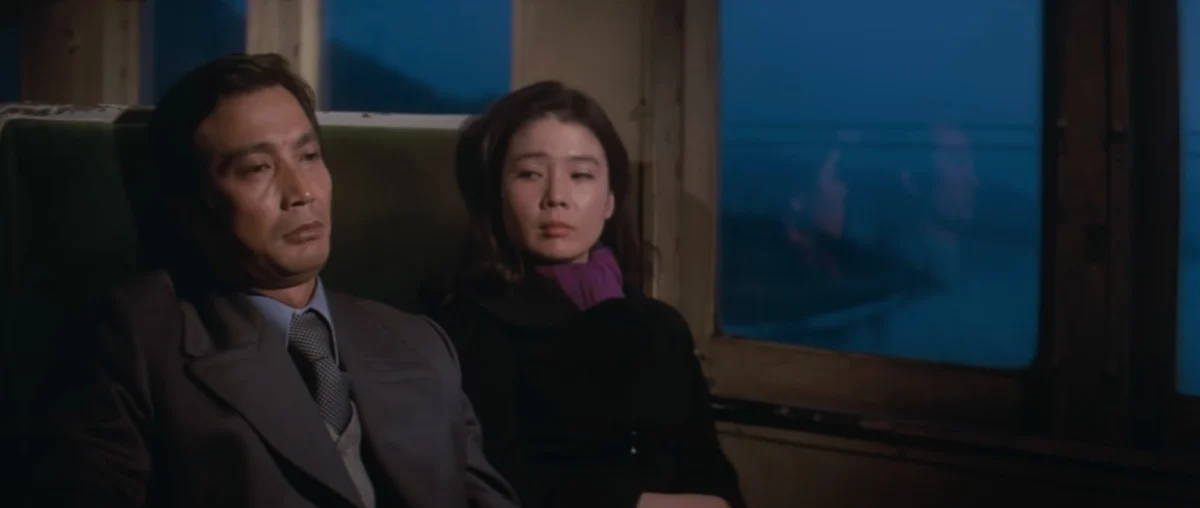
The film meticulously follows the dual existence of Lee Hyun-joo, portrayed with compelling depth by the iconic Yun Jeong-hee. By day, Hyun-joo navigates the conventional expectations of her role as a bank clerk, where she is reductively labeled the “last old maid” within her office environment, a dismissive term reflecting the intense societal pressure on women to marry. Yet, by night, she transforms into the clandestine lover of her supervisor, Park Dae-ri, played by the equally prominent Shin Seong-il. This nightly ritual defines a significant portion of her existence: an early return home, the meticulous cleaning of her apartment, the preparation of dinner, and a solitary wait, often accompanied by the flickering images of a television screen. Her lover’s arrival is consistently late, marked by his inebriated state, leading to a pattern of rough intimacy before he succumbs to sleep. Hyun-joo finds herself ensnared between the crushing weight of societal expectations and the suffocating secrecy of her relationship. Her longing for an escape manifests as a desire for marriage, yet this aspiration is tempered by an equally potent dread of succumbing to the monotonous and restrictive life of a conventional housewife, a common dilemma for women navigating a rapidly modernizing yet deeply traditional society.
Socio-Historical Canvas: South Korea in 1977
To fully appreciate the groundbreaking nature of "Night Journey," it is crucial to understand the socio-political landscape of South Korea in 1977. The nation was firmly under the authoritarian grip of President Park Chung-hee’s Yu-sin system, a period characterized by rapid industrialization, intense economic growth driven by the "Miracle on the Han River," and a pervasive emphasis on national unity and traditional values. While the country was modernizing at an unprecedented pace, social structures remained rigidly conservative, particularly concerning gender roles. Women were expected to uphold traditional virtues, prioritize family, and conform to the patriarchal order, even as more opportunities for education and employment slowly emerged. Films and other artistic expressions often faced censorship, making any overt critique of the state or deeply ingrained social norms a precarious endeavor. "Night Journey," by focusing on the intimate, personal struggles of a woman, ingeniously navigated these constraints to deliver a potent, albeit subtly presented, critique of the era’s inherent contradictions regarding female autonomy and societal expectations. The film subtly exposes the chasm between the glossy veneer of modernization and the stagnant, often oppressive, reality of individual lives, particularly for women grappling with evolving identities.
The Literary Foundation: Kim Seung-ok’s Vision
The film’s thematic richness owes much to its literary predecessor, the acclaimed novel by Kim Seung-ok. Born in 1941, Kim Seung-ok emerged as a seminal figure in post-war Korean literature, recognized for his incisive critiques of modern alienation and his experimental narrative techniques. He belonged to a generation of writers who grappled with the aftermath of the Korean War and the subsequent rapid industrialization, often exploring the psychological toll of these transformative periods on individuals. His works frequently depicted characters struggling with identity, meaninglessness, and the clash between traditional values and Western influences. The novel "Night Journey" captured the zeitgeist of a society in flux, offering a nuanced portrayal of a woman’s inner world with a psychological depth rarely seen in Korean literature of the time. Kim Seung-ok’s original text dared to articulate female desires and frustrations that were largely unspoken in public discourse, laying a robust foundation for the film’s provocative themes. The adaptation by director Kim Soo-yong was thus not merely a translation but a cinematic interpretation that sought to preserve the novel’s radical spirit while navigating the visual and censorship realities of filmmaking in the late 1970s.
A Journey of Self-Discovery: Plot and Chronology
Hyun-joo’s emotional odyssey is marked by a brief respite from her double life when she takes a short holiday. This interlude sees her returning to her hometown, a place that evokes a bittersweet nostalgia. Here, riding bicycles along the beach with her younger sister, she is transported back to memories of a past, forbidden love—her former schoolteacher. Their relationship, cut short by his conscription into the army and subsequent death in the Vietnam War, represents a poignant lost innocence and an early brush with the complexities of desire and loss. This journey to her past self contrasts sharply with her present reality. Upon her return to Seoul, the urban labyrinth becomes a reflection of her internal wandering; she drifts aimlessly through the city streets, eventually seeking solace in solitary drinking at a bar. The film reaches a critical juncture when Dae-ri, motivated not by love but by the sheer inconvenience of Hyun-joo’s absence during her holiday, finally decides to propose marriage. This hollow gesture, devoid of genuine affection, serves as the catalyst for Hyun-joo’s ultimate decision to leave him. The holiday, initially a period of reflection and momentary freedom, concludes not just physically but symbolically, marking the end of a chapter in her life and the beginning of an uncertain, yet chosen, path toward self-liberation.
Auteur’s Touch: Kim Soo-yong’s Direction
Director Kim Soo-yong, a prolific filmmaker with a significant body of work spanning several decades, brought a distinctive vision to "Night Journey." Known for his sensitive handling of character-driven narratives and his ability to infuse psychological realism into his films, Kim Soo-yong was a natural choice to adapt Kim Seung-ok’s complex novel. His directorial approach in "Night Journey" is characterized by a deliberate, gentle pace that, remarkably, never feels slow. Instead, this measured rhythm invites the audience into Hyun-joo’s introspective journey, allowing the film to unfold as a profound reflection on her past, present, and potential future.
What truly distinguishes Kim Soo-yong’s direction, and what made the film so radical for its time, is his masterful manipulation of the cinematic gaze. He meticulously constructs scenes where Hyun-joo is simultaneously an object of male scrutiny and an active observer of the absurdities around her. In the office, she is reduced to a stereotype; on the streets at night, she becomes an immediate object of fantasy, inviting a barrage of assumptions and unwanted gazes. Yet, through Hyun-joo’s own eyes, the men surrounding her are stripped of their perceived authority, revealing their own inherent flaws and ridiculousness. They are frequently depicted as perpetually inebriated, aimlessly moving from one bar to another, eagerly seizing every opportunity to flirt, mock, or harass women. This shifting perspective not only creates a nuanced character study but also serves as a sharp critique of the male-dominated social fabric of the time.
One particularly unsettling sequence exemplifies Kim Soo-yong’s willingness to confront uncomfortable truths. Hyun-joo is sexually assaulted by a stranger on a pedestrian bridge. The director deliberately refrains from offering a clear emotional response from Hyun-joo, leaving her reaction ambiguously poised between fear and a disquieting submission. This artistic choice renders the scene profoundly uncomfortable, yet it is precisely this ambiguity that allows the film to delve into the complicated interplay between violence, desire, and the pervasive social repression imposed upon women. It challenges viewers to confront the deeply ingrained power dynamics that shaped female experiences in that era and, disturbingly, continue to echo today.
Cinematic Craftsmanship: A Technical Masterpiece
Beyond its narrative and thematic depth, "Night Journey" stands out for its exceptional technical execution, showcasing a level of craftsmanship that elevates its storytelling. The film’s cinematography, orchestrated with understated brilliance, employs soft, muted colors that dominate the frame, creating a visual atmosphere that mirrors Hyun-joo’s subdued public persona. These gentle hues are strategically interrupted by carefully chosen flashes of vivid color in Hyun-joo’s costumes—a bright blue towel, a pair of striking red leather gloves, or a pale yellow blouse. These vibrant accents are not mere aesthetic choices; they function as quiet, visual manifestations of the rebellion simmering beneath her composed and seemingly compliant exterior, offering subtle glimpses into her inner life and suppressed desires.
Complementing these gentle images is Jeong Yoon-joo’s unexpectedly suspenseful score. When Hyun-joo walks alone, the background music subtly shifts, growing dark and unsettling. Initially, this musical tension might feel almost incongruous with the visual serenity, but it gradually asserts itself as a constant, sonic reminder of the invisible yet ever-present social pressure and potential dangers that surround her. The score effectively amplifies the psychological weight of her solitude and vulnerability in a society that offers little sanctuary for an independent woman.
Ree Kyoung-ja’s editing further contributes to the film’s distinctive texture. Frequent, artfully executed flashbacks seamlessly blur the lines between Hyun-joo’s memories and her present reality. These fragmented glimpses of her happiest and most painful experiences surface organically, drawing the audience deeper into her conflicted inner world. This non-linear narrative structure is not merely a stylistic flourish; it serves to illuminate the psychological complexities of her character, allowing viewers to piece together the tapestry of her past influences and current dilemmas, enriching the overall emotional impact of her journey.
Performances of Nuance: The Iconic Cast
The profound impact of "Night Journey" is undeniably amplified by the stellar performances of its lead actors, particularly Yun Jeong-hee and Shin Seong-il, two of the most celebrated figures in Korean cinematic history. Yun Jeong-hee, who later garnered international acclaim for her powerful portrayal in Lee Chang-dong’s "Poetry" (2010), demonstrates in "Night Journey" that her formidable acting prowess was fully developed even in the early stages of her illustrious career. She delivers a masterclass in subtle transformation, embodying Hyun-joo’s shifting identities with remarkable nuance. A simple pair of glasses, for instance, becomes a powerful prop in delineating her different selves. At work, she is restrained, meticulously professional, almost camouflaged; with her lover, she oscillates between raw desire and profound humiliation. Yet, when wandering alone through the city, she reclaims a sense of curiosity and quiet liveliness, moments of genuine self-expression. Witnessing her seamless shifts between these personas—the public façade, the private agony, the nascent self-discovery—is one of the film’s greatest pleasures and a testament to Yun Jeong-hee’s exceptional talent.
Shin Seong-il, an actor whose presence dominated Korean cinema for decades, is equally unforgettable as Park Dae-ri. His portrayal is chillingly effective in exposing the insidious nature of male privilege and hypocrisy. One of the film’s most potent and uncomfortable moments occurs when Hyun-joo accidentally refers to him as her "lover" within the office setting. Without a moment’s hesitation or a flicker of empathy, Dae-ri cruelly mocks her and swiftly invents an excuse to distance himself, publicly humiliating her to protect his own reputation. The brutal speed with which his feigned affection morphs into public repudiation perfectly encapsulates the cowardice and deep-seated hypocrisy at the core of his character, offering a searing critique of the patriarchal power dynamics that enabled such behavior.
Preservation and Rediscovery: The Korean Film Archive’s Role
The enduring legacy and contemporary appreciation of "Night Journey" owe a significant debt to the Korean Film Archive (KFA). In 2011, the KFA undertook the vital task of restoring the film, a meticulous process that breathed new life into this cinematic gem. Films from the 1970s, particularly those produced in South Korea, often faced challenges in preservation due to various factors, including the quality of film stock, storage conditions, and the lack of robust archival infrastructure at the time. The KFA’s restoration effort involved painstakingly cleaning and repairing the original negatives, digitizing the film at high resolution, and carefully color-correcting and sound-mastering to bring the film as close as possible to its original theatrical release quality.
This restoration was not merely a technical achievement; it was an act of cultural preservation that ensured "Night Journey" could be rediscovered by new generations of audiences and scholars. A spokesperson for the KFA, speaking at the time of the restoration, might have emphasized the film’s critical importance in the canon of Korean cinema, highlighting its bold thematic content and artistic merit. "Restoring ‘Night Journey’ was crucial," they might have stated, "as it represents a significant milestone in Korean filmmaking, offering an unparalleled glimpse into the social psyche of the 1970s and a timeless exploration of female experience. Its frankness was audacious for its era, and its messages remain strikingly relevant today." This initiative allowed the film to be screened at various international festivals, introducing it to a global audience and solidifying its reputation as a significant work of world cinema.
Enduring Legacy: A Modern Classic
More than fifty years after its initial release, "Night Journey" continues to feel remarkably modern, both in its audacious themes and its sophisticated filmmaking techniques. Centered squarely on a female protagonist, Kim Soo-yong’s film courageously exposes the moral hypocrisy and decaying gender values that simmered beneath South Korea’s veneer of rapid modernization. The society surrounding Hyun-joo constantly imposes contradictory demands: she must be sexually pure yet simultaneously available, independent enough to work yet obedient enough to readily settle into marriage and domesticity. These inherent contradictions, which Hyun-joo so acutely embodies and struggles against, feel no less relevant in the contemporary world.
In an era where discussions around female agency, gender roles, and societal pressures continue to evolve, "Night Journey" serves as a powerful historical document and a mirror reflecting persistent inequalities. Its unflinching depiction of a woman navigating a complex landscape of personal desire and public expectation resonates deeply, making it a classic that continues to speak profoundly to contemporary audiences worldwide. The film’s boldness in portraying female sexuality and its critique of patriarchal structures cemented its place as a pioneering work in Korean cinema, influencing subsequent generations of filmmakers who dared to explore similar themes. "Night Journey" is not just a film from the past; it is a vital, living commentary on the human condition, offering timeless insights into the struggles for identity and liberation that transcend geographical and temporal boundaries.