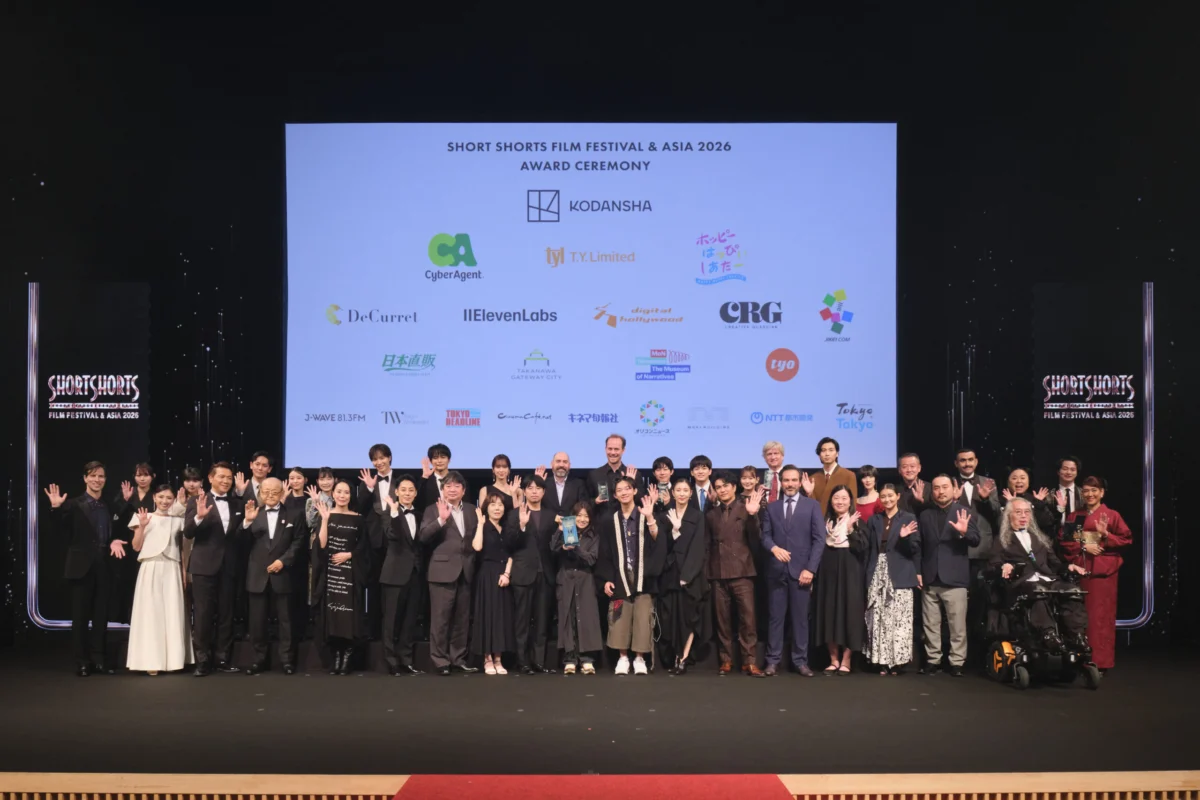
Tokyo, Japan – The Short Shorts Film Festival & Asia (SSFF & ASIA) 2026, one of Asia’s most prominent international film festivals accredited by the Academy Awards®, successfully concluded its main program with a spectacular Award Ceremony held at the iconic LINE CUBE SHIBUYA in Tokyo. The event served as a confluence for an esteemed gathering of filmmakers, industry luminaries, and creative innovators from across the globe, not only to celebrate the cinematic achievements of the past year but also to rigorously examine and champion the evolving landscape of visual storytelling. Under the prescient theme of "Cinema Engineering," this year’s festival meticulously explored the profound impact of emerging technologies, particularly artificial intelligence and vertical video formats, on the art and business of film.
Celebrating Cinematic Excellence: The Awards Gala
The pinnacle of the festival’s recognition, the coveted George Lucas Award, was bestowed upon South Korean director Jiin Oh for her compelling work, "SPEEDY!". This prestigious award, named after the visionary filmmaker George Lucas, celebrates a short film that demonstrates exceptional originality, technical mastery, and a profound impact on its audience. Oh’s victory underscored the festival’s commitment to recognizing groundbreaking talent that pushes the boundaries of narrative and form. While specific details of "SPEEDY!" were kept under wraps to maintain its mystique ahead of wider distribution, jury members reportedly praised its innovative pacing and ability to convey complex emotions within a concise timeframe, characteristics that are increasingly valued in the fast-evolving short film genre.
In addition to the top honor, the festival proudly announced the Best Short Award winners across its competitive categories: Live-Action, Non-Fiction, and Animation. These winning titles carry significant weight, as they automatically become eligible for consideration at the upcoming Academy Awards®, offering a direct pathway for these short films to reach the global stage. This accreditation is a testament to SSFF & ASIA’s stature as a crucial launchpad for emerging and established filmmakers alike, connecting Asian cinema with international recognition. The festival received a record number of submissions this year, with over 6,000 entries from more than 120 countries, reflecting the burgeoning global interest in short-form storytelling and the festival’s growing reputation as a gateway to Hollywood.
"Cinema Engineering": A Deep Dive into AI’s New Frontier
The 2026 edition of SSFF & ASIA positioned artificial intelligence as a central, transformative force within the film industry, a topic encapsulated by its "Cinema Engineering" theme. The festival did not merely discuss AI; it showcased its immediate, tangible applications. A pivotal moment arrived with Japanese creator Akihiro Nishino, who unveiled the world premiere of "Chimney Town," a new short film derived from his popular "Poupelle of Chimney Town" universe. What made this premiere revolutionary was Nishino’s announcement that the entire film had been produced using generative AI technologies.
Nishino, a multifaceted artist known for challenging conventions, presented "Chimney Town" not just as a film, but as a proof-of-concept for a new era of content creation. The film, a visually stunning expansion of his existing universe, demonstrated AI’s capabilities in generating intricate visuals, character animations, and even contributing to script development and musical scoring. The screening ignited a spirited discussion among attendees, delving into the complex interplay between human imagination and nascent AI technologies. "This isn’t about replacing human creativity," Nishino stated during a post-screening panel, "but about augmenting it, offering new tools to realize visions that might have been impossible or prohibitively expensive just a few years ago. We are at the cusp of defining the role of the human artist in an AI-powered studio." This pioneering effort opened a broader dialogue on the role of creative labor in an industry increasingly shaped by AI tools, prompting questions about intellectual property, authorship, and the future skillset required for filmmakers. Industry analysts predict that within the next five years, generative AI tools could reduce animation production timelines by 30-50% for certain tasks, democratizing access to high-quality visual effects and animation.
Further underscoring the rapid integration of AI into cinematic production, the festival also premiered "CINEMA TRAVELER 2." This adventure short featured an AI digital twin of none other than Festival President Tetsuya Bessho himself. What astonished the audience and industry observers was the revelation that this complex project, featuring a photorealistic digital avatar of a real person, was generated and completed within a mere two weeks following the festival’s opening ceremony. This rapid turnaround time served as a powerful demonstration of how quickly AI production methods are entering and reshaping the festival and broader entertainment landscape. Bessho, reflecting on the experience, remarked, "To see my digital self brought to life with such speed and fidelity was extraordinary. It highlights AI’s potential not just for creative output, but for rapid prototyping and even for preserving legacies. This is ‘Cinema Engineering’ in action – building new possibilities at an unprecedented pace." The project sparked conversations about the ethical implications of digital twins, their potential for virtual actors, and the challenges of distinguishing AI-generated content from human-created work.
Mastering the Vertical Canvas: The Rise of 9:16 Storytelling
Beyond AI, the 2026 festival placed a significant emphasis on another burgeoning trend: vertical cinema. As short-form vertical video continues its meteoric rise, dominating social media platforms like TikTok, Instagram Reels, and YouTube Shorts, SSFF & ASIA underscored the artistic possibilities inherent in the 9:16 aspect ratio. This format, once dismissed as merely a consequence of mobile phone usage, is now being recognized as a legitimate canvas for sophisticated storytelling.
The festival recognized excellence in this format with the CyberAgent Vertical Award, which was presented to Chavo’s "AIDOL KACHO." This award, supported by one of Japan’s leading internet companies, highlights the increasing commercial and creative value placed on content tailored for mobile consumption. "AIDOL KACHO" reportedly captivated judges with its inventive use of vertical space to enhance character intimacy and visual comedy.
The potential of vertical storytelling, particularly within genres like horror and suspense, was further emphasized by the Best Thrill Award, supported by CRG. This competition, launched via a public social media callout, received an impressive 273 submissions, showcasing a vibrant community of filmmakers experimenting with the format. The top prize was awarded to Haruki Kawanaka’s "The Ghost Photo Studio." Kawanaka’s film was lauded for its ingenious use of vertical framing to construct new forms of surprise, intimacy, and fear, directly engaging mobile audiences in a way traditional horizontal cinema often cannot. Critics noted how the confined vertical frame could heighten claustrophobia or create jump scares through unexpected elements entering from the top or bottom of the screen, exploiting the audience’s typical gaze patterns on mobile devices.
Renowned filmmaker Katsuyuki Motohiro, speaking at a panel on vertical cinema, articulated the excitement surrounding this format. "Vertical video is a new field, still wonderfully free from fixed rules," Motohiro observed. "It’s a wild west of storytelling, where creators are constantly inventing the grammar. I believe that future masters of the format, who will define its unique language, may very well emerge from competitions like these, challenging our preconceived notions of what cinema can be." This perspective aligns with current market trends; data from leading media analytics firms indicates that vertical video content now accounts for over 70% of all video consumption on mobile devices among Gen Z and millennial demographics, making its artistic exploration not just relevant but essential for future cinematic engagement.
Bridging Indies to Mainstream: The Disney+ Partnership
A significant announcement during the ceremony marked a pivotal moment for independent short-format cinema: a landmark distribution partnership with Disney+. Starting July 31, 2026, a carefully curated selection of 20 short works from SSFF & ASIA will be made available for streaming on Disney+ in Japan. This collaboration represents an unprecedented step for independent short films, demonstrating how festival-selected works can transcend traditional niche distribution to enter major commercial streaming platforms and reach wider domestic audiences.
This partnership is a testament to Disney+’s strategy of investing in diverse, high-quality local content to strengthen its presence in key international markets. For the filmmakers involved, it offers unparalleled exposure and potential new revenue streams, a critical lifeline for creators operating outside the mainstream studio system. A representative from Disney+ Japan, speaking off-record, commented, "Our goal is to bring compelling stories to our subscribers, and SSFF & ASIA consistently curates exceptional talent. This partnership allows us to support local artistry while offering unique, high-quality content that resonates with Japanese audiences and potentially beyond." This move is expected to inspire other major streaming services to explore similar partnerships with film festivals, further democratizing access to independent cinema and transforming the distribution landscape for short films globally. In Japan, Disney+ has steadily grown its subscriber base, now commanding a significant share of the streaming market, making this an impactful platform for the selected short films.
Fostering Future Talent: The Kodansha Cinema Creators Lab
The festival also provided a platform for Kodansha, one of Japan’s largest publishing houses, to celebrate the remarkable success of its Kodansha Cinema Creators Lab. Launched in 2022 with an ambitious promise to grant ¥10 million (approximately $65,000 USD) to selected creators for the production of a short film, the initiative has already proven to be a powerhouse for emerging talent. To date, projects supported by the lab have secured awards and selections at more than 60 international festivals, demonstrating a significant return on investment in nurturing new voices.
Yoshinobu Noma, President and CEO of Kodansha, took the stage to announce an exciting expansion of the program. Starting in September, the Kodansha Cinema Creators Lab will introduce a new award section specifically focused on corporate branded movies. This strategic move acknowledges the growing demand for high-quality, narrative-driven content from brands and offers filmmakers a new avenue for funding and creative expression outside traditional film grants. "We believe in the power of storytelling, whether it’s in a manga, a novel, or a short film," Noma articulated. "By expanding our lab to include branded content, we are not only providing more opportunities for creators but also recognizing the evolving landscape of media production where compelling narratives are valuable across all sectors." This initiative underscores the diversifying funding models available to filmmakers and Kodansha’s commitment to being at the forefront of content creation, blending artistic vision with commercial viability. The lab’s success highlights the critical role of corporate sponsorship in fostering independent cinema, acting as a vital bridge for filmmakers to transition from aspiring artists to recognized talents on the global stage.
Tetsuya Bessho’s Vision: The Future Intersect of Art and Innovation
In his poignant closing remarks, Festival President Tetsuya Bessho encapsulated the spirit of the 2026 edition. He passionately stressed the imperative of connecting the emotional power and artistic integrity of independent shorts with the relentless march of technological and commercial evolution. Bessho articulated a vision where the soul of cinema, the human connection it fosters, remains paramount, even as the tools and platforms for its creation and consumption undergo radical transformation. "Our mission at SSFF & ASIA is not just to showcase films, but to look forward," Bessho declared. "We are here to explore how AI can serve human creativity, how new formats like vertical video can open fresh artistic pathways, and how partnerships with global platforms can bring diverse voices to millions. This festival is a laboratory, a stage, and a dialogue for the future of cinema."
This year’s edition, through its diverse awards, groundbreaking premieres, and strategic industry announcements, firmly cemented SSFF & ASIA’s position not merely as a showcase for outstanding short cinema but as a dynamic platform where the future of AI in filmmaking, mobile storytelling, and global streaming distribution is actively being shaped and defined. The festival serves as a vital barometer for the industry, indicating the direction of travel for visual media and the opportunities and challenges that lie ahead for creators and consumers alike.
Continuing the Cinematic Journey: Online Access
For those who wish to experience the innovative and award-winning works of the festival, the nominated and winning films from the Live-Action, Non-Fiction, and Animation competitions remain accessible through the Festival Online Grand Theater. This digital platform ensures that the spirit of SSFF & ASIA continues to resonate with a global audience, allowing enthusiasts to delve into the curated selection of shorts until June 30, 2026. This extended online access reinforces the festival’s commitment to accessibility and its understanding of modern consumption habits, ensuring that its impact extends far beyond the physical event in Tokyo.
The Short Shorts Film Festival & Asia 2026 has unequivocally demonstrated that the future of cinema is not just about big screens and traditional narratives. It is a vibrant, multifaceted ecosystem where innovation, technology, and artistic expression converge to create new forms of storytelling that are more accessible, diverse, and engaging than ever before. As the industry looks ahead, the lessons and breakthroughs from Tokyo will undoubtedly reverberate, guiding filmmakers and audiences into an exciting, engineered cinematic future.