The release of Himjyoti Talukdar’s "Moromor Deuta" (Dear Father) on May 15, 2026, sparked significant academic and popular discourse, adding another chapter to the ongoing conversation surrounding screen adaptations in Assamese cinema. Based on the celebrated novel of the same name by literary titan Dr. Bhabendra Nath Saikia, the film’s five-week theatrical run across Assam was met with a dual reception: a general appreciation from average viewers for its narrative core, yet a detailed critique from experts regarding its execution and fidelity to the source material’s nuanced spirit. This divergence in reception underscores the intricate challenges inherent in translating revered literary works to the cinematic medium, particularly within a regional film industry striving for both artistic integrity and wider appeal.
A Legacy on Screen: Dr. Bhabendra Nath Saikia’s Enduring Influence
Dr. Bhabendra Nath Saikia holds an almost sacrosanct position in Assamese literature, his works celebrated for their profound emotional depth, astute observation of human nature, and remarkable simplicity of language. His narratives often delve into the lives of middle-class families, rendering mundane details with a vivid realism that resonates deeply across generations. "Moromor Deuta," in particular, occupies a special place in the collective consciousness of Assam, having been a part of the school curriculum for many, thereby forging an intimate connection with its readers. Saikia’s genius lay in his ability to convey complex emotions and perspectives with an effortless fluency, allowing readers to visualize situations with unparalleled clarity. His emphasis on realism and unadorned expression set a high benchmark, making any adaptation of his work a formidable task, burdened by the weight of public expectation and the critical eye of literary purists. The challenge for filmmakers lies not just in recounting the plot but in capturing the subtle textures, the unspoken gravitas, and the unique emotional landscape that defines Saikia’s prose.
The Tapestry of Assamese Film Adaptations
The tradition of adapting literary sources for the screen is deeply embedded in the history of Assamese cinema, a practice dating back to its very inception. Jyotiprasad Agarwala, widely regarded as the father of Assamese cinema, pioneered this trend, recognizing the power of adapting popular narratives to connect with local audiences. Over the decades, filmmakers have explored various theories and styles of adaptation, from direct fidelity to more interpretive approaches, each attempting to bridge the gap between two distinct artistic mediums. Contemporary directors like Monjul Baruah and Himjyoti Talukdar continue this legacy, navigating the complexities of modern storytelling while respecting the cultural heritage embedded in literary classics.
However, this journey has not been without its challenges. Regional cinemas, including Assamese, often operate with limited budgets and infrastructure compared to larger national or international industries. This can impact production values, technical finesse, and the ability to attract top-tier talent or invest heavily in pre-production research and development. The pressure to balance artistic vision with commercial viability often leads to compromises. Historically, successful adaptations have managed to retain the essence of the original while innovatively translating its themes for a visual medium. Conversely, less successful attempts often stumble in character development, narrative pacing, or technical execution, failing to meet the high expectations set by their literary predecessors. The debate surrounding adaptation styles—whether to strictly adhere to the source or to reinterpret it for contemporary audiences—remains a vibrant and critical aspect of film scholarship and public discourse in Assam.
‘Moromor Deuta’: From Page to Screen and Public Expectation
Himjyoti Talukdar, known for his previous work like "Taarikh," which garnered attention including a screening at the 53rd International Film Festival Rotterdam, took on the ambitious project of bringing "Moromor Deuta" to the big screen. The film’s narrative centers on the tumultuous relationship between a father and his adolescent son, Partha. Partha’s descent into drug involvement and petty delinquency forces his mild-mannered father to confront the situation head-on, embarking on a difficult journey to reclaim his son. This quest for change is fraught with challenges, leading both father and son to profound realizations that fundamentally redefine their bond. The story’s universal themes of parental love, adolescent rebellion, and the struggle for redemption held immense promise for a cinematic rendition, particularly given its resonance with a generation of Assamese readers. The anticipation for the film was palpable, fueled by the novel’s enduring popularity and Dr. Saikia’s revered status. The challenge for Talukdar was to translate Saikia’s understated yet deeply emotional narrative, known for its realism and simplicity, into a visual language that could evoke the same powerful sentiments without resorting to overt dramatization.
Dissecting the Adaptation: Character Portrayal and Emotional Depth
One of the primary criticisms leveled against "Moromor Deuta" concerned its portrayal of key characters, particularly the father, played by Mintu Baruah, and the son, Partha, portrayed by Bodhisattva Sharma. While both actors delivered competent performances, reviewers noted a distinct lack of variation in their character arcs. The profound helplessness and inner turmoil of a middle-class father grappling with his son’s delinquency, as depicted in Saikia’s novel, transcends mere calmness or soft-spoken demeanor. It is an internal struggle, a heavy burden that, while perhaps not outwardly expressive, profoundly shapes the individual. Critics argued that this crucial "gravity" was largely absent from the cinematic portrayal. Saikia’s literary genius often lay in presenting characters with complex, layered journeys, moving far beyond basic or minimalistic depictions. Unfortunately, this subtle, nuanced touch was reportedly missing from the film’s performances, leaving characters feeling somewhat static and less emotionally resonant than their literary counterparts.
Bodhisattva Sharma’s portrayal of Partha also drew criticism for its lack of contextual depth. His rebellion was depicted through random college brawls and fits of rage involving household items, yet the underlying motivations and purpose behind such actions remained largely unexplored. This absence of clarity diminished the character’s arc, preventing audiences from fully understanding or empathizing with Partha’s internal struggles. A more developed exploration of his psychological landscape, the pressures he faced, or the specific triggers for his destructive behavior could have significantly elevated the character and, by extension, the film’s emotional impact.
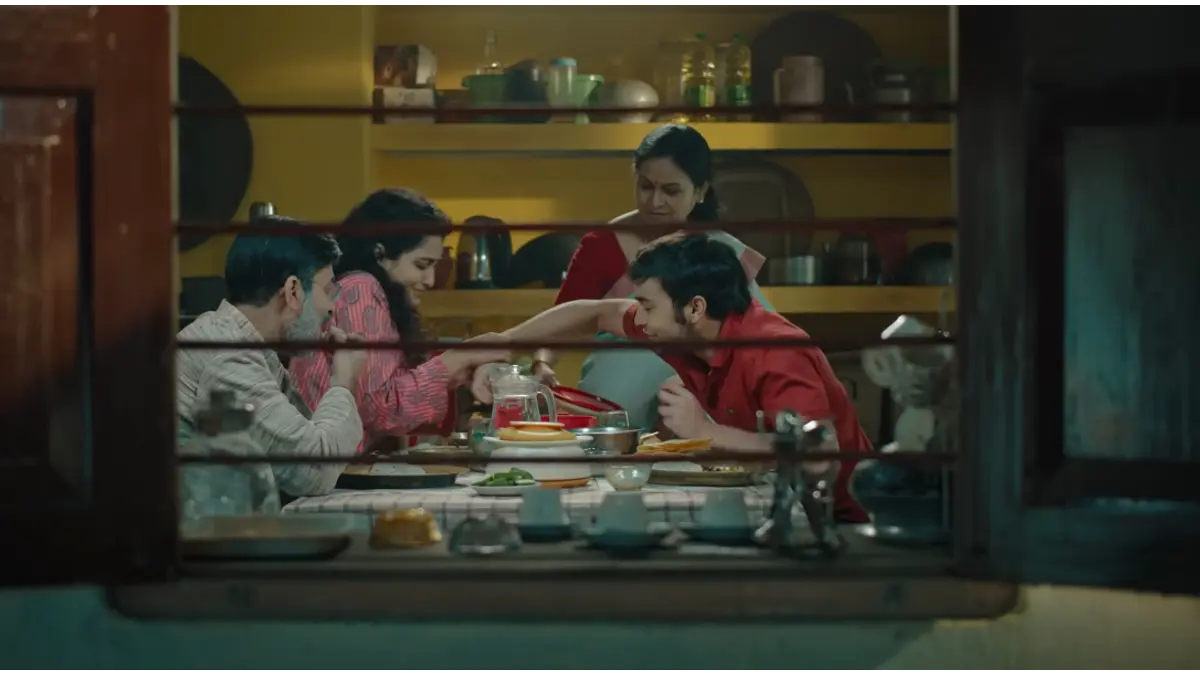
Similarly, the characters of Partha’s mother (Aparna Dutta Choudhury) and elder sister (Aparajita Mahanta), despite strong performances conveying their helplessness through subtle gestures and expressions, failed to evolve over the narrative’s duration. Reviewers expected to see these characters consumed by a grief that gradually transmuted into anger, regret, or a proactive stance. Instead, their presence primarily conveyed a sorrowful silence, leaving their emotional journeys underdeveloped and their potential impact on the unfolding drama unrealized. The static nature of these vital supporting roles further contributed to the perceived lack of emotional complexity in the film.
Technical Scrutiny: Cinematography, Sound, and Art Direction
Beyond character development, the film’s technical aspects faced considerable scrutiny, with several elements deemed inadequate or, at times, incongruous with the source material’s ethos. The use of lighting, in particular, was highlighted as a significant misstep. A scene depicting Partha’s parents waiting anxiously for his return on their porch, illuminated only by small light bulbs and a fire, was jarringly undercut by the bright lighting on Mintu Baruah’s face. Critics suggested that a subdued darkness would have been far more effective, symbolizing the father’s deep worry and perhaps allowing the faint flicker of fire to represent a fragile hope. Such a choice would have aligned more closely with Saikia’s naturalistic approach. Furthermore, lower lighting could have lent symbolic weight to the sudden flash of light from Partha’s scooter as he arrived, momentarily illuminating his father’s anxious face.
The ambient sound design also came under fire, particularly in the aforementioned scene. The sound of the porch fire was reportedly exaggerated, sounding more akin to a forest blaze than a small domestic fire in the stillness of the night. Such inaccuracies in sound design can break immersion and detract from the realism that Dr. Saikia’s narratives meticulously cultivate.
Cinematography by Chandra Kumar Das, while competent, did not fully impress critics. Opportunities for more philosophically resonant framing and composition were seemingly missed. In a pivotal confession scene, Aparna Dutta Choudhury was placed before a mirror while Mintu Baruah sat on the bed. The framing, however, showed reflections of both actors. A more poignant choice, as suggested by reviewers, could have been to show only the mother’s reflection, symbolizing her clear conscience, while perhaps placing the father behind a window or obscuring his face to convey his shame and uncertain moral standing. Distracting camera movements, such as a slow pan towards a newspaper after the father speaks to Partha’s friend, were also noted, creating an unwarranted expectation of hidden meaning where none existed.
The art direction and set design also deviated from the naturalistic aesthetic central to Saikia’s stories. The depiction of a middle-class home, which should typically feature faded and worn objects, appeared too "fine-tuned and polished." Instances such as a seemingly freshly painted wooden fence and unblemished curtains in the parents’ bedroom gave the impression of a curated studio set rather than an authentic lived-in environment. These details, while seemingly minor, collectively undermined the film’s commitment to the realism that defined the original novel.
Narrative Cohesion and Symbolic Missteps
Beyond individual technical elements, broader narrative and symbolic inconsistencies were also observed. A scene depicting Partha’s drug purchase featured a clearly blue sky in the background, a stark contrast to the slightly grey or muted tones expected of a winter evening. This bright blue, often associated with peace and hope, felt like a misfit, failing to foreshadow the seriousness of the danger Partha was entering. A more somber sky could have subtly reinforced the narrative’s gravity, aligning the visual mood with the impending peril.
Furthermore, several props and stylistic choices seemed forced or poorly conceived. The posters in Partha’s room, intended to signify his rebellious nature, appeared relatively new. Reviewers suggested that older, faded images representing adolescent desires would have been more authentic. The inclusion of a Bob Marley photograph, seemingly used as a shorthand to identify Partha as an addict, felt clichéd and lacked the subtlety Saikia employed in characterization. Similarly, the portrayal of a police character with commercial Hindi cinema-style heroism was deemed unnecessary and out of place in a story grounded in simplicity and realism. Such dramatic flourishes, critics argued, either indicated the director’s overreliance on theatricality or a misinterpretation of the source material’s understated power.
The Director’s Vision Versus Literary Nuance
Himjyoti Talukdar’s declared intention to maintain the simplicity and realism of Dr. Bhabendra Nath Saikia’s style was commendable. However, the critical consensus suggests that while he succeeded to some extent, the adaptation ultimately faltered in its visual presentation and emotional depth. The shortcomings highlighted across character development, technical execution, and symbolic choices point to a disconnect between the director’s interpretative approach and the profound subtlety that characterized Saikia’s original work. The review’s assertion that the director "either resorted to drama or became a victim of it" encapsulates the core criticism: in attempting to translate a nuanced literary experience, the film either oversimplified or over-dramatized elements, losing the intricate balance that made the novel a classic. This becomes particularly noticeable when the source material is the work of a literary giant, setting an exceptionally high bar for any adaptation.
Reception and Future Directions for Assamese Cinema
Despite the detailed critical analysis of its perceived flaws, "Moromor Deuta" was described as "nevertheless a good watch" for the average viewer. This dichotomy highlights the ongoing challenge for filmmakers in regional industries: balancing critical acclaim with popular appeal. While the story and screenplay inherited much of their strength from Dr. Saikia’s narrative, which was noted to be "almost a screenplay in itself," the film’s execution left discerning viewers and literary enthusiasts with a sense of disappointment. The high expectations associated with adapting a beloved work by Dr. Saikia meant that any deviation from his meticulous attention to detail and profound emotional resonance would be keenly felt.
The critical reception of "Moromor Deuta" serves as a crucial point of discussion for the future of Assamese cinema. It underscores the importance of a holistic approach to adaptation, one that encompasses not only a faithful rendering of the plot but also a deep understanding of the source material’s thematic nuances, character psychology, and stylistic sensibilities. The detailed feedback on technical aspects like lighting, sound, art direction, and cinematography emphasizes the need for continuous improvement in production values and technical expertise within the regional film industry. Such constructive criticism, as the original review suggests, can "open up space for constructive discussion," fostering an environment where filmmakers can learn from past projects and elevate the quality of future adaptations. Ultimately, the film’s journey from page to screen, and its subsequent critical reception, offers valuable insights into the complex art of cinematic adaptation and the enduring legacy of literary masters in shaping regional cultural narratives.