Central Asian cinema stands as one of the most compelling and, until recently, insufficiently explored facets of global moviemaking. The region’s filmmakers operate within societies profoundly shaped by the enduring legacy of Soviet history, rapid economic shifts, deeply ingrained cultural customs, and the inherent tension between ancient rural traditions and the burgeoning influence of globalized urban life. Their narratives bravely confront pressing issues such as migration, systemic corruption, environmental degradation, patriarchal violence, and pervasive economic inequality. Yet, amidst these weighty themes, they consistently weave in elements of humor, profound poetry, evocative music, and the quiet beauty inherent in everyday existence, offering a nuanced and multifaceted portrayal of life in this complex region.
Historically, Central Asian cinema has undergone significant transformations. During the Soviet era, filmmaking in the republics was often state-controlled, producing films that, while sometimes artistically innovative, largely adhered to ideological guidelines. Post-independence in the early 1990s brought both artistic freedom and severe economic challenges, leading to a period of reduced production. However, over the past two decades, a resurgence has occurred, fueled by a new generation of filmmakers, international co-productions, and a growing presence at prestigious global film festivals. This renewed vitality has allowed Central Asian voices to articulate unique perspectives on universal human experiences through the lens of their distinct cultural landscapes.
Kazakhstan, with its relatively robust economy and established film infrastructure, has emerged as a key player, producing some of the region’s most internationally recognized auteurs. Directors like Darezhan Omirbayev, Adilkhan Yerzhanov, and Emir Baigazin have consistently garnered critical acclaim and awards at festivals worldwide, establishing a distinct cinematic identity for the nation. Concurrently, Kyrgyz directors continue their deep examination of national traditions and the specific pressures confronting women in their society, often through poignant and visually striking storytelling. Meanwhile, Uzbek and Tajik productions are increasingly making their mark on the international festival circuit, offering compelling stories rooted in rich local history, intricate family dynamics, and the broader sweep of social transformation. This collective output underscores a vibrant and diverse cinematic ecosystem, rich with individual artistic visions and shared regional concerns.
Thematic Undercurrents and Artistic Expression
The films emanating from Central Asia are characterized by their profound engagement with the region’s socio-political realities. A recurring theme is the clash between tradition and modernity, often explored through the experiences of individuals navigating rapidly changing landscapes. The legacy of Soviet rule, with its impact on national identity, infrastructure, and social norms, remains a powerful undercurrent. Environmental issues, particularly the ecological disasters like the Aral Sea’s shrinkage, are addressed with urgency and sensitivity. Social inequality, corruption, and the struggles of marginalized communities, including migrants and women, are depicted with unflinching honesty. Despite the often-somber subject matter, these films frequently incorporate elements of magical realism, folklore, and a deep appreciation for the natural beauty of the Central Asian steppes and mountains, providing both a critical mirror and a poetic reflection of their societies.
The international film community has increasingly taken notice. Major festivals such as Cannes, Venice, Berlin, and Busan have regularly featured Central Asian productions, leading to awards, distribution deals, and greater visibility. This recognition not only validates the artistic merit of these films but also serves as a crucial platform for cultural exchange, allowing global audiences to gain deeper insights into a region often misunderstood or overlooked in mainstream media.
A Chronological Journey Through Contemporary Central Asian Cinema (2014-2025)

The following twenty titles, presented in chronological order of their release, offer a comprehensive introduction to the rich diversity and thematic depth of Central Asian cinema, showcasing a decade of significant artistic output.
1. Tasfiya (Sharofat Arabova, 2014, Tajikistan)
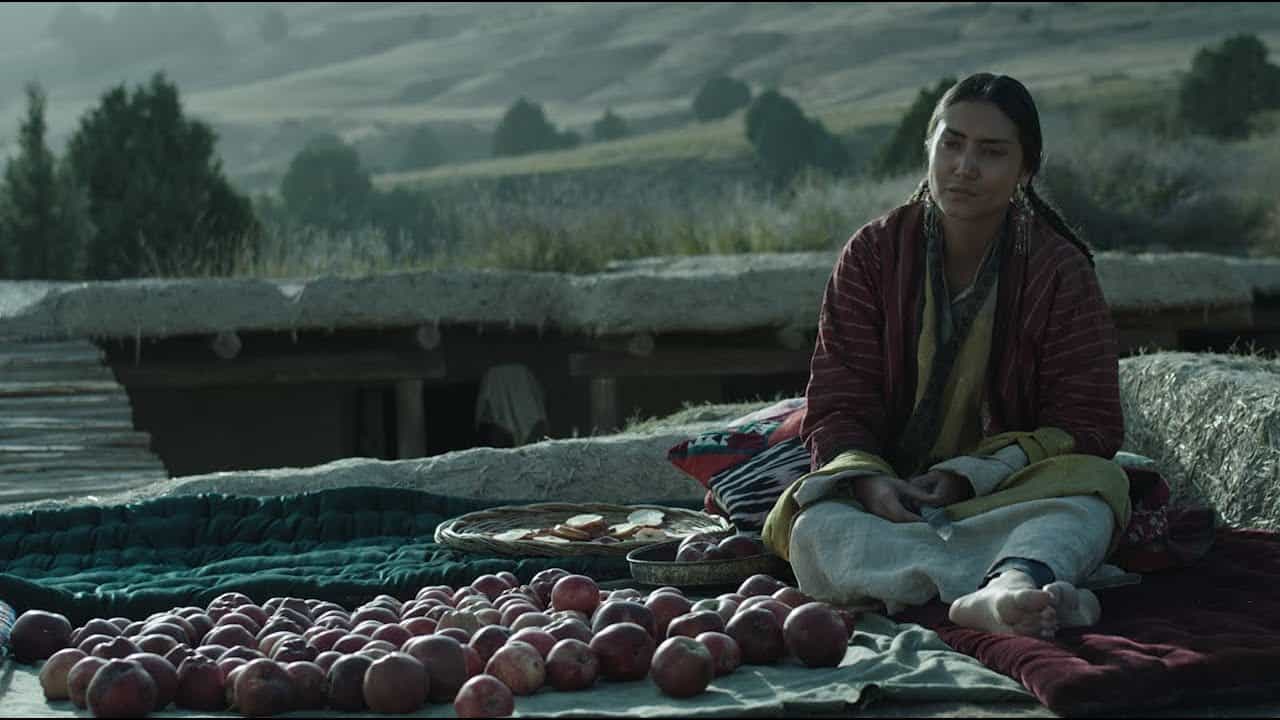
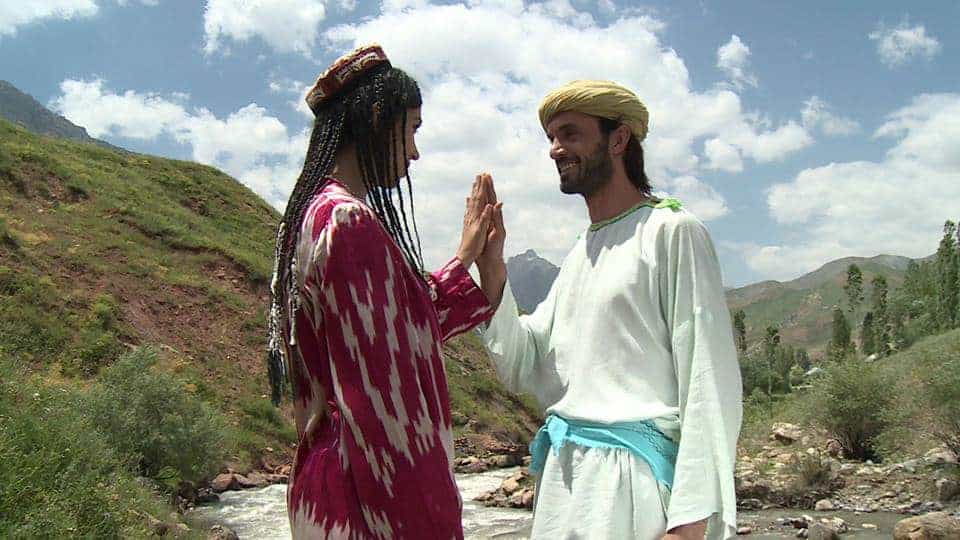
Based on Timur Zulfikarov’s novel “Jealousy,” “Tasfiya” delves into the destructive obsession of Shams, a talented musician, whose love for Mekhri morphs into a tragic fixation. The symbolic names, "Sun" and "Love," hint at the narrative’s allegorical nature, unfolding like a timeless folk tale. Director Sharofat Arabova masterfully intertwines romance, jealousy, and violence with an expansive portrayal of Tajik customs. Music, traditional attire, stunning landscapes, and community rituals are not mere backdrops but integral components of the story. Arabova employs vivid imagery, elevating her protagonists to almost mythical figures. While the rich cultural tapestry might initially feel dense to those unfamiliar with the context, the powerful visual storytelling and profound sense of place render “Tasfiya” a vital introduction to contemporary Tajik cinema, garnering positive reviews for its aesthetic and cultural authenticity.
2. Centaur (Aktan Abdykalykov, 2016, Kyrgyzstan)
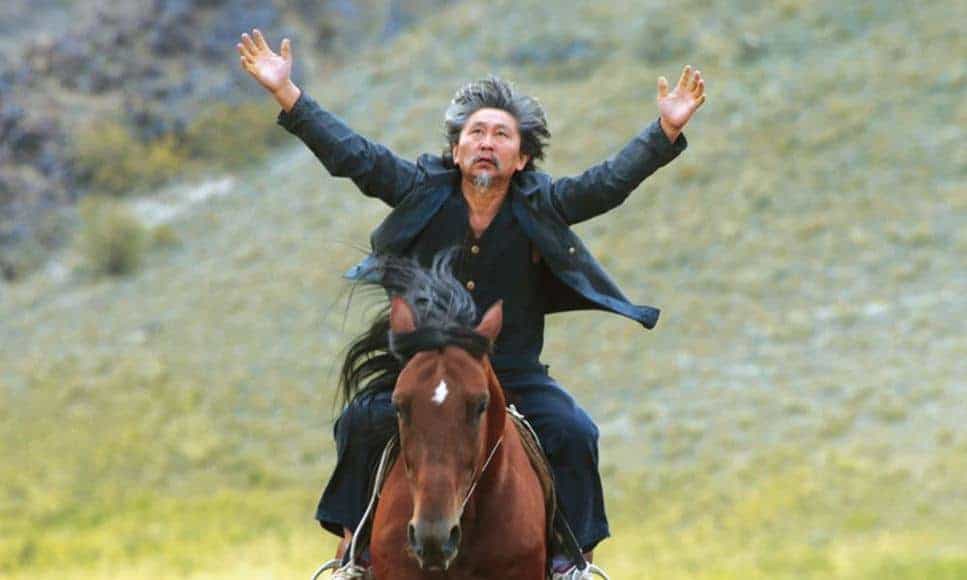
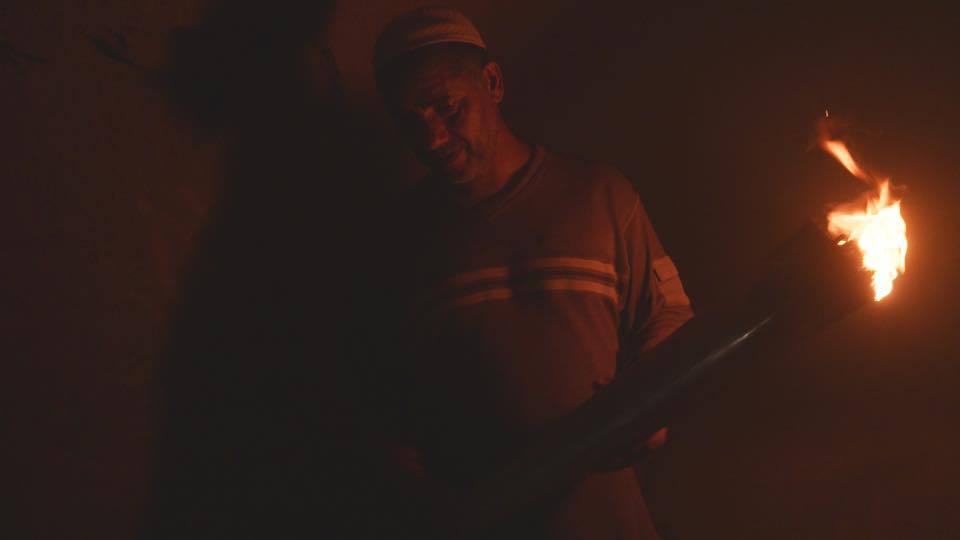
“Centaur” centers on a former projectionist leading a quiet life with his deaf wife and young son in rural Kyrgyzstan. By night, however, he engages in the illicit act of stealing and releasing racehorses, driven by a deeply held belief that the Kyrgyz people are descendants of centaurs, and that riding a horse can re-establish their spiritual connection to ancient origins. Aktan Abdykalykov ingeniously utilizes this unusual premise to explore the pervasive clash between modernization and tradition. Islamic beliefs, older mythologies, capitalist aspirations, and rural poverty uneasily coexist within the community. The protagonist’s actions, though illegal, are framed as a desperate, poetic endeavor to preserve a cultural identity that faces gradual erosion. The film’s allegorical qualities are significantly enhanced by the breathtaking cinematography of the Kyrgyz countryside, making it a profoundly humane and melancholic work that resonated with critics for its poetic depth and social commentary.
3. Returnee (Sabit Kurmanbekov, 2017, Kazakhstan)
Known internationally as both “Returnee” and “Oralman,” Sabit Kurmanbekov’s poignant drama chronicles a Kazakh family’s journey from Afghanistan to the homeland their ancestors left decades prior. Rather than immediate belonging, they encounter bureaucratic hurdles, significant cultural differences, and the painful realization that the idealized country of their imagination does not entirely align with contemporary Kazakhstan. “Returnee” portrays migration not merely as physical displacement but as a difficult, often heartbreaking, negotiation between memory and present reality. Despite sharing an ethnic identity with their new compatriots, the family’s language, life experiences, and expectations consistently mark them as outsiders. Kurmanbekov approaches their predicament with a commendable restraint, supported by powerful, expressive performances and cinematography that captures both the vastness of the landscape and the family’s increasing sense of isolation. The film received accolades for its sensitive portrayal of a complex humanitarian issue.
4. The Song of the Tree (Aibek Daiyrbekov, 2018, Kyrgyzstan)
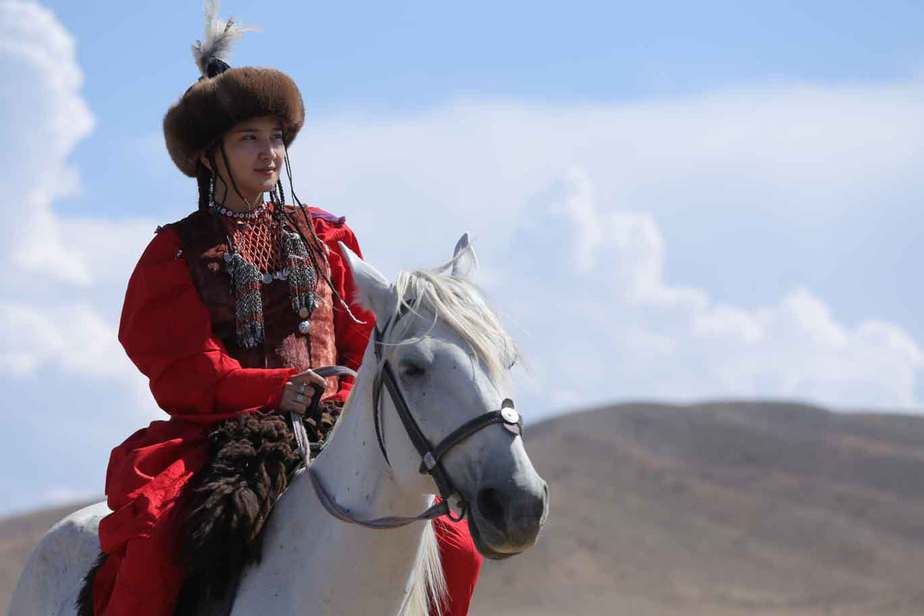
Heralded as Kyrgyzstan’s first musical production, “The Song of the Tree” seamlessly blends romance, rich folklore, and historical drama. The narrative revolves around Esen and Begimai, two young lovers whose affection is jeopardized by entrenched social divisions, demanding family expectations, and a cycle of revenge ignited by the destruction of a sacred tree. Aibek Daiyrbekov innovatively integrates traditional songs and instruments directly into the narrative, avoiding their treatment as separate spectacle. The majestic Kyrgyz mountains provide a stunning backdrop, while the authentic costumes and intricate choreography firmly anchor the story in national culture. Beneath the romantic plot lies a penetrating examination of honor, authority, and the devastating repercussions of decisions made in the name of rigid tradition. The film’s unique approach to the musical genre and its cultural richness garnered significant attention.
5. The River (Emir Baigazin, 2018, Kazakhstan)
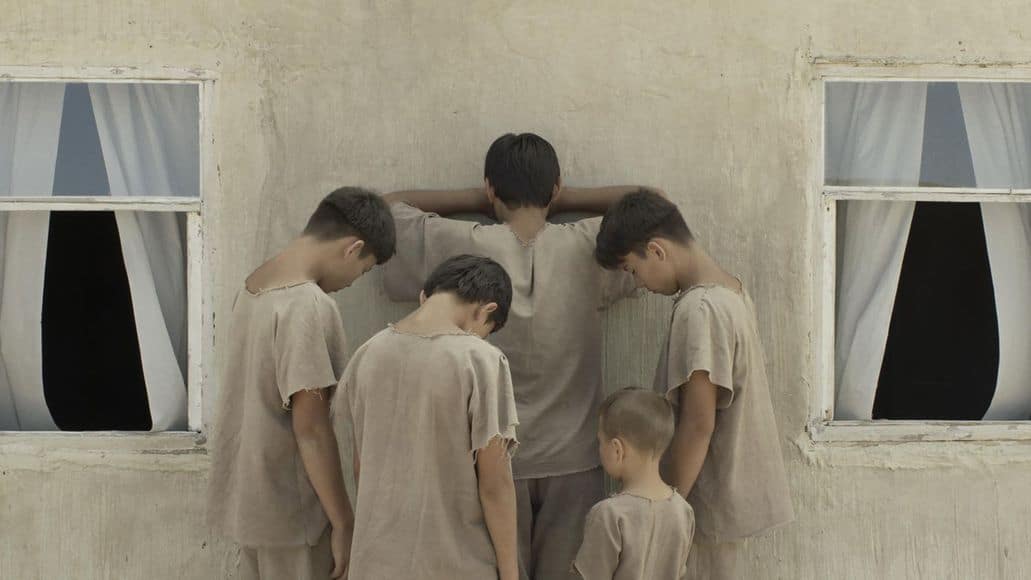
“The River” portrays five brothers living under the strict, authoritarian rule of their father, who meticulously controls their education, labor, and all contact with the outside world. Their isolated routine is dramatically disrupted by the arrival of a visiting boy who introduces them to modern clothes, unfamiliar ideas, and a smartphone. As their curiosity blossoms, the nearby river transforms into a dual symbol: a pathway to newfound freedom and a source of profound danger. In “The River,” Emir Baigazin constructs an austere, powerful allegory about authoritarianism, the seductive nature of temptation, and the inevitable collapse of an artificially maintained order. The father’s household, initially seemingly impervious to modern society, cannot escape the tide of change. Baigazin’s meticulously composed images, sparse dialogue, and repetitive visual patterns generate a palpable sense of tension even in seemingly mundane moments, resulting in a severe yet striking exploration of control and the nascent stirrings of rebellion.
6. Safarnoma: Notes on a Heritage Path (Sharofat Arabova, 2019, Tajikistan)
“Safarnoma: Notes on a Heritage Path” derives its title from the Persian word for a written account of a journey, a tradition that Sharofat Arabova meticulously follows in this documentary. The film embarks on a captivating journey across Tajikistan, exploring ancient archaeological sites, vibrant museums, deeply rooted religious customs, lively local celebrations, and the rhythms of everyday life. The documentary impressively covers a vast array of historical and cultural material without ever devolving into a conventional lecture. Panoramic vistas of mountains and settlements gracefully alternate with intimate observations of intricate rituals, distinctive architecture, and masterful craftsmanship. Its brisk editing allows the journey to flow organically between past and present, while the stunning landscapes vividly illustrate geography’s profound influence on the country’s cultural evolution. The result is both remarkably informative and visually inviting, a testament to Tajikistan’s rich heritage.
7. A Dark, Dark Man (Adilkhan Yerzhanov, 2019, Kazakhstan)
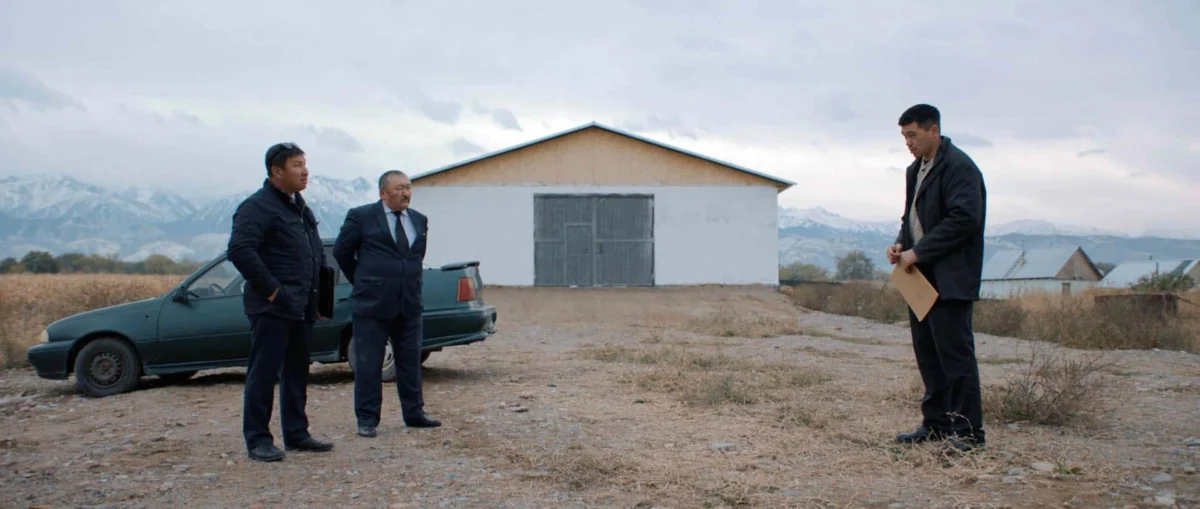
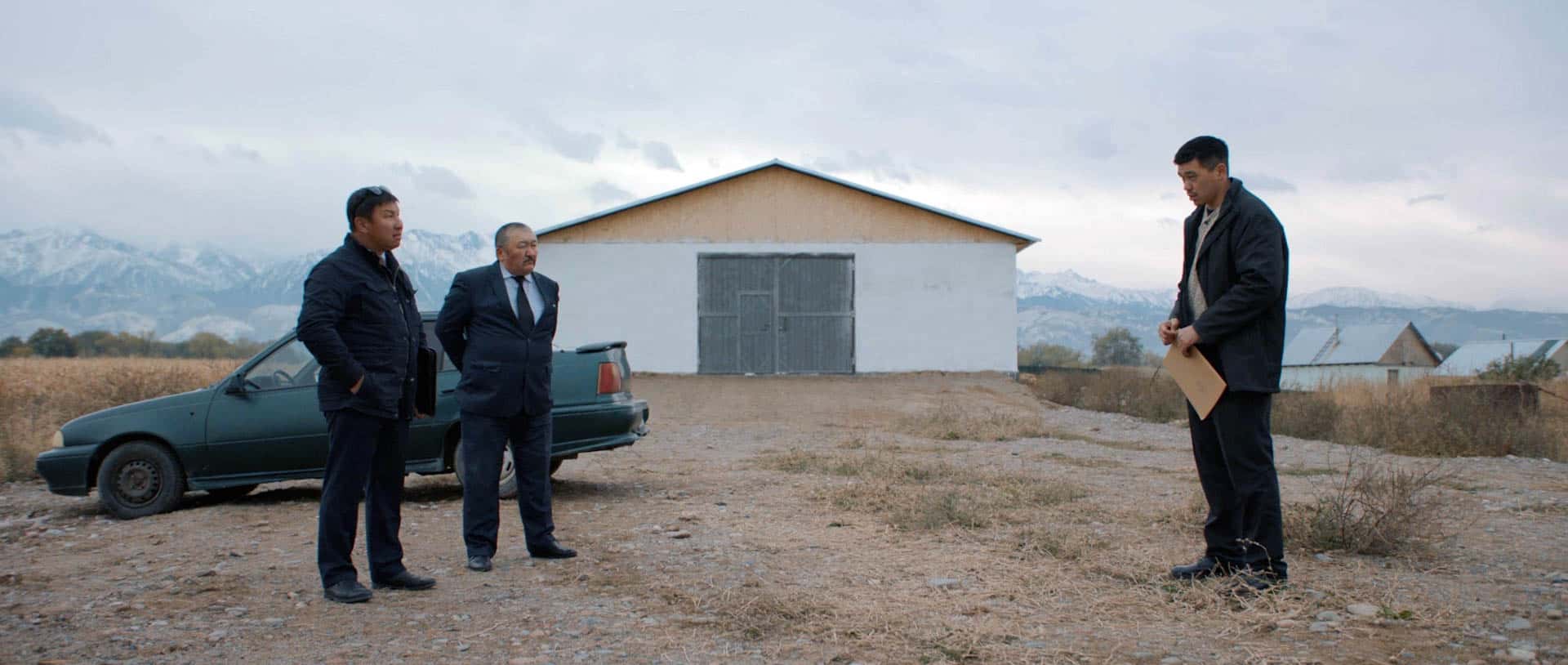
In a remote Kazakh village, a young boy is brutally murdered. Corrupt detective Bekzat is instructed to expediently close the case by framing Pukuar, a mentally impaired local man. However, the unexpected arrival of Ariana, a determined journalist from the city, compels Bekzat to undertake something resembling a genuine investigation for the first time. “A Dark, Dark Man” is a genre-bending cinematic experience, combining elements of crime cinema, stark western imagery, biting black comedy, and incisive social criticism. Adilkhan Yerzhanov masterfully uses the murder investigation to expose a deeply entrenched system where police officers, powerful officials, and local businessmen conspire to maintain their illicit power. The vast, desolate landscapes sharply contrast with the characters’ moral confinement, while the deliberately measured rhythm makes every eruption of violence shockingly effective. Bekzat’s gradual moral awakening injects an unexpected emotional dimension into the otherwise bleak narrative, earning critical acclaim for its daring style and poignant social commentary.
8. 2000 Songs for Farida (Yalkin Tuychiev, 2020, Uzbekistan)
Set in Central Asia during the early twentieth century, “2000 Songs for Farida” follows Kamil, a wealthy patriarch who, despite having three wives, remains without a male heir. He introduces the younger Farida into his household as his fourth wife, a decision that irrevocably disrupts the fragile equilibrium among the existing women. Yalkin Tuychiev expertly utilizes the household as a microcosm of a patriarchal society on the cusp of profound historical transformation. The wives, while often competing for Kamil’s attention, are also united by the stringent restrictions imposed upon them. Farida’s arrival intensifies jealousy, fear, and resentment, while unfolding events beyond the confines of the house subtly indicate that the established social order cannot endure indefinitely. Lush cinematography and meticulously detailed production design lend the drama the grandeur of a historical epic, though its most potent moments remain intimate and psychological, exploring the complex inner lives of its female characters.
9. The Road to Eden (Bakyt Mukul and Dastan Zhapar Uulu, 2020, Kyrgyzstan)
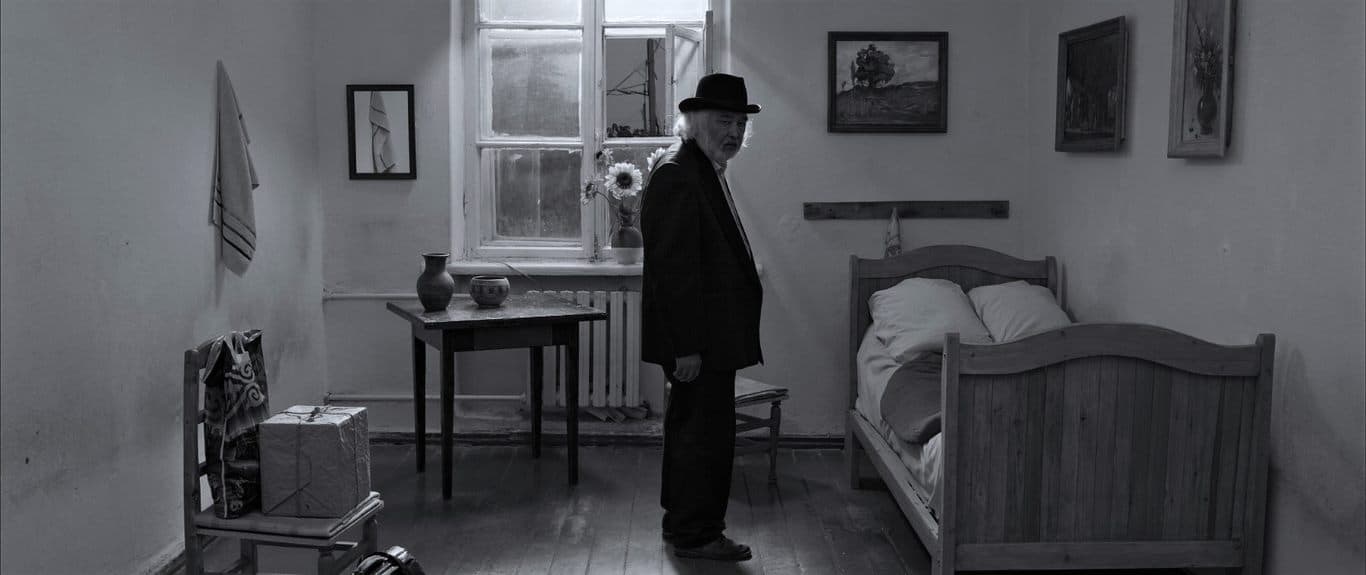
Shot in striking black and white, “The Road to Eden” examines themes of dignity, aging, and the role of compassion in a society increasingly defined by material wealth. Kurbat, a retired writer, lives modestly in Bishkek, maintaining a generosity that appears increasingly out of place. When a former student falls gravely ill, Kurbat considers selling his apartment to fund the man’s treatment, a decision that pits him against his more pragmatic nephew, Tilek. Bakyt Mukul and Dastan Zhapar Uulu skillfully avoid simplistic divisions between virtue and selfishness; even Tilek’s objections contain a degree of logical concern. Kurbat, however, embodies an ethical ideal, quietly insisting on the enduring value of literature and kindness, even when society no longer overtly rewards them. The film was praised for its contemplative pace and its profound philosophical questions, reflecting a deep engagement with societal values.
10. Fire (Aizhan Kassymbek, 2021, Kazakhstan)
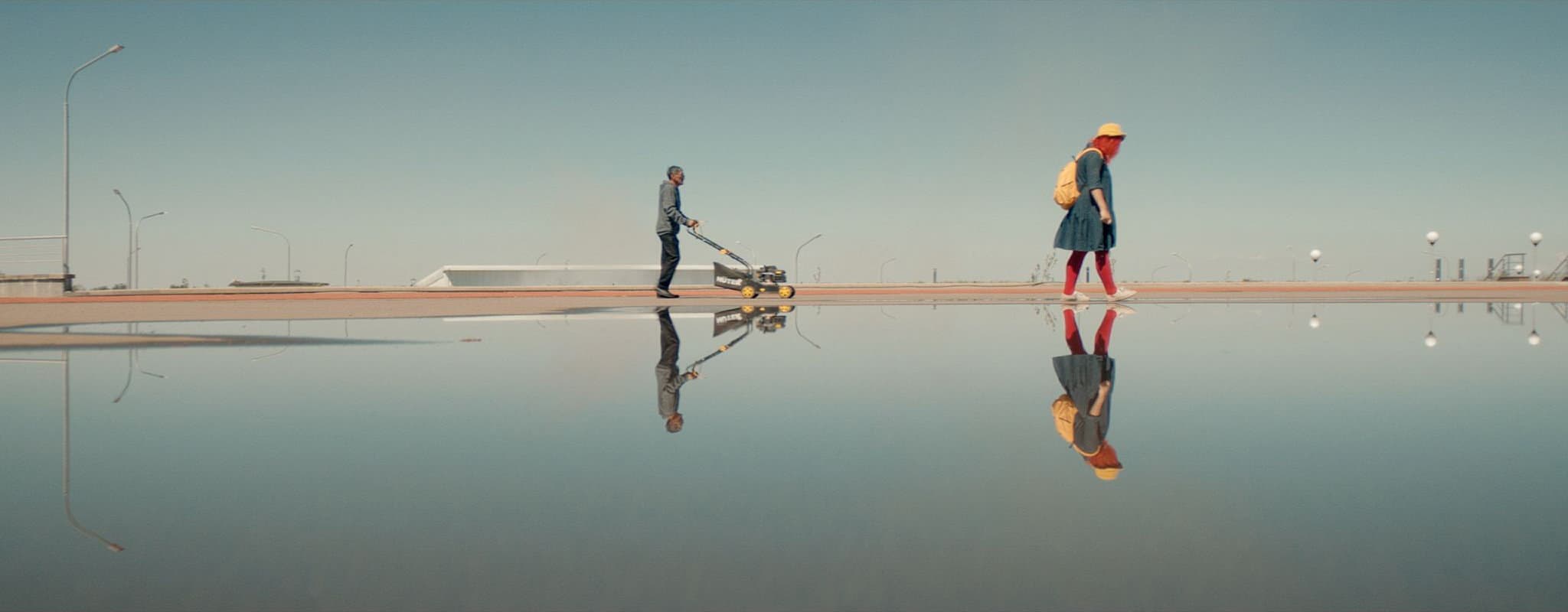
Tolik, a delivery driver for a bakery, grapples with supporting his expanding family and managing a mounting pile of debts. His wife is expecting their third child, and the discovery of their teenage daughter’s pregnancy plunges an already precarious household into another crisis. Despite the gravity of the situation, “Fire” frequently employs humor to depict the absurdities and humiliations inherent in economic hardship. Aizhan Kassymbek masterfully avoids reducing Tolik to either a mere victim or a complete failure. Instead, he is portrayed as an ordinary man desperately striving to preserve his dignity while an avalanche of responsibilities descends upon him. Colorful compositions and lively supporting characters temper the inherent bleakness without ever ignoring the intense pressures faced by working-class families in contemporary Kazakhstan, offering a relatable and humanistic portrait of resilience.
11. Poet (Darezhan Omirbayev, 2021, Kazakhstan)
Didar is a poet toiling for a newspaper with a limited readership. He supports his family, attends literary events, and continues to write despite the stark reality that his work receives scant attention in a culture increasingly dominated by commerce and popular entertainment. Darezhan Omirbayev draws a compelling parallel between Didar’s contemporary experiences and the story of Makhambet, a nineteenth-century Kazakh poet persecuted for opposing political authority. Through this historical connection, “Poet” provocatively questions whether artists are ever truly valued by the societies whose histories and identities they strive to preserve. Omirbayev’s characteristically restrained direction allows mundane events to accumulate into a profound reflection on cultural memory, artistic integrity, and the inherent loneliness of creation. The result is a quiet, intellectually rich, and deeply characteristic work from one of Central Asia’s most significant auteurs.

12. Aydinlar (Muzaffarxon Erkinov and Muzaffar Qoraboyev, 2021, Uzbekistan)
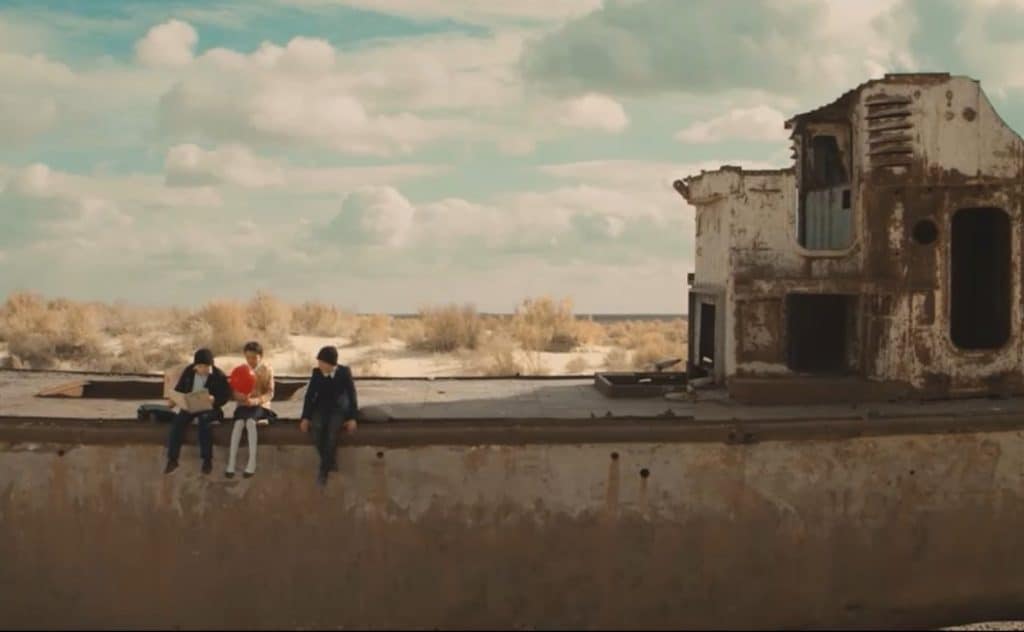
“Aydinlar” is set in Muynak, a former port city tragically left stranded after the catastrophic retreat of the Aral Sea. Young Seyit grows up surrounded by vast stretches of sand, the skeletal remains of abandoned ships, and adults whose memories vividly describe a vibrant natural environment he has never experienced. Muzaffarxon Erkinov and Muzaffar Qoraboyev skillfully connect this devastating ecological disaster to profound questions of memory and generational identity. The disappearance of the sea is not merely presented as a backdrop but as a powerful force that has irrevocably transformed employment opportunities, family structures, and the residents’ very understanding of home. Seyit’s grandfather recalls a world teeming with water, while the boy has inherited only its desolate ruins. Atmospheric images of the empty, haunting landscape imbue “Aydinlar” with a poignant quality, transforming environmental destruction into a deeply personal and intergenerational experience.
13. Scheme (Farkhat Sharipov, 2022, Kazakhstan)
Masha, a teenager in contemporary Kazakhstan, becomes increasingly captivated by a social circle built around money, lavish luxury, and access to wealthy men. What initially appears exciting gradually reveals itself as a predatory system where vulnerable young women are treated as disposable commodities. In “Scheme,” Farkhat Sharipov explores a world of opulent parties, insidious pyramid schemes, carefully curated online appearances, and insidious sexual exploitation. The adults who benefit from this environment rarely need to resort to overt force, as aspiration, poverty, and immense social pressure have already rendered the teenagers susceptible to manipulation. Sharipov maintains a visceral sense of immediacy by keeping the narrative closely tied to Masha’s perspective, allowing viewers to grasp both the allure of this dangerous lifestyle and the insidious perils hidden beneath its polished, glamorous surface.

14. Ademoka (Adilkhan Yerzhanov, 2022, Kazakhstan)
Ademoka is an undocumented Kyrgyz girl living precariously on the fringes of Kazakh society. Intelligent and fiercely determined to receive an education, she repeatedly encounters institutions that prioritize the absence of official documents over her inherent abilities or profound aspirations. Adilkhan Yerzhanov masterfully blends social drama with absurdist humor, sharp satire, and sudden, shocking violence. The protagonist’s unlikely mentor initially appears unreliable, yet their burgeoning relationship gradually evolves into the emotional core of “Ademoka.” Abandoned buildings and desolate urban spaces create an almost dystopian setting, while bureaucrats, police officers, and educators embody a system seemingly designed to exclude rather than assist. Despite its harsh critique of social inequality and patriarchy, the movie remains energetic, surprisingly funny, and ultimately hopeful about the transformative power of education and individual resilience.
15. Three (Ruslan Pak, 2022, Kazakhstan, Uzbekistan and South Korea)
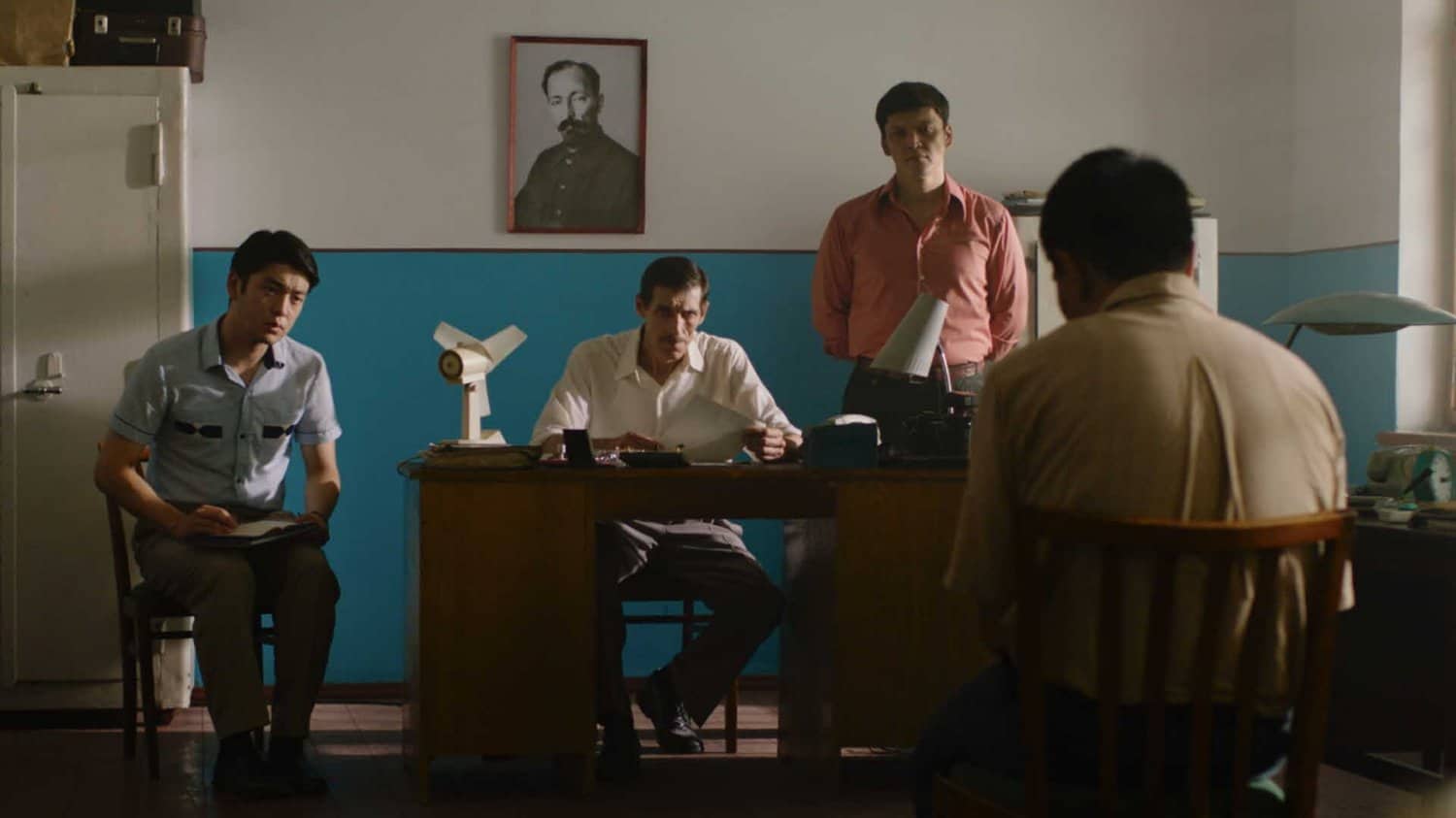
Inspired by the chilling crimes of Soviet serial killer Nikolai Dzhumagaliev, “Three” follows a young investigator attempting to identify a murderer in late 1970s Kazakhstan. As the investigation grinds to a halt, the terrifying possibility that his own sister could become a target transforms the case into an increasingly personal obsession. Ruslan Pak utilizes the conventions of the police procedural to depict pervasive institutional decay. Officials are depicted as being more concerned with maintaining appearances and mitigating political consequences than with protecting potential victims, forcing the investigator to navigate a labyrinth of incompetence, indifference, and fear. Bleak locations and controlled, austere cinematography reinforce the oppressive atmosphere, although moments of dark humor prevent the drama from becoming monotonous. The compelling combination of crime thriller and potent political commentary results in a disturbing portrait of violence concealed beneath a veneer of bureaucratic order.
16. Sunday (Shokir Kholikov, 2023, Uzbekistan)
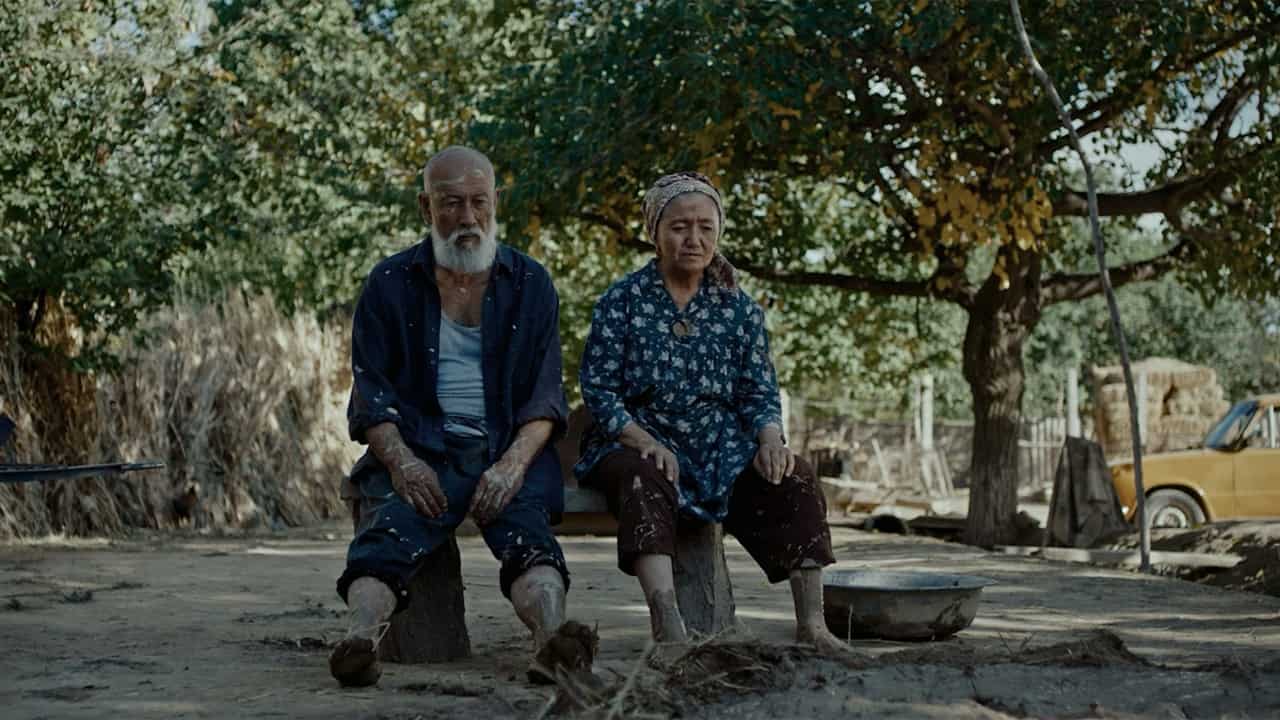
An elderly couple lives a quiet, traditional life in an isolated Uzbek village. Their adult sons, believing they are offering help, begin replacing cherished household objects with modern appliances and attempting to reorganize the couple’s routines according to contemporary notions of comfort and efficiency. “Sunday” transforms this seemingly simple situation into a subtle yet profound examination of generational conflict. The sons measure progress through technological advancement, while their parents understand home through deeply ingrained habits, cherished memories, and the physical objects accumulated over a lifetime. Shokir Kholikov favors meticulously composed static images and restrained performances, allowing both humor and profound sadness to emerge organically from the characters’ interactions. The movie neither outright rejects modernity nor uncritically romanticizes the past. Instead, it subtly asks what invaluable aspects may be irrevocably lost when change is imposed without genuinely listening to those expected to accept it.
17. Bride Kidnapping (Mirlan Abdykalykov, 2023, Kyrgyzstan)
“Bride Kidnapping” unflinchingly confronts the deeply entrenched practice of ala kachuu, where women are abducted and coerced into marriage. Mirlan Abdykalykov focuses not only on the initial violent act but also on the insidious network of relatives, neighbors, and community members who normalize the crime or pressure the victim to accept her fate. The director skillfully avoids presenting the custom as an isolated action perpetrated by a single cruel individual. Instead, the story reveals how societal expectations, family reputation, and collective silence create an environment where abuse can continue unchecked. The protagonist’s courageous resistance exposes the hypocrisy of those who disingenuously describe coercion as tradition, while the emotional consequences for all involved become increasingly devastating. Uncompromising in its perspective, “Bride Kidnapping” is both a forceful social critique and a deeply affecting character drama, sparking crucial conversations about women’s rights and cultural practices.

18. Deal at the Border (Dastan Zhapar Ryskeldi, 2024, Kyrgyzstan)
Aza and Samat become entangled with Nazik, a young woman desperately escaping human trafficking and sexual exploitation near a remote border crossing. Their encounter places all three in grave danger as criminals, corrupt officials, and pervasive economic desperation transform the surrounding landscape into a place where human lives can be negotiated like mere merchandise. Dastan Zhapar Ryskeldi presents the border as both a physical demarcation and a profound moral condition. The characters are forced to confront agonizing decisions about how much they are prepared to sacrifice for survival and whether helping another person is truly possible within a system built upon fear and profit. Although the production occasionally displays rough edges, its urgency and ethical seriousness remain powerfully impactful. “Deal at the Border” is particularly effective in examining how poverty can push ordinary people towards compromise without entirely eradicating their inherent capacity for solidarity and compassion.
19. Another Birth (Isabelle Kalandar, 2025, Tajikistan)
Set in the rugged mountainous region of Badakhshan, “Another Birth” follows eight-year-old Parastu, who grapples with the emotional void left by an absent father and the declining health of her beloved grandfather. Her innocent attempts to comprehend the complex adults around her gradually evolve into a profound journey that oscillates seamlessly between stark realism, fragmented memory, and vivid imagination. Isabelle Kalandar presents events largely through the child’s unique perception, allowing ordinary encounters to acquire mysterious or even magical qualities. The remote, breathtaking landscapes are beautiful yet also emphasize the profound isolation of communities deeply affected by migration and limited opportunities. Rather than explicitly explaining every symbol or emotional shift, the director grants Parastu’s fears and discoveries ample room to organically unfold. The result is a poetic road movie about abandonment, the enduring strength of family bonds, and a child’s earnest attempt to construct meaning from circumstances she cannot control.
20. Kurak (Erke Dzhumakmatova and Emil Atageldiev, 2025, Kyrgyzstan)
Inspired by real-life events, “Kurak” weaves together several harrowing stories about women confronting violence, exploitation, and systemic institutional indifference in Kyrgyzstan. Among the narratives are a webcam model blackmailed by corrupt police, a young woman who is drugged and raped before a recording of the assault is circulated online, and a mother desperately attempting to secure justice in a system seemingly determined to protect influential men. Erke Dzhumakmatova and Emil Atageldiev meticulously examine how individual acts of abuse are sustained and perpetuated by powerful political connections, pervasive victim-blaming, and a deafening public silence. The interconnected narrative structure powerfully demonstrates that these women’s experiences are not isolated incidents but rather integral parts of a wider, deeply troubling social pattern. Angry, direct, and politically urgent, “Kurak” bravely challenges the mechanisms that allow perpetrators to remain protected while survivors are relentlessly pressured into silence, serving as a powerful call for justice and societal change.
The Broader Impact and Future Outlook
The films highlighted here, and indeed the broader output of Central Asian cinema, serve a crucial function beyond mere entertainment. They are vital cultural artifacts that document contemporary challenges, preserve historical memory, and articulate diverse national identities in a globalized world. The increasing visibility of these films at international festivals and through streaming platforms means that Central Asian narratives are reaching wider audiences than ever before, fostering greater understanding and challenging existing stereotypes about the region.
This cinematic wave also has significant implications for the internal cultural landscape of Central Asian nations. By addressing sensitive topics such as corruption, gender inequality, and environmental crises, filmmakers contribute to public discourse and can act as catalysts for social change. Their work provides a space for reflection, critique, and the imagining of alternative futures. The development of film schools, funding initiatives, and co-production treaties further signals a maturing industry poised for continued growth.
As Central Asian cinema continues its trajectory of artistic evolution and global recognition, it promises to remain an indispensable lens through which to understand the complexities, resilience, and profound human experiences of a region undergoing dynamic transformation. The coming years are likely to see even more diverse voices and innovative storytelling emerge from this fascinating cinematic landscape, solidifying its place on the world stage.