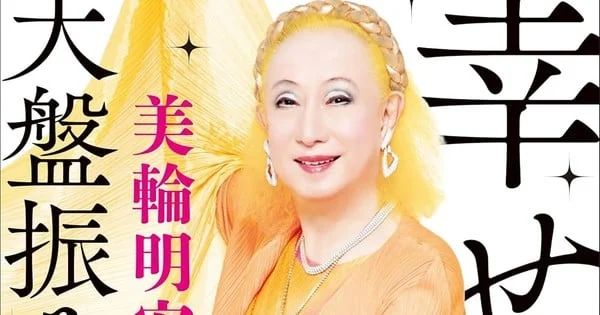
The vibrant and multifaceted career of Akihiro Miwa, a towering figure in Japanese entertainment known for his distinctive voice, captivating stage presence, and bold artistic expression, has concluded. Miwa, whose real name was Akihiro Maruyama, passed away on June 20 at the age of 91, a somber announcement made Sunday via his official website. The cause of death was attributed to old age.
A Life of Artistic Transgression and Enduring Legacy
Akihiro Miwa’s passing marks the end of an era for Japanese arts and culture. Throughout his nine decades, Miwa carved a unique path, consistently challenging societal norms and artistic boundaries. From his early days as a sensational singer to his later acclaim as a prolific actor and voice artist, Miwa’s influence permeated various creative fields, leaving an indelible mark on generations of fans and fellow artists. His life was a testament to artistic freedom and the power of individuality, embodied by his signature yellow hair and his courageous embrace of androgyny in a society that often favored conformity.
Chronology of a Remarkable Career
Born in Nagasaki in 1935, Miwa’s early life was profoundly shaped by the devastating atom bombing of the city in 1945. This experience, which he later recounted with poignant detail to the Asahi Shimbun in 2009, undoubtedly instilled in him a deep appreciation for life and a commitment to its preservation, themes that would subtly weave through his artistic endeavors.
After graduating from middle school, Miwa relocated to Tokyo, embarking on a professional singing career at the remarkably young age of 16. His vocal talents spanned a diverse spectrum, encompassing classical music, French chanson, tango, Latin rhythms, and jazz. He became a fixture in the burgeoning Tokyo music scene, notably performing at a chanson cafe in the upscale Ginza district.
His breakthrough as a singer arrived in 1957 with the hit song "Meke Meke." However, it was his iconic ballad "Yoitomake no Uta" that cemented his status as a cultural phenomenon. This deeply personal and evocative song, which he penned and performed, resonated with a wide audience and has since been covered by numerous artists, further propagating its emotional impact.
Miwa’s artistic trajectory was not confined to music. He ventured into acting, appearing on stage, television, and in film. His theatrical performances were particularly noteworthy, including a memorable role in Yukio Mishima’s adaptation of Ranpo Edogawa’s novel, "Black Lizard." His cinematic contributions included an appearance in Takeshi Kitano’s 2005 film "Takeshis’," showcasing his versatility and enduring appeal across different directorial styles.
In the realm of anime, Miwa lent his distinctive voice to several beloved characters, becoming a familiar presence to younger audiences worldwide. His portrayal of the Witch of the Waste in Hayao Miyazaki’s critically acclaimed "Howl’s Moving Castle" (2004) and the formidable Moro in "Princess Mononoke" (1997) are perhaps his most recognized voice roles. He also voiced Arceus in "Pokémon: Arceus and the Jewel of Life" (2009), Froy in "Harmagedon" (1983), and the Queen of the Night in "Maeterlinck’s Blue Bird" (1986).
Beyond his performance work, Miwa was also a respected writer, authoring several books that offered insights into his life, philosophy, and artistic vision. "Shiawase no Oban Furumai" (Lavish Banquet of Happiness) stands as an example of his literary contributions.

Acknowledgment and Public Recognition
Miwa’s significant impact on Japanese society and culture was formally recognized in 2018 when he was honored as an "Honorary Citizen of Tokyo." This prestigious accolade celebrated his pioneering spirit in "demonstrating a way of life that transcended gender in post-war Japan, and for longstanding contributions in stage, film, television, lectures, and writing." The award underscored his role as a cultural icon who challenged traditional gender roles and inspired a more inclusive society.
Recent Years and Final Moments
In the last year of his life, Miwa had been gradually reducing his professional commitments due to his advanced age, as indicated by his agency. The announcement revealed that his health had begun to decline approximately three months prior to his passing, leading him to convalesce at home. His final moments were described with poignant tenderness: he expressed gratitude with a whispered "thank you" before peacefully closing his eyes. The funeral, attended by close relatives, was adorned with his favorite yellow roses, a symbol that had become intrinsically linked to his flamboyant persona.
Thematic Resonance and Artistic Impact
Akihiro Miwa’s career was characterized by a consistent defiance of convention. His willingness to perform and appear in drag, coupled with his flamboyant persona and trademark yellow hair, made him a visible and vocal advocate for self-expression. This embraced androgyny was not merely a stylistic choice but a profound statement about identity and the fluidity of gender, particularly impactful in post-war Japan. His artistry encouraged a broader understanding and acceptance of diverse identities, resonating deeply with those who felt marginalized or misunderstood.
His work in children’s entertainment, particularly his voice roles in Studio Ghibli films, introduced his unique vocal talents to a global audience. The Witch of the Waste and Moro are not just characters; they are embodiments of power, wisdom, and a certain untamed spirit that Miwa brought to life with unparalleled conviction. These roles, in particular, demonstrated his ability to inhabit complex characters and imbue them with a memorable gravitas that transcended language barriers.
Broader Context and Cultural Significance
The passing of Akihiro Miwa occurs at a time when discussions around gender identity, artistic freedom, and the legacy of cultural icons are increasingly prominent. Miwa, who lived through significant social and political shifts in Japan, consistently pushed the boundaries of what was considered acceptable in public life and artistic expression. His life and career serve as a powerful reminder of the importance of individual authenticity and the enduring impact of artists who dare to be different.
His willingness to engage with his past, including his experiences as a hibakusha (atomic bomb survivor), added another layer of depth to his public persona. It offered a perspective on resilience and the profound human capacity to find beauty and meaning even in the face of unimaginable tragedy. This aspect of his life, though often overshadowed by his more flamboyant public image, highlighted a profound inner strength and a commitment to bearing witness.
Inferred Reactions and Industry Sentiments
While specific public statements from colleagues and collaborators are not yet widely reported, the magnitude of Miwa’s loss is likely to be felt across the entertainment industry. Tributes are expected to pour in from actors, directors, musicians, and animators who were inspired by his fearless approach to art and life. His legacy as a pioneer in challenging gender norms in Japan, coupled with his extensive body of work, ensures his continued relevance and inspiration for future generations. The NHK News’s early report on X (formerly Twitter) underscores the national significance of his passing, as indicated by the use of the #nhk_news hashtag. The inclusion of the Japanese text in the original announcement further highlights the immediate and official nature of the news within Japan.
Conclusion
Akihiro Miwa’s departure leaves a void in the landscape of Japanese entertainment, but his legacy is far from extinguished. His voice, his performances, and his unwavering commitment to self-expression will continue to inspire and resonate. He was a true original, a cultural force who lived life on his own terms, leaving behind a rich tapestry of work that stands as a testament to his extraordinary talent and his enduring spirit. The quiet closing of his eyes, marked by gratitude and surrounded by his beloved yellow roses, marks the end of a remarkable journey, but the echo of his vibrant presence will undoubtedly endure.