The impending release of Jackass: Best and Last in 2026 marks a potentially poignant conclusion to a cultural phenomenon that defied expectations, blending outrageous stunts with an unexpected undercurrent of camaraderie. For director Jeff Tremaine, the mastermind behind the camera since the series’ inception, the finality of this chapter has evoked a profound sense of reflection. This sentiment, shared by some members of the veteran cast, underscores the unique journey of a franchise that was never "built to run long-distance," yet somehow endured for over two decades, evolving from a raw MTV series into a globally recognized cinematic enterprise.
An Unexpectedly Emotional Journey to the Finish Line
Tremaine recently articulated his feelings about the series’ swansong, noting, "I really felt it in the edit bay when we started opening up the old footage and looking back on how long we’ve been doing this. Seeing all these guys as babies, that hit me a little bit." This look back at the origins, when the team merely hoped for "one episode on TV," highlights the improbable trajectory of Jackass. From its humble beginnings, it blossomed into a multi-million-dollar franchise, collectively grossing over $500 million worldwide across its film installments, a testament to its enduring appeal and Tremaine’s distinctive vision. The forthcoming Best and Last is anticipated not only as a compilation of highlights but also as a retrospective that captures the bittersweet emotions surrounding its potential farewell.
The Unlikely Auteur: Jeff Tremaine’s Vision Beyond the Groin Hits
Despite his pivotal role in shaping the aesthetic and sensibility of Jackass alongside co-creators Johnny Knoxville and Spike Jonze, Tremaine often finds himself overlooked as a filmmaker. His public persona, exemplified by his self-deprecating humor and a vintage Smiths T-shirt, belies a refined artistic background. Holding an undergraduate degree in fine arts and cultivating a lifelong passion for painting and drawing, Tremaine’s journey into directing was not a conventional one. He himself admits he never aspired to be a director, finding his initial career pinnacle in curating content for Big Brother, a skateboarding magazine known for its irreverent humor and eccentric personalities.
Yet, it was within this environment that Tremaine’s directorial prowess began to emerge. His innate ability to identify and cultivate outrageous personalities, coupled with an instinct for capturing raw, compelling moments, laid the groundwork for Jackass. He recounts a pivotal moment when Johnny Knoxville filmed himself being shot with a handgun for a Big Brother video: "that footage was really the moment where I felt this was bigger than the little skateboard video we were making. It was Knoxville’s ability to engage you." This realization, combined with the magnetic personalities of Steve-O, Wee Man, and Chris Pontius, catalyzed the transformation of their antics into a television show.
Critics and scholars have increasingly acknowledged Tremaine’s subtle artistry. While the franchise is undeniably famous for its "grown men getting hit in the groin," a deeper analysis reveals a director who has crafted "something unexpectedly touching and endearing from these seemingly coarse moments." Tremaine has been lauded for spearheading a joyous comedy series that subtly condemns homophobia while celebrating healthy, if unconventional, male friendships – a facet often overlooked by those who only perceive the surface-level shock value.
From Skateboard Zine to Global Phenomenon: A Chronology of Chaos
The Jackass saga began not on television screens, but within the pages of Big Brother magazine in the late 1990s. The magazine, known for its edgy content and a punk rock ethos, provided a fertile ground for the nascent Jackass crew to develop their brand of outrageous stunts and pranks. The transition to MTV in 2000 was a game-changer, bringing their unique brand of "brilliantly sophomoric" humor to a wider audience. The television series, which ran for three seasons (2000-2002), quickly garnered both immense popularity and significant controversy, leading to its eventual cancellation amidst concerns over its influence on young viewers.
However, the spirit of Jackass proved irrepressible. The franchise made a successful leap to the big screen with Jackass: The Movie in 2002, demonstrating its theatrical viability. This was followed by Jackass Number Two in 2006, and Jackass 3D in 2010, which marked a significant technical and critical turning point. The spin-off Jackass Presents: Bad Grandpa (2013) showcased a more narrative-driven approach, earning an Academy Award nomination for Best Makeup and Hairstyling, further solidifying the franchise’s unexpected artistic recognition. The most recent installment, Jackass Forever, released in 2022, continued to push boundaries while introducing a new generation of stunt performers. Now, Jackass: Best and Last (2026) aims to encapsulate this remarkable journey.
The Evolution of Production: Guarding Spontaneity Amidst Growth
The growth of Jackass from a guerilla-style operation to a major studio production presented Tremaine with unique challenges. He fondly recalls the early days: "We used to all fit in one van. The cameraman, the sound guy and the cast—and I’m driving the van… for a Paramount movie!" This stark contrast to later productions, where he’d drive Ryan Dunn to get an X-ray after a stunt, illustrates the series’ rapid expansion.
As the franchise matured, so did its production scale. What began as spontaneous, unpermitted stunts, like the infamous "kidnapping" of Brad Pitt, evolved into a "slow-moving, deliberate machine that is hard to control." Tremaine laments the loss of that raw spontaneity, where ideas could be conceived and executed within minutes. Yet, he acknowledges the unexpected benefits of these new constraints: "Once you start getting permissions, you start getting restrictions. But I like operating with some restrictions—I think that forces me to be more creative."
This dynamic between controlled chaos and creative constraint is evident in the ongoing battles with organizations like the Motion Picture Association of America (MPAA) over film ratings. Tremaine recounts a humorous yet illustrative struggle during the production of Jackass 3D concerning a lengthy shot of Chris Pontius’s penis hitting a ping-pong ball. The MPAA’s stringent rules, which initially demanded justification for "any frame of full-frontal male nudity," forced Tremaine to find creative workarounds, such as strategically placed black bars that would momentarily slide away to reveal the "funny part." These instances highlight Tremaine’s ingenuity in navigating external limitations while preserving the comedic essence of Jackass.
The Art of the Stunt: Directing the ‘Exceptional Dumb-Dumbs’
Tremaine’s directorial approach is far from conventional. He emphasizes that he doesn’t script dialogue, allowing the cast’s genuine personalities to shine through. Instead, his artistry lies in creating the situations that elicit their most authentic and often hilarious reactions. "I don’t tell anyone what to say—it is their real personalities—but sometimes I can feel some hamminess and I’ll make them redo things," he explains. His method involves strategically placing cast members and cameras to capture unexpected humor, particularly highlighting Chris Pontius’s knack for turning a "C into an A" with his spontaneous commentary.
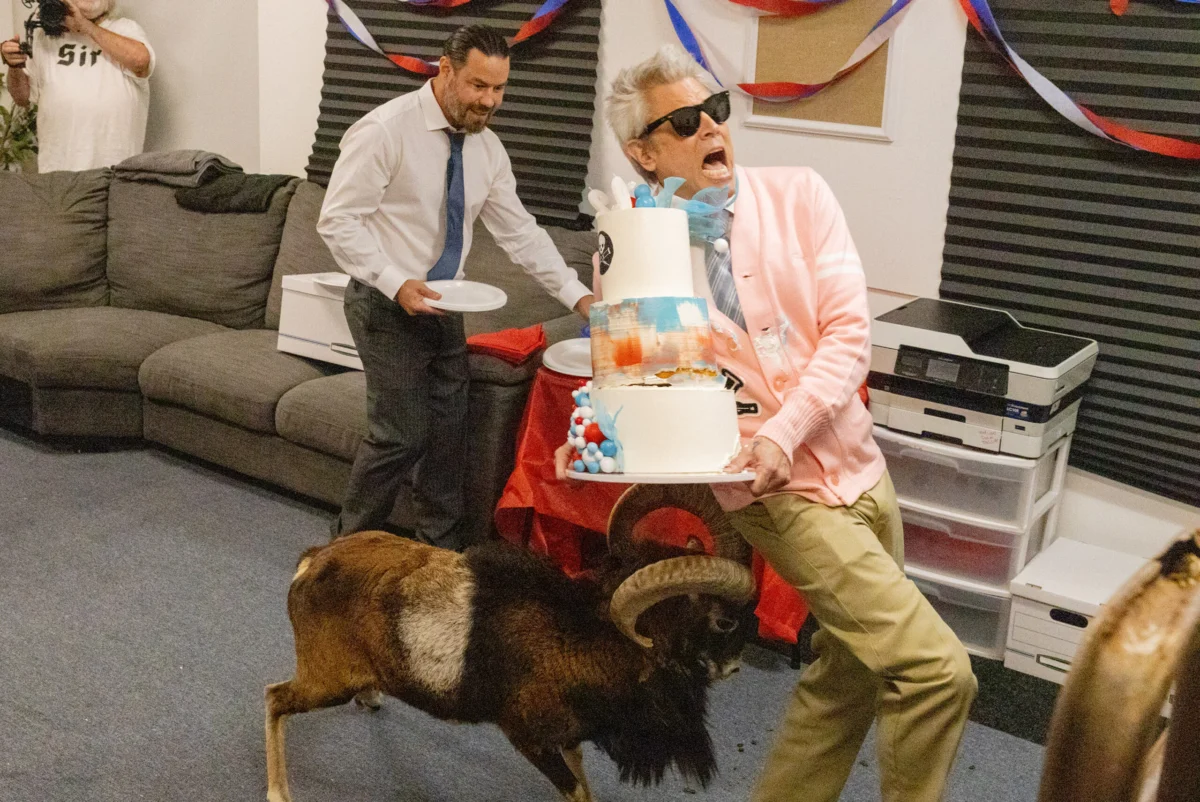
The balance between safety and cinematic impact is a constant tightrope walk. Tremaine recounts the intense decision to ask Johnny Knoxville to repeat "The Magic Trick" stunt in Jackass Forever, where Knoxville was hit by a bull. Despite Knoxville breaking two ribs on the first take, Tremaine had to deliver the difficult news that the footage wasn’t "impressive enough." The commitment to capturing the perfect, albeit dangerous, shot encapsulates the Jackass ethos: "we’re going to do this until we get it right—and getting it right is getting it wrong." This unwavering pursuit of the ultimate stunt, often at personal risk, is a defining characteristic of the franchise.
Tremaine also acts as a critical gatekeeper, alongside Knoxville, for proposed stunts. While he admits to initial skepticism about ideas like "The High Five" or placing Ehren McGhehey in front of a bear, he ultimately succumbs to Knoxville’s persistent vision, acknowledging that "a lot of times those are the very best ideas." This collaborative yet guiding role underscores Tremaine’s subtle influence on the series’ iconic moments.
Critical Reappraisal and Enduring Cultural Impact
One of the most remarkable aspects of the Jackass franchise is its unlikely trajectory in critical reception. Initially dismissed as lowbrow and puerile, the series began to garner serious artistic recognition around the time of Jackass 3D‘s premiere at the Museum of Modern Art (MoMA) in 2010. This unexpected embrace by the art world led to a shift in critical discourse, with academics and journalists beginning to analyze Jackass as a form of performance art or a commentary on modern masculinity.
Tremaine, ever wary of pretension, admits to struggling with "intellectualizing what we do." For him, the core remains simple: "This is what we do and it’s stupid. We’re magnifying stupid." Yet, he acknowledges the validity of some critical interpretations, finding amusement and occasional insight in scholarly breakdowns. The MoMA gala, in particular, represented a "sea change" in how the franchise was perceived.
The phenomenon of Jackass receiving increasingly positive reviews with each subsequent film is an anomaly in Hollywood. Tremaine notes the shift, particularly with Jackass Forever, which received widespread critical acclaim. This newfound acceptance, he half-jokingly suggests, might indicate a loss of their "punk" edge, or perhaps a generational shift where former Jackass viewers are now the critics. Despite this, the underlying "Fuck the world" mindset, at least for Tremaine, persists, maintaining the rebellious spirit that defined the series from its outset.
Beyond Jackass: Tremaine’s Diverse Portfolio and Artistic Identity
Tremaine’s creative reach extends beyond the realm of self-inflicted pain and elaborate pranks. His unexpected commission to direct a stylish and elegant American Airlines safety PSA offered a glimpse into his versatile directorial capabilities. Tremaine found immense humor in the incongruity of "the Jackass guy" being tasked with promoting safety, a stark contrast to his career-long mantra of "Safety third." The PSA, with its polished aesthetic, showcases Tremaine’s ability to craft visually engaging content in a completely different genre, and he proudly notes that it might be "the thing I’ve done that more people have seen than anything else."
Music, a "foreground element" in Tremaine’s personal development, also plays a crucial role in his work. He describes music as an homage and a reflection of personal taste, emphasizing its importance in setting the tone for Jackass. This passion for music, coupled with his background in fine arts, reveals a multifaceted creative individual.
Even his painting, though not explicitly "punk" in style, stems from the same creative wellspring as his directing. Tremaine views all his creative endeavors as emanating from a single part of his brain, often finding that directing Jackass consumes his creative reserves, leaving little "in the tank" for other artistic pursuits.
The Enduring Spirit: A Reluctant Farewell
As Jackass: Best and Last prepares for its debut, Jeff Tremaine grapples with the potential finality of a series that has defined much of his career. Despite his artistic evolution, he playfully admits to a persistent, almost childlike creative voice: "I’m almost 60 years old, and I still like to draw dicks on things. It’s weird to me that that is still funny to me. I’m waiting to grow up."
This self-effacing humor encapsulates the enduring appeal of Jackass and its creator. The franchise, a vibrant tapestry of danger, camaraderie, and slapstick, has not only entertained millions but has also, through Tremaine’s understated artistic guidance, carved out a surprisingly significant niche in popular culture. As the curtain potentially falls on this "brilliantly sophomoric series," its legacy will undoubtedly endure, a testament to the vision of an unlikely auteur who found profound humor and unexpected depth in the most outrageous of human endeavors.