Hidaka Yamada, an acclaimed director known for his distinctive visual style honed through years in commercial and promotional video production, has brought a potent social commentary to the forefront with his latest independent short film, “shady.” Released in 2025 and subsequently selected for the prestigious Short Shorts Film Festival & Asia 2026, the 16-minute cinematic work delves into the harrowing world of illegal part-time jobs, often referred to as ‘yami-baito’ (dark part-time jobs), and their devastating impact on Japan’s youth. The film offers a stark, almost dialogue-free portrayal of young individuals caught in a spiral of desperation, uncertainty, and profound helplessness, resonating deeply with contemporary societal anxieties.
A Director’s Journey from Commercials to Critical Independent Cinema
Yamada’s trajectory into independent filmmaking is a testament to his versatile talent and commitment to storytelling beyond the confines of commercial mandates. After graduating from Tokyo’s venerable Waseda University, an institution renowned for fostering creative and intellectual talent, Yamada embarked on a career primarily directing commercials and promotional videos. This professional background undoubtedly refined his eye for meticulously crafted visuals, concise narrative delivery, and evocative atmosphere – skills that are distinctly evident in "shady." While establishing a strong foundation in the commercial realm, Yamada simultaneously nurtured his passion for independent cinema, gradually building a portfolio that allows him to explore more complex and socially pertinent themes. His participation in the Short Shorts Film Festival & Asia 2026 underscores his growing recognition within the independent film circuit, providing a significant platform for his work to reach a broader international audience and engage with critical discourse.
The Narrative Core of ‘shady’: A Descent into Desperation
At its heart, "shady" unravels the story of Masashi (portrayed by Nagomu Miyamoto), a young man entangled in a four-member group that conducts house burglaries. The film meticulously builds a sense of unease as it depicts the precarious existence of these individuals, hinting at the underlying pressures that might have driven them to such desperate measures. A pivotal incident during one of their illicit operations triggers a chain of events that exposes the brutal realities of their involvement. When the group attempts to contact their elusive "boss" for assistance, their pleas are met with cold indifference and abandonment, leaving them to face the consequences alone. This abandonment serves as a chilling illustration of the exploitative nature of yami-baito, where participants are disposable and left with no recourse.
Following this critical juncture, Masashi, along with Hikaru (Runa Nushino), another member of the group, is forced into hiding. The narrative then shifts its focus to their desperate attempts to formulate a new plan, highlighting their isolation and the profound uncertainty that now defines their future. Through this seemingly simple plot, Yamada endeavors to illuminate the dire predicament faced by many young people in Japan who find themselves ensnared in illegal activities, often driven by economic hardship or a lack of viable alternatives. The film’s strength lies in its ability to convey the overwhelming sense of being lost, uncertain, and, crucially, helpless in finding a path back to legitimacy.
Short Shorts Film Festival & Asia: A Launchpad for Emerging Talent
The selection of "shady" for the Short Shorts Film Festival & Asia 2026 holds significant weight within the global film industry. Founded by actor Tetsuya Bessho, the festival is one of Asia’s largest international short film festivals and an Academy Awards-qualifying event. This status means that films winning certain awards at the festival automatically become eligible for consideration in the Oscar short film categories, providing an unparalleled opportunity for filmmakers like Yamada to gain international acclaim and visibility. The festival, which celebrates its 28th edition in 2026, has consistently championed emerging talent and diverse storytelling, offering a vital platform for short films to be recognized for their artistic merit and societal relevance. Its annual screenings attract industry professionals, critics, and cinephiles from around the world, making it an ideal venue for a film like "shady" to spark conversations about its important themes.
The Shadow Economy: Understanding ‘Yami-Baito’ in Japan
Yamada’s decision to tackle the issue of yami-baito is particularly timely and relevant. Yami-baito, literally translating to "dark part-time jobs," refers to illegal or illicit work, often orchestrated by organized crime syndicates or unscrupulous individuals, that preys on vulnerable populations, especially young people. These jobs can range from phone fraud schemes (furikome sagi) and drug trafficking to more violent crimes like burglary, as depicted in "shady," or even human trafficking. The allure for young people often stems from promises of quick, substantial income with minimal effort, a deceptive facade that quickly crumbles into exploitation and danger.
Socio-Economic Factors Fueling Desperation:
Several underlying socio-economic factors contribute to the prevalence of yami-baito among Japanese youth:
- Economic Precarity and Inequality: Despite Japan’s reputation for a robust economy, a significant portion of its youth faces economic insecurity. The rise of non-regular employment, characterized by contract work, temporary positions, and lower wages, has made it difficult for many young people to secure stable, well-paying jobs. Data from the Ministry of Health, Labour and Welfare often highlights the challenges faced by new graduates in finding permanent employment, leading to a sense of disillusionment. The average starting salary for non-regular workers is significantly lower than that for regular employees, making it difficult to achieve financial independence or save for the future.
- Pressure to Earn: The high cost of living in major cities like Tokyo, coupled with societal pressures to maintain certain lifestyles or pay off student debts, can push young individuals towards quick money schemes. When legitimate avenues seem insufficient or out of reach, the perceived ease and high reward of yami-baito can become dangerously attractive.
- Lack of Awareness and Support: Many young people, particularly those from disadvantaged backgrounds or with limited social networks, may not fully comprehend the risks associated with yami-baito or know where to turn for help. Recruiters for these illegal jobs often target individuals through social media platforms or online forums, preying on their vulnerability and anonymity.
- Mental Health Crisis: The pressures of modern Japanese society, including academic stress, career anxiety, and social isolation, contribute to a growing mental health crisis among youth. Feelings of hopelessness and a lack of control over one’s future can make individuals more susceptible to the promises of illegal work, seeing it as a desperate escape rather than a trap. The sense of helplessness depicted in "shady" directly mirrors the psychological toll these circumstances exact.
Government agencies and NGOs have launched public awareness campaigns to warn against the dangers of yami-baito, but the clandestine nature of these operations and the persistent socio-economic challenges make it an ongoing battle. Yamada’s film serves as a powerful artistic intervention, bringing a human face to these statistics and abstract societal problems.
Cinematic Craft: Sustaining Confusion and Mystique
"shady" distinguishes itself through its meticulously crafted visual style, which plays a crucial role in conveying its complex themes without relying heavily on dialogue. The film’s aesthetic choices contribute significantly to the pervasive sense of confusion, uncertainty, and emotional detachment that permeates the narrative:
- Long Takes: Yamada employs extended, unbroken shots that create a deliberate, unhurried pace. This technique immerses the viewer more deeply into the characters’ immediate experience, fostering a sense of real-time observation. It allows scenes to unfold quietly, compelling the audience to become a "silent observer" of the characters’ predicament, mirroring their own isolation and the slow unraveling of their situation. The sustained nature of these shots amplifies the tension and the feeling of being trapped, as there is no quick cut to alleviate the emotional weight.
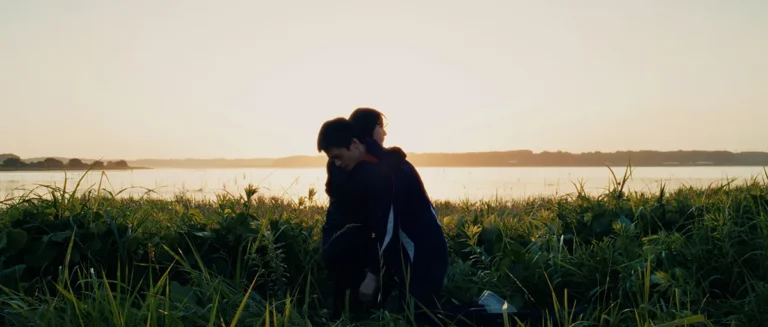
- Dark Colour Grading: The film’s aesthetic is dominated by a dark colour palette, utilizing muted tones and deep shadows. This choice is not merely stylistic; it functions as a powerful symbolic tool. The dark grading evokes the moral ambiguity of the characters’ actions, the hidden nature of their illicit lives, and the emotional despair that envelops them. It creates a somber, melancholic atmosphere that reinforces the film’s thematic exploration of a bleak and uncertain future.
- Seemingly Candid Camera Angles: Yamada often uses camera angles that appear almost observational, as if the viewer is witnessing events unfold from a hidden vantage point. This "candid" approach enhances the film’s realism and immediacy, drawing the audience into the characters’ world without explicit exposition. It further reinforces the voyeuristic element, making the viewer complicit in observing the characters’ plight, unable to intervene.
- Mystical Atmosphere: Combined, these elements coalesce to create a mystical, almost ethereal atmosphere. This mystique, however, is not one of wonder but of foreboding and existential dread. It allows the scenes to unfold with a quiet intensity, turning mundane moments of hiding or planning into poignant reflections on the characters’ inner turmoil. This sustained mood ensures that even though "not much happens" in terms of overt action during the 16-minute runtime, the sense of uncertainty and being lost, shared deeply with Masashi and Hikaru, persists until the very end. The ambiguity of the characters’ fate is thus amplified by the film’s visual language, leaving a lasting impression of unresolved tension.
Performances: A Study in Ambivalence and Stoicism
The performances of the two lead actors, Runa Nushino as Hikaru and Nagomu Miyamoto as Masashi, are central to the film’s artistic intention, albeit with nuances that invite critical interpretation. Runa Nushino’s portrayal of Hikaru, described as self-confident and strong-headed, is characterized by an "unnatural stoicism." While this choice might lead some viewers to perceive a lack of emotional range, it can also be interpreted as a deliberate artistic decision to reflect Hikaru’s coping mechanism in a desperate and dangerous situation. In the world of yami-baito, overt emotional expression can be a liability, and a hardened exterior might be necessary for survival. Her stoicism could thus be seen as a manifestation of resilience, or perhaps, a deep-seated numbness brought on by trauma and repeated exposure to peril.
Conversely, Nagomu Miyamoto’s portrayal of Masashi, the ambivalent protagonist, is noted for lacking the commanding presence typically expected of a film’s central character. Instead of driving the narrative forward with assertive actions, Masashi often seems to "disappear into it," allowing the story to unfold around him rather than because of his direct agency. This seemingly understated performance, however, could be a profound reflection of Masashi’s inner turmoil, his indecision, and the overwhelming helplessness he feels. His ambivalence might symbolize the wider predicament of young people who feel powerless in the face of larger systemic forces, pushed into situations where they are merely reacting to circumstances rather than shaping their own destiny. While emotions are visible on their faces, their muted expression can feel more forced than genuinely raw, contributing to an overall sense of suppressed desperation rather than explosive despair. This deliberate emotional restraint aligns with the film’s overall aesthetic of quiet observation and sustained uncertainty, reinforcing the idea that these characters are emotionally numb or too overwhelmed to fully process their predicament.
Broader Implications and a Call for Dialogue
In its conclusion, Yamada’s "shady" stands at a critical juncture, balancing the potential to be a profound existential narrative with the risk of its message being obscured by its stylistic choices and understated performances. The film attempts to dive deeply into the social issues affecting young people, particularly the insidious nature of yami-baito and the subsequent feelings of alienation and despair. It implicitly raises questions about societal responsibility and the systemic failures that might push vulnerable individuals into such dangerous paths.
The film’s ambiguity regarding its ultimate message—whether it’s a stark social commentary or a more abstract exploration of human predicament—is both its strength and its challenge. By keeping the narrative sparse and dialogue minimal, Yamada invites viewers to project their own interpretations and engage actively with the characters’ silent struggles. However, this approach also runs the risk of diluting the urgency of its social message, potentially leaving some viewers wishing for a more explicit call to action or a clearer indictment of the forces at play.
Ultimately, "shady" is a film that bravely attempts to shed light on a crucial, often hidden, social issue. While its artistic choices might divide audiences and critics, its very existence and its screening at a major festival like Short Shorts Film Festival & Asia contribute significantly to public discourse. It compels viewers to confront uncomfortable truths about economic disparity, youth vulnerability, and the shadows that linger beneath the veneer of a prosperous society. In doing so, "shady" may not fully succeed in pulling its complex message entirely out of the shadows, but it undeniably casts a powerful, thought-provoking light on them, prompting essential reflection on the lives of those often unseen and unheard.