Narrative Premise and Historical Context
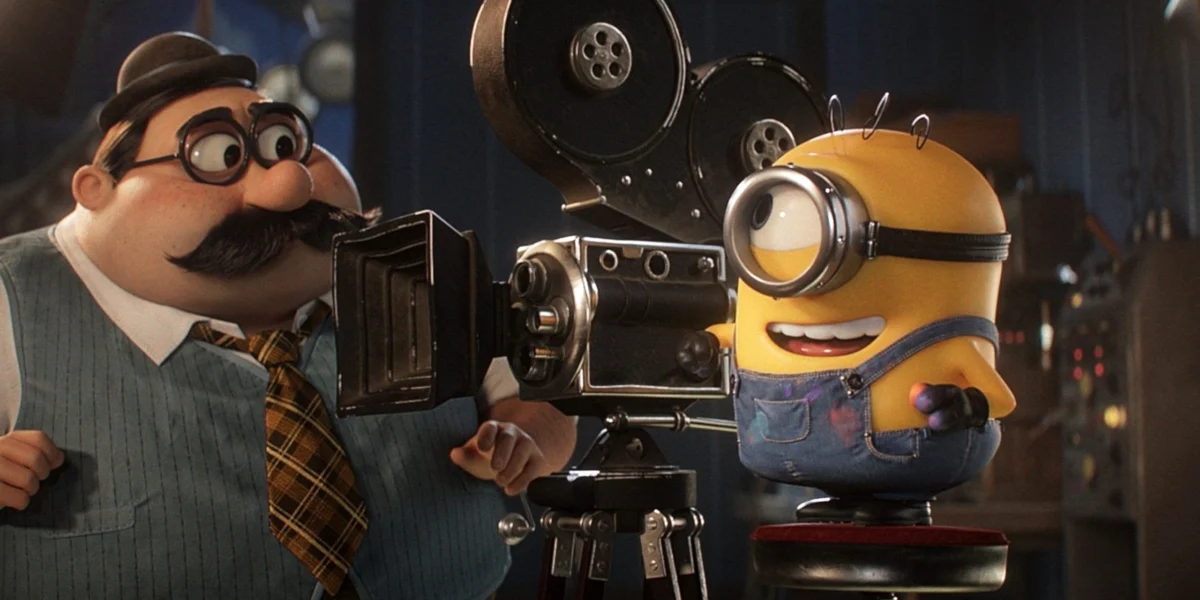
Set against the backdrop of a rapidly evolving film industry, Minions & Monsters follows Kevin, Stuart, Bob, and their cohorts as they arrive in Los Angeles with the singular goal of producing their own monster epic. The year 1927 is historically significant in the film industry, coinciding with the release of The Jazz Singer and the beginning of the end for the silent film era. The Minions, who primarily communicate through a polyglot language of gibberish and physical comedy, find themselves uniquely suited for the silent era but hilariously ill-equipped for the emerging technological shifts.
The plot centers on the Minions infiltrating a major studio lot, where they attempt to emulate the gothic horror aesthetics of the time—drawing inspiration from real-world classics such as Nosferatu and The Phantom of the Opera. However, their efforts are complicated by the arrival of a star-studded ensemble of characters who either assist or hinder their chaotic production. The film’s narrative structure has been praised for its "film-within-a-film" approach, allowing Illumination’s animators to experiment with black-and-white palettes, grainy film textures, and the exaggerated physical acting styles of the 1920s.
Voice Cast and Character Dynamics
The production features a high-profile voice cast that combines franchise regulars with acclaimed dramatic and comedic actors. Pierre Coffin returns to voice the Minions, a role he has maintained since the original Despicable Me in 2010. Joining the ensemble are:
- Trey Parker: Known for his versatility, Parker provides the voice for a rival studio executive whose traditionalist views clash with the Minions’ unorthodox methods.
- Allison Janney and Christoph Waltz: The Academy Award winners portray a power-couple of the silent screen who see the Minions as their ticket to staying relevant in the age of sound.
- Jesse Eisenberg: Voices a high-strung, avant-garde director who attempts to mentor the Minions in the "art" of the monster movie.
- Jeff Bridges: Lends his voice to a veteran prop master who becomes an unlikely ally to the tribe.
- Zoey Deutch, Bobby Moynihan, and Phil LaMarr: Round out the supporting cast as various industry professionals and aspiring actors caught in the Minions’ wake.
Industry analysts note that the casting of Waltz and Janney reflects Illumination’s continued strategy of pairing high-concept animation with prestige talent to appeal to both younger demographics and adult audiences.
A Chronological Overview of the Franchise
The release of Minions & Monsters further complicates and enriches the timeline of the Despicable Me universe. To understand the film’s placement, one must look at the historical progression of the characters as established across seven films:
- Minions & Monsters (Set in 1927): The earliest chronological point, showing the Minions’ brief stint in the fledgling American film industry.
- Minions (Set in 1968): The tribe’s journey to New York and London, where they eventually meet a young Gru at Villain-Con.
- Minions: The Rise of Gru (Set in the mid-1970s): The beginning of the partnership between the Minions and their "Mini-Boss."
- Despicable Me 1, 2, 3, and 4 (Modern Era): The central narrative following Gru’s transition from a supervillain to a father and secret agent.
By inserting a story into the 1920s, the writers have bridged the gap between the Minions’ prehistoric origins (seen in the 2015 prologue) and their mid-century activities. This "Old Hollywood" era provides a fresh aesthetic landscape that departs from the psychedelic 60s and disco-infused 70s of previous prequels.
Production Design and Technical Achievement
Under the direction of Pierre Coffin, the animation team at Illumination Mac Guff in Paris utilized advanced rendering techniques to recreate 1920s Los Angeles. The production design emphasizes the contrast between the vibrant, saturated yellow of the Minions and the sepia-toned, atmospheric world of early cinema.
The film’s score, composed by Heitor Pereira, incorporates period-appropriate jazz and orchestral arrangements that mimic the live accompaniment of the silent era. Technical reviews have highlighted the film’s use of lighting, particularly in the "monster movie" sequences, which utilize chiaroscuro techniques to pay homage to German Expressionism. This level of detail has led many critics to cite Minions & Monsters as the most visually sophisticated entry in the franchise to date.

Financial Performance and Market Impact
The Despicable Me franchise remains the highest-grossing animated film franchise in history, with a cumulative global box office exceeding $4.6 billion prior to the release of this latest installment. Early tracking for Minions & Monsters suggests a strong opening weekend, bolstered by a massive cross-promotional marketing campaign by Universal Pictures.
Data from market research firms indicates that the "Minions" brand retains a 95% brand awareness among families in North America and Europe. The decision to release the film in 2026 aligns with Universal’s strategy of maintaining a two-to-three-year gap between major franchise entries to avoid "franchise fatigue."
| Film Title | Release Year | Global Box Office (USD) |
|---|---|---|
| Despicable Me | 2010 | $543 Million |
| Despicable Me 2 | 2013 | $970 Million |
| Minions | 2015 | $1.159 Billion |
| Despicable Me 3 | 2017 | $1.034 Billion |
| Minions: The Rise of Gru | 2022 | $940 Million |
| Despicable Me 4 | 2024 | $960 Million+ (Projected Final) |
Projections for Minions & Monsters estimate a domestic opening of $75–$85 million, with significant growth expected in international markets, particularly in China and Latin America, where the characters have historically outperformed industry standards.
Critical Reception and Director Insights
In a series of interviews following the film’s premiere, Pierre Coffin discussed the challenges of returning to the director’s chair for the seventh time. Coffin noted that the 1927 setting allowed him to return to the roots of the Minions’ comedy—visual storytelling. "The Minions are essentially silent film stars," Coffin stated in a recent discussion. "Placing them in the era of Buster Keaton and Charlie Chaplin felt like bringing them home."
The critical response has been notably positive. Early reviews from major outlets suggest that the film manages to balance the "chaos" expected of the characters with a genuine reverence for cinematic history. Some critics have pointed out that the film’s 90-minute runtime is densely packed with Easter eggs for cinephiles, ranging from references to the "Uncanny Valley" of early animation to the specific camera rigs used by 1920s cinematographers.
The consensus among critics is that Minions & Monsters recaptures the "heart and ingenuity" of the original 2010 film. By moving away from the high-stakes global espionage of the Despicable Me sequels and focusing on a localized, character-driven comedy about filmmaking, the franchise has found a renewed sense of purpose.
Broader Implications for the Animation Industry
The success and scale of Minions & Monsters underscore the shifting landscape of the animation industry. While other studios have struggled with original intellectual property, Illumination’s reliance on "iterative storytelling"—building upon established characters in different historical contexts—has proven to be a resilient business model.
Furthermore, the film’s focus on the history of Hollywood serves as a strategic move to engage older audiences who may be accompanying children to the theater. By blending slapstick for kids with sophisticated film-history jokes for adults, Universal continues to master the "four-quadrant" appeal necessary for billion-dollar successes.
As the film continues its theatrical run, industry observers are looking toward the future of the franchise. While no eighth film has been officially greenlit, the positive reception of the 1920s setting suggests that Illumination may continue to explore different decades in the Minions’ long history. For now, Minions & Monsters stands as a testament to the enduring popularity of its characters and the technical prowess of its creators, securing the franchise’s place in the modern cinematic canon.