Radiance Films, a leading distributor specializing in the restoration of rare and world cinema, has officially announced the upcoming Blu-ray release of Shūji Terayama’s 1977 sports drama, The Boxer. Originally titled Bokusā, the film represents a significant cultural artifact from a transformative era in Japanese cinema, blending the grit of Toei Company’s studio system with the avant-garde sensibilities of one of Japan’s most celebrated polymaths. The restoration is scheduled for release on July 20, 2026, marking a pivotal moment for film historians and enthusiasts who have long categorized the title as a "lost" classic due to its limited availability outside of Japan.
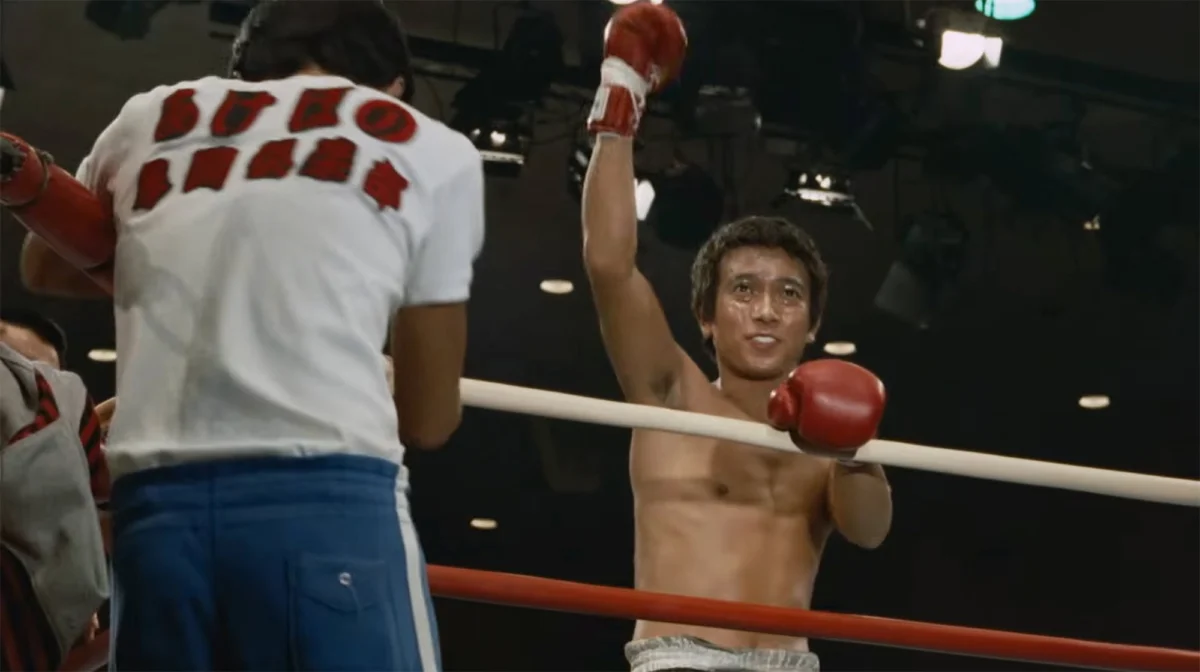
The Boxer arrived in Japanese theaters in October 1977, less than a year after the global phenomenon of Sylvester Stallone’s Rocky (1976). While both films center on the physical and psychological toll of the ring, Terayama’s work offers a distinctly nihilistic and stylistically experimental counterpoint to the American "underdog" narrative. The film follows the story of Tenma, a young and mediocre boxer portrayed by Kentaro Shimizu, who accidentally kills the brother of a former champion during a match. Driven by a complex mixture of guilt and ambition, Tenma seeks out the retired champion, Hayato (played by the legendary Bunta Sugawara), to train him. Hayato, having abandoned the sport to live in isolation with his dog, eventually agrees to mentor the young man, setting the stage for a narrative defined by redemption, obsession, and the brutal realities of the human condition.
Historical Context of the 1977 Production
The production of The Boxer occurred during a period of significant flux for the Japanese film industry. By the late 1970s, the "Golden Age" of Japanese cinema had faded, and major studios like Toei were increasingly looking for ways to revitalize their output. Shūji Terayama was an unconventional choice for a studio-backed sports film. Known primarily as a poet, playwright, and experimental filmmaker, Terayama was the founder of the avant-garde theater troupe Tenjō Sajiki. His previous cinematic efforts, such as Emperor Tomato Ketchup (1971) and Pastoral: To Die in the Country (1974), were surrealist, non-linear explorations of memory and sexuality.
The collaboration between Terayama and Toei was initiated by Bunta Sugawara, one of Japan’s most bankable stars at the time. Sugawara, famous for his roles in the Battles Without Honor and Humanity series, was the quintessential face of the "Jitsuroku" (true record) yakuza films. Seeking to expand his artistic range, Sugawara personally requested that Terayama direct the project. This intersection of a mainstream action icon and an underground intellectual resulted in a film that maintained the visceral, gritty atmosphere of a 1970s studio production while being infused with Terayama’s characteristic carnivalesque imagery and philosophical depth.

The Intersection of Avant-Garde and Commercial Cinema
The Boxer is often cited as Terayama’s most accessible film, yet it remains deeply idiosyncratic. Unlike the traditional sports tropes of victory and glory, Terayama focuses on the "aesthetic of the loser." This theme resonated deeply with the Japanese youth of the 1970s, who were grappling with the end of the post-war economic miracle and a sense of social stagnation.
The film’s screenplay, co-written by Terayama alongside Shirō Ishimori and Rio Kishida, avoids the sentimentality often found in boxing dramas. Instead, it explores the concept of boxing as a form of "hatred" or a "ritual of self-destruction." In the film, the mentor-protegé relationship is not built on mutual affection but on a shared recognition of their status as societal outcasts. This dark, psychological approach distinguished The Boxer from contemporary Western counterparts and aligned it more closely with the "New Wave" sensibilities that had redefined global cinema a decade earlier.
Cinematographic Excellence and Technical Restoration
A primary draw of the upcoming Radiance Films release is the visual restoration of the work of cinematographer Tatsuo Suzuki. Suzuki was a frequent collaborator with Terayama and is credited with giving The Boxer its distinctive, vivid color palette and dynamic framing. The 1970s aesthetic is characterized by high-contrast lighting, saturated primary colors, and handheld camera work that captures the frenetic energy of the boxing ring.
The new High-Definition upgrade utilized advanced digital restoration techniques to stabilize the image, remove debris from the original negative, and correct color fading that had occurred over the last five decades. This restoration process ensures that Suzuki’s cinematography—noted for its "spectacular shots" and "vivid color"—can be experienced as originally intended. For many viewers, this will be the first opportunity to see the film without the degradation common in bootleg copies or aging archival prints.
Comparative Analysis within the Boxing Genre
In the broader context of sports cinema, The Boxer holds a unique position. While Rocky popularized the "hero’s journey" within the ring, The Boxer shares more DNA with films like John Huston’s Fat City (1972) or Martin Scorsese’s later Raging Bull (1980). It treats boxing not as a sport, but as a metaphor for the struggle against an indifferent world.

Historical data regarding the film’s initial reception in Japan indicates it was a moderate success, though it was largely overshadowed by the international craze for American blockbusters. However, in subsequent decades, the film gained a cult following among international cinephiles. It was notably added to the Harvard Film Archive in 2017, a move that signaled its growing recognition as a masterpiece of world cinema. Critics who have viewed archival prints have described the film as a "worthy contender for the title of ‘Best boxing movie ever made,’" highlighting its emotional resonance and visual sophistication.
Chronology of The Boxer’s International Recognition
The path to the 2026 Blu-ray release has been long and characterized by the film’s relative obscurity in the West.
- October 1977: The Boxer premieres in Japan under the Toei Company banner.
- 1980s-1990s: The film remains largely unavailable outside of Japan, appearing only in specialized film festivals or as part of retrospectives on Shūji Terayama.
- 2010s: A resurgence of interest in 1970s Japanese "New Action" and "Pinky Violence" films leads boutique labels to begin investigating the Toei vaults.
- 2017: The Harvard Film Archive hosts a retrospective of Terayama’s work, including The Boxer, introducing the film to a new generation of American scholars and critics.
- 2024-2025: Radiance Films secures the distribution rights and begins the arduous process of digital restoration and subtitle translation.
- July 20, 2026: The official High-Definition Blu-ray is scheduled for release, featuring a plethora of supplemental materials.
Technical Specifications and Special Edition Features
Radiance Films has confirmed that the upcoming release is a Limited Edition set, aimed at collectors and academic institutions. The package includes:
- High-Definition Digital Transfer: A meticulously cleaned and stabilized presentation of the film.
- Improved Subtitles: A fresh translation of the Japanese dialogue, designed to capture the poetic nuances of Terayama’s script.
- Critical Essays: A booklet containing new writing on the film’s place in Terayama’s filmography and its relationship to the sports genre.
- Toei Video Content: Archival materials from the Toei Company, providing historical context on the production.
- Reversible Cover Art: Featuring original theatrical poster designs and new modern interpretations.
These features are intended to provide a comprehensive educational experience, allowing viewers to understand the film within its specific historical and cultural framework.
The Broader Impact on World Cinema Preservation
The release of The Boxer is emblematic of a larger trend in the home media industry. As streaming services often prioritize contemporary content, boutique labels like Radiance Films, The Criterion Collection, and Arrow Video have taken on the role of cultural preservationists. By investing in the restoration of "lost" films from the 1970s, these companies ensure that the history of world cinema remains accessible and protected from physical decay.

Industry analysts suggest that the restoration of Japanese studio films from this era is particularly important because of the unique way they blended commercial requirements with artistic experimentation. The Boxer serves as a prime example of how a studio-commissioned project could, under the right direction, become a profound piece of art.
As the July 20th release date approaches, the film is expected to undergo a critical reappraisal. The availability of a high-quality version of The Boxer allows for a deeper exploration of Shūji Terayama’s legacy, moving beyond his reputation as an avant-garde provocateur to recognize his skill as a narrative filmmaker capable of operating within the studio system. For audiences accustomed to the formulaic nature of modern sports dramas, The Boxer offers a challenging, visually stunning, and emotionally raw alternative that remains as relevant today as it was in 1977.