In Korean culture, thread has long carried meanings connected to fate, relationships, and social bonds. The expression cheongsil hongsil, meaning blue thread and red thread, is associated with a folk tale in which an old matchmaker joins people destined to marry. This motif, derived from the East Asian legend of the lunar matchmaker Yue Lao, later became connected with Korean wedding customs, where blue and red threads represent the union of two individuals and the complementary forces of yin and yang. Red itself has traditionally signified good fortune and prosperity, which also explains its prominent place in bridal clothing and ceremonial objects. Director Yoon Hye-ju implements this profound cultural concept in her compelling short film, “Line,” transforming a symbol of harmonious destiny into a tangible representation of societal friction and division within a rural community.
The Enduring Symbolism of Thread in Korean Culture
The significance of thread in Korean culture extends far beyond a mere utilitarian object; it is deeply interwoven with philosophical beliefs, folklore, and daily life. The legend of Yue Lao, the Old Man Under the Moon, is a cornerstone of this symbolism across East Asia. According to the legend, Yue Lao ties an invisible red thread around the ankles of two people destined to be together, regardless of time, place, or circumstances. This thread is unbreakable, and the two individuals are fated to meet and marry. In Korea, this legend evolved into the cheongsil hongsil tradition, literally "blue thread, red thread," symbolizing the perfect marital match. The red thread typically represents the bride, signifying passion, prosperity, and good fortune, while the blue thread represents the groom, embodying stability, hope, and new beginnings. Together, they symbolize the harmonious balance of yin (feminine, often red) and yang (masculine, often blue), a fundamental principle in East Asian cosmology that emphasizes complementary forces creating a unified whole.
Beyond matrimonial contexts, threads have been used in various cultural practices. For instance, shamans might use colored threads in rituals to bind spirits, connect with ancestors, or ward off evil. In traditional crafts, the meticulous weaving of threads into textiles or embroidery often reflected the maker’s dedication, patience, and hope for a prosperous future, imbuing everyday objects with deeper meanings. The concept of an "unbreakable bond" or "fate" is pervasive in Korean storytelling, often manifesting through metaphors of thread or string, emphasizing the interconnectedness of human lives and the idea that certain destinies are predetermined. Yoon Hye-ju’s choice to revisit and subvert this potent symbol in "Line" immediately sets a rich cultural backdrop for her contemporary narrative.
"Line": A Narrative of Disruption and Discontent
Yoon Hye-ju’s "Line" immediately subverts these deeply ingrained cultural perceptions of thread. Instead of a delicate, invisible bond of destiny, the film presents an unsettling physical manifestation: vast quantities of red thread spread across a rural village, becoming a literal and figurative obstacle. The narrative commences with a scene illustrating this disruption, as villagers are shown diligently attempting to gather the pervasive red threads that have permeated their environment, particularly the sprawling rice paddies. This initial imagery is stark: a symbol of unity and destiny has transformed into a visible nuisance, demanding collective effort to manage.
Amidst this communal labor, a man identified as Hyung, characterized by his nonchalant demeanor, walks through the same area, conspicuously smoking, seemingly detached from the villagers’ plight. His apparent indifference prompts a confrontation from a frustrated villager, who questions his lack of participation. Hyung remains evasive, further fueling the villager’s indignation, who admonishes him for his perceived selfishness. The tension of the scene is palpable, establishing an immediate undercurrent of friction within the community.
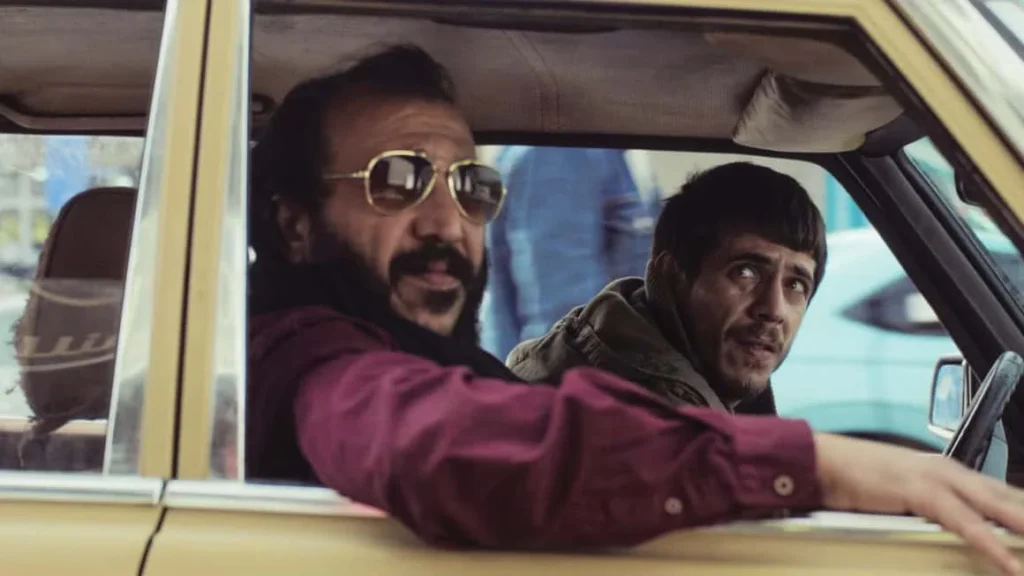
The arrival of Boss Park, a figure of authority, shifts the dynamic. Rather than focusing on the endless task of collecting the threads, Boss Park proposes a more fundamental solution: identifying the source of this peculiar phenomenon. This decision marks a turning point, transforming the narrative from one of passive reaction to active investigation. Boss Park then enlists Hyung and an obese man, picking them up in his truck. This action further incenses the critical villager, who continues his vocal objections to their departure. Despite his protestations, the villager ultimately defers to Boss Park’s authority, highlighting the established social hierarchy within the community.
As the truck proceeds, the obese man engages in provocative gossip, targeting the first villager’s son with offensive remarks and delving into various other contentious topics. Hyung, notably, maintains his stoic silence, offering no reaction to the inflammatory conversation. This segment not only reveals the pervasive nature of gossip within the close-knit community but also underscores Hyung’s enigmatic character. The journey is abruptly interrupted twice: first, by the sudden appearance of a goose in the road, forcing the truck to a halt, and subsequently, by a thick stretch of red thread blocking their path. Boss Park, demonstrating his pragmatic and somewhat aggressive nature, cuts the thread with scissors and immediately engages in a heated quarrel with the owner of the house from which the thread originates. The argument escalates rapidly, mirroring the rising tensions within the community, only to be temporarily defused by a young girl’s call for snacks, offering a brief, almost absurd, moment of respite amidst the escalating conflict.
Unpacking the Societal Critiques: Rural Discontent and the "Outsider"
"Line" deftly uses the escalating conflict over the red threads to dissect deeper societal issues, particularly the palpable tension between long-standing rural communities and perceived "outsiders," often associated with urban centers like Seoul. Boss Park, while seemingly the immediate instigator of direct altercations, acts as a conduit for a broader, underlying disdain among the locals. This resentment towards those who are not "from here" is a recurring theme, reflecting real-world anxieties about modernization, economic disparity, and the perceived erosion of traditional values in many South Korean rural areas.
The film meticulously builds this atmosphere of suspicion and resentment. The gossip that pervades the community, where "everyone knows everything about everyone," serves a dual purpose: it acts as a mechanism for social control and cohesion, but also as a breeding ground for judgment, prejudice, and division. This small-town mentality, with its inherent distrust of the unfamiliar, is not merely depicted; it is actively parodied through the exaggerated physical presence of the red thread. The thread, traditionally a symbol of invisible, destined connection, is transformed into a highly visible, obstructive barrier, mirroring the psychological walls erected between individuals and groups within the village.
The "outsider" archetype in Korean cinema often carries a complex weight, embodying either a threat to established order or a catalyst for change. In "Line," the implied outsiders—perhaps the source of the threads, or simply anyone not conforming to the village’s insular norms—become targets for the community’s collective frustrations. This dynamic is a nuanced commentary on the challenges faced by many rural communities in South Korea, which grapple with issues such as aging populations, dwindling resources, and the pervasive influence of Seoul-centric culture. The film suggests that the "lines" that divide are not always invisible or metaphorical; they can become tangible, creating real-world friction and conflict.
Cinematic Craftsmanship: A Director’s Vision
Yoon Hye-ju’s directorial approach in "Line" is as compelling as its narrative. The film’s technical execution plays a crucial role in amplifying its thematic depth and emotional impact. One of the most striking aspects is the cinematography, which features a gliding camera that frequently moves into intimate close-ups of the characters’ faces. This technique, while reminiscent of auteur Hong Sang-soo’s minimalist, observational style, is imbued with a more abrupt and tense quality, perfectly suiting the film’s escalating sense of unease.
The decision to seemingly shoot the film in one continuous take, or at least create the illusion of it, is a significant artistic choice. A long take demands meticulous planning, precise choreography, and flawless performances. It immerses the audience directly into the unfolding events, fostering a sense of real-time observation and heightening the tension as the conflicts develop without the conventional breaks of editing. This approach not only showcases the technical prowess of the production team but also serves to underscore the inescapable nature of the community’s conflicts; there are no cuts, no easy escapes from the pervasive red threads or the heated arguments.
The visual impact of the red thread itself is a major strength. Its striking color against the mundane rural landscape, particularly the green of the rice paddies or the gray of the road, makes it an unforgettable visual motif. It transforms from a quaint cultural symbol into an alien, invasive element, forcing the audience to reconsider its meaning. The performances are equally commendable, characterized by their naturalism and intensity. The actors embody the mounting frustration and animosity of the villagers with authenticity, making the audience feel the weight of their collective irritation and individual grievances.
An intriguing element in the film is the recurring presence of the goose. Its honking acts as an unexpected catalyst, breaking up fights and injecting moments of bizarre hilarity into otherwise tense scenes. This use of unexpected humor provides a brief release valve for the audience, further highlighting the absurdity of the escalating human conflicts. The enigmatic role of Hyung, the "lazy man," is another masterstroke. His quiet detachment throughout much of the film builds suspense, and his ultimate significance, revealed only in the tragic conclusion, recontextualizes every preceding event. This narrative twist is designed to challenge the audience’s initial judgments and deepen the film’s commentary on human connection and the often-unforeseen consequences of collective actions.
Festival Acclaim and Future Implications
Given the visual quality and narrative depth, it is highly probable that "Line" has garnered significant attention in the film festival circuit, particularly at events like the Bucheon International Fantastic Film Festival (BIFAN), as suggested by related promotional materials. BIFAN is renowned for its focus on genre cinema, short films, and showcasing emerging talents in South Korean and international filmmaking. For a short film like "Line," a successful run at BIFAN could serve as a crucial launching pad for Yoon Hye-ju’s career, establishing her as a director with a distinctive voice and a keen eye for social commentary.
Short films often act as a proving ground for directors, allowing them to experiment with themes, techniques, and narrative structures before venturing into feature-length productions. "Line" exemplifies this perfectly, demonstrating Yoon Hye-ju’s ability to craft a visually striking and thematically rich story within a concise format. The film’s critical reception, likely highlighting its innovative narrative, strong visual aesthetics, and powerful social critique, would position Yoon Hye-ju as a promising talent in contemporary Korean cinema.
The implications of "Line" extend beyond its artistic merit. It serves as a potent microcosm of broader societal tensions in South Korea—the friction between tradition and modernity, rural and urban perspectives, and the fragility of communal harmony in the face of escalating conflict. By transforming a beloved cultural symbol into an agent of division, Yoon Hye-ju invites audiences to reflect on the lines—both visible and invisible—that shape human interactions and determine collective fates. "Line" is not merely a film about red threads; it is a profound meditation on the ties that bind, and those that ultimately fray, in the tapestry of human existence. Director Yoon Hye-ju appears to be a filmmaker whose future works will undoubtedly continue to offer incisive perspectives on the complexities of contemporary life.