The highly anticipated Hong Kong production, "The Mage," a supernatural horror and crime thriller, made its world premiere at the 30th Bucheon International Fantastic Film Festival (BIFAN) in South Korea. Produced by Conroy Chan through 852 Films and directed by the acclaimed twin filmmakers Danny and Oxide Pang, with Danny Pang also credited as the writer, the 97-minute feature promises a compelling blend of ghostly mythology, a gripping murder investigation, action sequences, suspense, and intricate special effects. The film marks another significant collaboration between lead actress Josie Ho and the Pang brothers, a trio known for their impactful contributions to Hong Kong genre cinema. The premiere was complemented by a masterclass featuring the directors, producer, and cast members Josie Ho and Iman Taheri, offering attendees deeper insights into the film’s creation and broader industry topics, including the evolving role of artificial intelligence in filmmaking.
The Bucheon International Fantastic Film Festival: A Global Stage for Genre Cinema
BIFAN, celebrating its 30th anniversary, stands as one of Asia’s most prestigious and influential film festivals dedicated to genre cinema, encompassing horror, fantasy, science fiction, and thrillers. Held annually in Bucheon, South Korea, the festival has cultivated a reputation for showcasing groundbreaking and unconventional films from around the globe, often serving as a crucial platform for Asian filmmakers to gain international recognition. Its programming is known for pushing cinematic boundaries, exploring diverse cultural narratives, and fostering dialogue among industry professionals and cinephiles alike. The selection of "The Mage" as a world premiere underscores BIFAN’s commitment to highlighting significant works from Hong Kong, a region with a storied history in genre filmmaking. For a Hong Kong production to debut at BIFAN signifies its perceived artistic merit and its potential to resonate with a global audience appreciative of distinct genre offerings. The festival’s 30th edition is particularly noteworthy, representing three decades of promoting fantastic cinema and adapting to new industry trends, including discussions around technological advancements like AI, which were evidently part of the discourse during the masterclass sessions.
A Deep Dive into "The Mage": Production and Creative Vision
"The Mage" emerges from the creative stable of 852 Films, a production company spearheaded by Conroy Chan, known for its focus on delivering high-quality and distinctive cinematic experiences from Hong Kong. Chan’s involvement as producer signals a commitment to nurturing genre storytelling with a unique local flavor, yet with international appeal. The directorial reins are held by the Pang brothers, Danny and Oxide, a duo synonymous with Hong Kong horror and thrillers. Their filmography includes critical and commercial successes such as "The Eye" series (2002), which spawned Hollywood remakes and solidified their reputation for crafting atmospheric and psychologically unsettling horror. Other notable works include "Bangkok Dangerous" (1999), "Infernal Affairs II" (as writers for Oxide Pang), and numerous other thrillers that often blend supernatural elements with gritty urban realism. Danny Pang’s additional credit as writer for "The Mage" suggests a singular vision for the narrative, allowing for a cohesive execution of the complex plot. Their signature style, often characterized by a strong emphasis on visual storytelling, pervasive atmosphere, and sudden scares, is reportedly very much present in "The Mage." This collaboration with Josie Ho, who has previously worked with them on projects like "The Eye 2," underscores a mutual artistic understanding and a shared commitment to pushing the boundaries of genre cinema.
The film boasts an impressive ensemble cast, led by Josie Ho, a multifaceted actress and singer renowned for her willingness to take on challenging and unconventional roles. Ho’s career spans across mainstream blockbusters and independent features, earning her accolades for her intense performances and screen presence. In "The Mage," she takes on the pivotal role of Lan Pui Ching. Joining her is Carlos Chan, a rising star in Hong Kong cinema, playing police officer Wong Ming. The dynamic between Ho and Chan is central to the film’s narrative, embodying the classic conflict between the supernatural and the logical. The supporting cast includes German Cheung, Kathy Tong Yee, Sabrina Ng, and Iman Taheri, whose contributions round out the intricate character web of the story.
Narrative Unveiled: Supernatural Intrigue Meets Gritty Crime Investigation
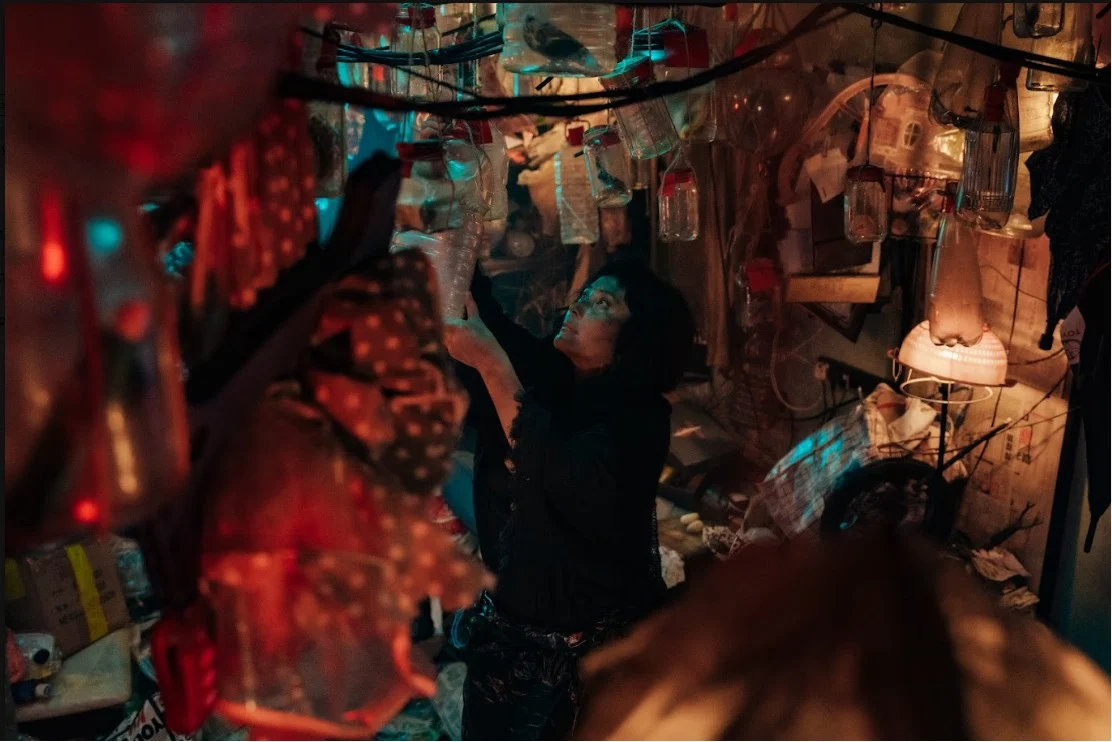
The plot of "The Mage" intricately weaves together elements of supernatural horror and a police procedural. The story unfolds in Hong Kong, where a series of perplexing deaths initially appear to be mere accidents. However, the astute police officer Wong Ming (Carlos Chan) begins to notice a peculiar pattern: the enigmatic Lan Pui Ching (Josie Ho) consistently appears near several of these crime scenes, meticulously collecting discarded objects from the surrounding areas. Lan is no ordinary scavenger; she is a former spirit medium burdened with a unique ability—she can perceive souls trapped within abandoned items and guide them toward reincarnation.
Lan’s past is haunted by a profound sense of guilt stemming from a tragic incident thirteen years prior, an event where her actions inadvertently contributed to the death of a young girl, leaving her plagued by persistent visions of the deceased. As Wong’s investigation into the recent fatalities deepens, Lan’s spiritual insights lead her to a chilling realization: these deaths are not random occurrences but are meticulously orchestrated as part of a mysterious cult ritual. Their separate paths, driven by logic and spiritual intuition respectively, gradually converge as they uncover the sinister truth. This convergence reveals a terrifying personal stake: both Wong and Lan have been chosen as the cult’s next victims. The narrative further complicates when it is disclosed that Officer Wong Ming, despite his adherence to logic, carries his own unresolved trauma, adding layers of psychological depth to his character and forging an unexpected bond with Lan. This exploration of personal demons alongside a supernatural threat elevates the film beyond a simple genre exercise, delving into themes of redemption, fate, and the intersection of the seen and unseen worlds.
Visuals, Sound, and Editing: Crafting a Visceral Experience
The critical assessment of "The Mage" highlights its strengths in technical execution, particularly in its visual and auditory design. Cinematographers Hung Mo To and S. K. Yip have employed a desaturated color palette, a deliberate artistic choice that enhances the film’s gritty, oppressive atmosphere. This muted aesthetic serves to make the intermittent splashes of vivid red—representing violence, blood, and the gruesomely depicted victims—stand out with striking intensity. This contrast not only heightens the horrific aspects but also makes the action sequences more impactful and visually memorable. The film’s design, in this regard, is noted for its distinctive and effective approach.
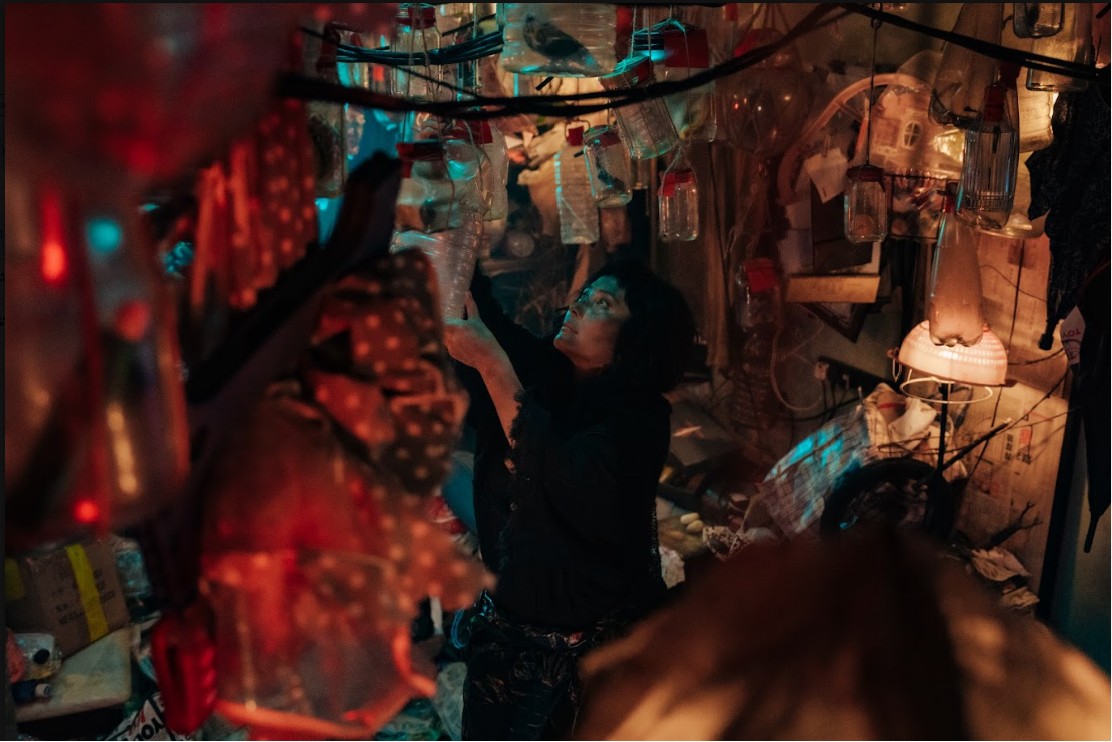
Beyond color, the creative use of environmental elements contributes significantly to the film’s immersive quality. Rain, for instance, a recurring motif, is integrated effectively through both masterful sound design and compelling visuals. The protagonist Lan Pui Ching’s apparent fear of water is visually and audibly amplified, creating moments of palpable tension and vulnerability. Furthermore, the pervasive presence of garbage surrounding Lan, a reflection of her life as a scavenger, is not merely background detail but actively contributes to the film’s bleak atmosphere and subtly reinforces her characterization, hinting at her connection to discarded souls and forgotten spaces.
The editing by Jinrong Weng is another cornerstone of the film’s effectiveness. Characterized by sudden, abrupt cuts, the editing style plays a crucial role in amplifying the horrific elements of the movie, often jarring the audience and creating a sense of unease. The fast tempo of the editing complements the film’s aesthetic, ensuring that the narrative unfolds dynamically and maintains a relentless pace, preventing any lag throughout its 97-minute running time. This efficient pacing is essential for a genre film that relies on sustained tension and quick reveals. The film’s audiovisual approach, particularly its dark, gritty realism and atmospheric tension, draws evident inspiration from recent Hong Kong cinematic successes like Soi Cheang’s "Limbo." While acknowledging these influences, critics affirm that "The Mage" manages to establish its own unique identity and artistic merit, standing firmly on its own as a significant contribution to the genre.
Critical Reception and Thematic Explorations at BIFAN
Early reception from the Bucheon International Fantastic Film Festival noted that "The Mage" confidently wears its stylistic choices and inherent challenges on its sleeves. The Pang brothers’ approach, characterized by a certain exaggeration, has been described as a "hit or miss" strategy, a stylistic hallmark frequently observed in Hong Kong genre productions of the past. The narrative, for instance, is not always strictly logical, often prioritizing striking and grotesque imagery over conventional plot coherence. This focus on visceral impact means that characterization can sometimes appear "weird and illogical," twists are "abrupt," and the final act can feel "rushed." These elements, while potentially challenging for some viewers, are often seen as part of the appeal for aficionados of classic Hong Kong genre cinema, particularly those familiar with the traditions of CAT III films where atmosphere and shock value often superseded narrative strictness.
The acting performances, particularly Josie Ho’s portrayal of Lan, navigate these stylistic choices. Despite the script’s tendency towards "one-liner after one-liner" and "inexplicable attitudes," Ho’s inherent charisma and her skillful depiction of Lan’s erratic behavior are highlighted as "quite appealing." Carlos Chan, as Officer Wong, offers a more grounded performance, although he too has moments of excessiveness. The inherent antithesis between Lan, the spirit medium, and Wong, the logical detective, creates a compelling dynamic that, despite minor criticisms (such as Chan being "somewhat too clean cut"), effectively carries the film. This tension between the supernatural and the rational forms the narrative backbone, exploring themes of belief, skepticism, and the unknown. Iman Taheri’s performance as Wong’s boss, however, was noted as less effective.
A significant aspect of "The Mage"’s premiere at BIFAN was the masterclass, where Josie Ho engaged in discussions about the film and, notably, the topic of Artificial Intelligence. While the original article does not detail the specifics of the AI discussion, its inclusion signifies BIFAN’s broader intellectual agenda—to address not only the art of filmmaking but also its evolving industrial landscape. Josie Ho’s involvement in this discussion points to her engagement with contemporary industry challenges and her forward-thinking perspective. This broader discourse on AI within a genre film festival context could encompass a range of implications: from AI’s potential applications in special effects and post-production, to its impact on screenwriting, character development, or even the ethical considerations of AI in creative industries. Her participation likely positioned "The Mage" and its creators as not just storytellers but also as contributors to a larger conversation about the future of cinema.
Distribution and Future Outlook
Following its world premiere at BIFAN, "The Mage" has secured significant distribution agreements, indicating confidence in its commercial viability. Edko Films, a prominent distributor in the region, has acquired the theatrical distribution rights for Hong Kong and Macau. A local release is strategically planned for the third or fourth quarter of 2026, positioning the film for optimal audience engagement during a potentially busy cinematic period. This phased release strategy allows for initial festival buzz to build anticipation ahead of its broader theatrical run. Critically, 852 Films, the production company, has retained the international rights, granting them greater control over the film’s global rollout and ensuring that "The Mage" can reach diverse audiences worldwide. This dual distribution approach underscores a calculated effort to maximize both domestic and international exposure for the supernatural thriller.
The film’s trajectory, from its festival debut to its upcoming theatrical release, positions it as a key entry in the ongoing narrative of Hong Kong cinema. It not only showcases the enduring talent of its directors and cast but also highlights the robust ecosystem of genre filmmaking that continues to thrive in the region.
The Enduring Appeal of Hong Kong Genre Cinema
"The Mage" serves as a powerful testament to the enduring appeal and innovative spirit of Hong Kong genre cinema. For decades, Hong Kong has been a global powerhouse for producing distinctive and often audacious genre films, from martial arts epics to supernatural horrors and gritty crime thrillers. The Pang brothers, through their consistent work, have been instrumental in maintaining and evolving this legacy, particularly in the horror space. "The Mage," with its deliberate blend of ghostly mythology and a hard-boiled crime investigation, stands as a contemporary iteration of this rich tradition.
The film’s reception, particularly the understanding that "one has to throw logic out the window to enjoy ‘The Mage’," echoes the sentiment often associated with classic Hong Kong genre productions, particularly those from the CAT III era. These films often prioritized visceral impact, stylistic flair, and an immersive experience over strict narrative realism. For audiences willing to embrace this approach, "The Mage" promises to be an "entertaining" and "excellent audiovisual spectacle," a film best experienced on the grandeur of the big screen to fully appreciate its meticulously crafted visuals and sound design. It represents not just another film, but a continuation of a cinematic heritage that continues to captivate and challenge audiences, demonstrating that Hong Kong genre cinema remains a vibrant and essential force on the international stage.